Best Japanese Traditional Fashion Workshops & Online Courses 2026
The Renaissance of Traditional Japanese Garment Education in 2026
The intersection of ancient textile arts and modern pedagogical frameworks has never been more vibrant than in 2026. As global interest in sustainable, heritage-based fashion continues to surge, Japanese fashion schools have expanded their traditional garment workshops and online learning modules to accommodate an international audience. Whether you are a seasoned fashion designer looking to integrate kimono drafting into your couture collections, or a textile enthusiast eager to master the intricate resist-dyeing techniques of shibori, Japan’s educational institutions offer unparalleled access to centuries-old craftsmanship. This comprehensive guide explores the premier Japanese fashion school workshops and online courses available in 2026, detailing curriculums, costs, and application strategies for global students.
Premier In-Person Workshops: Bunka Fashion College
Located in the heart of Tokyo’s Shinjuku district, Bunka Fashion College remains the vanguard of Japanese fashion education. While globally renowned for its avant-garde western fashion alumni, Bunka’s 2026 short-term intensive programs in traditional Japanese dress are highly sought after by international designers. The "Kimono & Japanese Dress Construction" workshop is a rigorous four-week program that bridges the gap between historical flat-pattern drafting and contemporary garment construction.
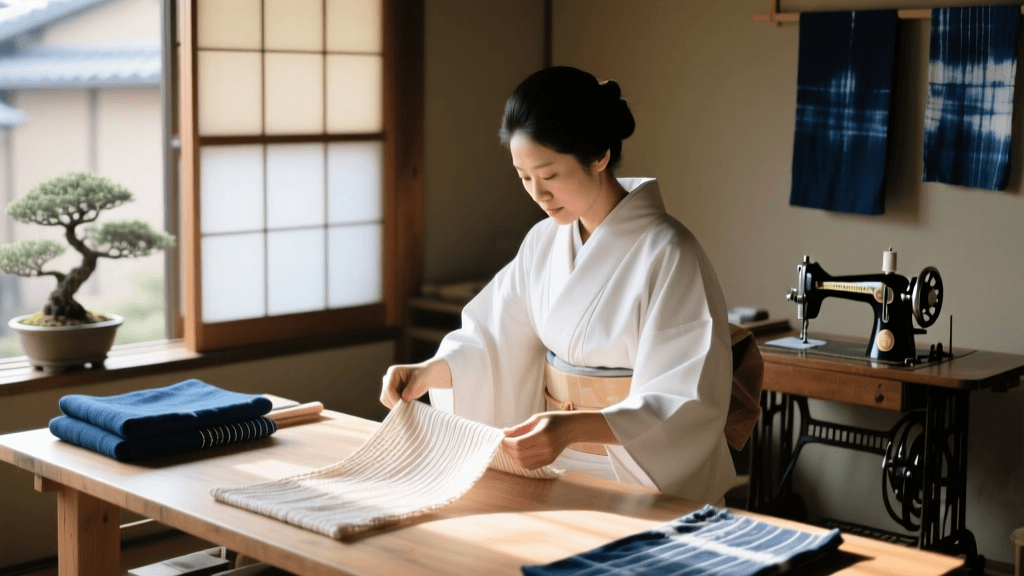
Unlike Western tailoring, which relies heavily on three-dimensional draping and curved seams, traditional Japanese garments like the kimono, yukata, and haori are constructed from straight, rectangular panels of fabric. Bunka’s 2026 curriculum emphasizes the mathematical precision required for this modular approach, teaching students how to calculate fabric yardage based on the standard 36cm width of traditional tanmono (kimono fabric bolts). Students learn essential hand-sewing techniques, including the hon-geshi (blind stitch) and the chidori-gake (catch stitch), which allow the garment to be entirely disassembled for cleaning and re-sewn—a hallmark of sustainable, zero-waste fashion.
For the 2026 academic year, the four-week summer intensive is priced at approximately ¥380,000 (around $2,550 USD), which includes access to Bunka’s extensive historical garment archive and specialized sewing studios. Enrollment is highly competitive, and applicants are required to submit a portfolio demonstrating basic sewing proficiency and a clear statement of purpose regarding how they intend to apply traditional Japanese techniques to their future design work.
Kyoto Seika University: Immersive Textile and Dyeing Masterclasses
While Tokyo focuses on construction and pattern-making, Kyoto remains the undisputed capital of textile arts. Kyoto Seika University, particularly its Faculty of Art and Design, offers some of the most immersive traditional dyeing and weaving workshops in the country. Their 2026 "Heritage Textiles and Natural Dyes" summer masterclass is a three-week deep dive into the chemistry and artistry of Japanese color.
The Kyoto Seika program is heavily focused on Yuzen and Shibori. Yuzen is a highly complex resist-dyeing technique used to create the elaborate, pictorial designs seen on formal kimono. Under the tutelage of master artisans, students learn to apply itome-nori (rice paste resist) using specialized conical metal tips, creating intricate outlines that prevent dyes from bleeding. The curriculum also covers Arashi Shibori (pole-wrapping) and Kanoko Shibori (fawn-spot tie-dye), teaching students the physical endurance and rhythmic precision required to bind thousands of micro-knots into silk crepe.
In 2026, Kyoto Seika has partnered with local indigo farms in Tokushima to provide students with hands-on experience in maintaining a traditional sukumo (fermented indigo) vat. Understanding the alkaline pH balance and the daily feeding of the indigo bacteria is a crucial component of the workshop. The tuition for this three-week masterclass is ¥420,000 ($2,800 USD), reflecting the high cost of premium silk substrates and natural dyestuffs provided to each student.
The Best Online Learning Platforms for Global Enthusiasts
Not everyone can relocate to Japan for a month-long intensive. Recognizing this, Japanese institutions and specialized educational platforms have vastly improved their online learning infrastructure by 2026. The hybrid model, which combines high-definition asynchronous video lectures with physical material kits shipped globally, has become the gold standard for remote traditional garment education.
The "Japan Traditional Crafts Online Portal," an initiative supported by the Ministry of Economy, Trade and Industry (METI), offers modular courses in English. Their 2026 flagship course, "Digital Pattern Drafting for the Modern Kimono," utilizes specialized CAD software adapted for traditional Japanese measurements. Students learn how to digitize the modular panels of a kimono, allowing them to experiment with modern textile prints while maintaining the structural integrity of the traditional silhouette.
Furthermore, Bunka Fashion College has introduced a series of weekend online seminars focusing on the styling and cultural context of traditional garments. These sessions cover the complex rules of kitsuke (kimono dressing), the seasonal appropriateness of specific motifs (such as using plum blossoms in late winter or maple leaves in autumn), and the proper selection of obi (sashes) and obijime (decorative cords). While these online seminars do not teach physical construction, they are invaluable for fashion journalists, stylists, and costume designers who need a rigorous academic understanding of Japanese sartorial codes.
2026 Course Comparison: In-Person vs. Online Traditional Workshops
To help you navigate the diverse educational landscape, we have compiled a comparison of the top traditional garment workshops and online courses available in 2026.
| Institution / Platform | Format | Duration | 2026 Cost (USD) | Primary Focus |
|---|---|---|---|---|
| Bunka Fashion College | In-Person (Tokyo) | 4 Weeks | $2,550 | Kimono Construction & Flat-Pattern Drafting |
| Kyoto Seika University | In-Person (Kyoto) | 3 Weeks | $2,800 | Yuzen, Shibori, and Natural Indigo Dyeing |
| METI Crafts Portal | Online + Kit | 6 Weeks | $450 | Digital Kimono CAD & Modern Textile Integration |
| Bunka Online Seminars | Online (Live) | 4 Weekends | $120 | Kitsuke (Styling), History, and Cultural Codes |
Essential Tools and Material Kits for 2026 Students
Whether you are attending an in-person workshop or studying remotely, mastering traditional Japanese garment construction requires specialized tools that are rarely found in Western sewing kits. In 2026, most top-tier schools include these tools in their tuition, but remote learners must source them independently.
- Herahari (Bamboo Spatula): Used for creasing silk and applying rice paste resist. Unlike metal tools, bamboo prevents snagging delicate fibers. A high-quality, aged bamboo herahari costs around $35 USD from specialized suppliers in Tokyo's Nippori Textile Town.
- Kote (Soldering Iron for Silk): Essential for the Edo period technique of cutting and sealing synthetic blends, though traditionalists use specialized heated irons for pressing silk seams without water. Modern 2026 models feature precise digital temperature controls to prevent scorching fragile chirimen (crepe) silk.
- Shinshi (Bamboo Stretchers): Used during the dyeing process to keep fabric taut and prevent the edges from curling inward. A set of adjustable shinshi with hundreds of tiny brass pins is an investment piece, typically costing upwards of $150 USD.
- Kakehari (Tension Hook): A traditional wooden and metal tool used to anchor fabric to the floor or a low table while hand-sewing, maintaining the precise tension required for the invisible hon-geshi stitch.
How to Apply and Visa Considerations for 2026
Applying for short-term workshops in Japan requires careful logistical planning, particularly regarding immigration and visa requirements. For courses lasting less than 90 days, citizens of many countries can enter Japan under a Temporary Visitor visa, which permits participation in short-term cultural workshops and unpaid educational seminars. However, if you plan to enroll in a comprehensive, multi-month program or a formal degree track in traditional arts, you will need a Student Visa.
The official Study in Japan portal, managed by the Japan Student Services Organization (JASSO), is the most authoritative resource for navigating the 2026 visa landscape. Schools like Bunka and Kyoto Seika have dedicated international student offices that will issue the necessary Certificate of Eligibility (COE) upon acceptance and payment of the initial enrollment fee.
When preparing your application for 2026 cohorts, ensure your portfolio highlights not just your technical skills, but your conceptual understanding of heritage preservation. Japanese institutions place a high value on "shokunin kishitsu" (the spirit of the artisan)—a dedication to continuous improvement, respect for materials, and a willingness to endure repetitive practice to achieve perfection. Demonstrating this philosophy in your statement of purpose will significantly enhance your chances of acceptance into these highly competitive traditional garment workshops.
Final Thoughts on Heritage Education
The landscape of Japanese fashion education in 2026 offers a profound opportunity to engage with one of the world's most sophisticated sartorial traditions. Whether you are manipulating silk in a Kyoto dye house or drafting modular patterns via a digital interface from your home studio, these workshops provide the technical rigor and cultural context necessary to respectfully innovate within the realm of traditional Asian garments. By investing in this specialized education, designers and enthusiasts alike ensure that the intricate arts of the kimono, yukata, and haori continue to evolve and inspire the global fashion industry for generations to come.