Contemporary Vyshyvanka Styling: 2026 Minimalist Wardrobe Guide
The Global Resurgence of European Folk Dress
In the landscape of 2026 fashion, the pendulum has swung decisively away from fleeting micro-trends and fast-fashion synthetics, landing firmly on the principles of heritage minimalism and artisanal longevity. At the forefront of this European folk dress revival is the Vyshyvanka, the traditional Ukrainian embroidered shirt. Once reserved primarily for national holidays, weddings, and ceremonial events, the Vyshyvanka has been reimagined by contemporary designers and style enthusiasts as a cornerstone of the modern, conscious capsule wardrobe. This evolution represents a broader movement within European textile traditions, where historical garments are not merely preserved in glass cases, but are actively lived in, adapted, and integrated into daily life.
The integration of folk dress into contemporary styling requires a delicate balance. It demands respect for the historical significance and regional nuances of the garment while embracing modern silhouettes, sustainable fabrics, and minimalist color palettes. As noted by textile historians and curators at the Victoria and Albert Museum's fashion archives, regional European embroidery techniques have historically served as a profound wellspring of inspiration for global textile trends, constantly evolving as they interact with contemporary aesthetics. In 2026, the Vyshyvanka stands as a masterclass in how traditional craftsmanship can elevate a minimalist wardrobe, offering texture, narrative, and unparalleled artisanal quality that mass production simply cannot replicate.
Deconstructing the Modern Vyshyvanka
To successfully style the Vyshyvanka in a contemporary context, one must first understand the anatomical shifts the garment has undergone to suit modern lifestyles. The traditional shirt was often constructed from rigid, heavy linens with restrictive, boxy cuts designed for agrarian labor and layered under heavy wool vests. The 2026 iteration, however, prioritizes fluidity, breathability, and architectural drape.
Fabric and Silhouette Innovations
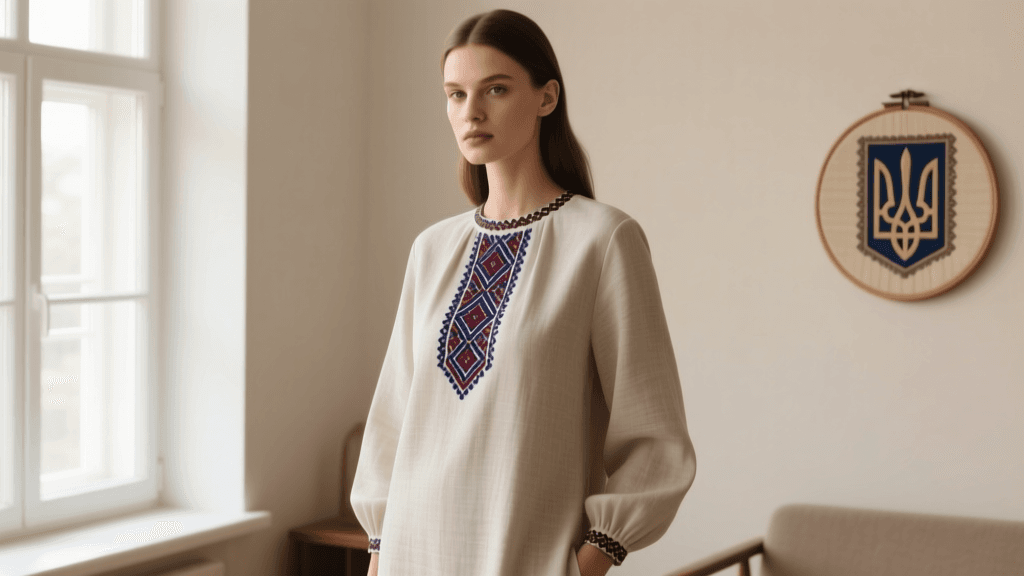
Contemporary heritage brands are now weaving custom organic hemp and European flax linen blends that offer a softer hand-feel while maintaining the structural integrity required to support heavy embroidery. The silhouettes have been updated to feature drop-shoulder seams, relaxed balloon sleeves with subtle elasticated cuffs, and elongated tunic lengths. These modern proportions allow the garment to function as a lightweight summer dress or a structured overshirt, providing versatility that aligns perfectly with the 2026 ethos of multi-functional dressing.
Embroidery: From Ceremonial to Subtle
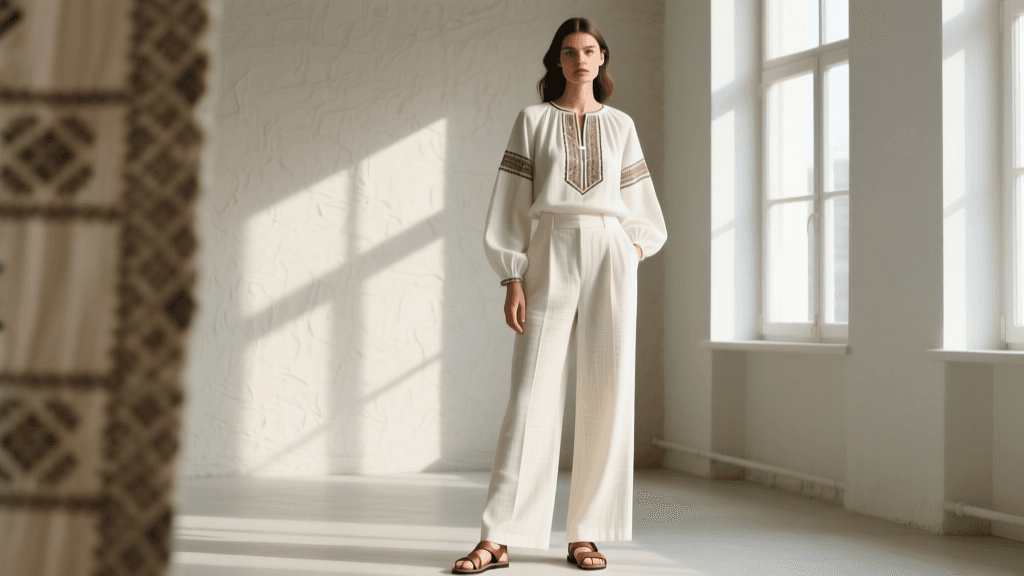
While the vibrant, high-contrast red and black geometric patterns of the Hutsul region remain iconic, the minimalist wardrobe favors the 'Bila po bilomu' (white-on-white) technique originating from the Poltava and Chernihiv regions. This technique relies on the interplay of light and shadow across different stitching methods—such as cutwork, satin stitch, and drawn thread work—rather than contrasting colors. The result is a tone-on-tone masterpiece that reads as a subtle, luxurious texture from a distance, but reveals staggering geometric complexity up close. This subtle approach allows the Vyshyvanka to be worn in professional and formal settings without appearing costumey.
2026 Styling Guide: Three Contemporary Looks
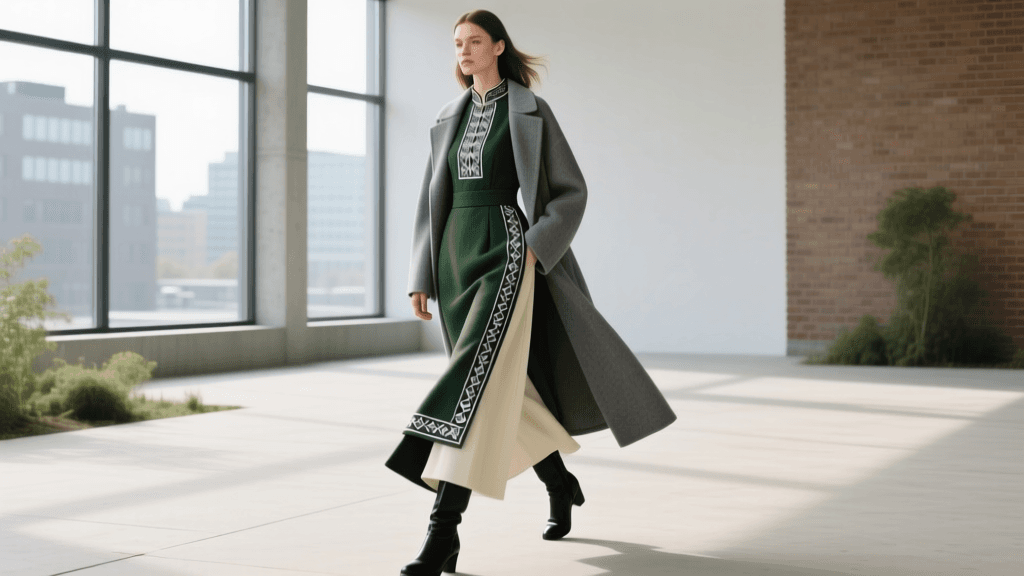
Integrating a highly textured, culturally significant garment into a daily rotation requires thoughtful styling. The key to contemporary folk dress revival is contrast: pairing the intricate, handcrafted nature of the Vyshyvanka with clean, tailored, and modern foundational pieces.
1. The Architectural Office Look
For a sophisticated workplace ensemble, select a mid-weight, white-on-white Poltava Vyshyvanka with a structured mandarin collar. Pair this with high-waisted, wide-leg wool trousers in charcoal grey or deep navy. The trousers should feature a sharp front crease and a fluid drape that pools slightly over a minimalist leather loafer. Tuck the front of the Vyshyvanka into the trousers to define the waist, leaving the back untucked for a modern, asymmetrical hemline. This look balances the romanticism of the embroidery with the severe, architectural lines of contemporary tailoring.
2. Elevated Weekend Layering
As the seasons transition, the Vyshyvanka excels as a layering piece. Choose a relaxed, drop-shoulder linen shirt featuring subtle black cross-stitching along the placket and cuffs. Wear this unbuttoned over a fine-gauge, black merino wool turtleneck. Complete the look with straight-leg raw denim and suede Chelsea boots. The juxtaposition of the crisp, textured linen against the smooth, matte surface of the merino wool creates a rich tactile experience that is a hallmark of elevated 2026 casual wear.
3. Summer Evening Minimalism
For warm-weather evenings, an elongated, sheer hemp-blend Vyshyvanka can be styled as a tunic dress. Opt for a piece with delicate draw-thread work that allows for subtle transparency. Cinch the waist with a contemporary, wide leather corset-belt in a muted earth tone, such as cognac or olive. Pair with minimalist strappy sandals and sculptural metal jewelry. The belt provides modern structure to the historically voluminous folk silhouette, transforming it into a striking piece of evening wear.
Sourcing Authentic Pieces in 2026
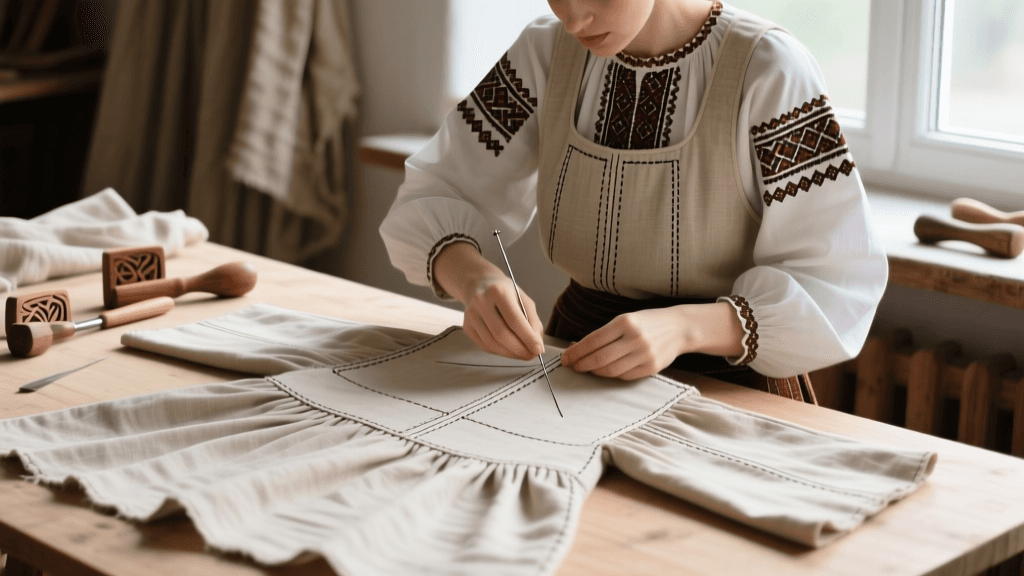
As the demand for authentic European folk dress has surged, the market has become saturated with machine-embroidered imitations. True revival relies on supporting living traditions and artisanal communities. According to the frameworks established by UNESCO's Intangible Cultural Heritage guidelines, safeguarding traditional craftsmanship requires economic support for the artisans who keep these techniques alive. When sourcing a Vyshyvanka in 2026, buyers must look for evidence of hand-stitching, natural fiber content, and transparent supply chains.
| Sourcing Channel | 2026 Price Range (EUR) | Lead Time | Best For |
|---|---|---|---|
| Direct Artisan Co-ops | €350 - €800 | 4 - 12 Weeks | Bespoke measurements, preserving specific regional techniques, investment pieces. |
| Contemporary Heritage Brands | €180 - €450 | In Stock / 1 Week | Modern silhouettes, reliable sizing, everyday capsule wardrobe integration. |
| Curated Vintage / Antique | €250 - €1,200+ | Immediate | Collectors, historical accuracy, unique mid-century patterns and fabrics. |
When purchasing from contemporary heritage brands, scrutinize the product descriptions. Look for terms like 'hand-loomed,' 'hand-embroidered,' and specific regional attributions. Avoid garments that use the term 'embroidered' without the 'hand-' prefix, as this almost universally indicates computerized machine embroidery, which lacks the tension, depth, and cultural soul of artisanal work.
Preserving Heritage: Care and Maintenance
A hand-embroidered Vyshyvanka is an investment in wearable art, and its longevity depends entirely on proper care. The tension of hand-stitching can warp delicate linens if subjected to the agitation of modern washing machines. Furthermore, the preservation of historical textiles is a meticulous science. Guidelines from institutions like the Metropolitan Museum of Art's Costume Institute emphasize that environmental control and gentle handling are paramount for natural fibers and dyed threads.
For your 2026 wardrobe maintenance routine, always hand-wash your Vyshyvanka in cool water using a pH-neutral, enzyme-free detergent specifically formulated for delicate natural fibers. Never wring or twist the fabric; instead, gently press the water out and roll the garment in a clean, dry towel to absorb excess moisture. Lay the shirt flat on a drying rack away from direct sunlight, which can yellow unbleached linens and fade natural botanical dyes over time.
Ironing requires a careful touch. Turn the garment inside out and place a damp pressing cloth between the iron and the embroidery. This protects the raised threads from being crushed by the heat and weight of the iron, preserving the three-dimensional texture of the satin and cutwork stitches. When storing the garment for the off-season, avoid wire hangers which can distort the shoulder seams. Instead, fold the shirt along its natural seams and store it in a breathable, unbleached cotton bag with natural cedar blocks to deter pests without the use of harsh chemical mothballs.
Conclusion
The contemporary revival of the Vyshyvanka is a testament to the enduring power of European folk dress. By stripping away the costumey associations and focusing on the garment's intrinsic qualities—masterful craftsmanship, sustainable materials, and profound cultural narrative—we can integrate these historical pieces into our modern lives. As we navigate the fashion landscape of 2026, choosing to wear, care for, and invest in authentic folk textiles is not just a stylistic choice; it is an active participation in the preservation of human heritage, proving that true style is both deeply personal and historically rooted.