Authentic Vyshyvanka & Ie Blouses: 2026 Buyer Guide
The Renaissance of Eastern European Heritage Textiles in 2026
The global appreciation for slow fashion, zero-waste pattern cutting, and ancestral craftsmanship has propelled Eastern European folk dress into the international spotlight. In 2026, the traditional Ukrainian Vyshyvanka and the Romanian Ie are no longer just ceremonial garments reserved for national holidays; they are highly sought-after investments in wearable cultural heritage. However, this surge in demand has also flooded the market with mass-produced, machine-embroidered imitations. For serious collectors, cultural enthusiasts, and advocates of ethical fashion, understanding the nuances of Slavic and Balkan embroidery is essential.
This comprehensive guide will walk you through the anatomy of these iconic garments, how to source authentic hand-embroidered pieces from heritage cooperatives, and the precise archival care required to preserve these textiles for future generations.
Decoding the Vyshyvanka: Ukrainian Embroidery Traditions
The Ukrainian Vyshyvanka is far more than a simple embroidered shirt; it is a regional passport, with specific motifs, color palettes, and stitch types indicating the wearer's exact village of origin. According to the Textile Research Centre Leiden, Ukrainian embroidery encompasses over 250 distinct historical stitches, categorized into roughly 20 primary techniques.
Regional Variations to Look For
- Poltava Region: Famous for its delicate, tone-on-tone white-on-white embroidery (bil po bilomu). The intricate cutwork and satin stitching create a textured, shadow-play effect that is highly prized by collectors in 2026.
- Hutsul Region (Carpathians): Characterized by dense, vibrant geometric patterns. The dominant colors are deep red, black, and yellow, often incorporating metallic threads and intricate cross-stitch (krestik) that covers nearly the entire sleeve.
- Kyiv and Chernihiv: Features stylized botanical motifs, including hops, oak leaves, and grapevines, typically executed in red and black cotton or silk threads on a natural hemp base.
The Romanian Ie: Mastering the Altiță and Openwork
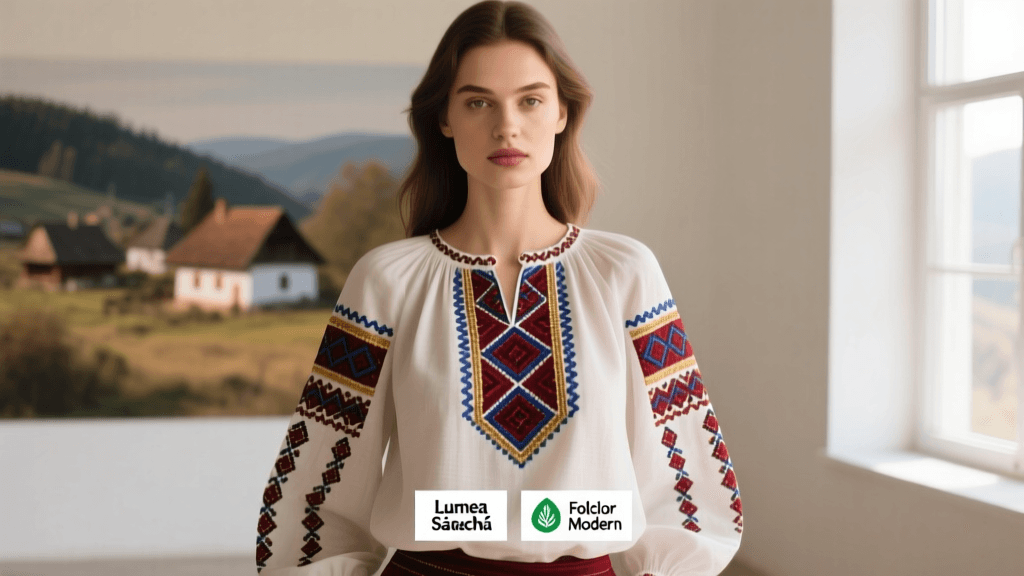
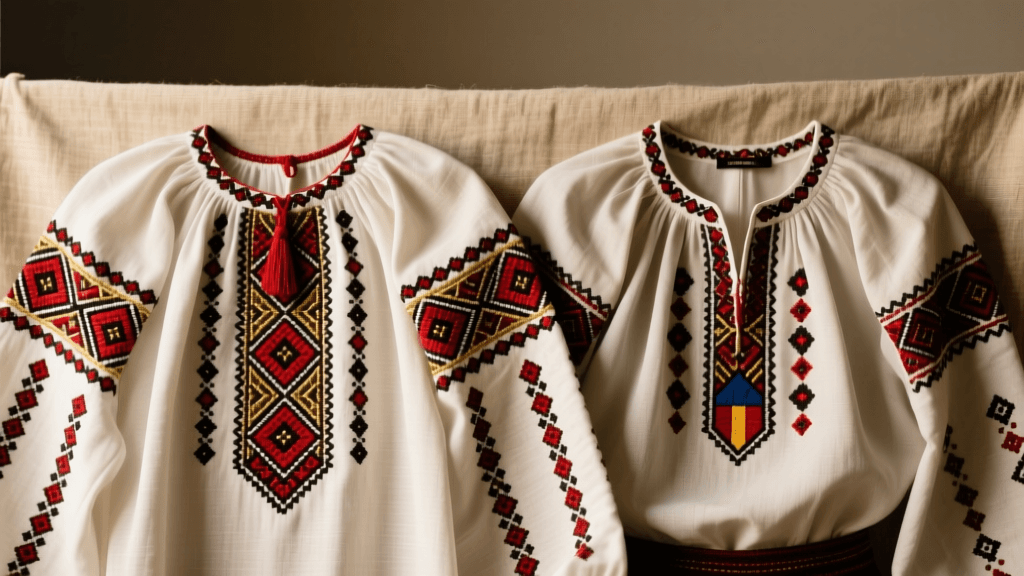
The Romanian Ie (pronounced 'ee-eh') is a masterpiece of structural embroidery. Unlike the all-over patterns of some Slavic garments, the traditional Ie is strictly governed by a tripartite sleeve structure. In fact, the traditional blouse with embroidery on the shoulder is so culturally significant that it was officially inscribed on the UNESCO Representative List of the Intangible Cultural Heritage of Humanity.
The Anatomy of the Sleeve
When authenticating a genuine Ie, you must verify the presence of these three distinct sleeve zones:
- Altiță (The Shoulder): The widest and most densely embroidered band, sitting squarely on the shoulder. It serves as the visual anchor of the blouse.
- Încreț (The Gather): A narrower, often contrasting band (historically stitched in yellow or pale blue) located just below the altiță, where the fabric is gathered.
- Râuri (The Rivers): Diagonal or vertical stripes of embroidery that flow down the sleeve to the cuff, symbolizing flowing water and life force.
Zero-Waste Construction: Sizing and Fit
Modern buyers often struggle with the fit of authentic folk blouses because they are constructed using ancient, zero-waste geometric cutting. There are no curved armholes or tailored darts. Instead, the garments are made from rectangular panels of handwoven linen or hemp, joined by gussets (lastoviță) under the arm to allow for mobility.
Actionable Sizing Advice for 2026: Do not buy based on standard S/M/L sizing. Always request the flat chest measurement (armpit to armpit) and the sleeve length from the center back neck. Because the fabric is gathered heavily at the neckline with a drawstring (brezărău), a single blouse can often fit a range of 3 to 4 modern dress sizes, provided the shoulder gussets align correctly with your frame.
2026 Market Guide: Sourcing and Pricing
Sourcing authentic, hand-stitched garments requires bypassing commercial souvenir shops and connecting directly with artisan guilds, rural cooperatives, and verified heritage dealers. In 2026, the pricing for genuine handwork reflects the hundreds of hours required to complete a single blouse.
| Garment Type | Primary Stitch Technique | Base Material | Dominant Motifs | Average 2026 Market Price (EUR) |
|---|---|---|---|---|
| Ukrainian Vyshyvanka (Poltava) | Cutwork, Satin Stitch | Handwoven Linen | Geometric, Tone-on-tone | €280 - €450 |
| Ukrainian Vyshyvanka (Hutsul) | Cross-stitch, Nyzynka | Hemp / Cotton blend | Dense Geometry, Stars | €220 - €380 |
| Romanian Ie (Maramureș) | Chain stitch, Openwork | Home-spun Hemp | Hooked motifs, Black/Red | €300 - €550 |
| Romanian Ie (Argeș / Muscel) | Altiță structure, Silk | Finely woven Cotton | Floral, Gold/Silver thread | €400 - €750+ |
How to Authenticate Hand-Embroidered Folk Blouses
Machine embroidery has become increasingly sophisticated, but it cannot perfectly replicate the physics of hand-stitching. Use these three expert tests when evaluating a piece:
1. The Backside Test
Turn the garment inside out. Hand embroidery, particularly the traditional nyzynka (a Ukrainian darning stitch worked from the back), will look nearly identical on both sides, or will show deliberate, neat thread paths. Machine embroidery will leave a messy web of bobbin thread, jump stitches, and synthetic stabilizer backing on the reverse side.
2. The Thread Burn Test (For Vintage/Raw Materials)
If you are sourcing vintage 20th-century pieces, authentic threads were made of cotton, linen, or silk. A tiny, carefully clipped thread burned with a lighter will turn to fine ash and smell like burning paper or hair. Modern machine replicas use polyester, which will melt into a hard plastic bead and emit a chemical odor.
3. Fabric Weave Inspection
Hold the base fabric up to a strong light. Authentic handwoven linen or hemp will have slight irregularities in the yarn thickness (slubs) and a naturally asymmetrical weave. Factory-milled cotton or synthetic blends will appear perfectly uniform and overly opaque.
Archival Care and Maintenance
Heritage textiles are highly susceptible to environmental damage. To preserve your Slavic and Balkan blouses in 2026 and beyond, follow these strict archival protocols:
- Washing: Never use modern alkaline laundry detergents or bleach, which will shatter historic cellulose fibers. Hand wash in cold water (below 20°C) using a pH-neutral conservation detergent, such as Orvus WA Paste or a specialized textile wash.
- Drying: Never wring or twist the embroidery, as this will distort the tension of the stitches. Roll the wet blouse in a clean, white cotton towel to press out excess moisture, then lay it flat on a drying rack out of direct sunlight to prevent UV fading of natural dyes.
- Storage: Do not hang heavy, embroidered blouses on wire or wooden hangers; the weight of the embroidery will tear the shoulder seams over time. Instead, fold the blouse using acid-free, unbuffered tissue paper to cushion the folds, and store it in a breathable cotton archival box in a climate-controlled environment (ideally 18-20°C with 50% relative humidity).
Conclusion
Investing in an authentic Ukrainian Vyshyvanka or Romanian Ie is an act of cultural preservation. By understanding the structural anatomy, regional variations, and proper care techniques outlined in this 2026 guide, you can confidently navigate the heritage textile market, supporting the master artisans who keep these profound Eastern European traditions alive.