Authentic Alpine Tracht 2026: Dirndl & Lederhosen Guide
The 2026 Renaissance of Authentic Alpine Tracht
In 2026, the landscape of European folk dress has experienced a profound renaissance, particularly within the Alpine regions of Germany, Austria, and South Tyrol. Moving decisively away from the mass-produced, synthetic "Oktoberfest costumes" that dominated the early 2010s, modern consumers and heritage enthusiasts are returning to authentic Trachtenmode. This revival is deeply rooted in sustainability, regional craftsmanship, and a respect for historical accuracy. According to the Bayerischer Trachtenverband (Bavarian Folk Costume Association), there has been a 40% increase in demand for historically accurate, locally sourced garments over the past three years, driven by a younger generation seeking sustainable, lifelong wardrobe investments rather than fast fashion.
Alpine Tracht is not a monolith; it is a complex tapestry of regional identities, guild regulations, and textile traditions. Whether you are looking to commission a bespoke Dirndl, invest in handcrafted Lederhosen, or simply understand the sartorial codes of Alpine festivals, this comprehensive 2026 guide covers the anatomy, regional variations, and practical sourcing of authentic European Alpine folk dress.
Anatomy of the Authentic Dirndl
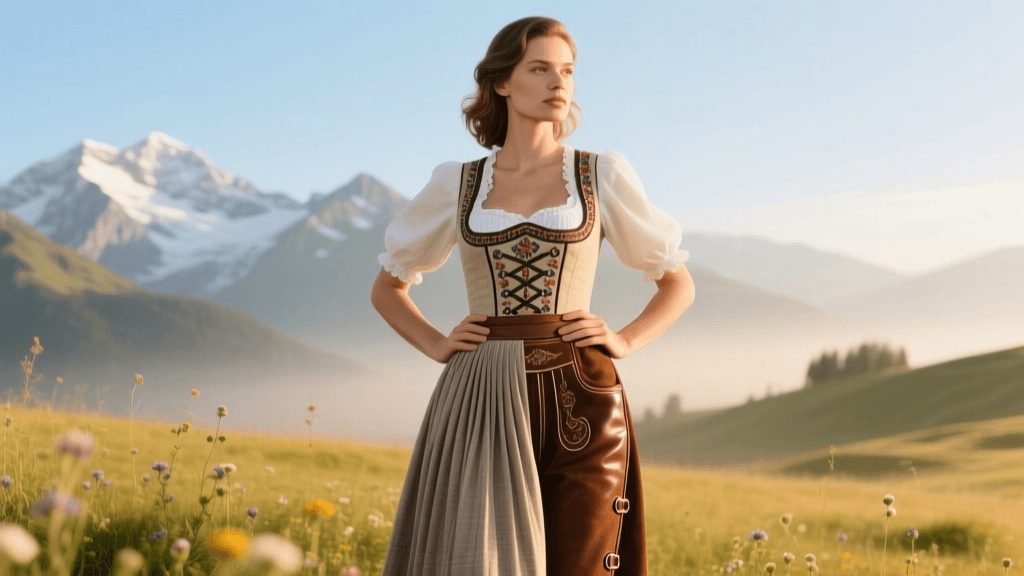
The Dirndl is a dress consisting of four distinct components, each with its own historical lineage and construction standards. In 2026, high-end Tracht designers prioritize natural fibers like Bavarian forest linen, Tyrolean wool, and mulberry silk.
The Mieder (Bodice)
The Mieder is the structured bodice of the Dirndl. Authentic versions are heavily interfaced and tailored to provide support without the need for a corset. Traditional closure methods include front lacing (using silk ribbons or metal chains), hook-and-eye closures, or intricate metal buttons. The neckline varies by region and occasion, ranging from the modest, high-collared geschlossenes Mieder to the wider, square-cut Wiesn-Ausschnitt popularized in Munich.
The Rock (Skirt)
Attached to the bodice is the Rock, a wide, heavily pleated skirt. The length is a critical marker of authenticity. While tourist shops sell skirts that end above the knee, traditional Tracht dictates that the skirt must fall to at least mid-calf, often grazing the ankle for formal church occasions (Festtagstracht). The pleating techniques, such as the Faltenrock (knife pleats) or Glockenrock (bell-shaped gathers), require meters of high-quality fabric to achieve the proper drape and swing during traditional folk dances like the Plattler.
The Schürze (Apron) and the Bow Code
No Dirndl is complete without the Schürze. Historically a protective garment for working women, it is now the centerpiece of the outfit's aesthetic and social signaling. The apron bow (Schleife) is tied in specific locations to indicate the wearer's relationship status, a code that remains strictly observed at traditional events in 2026:
- Left Side: Single and available.
- Right Side: In a relationship, married, or engaged.
- Center: Traditionally indicates virginity, though today it is often worn by young girls or those who prefer not to disclose their status.
- Back (Widow's Knot):strong> Indicates the wearer is widowed, or it may simply be tied in the back for practical working purposes.
Lederhosen: The Craft of Hirschleder
While the Dirndl dominates women's Alpine wear, Lederhosen (leather breeches) are the cornerstone of men's Tracht. True Lederhosen are not made from cowhide or pigskin, but from Hirschleder (deer leather) or Gamsleder (chamois). The tanning process, known as Sämischgerbung, uses cod liver oil and natural fats, resulting in a leather that is incredibly soft, breathable, and washable.
The Art of the Säckler
The artisans who craft these garments are called Säckler. In 2026, the number of master Säckler remains limited, making bespoke pairs highly sought after. The leather is cut and sewn using a technique called Säcklernaht, where the seams are stitched on the outside and then flattened, creating a distinctive, durable ridge. The embroidery, often featuring motifs of edelweiss, oak leaves, or hunting scenes, is done using Weißstickerei (white embroidery) or colored silk threads. The Tiroler Volkskunstmuseum houses extensive archives of these embroidery patterns, which modern artisans frequently reference to ensure historical fidelity.
Regional Variations Across the Alps
Alpine Tracht is highly localized. Wearing the wrong regional variation to a local Schützenfest (marksmen's festival) is considered a major faux pas. Here are three prominent regional styles:
Miesbacher Tracht (Upper Bavaria)
Considered the gold standard of Bavarian Tracht, the Miesbacher style for men features a grey loden jacket with green lapels, a silk embroidered vest, and a hat adorned with a Gamsbart (chamois hair brush). Women wear dark, richly embroidered silk Dirndls with silver chain lacing and a prominent silver coin necklace (Kropfkette).
Werdenfelser Tracht (Garmisch-Partenkirchen)
Originating from the Werdenfelser Land, this style is characterized by vibrant colors and intricate floral embroidery. The men's Lederhosen often feature a distinctive dropped waistband and are paired with brightly colored silk neckerchiefs. The Salzburg Open-Air Museum and neighboring Bavarian heritage sites frequently host exhibitions detailing the cross-border textile trade that influenced these vivid dyes in the 19th century.
Steireranzug (Styria, Austria)
The Steireranzug is a highly formal men's suit made from grey or green loden wool, featuring a standing collar and horn buttons. It is less rustic than Lederhosen and is often worn to weddings, political events, and formal concerts. In 2026, sustainable Styrian wool from the Tyrolean Stone Sheep breed has become a premium material for these suits.
2026 Sourcing, Pricing, and Sustainability
Acquiring authentic Tracht requires a significant financial investment, reflecting the cost of ethical labor, natural materials, and specialized craftsmanship. The table below outlines the 2026 market expectations for authentic, heritage-grade Alpine garments.
| Garment Type | Primary Material | 2026 Avg. Cost (EUR) | Expected Lifespan | Care Instructions |
|---|---|---|---|---|
| Bespoke Dirndl (Full Set) | Silk, Linen, Wool | €1,200 - €3,500 | 20+ Years | Dry clean only; store in cotton bags. |
| Handcrafted Lederhosen (Kniebund) | Hirschleder (Deer) | €900 - €1,800 | Lifetime | Washable with leather soap; air dry. |
| Loden Jacket (Trachtenjanker) | 100% Virgin Wool | €450 - €850 | 15+ Years | Brush regularly; professional steam clean. |
| Hand-embroidered Suspenders | Deer Leather, Silk Thread | €180 - €350 | Lifetime | Condition leather annually. |
For those seeking authentic pieces, heritage houses like Lodenfrey in Munich or specialized local ateliers in Salzburg and Innsbruck are the premier destinations. In 2026, many of these houses offer "Tracht Consulting," where experts help clients build a modular wardrobe that can transition from a rustic Almabtrieb (cattle drive festival) to a formal evening gala.
Practical Tailoring: How to Measure for Tracht
Ordering bespoke Tracht online or preparing for an in-person fitting requires precise measurements. Unlike modern fast fashion, which relies on stretch fabrics and forgiving cuts, traditional Tracht is structured and unforgiving of poor measurements.
"A true Mieder should feel like a firm embrace. It must support the posture and elevate the traditional silhouette without restricting the diaphragm, allowing the wearer to dance the Schuhplattler for hours." — Master Tailor, Garmisch-Partenkirchen Atelier.
Essential Measurements for a Dirndl Mieder:
- Underbust: Measure snugly directly beneath the bust. This determines the band size and structural foundation.
- Overbust: Measure around the fullest part of the bust while wearing the specific Dirndl blouse you intend to use, as blouse thickness varies.
- Natural Waist: Measure the narrowest part of the torso, typically just above the navel. The Mieder must terminate exactly at this point to allow the Rock to flare properly.
- Torso Length: Measure from the base of the neck (C7 vertebra) down to the natural waist. This ensures the bodice does not dig into the hips when sitting.
Essential Measurements for Lederhosen:
- Waist: Measure where the Lederhosen will sit, which is typically higher than modern trousers, just below the navel.
- Hips/Seat: Measure the fullest part of the buttocks. Hirschleder has minimal stretch; an accurate seat measurement prevents tearing during deep squats or folk dancing.
- Thigh: Measure the widest part of the upper thigh. The Kniebund (knee breeches) must taper correctly to fasten just below the knee without cutting off circulation.
- Drop Length: Measure from the waistband down to the desired cuff position, usually two inches below the kneecap.
Preserving Heritage in a Modern Era
The year 2026 marks a pivotal moment for European folk dress. The Alpine Tracht movement has successfully bridged the gap between museum preservation and living, breathing culture. By investing in authentic materials, supporting local Säckler and tailors, and adhering to the historical codes of the garments, wearers do more than just dress up; they participate in the active stewardship of European textile heritage. Whether you are fastening the silver hooks of a Miesbacher Mieder or tying the Schürze of a linen Dirndl, you are wearing a garment that tells the story of the Alps, stitch by stitch.