Authentic Slavic Vyshyvanka and Romanian Ie Buyer Guide 2026
The Renaissance of Eastern European Folk Dress in 2026
The global fashion landscape in 2026 has undergone a profound transformation, shifting away from the ephemeral trends of fast fashion toward garments that carry deep cultural resonance, historical weight, and artisanal mastery. At the forefront of this slow-fashion renaissance are the traditional embroidered blouses of Eastern Europe and the Balkans. Specifically, the Ukrainian vyshyvanka and the Romanian ie have transcended their regional origins to become highly sought-after pieces for collectors, cultural enthusiasts, and sustainable fashion advocates worldwide. However, this surge in global demand has also flooded the market with mass-produced, synthetic imitations. For the discerning collector or conscious consumer, understanding how to authenticate, source, and properly care for these heritage textiles is more critical than ever. This comprehensive guide will equip you with the knowledge needed to navigate the 2026 market for authentic Slavic and Balkan folk dress.
Decoding the Motifs: Vyshyvanka vs. Ie
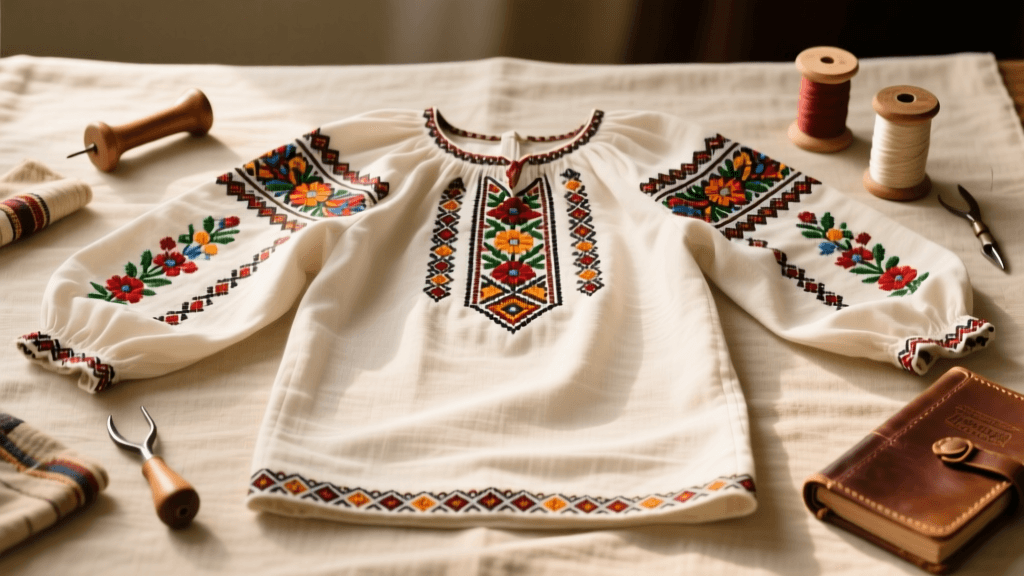
While both garments are celebrated for their intricate needlework, the Ukrainian vyshyvanka and the Romanian ie possess distinct structural and symbolic anatomies. The vyshyvanka is characterized by its diverse regional techniques. In the Poltava region, artisans are famous for bilu po bilomu (white-on-white) embroidery, utilizing up to 180 different variations of satin stitch and drawn thread work (merezhka) to create subtle, textural masterpieces. Conversely, the Hutsul region in the Carpathian Mountains favors vibrant, high-contrast geometric patterns stitched in dense cross-stitch, utilizing colors derived from natural dyes like madder root and woad.
The Romanian ie (pronounced 'ee-eh') follows a highly structured, almost architectural layout. According to the UNESCO Intangible Cultural Heritage registry, the traditional shirt with embroidery on the shoulder (altita) is a defining element of Romanian and Moldovan identity. The anatomy of an authentic ie includes the altita (the rectangular, heavily embroidered shoulder panel), the incret (a narrow horizontal band of gathering and stitching below the altita), the rauri or 'rivers' (diagonal or vertical lines of embroidery flowing down the sleeves), and the poale (the hem of the blouse). Understanding these structural markers is your first line of defense against poorly researched factory reproductions.
The 2026 Authentication Checklist: Hand-Stitched vs. Machine-Made
As manufacturing technology has advanced, machine-made replicas have become increasingly deceptive. However, true artisanal hand-embroidery possesses inherent human imperfections and structural qualities that machines cannot replicate. When evaluating a piece in 2026, use the following comparative checklist to verify its authenticity.
| Feature | Authentic Hand-Embroidered (2026 Standard) | Mass-Produced Machine Copy |
|---|---|---|
| Reverse Side | Neat but shows distinct thread paths, knots, and slight tension variations. The pattern is often reversible or easily readable from the back. | Covered in a continuous web of bobbin thread, jump stitches, and synthetic stabilizers. The back looks vastly different from the front. |
| Thread Material | Mercerized cotton, silk, or traditionally spun wool. Fibers have a natural luster and absorb dyes with slight, beautiful variations. | 100% polyester or rayon. Threads are overly shiny, uniform, and prone to snagging or melting under high heat. |
| Base Fabric | Hand-woven or high-quality slub linen, hemp, or cotton-linen blends. The fabric has a natural, slightly uneven weave and breathable drape. | Stiff, synthetic blends, cheap polyester organza, or uniform, chemically treated factory cotton that lacks breathability. |
| Motif Symmetry | Features intentional, traditional 'mistakes' or slight asymmetries meant to ward off the evil eye, reflecting the artisan's individual hand. | Mathematically perfect, laser-scanned symmetry with no deviation across the left and right panels. |
| 2026 Market Price | New artisan pieces start at €250–€600; verified antique pieces (pre-1950s) range from €800 to over €3,000. | Typically priced between €30 and €85, often sold via dropshipping networks or fast-fashion heritage lines. |
Sourcing Authentic Pieces: Where to Buy in 2026
Finding genuine Eastern European folk dress requires bypassing generic marketplaces and connecting directly with heritage cooperatives, verified artisan guilds, and specialized antique dealers. In 2026, the most reliable method for acquiring a new, custom-stitched vyshyvanka or ie is through direct commissions from regional artisan collectives. Organizations supported by the Ukrainian Institute and various Balkan cultural NGOs frequently maintain directories of verified master craftswomen who accept international commissions. Expect a lead time of three to six months for a bespoke, hand-stitched garment, as a single blouse can require over 200 hours of meticulous needlework.
For antique collectors, specialized textile auctions and curated vintage dealers in Kyiv, Bucharest, and Vienna remain the premier sources. When purchasing antiques, always request high-resolution macro photography of the embroidery's reverse side and the fabric's selvedge to check for modern serging, which instantly disqualifies a piece from being a true historical artifact. Beware of 'upcycled' garments where modern machine embroidery is applied to vintage linen scraps; while sustainable, they hold no historical or collector value.
Archival Care and Maintenance for Heritage Linens
Authentic Slavic and Balkan blouses are investment pieces that, when properly cared for, will outlive their owners. The base fabrics—usually unbleached linen or hemp—are incredibly durable, but the natural dyes and delicate drawn-thread work require specialized maintenance. According to the Victoria and Albert Museum textile conservation guide, improper washing is the leading cause of degradation in historical folk textiles.
- Washing: Never use standard commercial detergents, which contain optical brighteners and enzymes that will strip natural dyes and weaken linen fibers. Hand wash the garment in cold water using a pH-neutral, conservation-grade soap. Submerge the blouse gently and avoid any wringing, twisting, or aggressive agitation, which can snap the delicate threads of merezhka (drawn thread work).
- Drying: Never hang a wet embroidered blouse, as the weight of the water will stretch the linen and distort the embroidery. Lay the garment flat on a clean, dry cotton towel, roll the towel up to gently press out excess moisture, and then unroll and let it air dry flat, away from direct sunlight to prevent UV fading.
- Ironing and Storage: Iron the garment while it is still slightly damp. Always iron on the reverse side, placing a thick, clean cotton towel underneath the embroidery. This prevents the stitches from being crushed flat and preserves their three-dimensional texture. For long-term storage, wrap the blouse in acid-free tissue paper and store it in a breathable cotton pillowcase in a cool, dark, and dry environment. Never store heritage textiles in plastic bins, which trap moisture and promote mildew.
Modern Styling: Integrating Heritage into Contemporary Wardrobes
The beauty of the vyshyvanka and the ie lies in their versatility. In 2026, the most respected way to wear these garments is not as a literal historical costume, but as a statement piece integrated into a modern, sustainable wardrobe. The key to styling traditional embroidery is contrast and silhouette balancing.
For a sophisticated, contemporary look, pair a voluminous, white-on-white Poltava vyshyvanka with sharply tailored, high-waisted wide-leg trousers in charcoal wool or deep navy linen. The structured tailoring of the trousers grounds the ethereal, romantic volume of the embroidered blouse. Alternatively, a Romanian ie with vibrant, multi-colored geometric rauri can be styled with minimalist, sustainable raw denim and sleek leather ankle boots, allowing the intricate shoulder altita to serve as the focal point of the outfit. By treating these heritage garments with the same sartorial respect as high-end contemporary designer pieces, you honor the artisan's labor while ensuring the tradition remains a living, breathing part of global fashion.