Authentic Alpine Tracht 2026: Sourcing Bavarian & Austrian Dress
The 2026 Renaissance of Authentic Alpine Tracht
As we move through 2026, the European folk dress market has experienced a profound shift away from mass-produced, synthetic costumes toward a deep appreciation for heritage craftsmanship. Nowhere is this more evident than in the Alpine regions of Bavaria (Germany) and Austria, where traditional Tracht is experiencing a renaissance. Today’s enthusiasts, festival-goers, and cultural preservationists are actively seeking out master tailors (Trachtenschneider) who utilize historical patterns, natural fibers, and time-honored stitching techniques. Whether you are preparing for the Almabtrieb (alpine descent) festivals, attending a traditional Schützenfest, or simply investing in a lifelong piece of wearable European history, understanding the distinct regional variations of Alpine folk dress is essential.
The modern 'Slow Tracht' movement of 2026 emphasizes sustainability and historical accuracy. According to cultural heritage experts at the Bavarian National Museum, which houses one of the most extensive historical textile archives in Europe, contemporary buyers are increasingly requesting garments that mirror 19th-century construction methods. This means hand-pleated skirts, natural linen undergarments, and bodices structured with natural materials rather than modern plastics or synthetic boning.
Decoding Regional Variations: Beyond the Tourist Dirndl
The term 'Tracht' encompasses a vast array of regional folk costumes. What is often sold in tourist shops as a generic 'Dirndl' or 'Lederhosen' is usually a pan-Alpine amalgamation that lacks geographical authenticity. True traditional dress is deeply tied to specific valleys, towns, and historical guilds. Below, we explore the defining characteristics of the most prominent regional styles in Germany and Austria.
Bavarian Tracht (Germany)
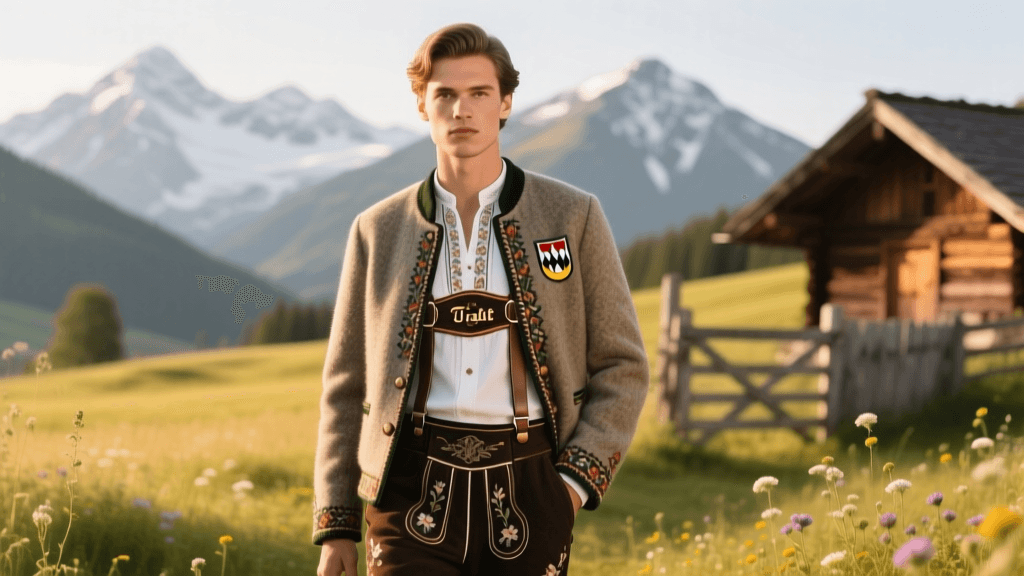
Miesbacher Tracht: Originating from the Miesbach district south of Munich, this is widely considered the gold standard of Bavarian folk dress. For women, the Miesbacher Dirndl features a dark, heavily structured bodice (Mieder) with intricate silk embroidery, a hand-pleated wool or silk skirt, and a distinct silk apron. The most recognizable element, however, is the Miesbacher hat, adorned with a specific arrangement of ribbons, silver pins, and often a Gamsbart (a tuft of chamois hair) or an eagle feather. For men, the Miesbacher Bundlederhose (knee-breeches) features highly specific floral and hunting motifs embroidered in green and yellow silk thread on vegetable-tanned deer leather.
Werdenfelser Tracht: Hailing from the Garmisch-Partenkirchen region, the Werdenfelser style is notably lighter and more vibrant. Women’s dresses often incorporate floral brocades and lighter pastel silk aprons, reflecting the alpine meadow flora. The men’s Lederhosen here feature a distinctive 'Lausbub' (cheeky) aesthetic with slightly shorter cuts and brighter, more varied embroidery threads compared to the conservative Miesbach style.
Austrian Tracht (Austria)
Salzkammergut Festtracht: The lake region of Upper Austria is famous for its opulent festival dress, heavily documented and preserved by institutions like the Österreichisches Museum für Volkskunde. The centerpiece of the women’s Salzkammergut Tracht is the Goldhaube, a magnificent golden bonnet embroidered with metallic bullion threads in intricate baroque patterns. The accompanying dress features heavy, dark brocade skirts and a black silk apron, representing the historical wealth of the salt-mining guilds.
Steirische Tracht (Styria): Moving southeast, the Styrian folk dress is characterized by its elegance and restraint. The men’s Steireranzug (Styrian suit) is a masterpiece of tailoring, crafted from high-quality Loden wool in a specific shade of 'Styrian Green' or slate grey. It features a standing collar, horn buttons, and subtle green piping. Women’s Styrian Tracht often includes the Dirndlgwand with a distinctive 'Styrian hat' (a wide-brimmed velvet hat with a gold cord) and bodices that lace up the front rather than using hidden hooks.
Sourcing and Commissioning Authentic Pieces in 2026
If you are looking to acquire authentic Alpine Tracht in 2026, you must bypass commercial retail chains and connect directly with certified master tailors and traditional leatherworkers. Here is what you need to know about the commissioning process:
- Lead Times: Due to a surge in demand for heritage garments and a limited number of master artisans, expect a waitlist of 8 to 14 months for a fully bespoke Dirndl or Lederhose.
- The Fitting Process: A genuine commission requires a minimum of three in-person fittings. The first establishes the canvas structure of the bodice; the second adjusts the hand-pleated skirt drape; the third finalizes the placement of embroidery and silver hook-and-eye closures.
- Pricing: Authenticity comes at a premium. As of 2026, a bespoke, hand-pleated Miesbacher Dirndl with a silk apron and custom blouse starts at approximately €2,200 and can exceed €4,500 depending on the complexity of the silk embroidery. Hand-stitched Hirschleder (deer leather) Lederhosen range from €1,800 to €3,800.
- Verification: Always ask the tailor for their guild certification. In Germany, look for the Handwerkskammer (Chamber of Crafts) master title; in Austria, look for the Meisterbetrieb designation.
Material Standards and Construction Details
To ensure you are investing in genuine folk dress, scrutinize the materials and construction. The German UNESCO Commission recognizes traditional tailoring and hand-embroidery as intangible cultural heritage, meaning true artisans adhere to strict historical material guidelines.
Leather: Authentic Bavarian and Tyrolean Lederhosen are made exclusively from Hirschleder (deer leather) or Sämischleder (chamois), tanned using traditional fish oil and brain-tanning methods. This results in a suede-like finish that is breathable, washable, and develops a unique patina over decades of wear. Chrome-tanned cowhide is a strict indicator of a commercial, non-authentic garment.
Textiles: Skirts and bodices should be constructed from 100% natural fibers: pure wool, linen, silk, or cotton damask. The smocking technique used on the back of the Dirndl bodice, known as Froschgoscherl (little frog mouths), must be done entirely by hand, creating a flexible, three-dimensional stretch that molds to the wearer's back.
Hardware: Buttons must be carved from natural stag horn, silver, or brass. Buttonholes on high-end Tracht are hand-stitched using silk buttonhole twist, a process that takes an artisan up to 20 minutes per hole.
2026 Regional Tracht Comparison Chart
The following table provides a quick-reference guide to the most sought-after regional styles, their primary materials, and current market pricing for bespoke commissions in 2026.
| Region | Key Garment | Primary Materials | Est. Bespoke Cost (2026) | Distinguishing Feature |
|---|---|---|---|---|
| Miesbach (Bavaria) | Miesbacher Tracht | Wool, Silk, Hirschleder | €2,500 - €4,500 | Dark bodice, eagle feather hat, specific floral stickerei |
| Salzkammergut (Austria) | Festtracht | Heavy Brocade, Gold Thread | €3,000 - €5,500 | Goldhaube (golden bonnet), rich baroque embroidery |
| Tyrol (Austria) | Bundlederhose | Deer Leather, Linen | €1,800 - €3,500 | Intricate alpine floral embroidery, suspenders with cross-piece |
| Styria (Austria) | Steireranzug | Loden Wool, Stag Horn | €1,500 - €2,800 | Styrian Green/Grey palette, standing collar, elegant piping |
| Werdenfels (Bavaria) | Werdenfelser Tracht | Floral Brocade, Silk | €2,000 - €3,800 | Lighter pastel colors, alpine meadow motifs |
Accessorizing: The Devil is in the Details
A complete regional Tracht ensemble requires historically accurate accessories. Footwear is paramount: men and women alike wear Haferlschuhe, sturdy leather shoes with a distinctive side-lacing or front-lacing system, originally designed for navigating steep alpine terrain. These should be crafted from unlined, vegetable-tanned leather and paired with thick, hand-knit wool socks featuring regional cable-knit patterns.
For men, the Charivari is an essential piece of jewelry. This silver chain, draped across the front of the Lederhosen, is adorned with silver coins, animal teeth, and hunting trophies. Historically, it served as a talisman for a successful hunt and a display of the wearer's wealth and prowess. In 2026, master silversmiths in Munich and Salzburg continue to cast these charms using traditional lost-wax methods, with custom Charivari pieces costing between €800 and €2,500.
Women must pay close attention to the apron bow. In traditional Bavarian and Austrian etiquette, the placement of the bow on the Dirndl apron signals the wearer's relationship status: tied on the left means single, on the right means married or taken, in the center front signifies virginity (though this is largely historical and rarely enforced today), and tied in the back indicates widowhood or that the wearer is a working waitress at a festival.
Preserving Heritage for the Future
Investing in authentic European folk dress is more than a sartorial choice; it is an act of cultural preservation. By commissioning pieces from master artisans in 2026, you are directly supporting the survival of centuries-old textile techniques, from hand-smocking to natural leather tanning. Whether you are donning the opulent Goldhaube of the Salzkammergut or the rugged, beautifully embroidered Hirschleder of Tyrol, authentic Tracht connects the wearer to the deep, enduring history of the Alpine landscape.