Norwegian Bunad Silver & Headwear Guide 2026: Sølje & Skaut Styling
Introduction to Norwegian Bunad Accessories in 2026
The Norwegian bunad is far more than a mere garment; it is a living, breathing tapestry of regional history, identity, and artisanal mastery. As we move through 2026, the revival of European folk dress has reached new heights, with a distinct emphasis on authenticity, sustainable sourcing, and the preservation of heritage crafts. At the very heart of the bunad tradition lies its exquisite accessories: the intricate silver jewelry known as bunadsølv and the deeply symbolic traditional headwear. Whether you are a collector of antique Scandinavian textiles, a participant in the 2026 Syttende Mai celebrations, or a researcher of European folk dress, understanding the nuances of these accessories is essential.
In this comprehensive guide, we explore the anatomy of traditional Norwegian silver, the strict codifications of regional headwear, and the modern market for sourcing and preserving these heirloom pieces in 2026.
The Anatomy of Bunad Silver (Bunadsølv)
Silver has been a cornerstone of Norwegian folk dress for centuries. Historically, silver was not only a display of wealth and social standing but also believed to possess apotropaic qualities—warding off evil spirits and ensuring the wearer's safety during life's major transitions. Today, a complete bunad ensemble requires a specific suite of silver pieces, each meticulously crafted to match the regional origins of the garment.
The Brystsølje (Breast Brooch) and Halsknapp
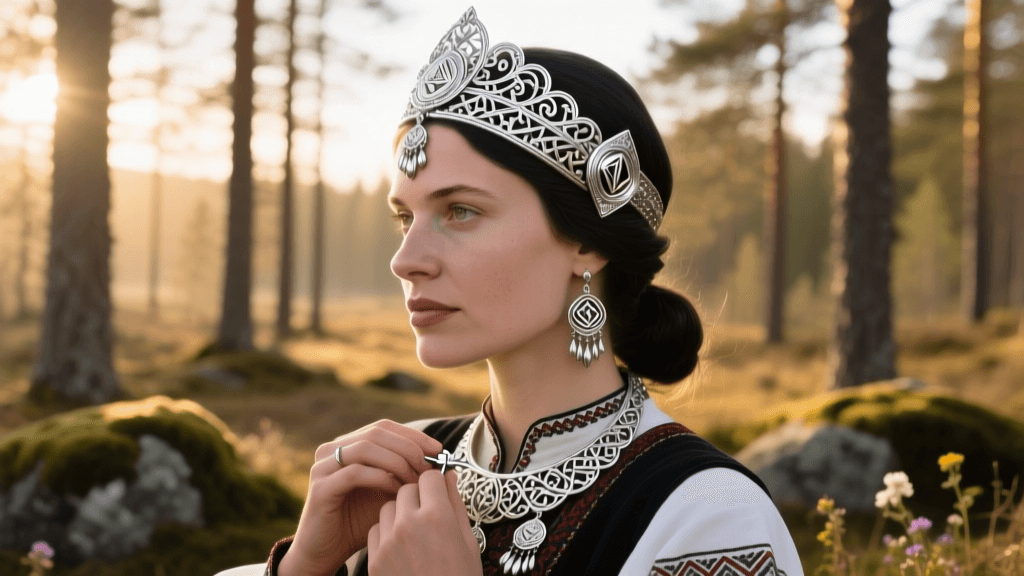
The most visually striking piece of jewelry in a woman's bunad is the brystsølje, or breast brooch. Pinned at the collarbone, it secures the linen undershirt (serk) and serves as the centerpiece of the ensemble. Regional variations are profound. For instance, the Hardanger bunad features delicate, airy filigree work often accented with colored glass drops or semi-precious stones, reflecting the region's proximity to coastal trade routes. In contrast, the Telemark bunad utilizes heavier, deeply oxidized silver with prominent, three-dimensional rose motifs and hanging leaf pendants (blad) that catch the light and create a soft chiming sound with movement.
Beneath the collar sits the halsknapp (neck button), a smaller, often spherical or rosette-shaped silver clasp that fastens the neckband of the shirt. In 2026, master silversmiths are increasingly reviving lost 18th-century casting techniques to recreate museum-grade halsknapper for rare regional variants.
Cufflinks, Belt Buckles, and Shoe Buckles
The accessory suite extends to the extremities. Armknapper (cufflinks) secure the wrists of the linen shirt, while the beltespenne (belt buckle) is a heavy, ornate piece that anchors the woven wool belt. For formal occasions, women may also wear skospenner (shoe buckles) on their traditional black leather bunad shoes. According to the Norges Husflidslag (The Norwegian Craft Association), the demand for bespoke, hand-forged belt buckles has surged in 2026, as buyers move away from mass-cast alternatives toward artisanal, small-batch silversmithing.
2026 Market Guide: Silver Weight and Pricing by Region
The cost of authentic bunad silver is intrinsically tied to the weight of the silver and the complexity of the handwork. Below is a comparative overview of standard silver sets for three major bunad regions, reflecting market averages in early 2026.
| Region / Bunad Type | Key Silver Pieces Included | Average Silver Weight (grams) | Estimated 2026 Price (NOK) | Distinguishing Characteristics |
|---|---|---|---|---|
| Hardanger | Brystsølje, Halsknapp, Cufflinks, Belt Buckle | 140g - 180g | 12,500 - 16,000 | Fine filigree, colored glass stones, delicate chains. |
| Telemark | Brystsølje, Halsknapp, Cufflinks, Belt Buckle, Shoe Buckles | 220g - 280g | 18,000 - 24,500 | Heavy oxidized silver, prominent rose motifs, hanging leaves. |
| Setesdal | Brystsølje, Halsknapp, Cufflinks, Belt Buckle, Filigree Buttons | 190g - 240g | 15,000 - 20,000 | Elaborate filigree spheres, intricate wirework, Viking-era influences. |
Crown and Cloth: Navigating Bunad Headwear
In traditional Norwegian folk dress, headwear is never an afterthought; it is a strict indicator of marital status, age, and the specific occasion being celebrated. The rules governing headwear are fiercely protected by local bunad councils to maintain historical accuracy.
The Skaut and Lin (Married Women's Headwear)
For married women, the skaut (or lin in some eastern dialects) is mandatory. The skaut is a complex headdress made of crisp, white linen or fine cotton, often heavily starched and meticulously folded. The folding technique is a closely guarded regional secret, often requiring the assistance of a mother or grandmother. In the Valdres tradition, the skaut is folded into a wide, halo-like structure that frames the face, secured at the nape of the neck with a specialized silver pin known as a skautenål.
In 2026, heritage textile workshops have seen a massive resurgence in enrollment, as younger generations seek to learn the intricate folding and pinning techniques required for the skaut, ensuring the survival of this ephemeral textile art form.
The Laukrans (The Bridal Crown)
The pinnacle of Norwegian folk headwear is the laukrans, or bridal crown. Worn only on a woman's wedding day, the lau krans is a spectacular, towering piece of metalwork and textile. Historically crafted from gilded silver, brass, or copper, it is adorned with ribbons, mirrors, glass beads, and sometimes natural flowers. The crown symbolizes the bride's purity and her transition into married life. According to the archives at the Norwegian Museum of Cultural History, many surviving 18th-century bridal crowns feature intricate motifs of the Tree of Life, symbolizing fertility and eternal lineage. Today, renting a historically accurate, family-owned lau krans for a bunad wedding is a highly sought-after practice, with 2026 rental waitlists often extending over a year in advance.
Unmarried Women and the Bare Head
Traditionally, unmarried girls and young women do not wear complex headwear. Instead, they wear their hair long and unbound, or woven into intricate braids tied with silk ribbons that match the embroidery of their bunad. In some regions, a simple, narrow silk headband (band) is worn across the forehead, but the hair remains visible, signifying youth and availability.
Men's Bunad Accessories: Vest Buttons and Belts
While women's accessories often draw the most attention, men's bunads feature equally impressive, albeit more understated, silver and leatherwork. The focal point of a man's bunad is the vest, which is fastened with a double row of heavy silver buttons (vestknapper). These buttons are often cast with regional motifs, such as the eight-petaled rose or geometric Viking knotwork.
Men also wear a wide leather belt, often tooled with intricate carvings and fitted with a substantial silver or brass buckle. A vital accessory for the male bunad is the knivslire (knife sheath), which hangs from the belt. The sheath is typically crafted from carved wood, leather, and silver mounts, housing a traditional utility knife that historically served as an essential tool for farm life and woodworking.
Sourcing Authentic Silver and Hallmarking Standards
When investing in heirloom bunad accessories, verifying authenticity is paramount. In Norway, the precious metal industry is strictly regulated. As of 2026, all genuine bunad silver must bear the official Norwegian hallmark, indicating its purity. The two most common standards are 830S (83% pure silver, the historical standard for Norwegian bunad silver, prized for its durability and slightly warmer tone) and 925S (Sterling silver, 92.5% pure, which is brighter but softer).
Leading manufacturers like Sylvsmia continue to dominate the market, offering both 830S and 925S pieces that are fully approved by local bunad councils. When purchasing antique pieces from estate sales or auctions, buyers should look for the maker's mark alongside the purity stamp, and ideally consult a certified appraiser to ensure the piece matches the specific regional requirements of their bunad.
Preservation and Care of Heirloom Accessories
Proper maintenance ensures that bunad silver and headwear can be passed down through multiple generations. Silver naturally tarnishes when exposed to sulfur in the air, a process that accelerates in humid environments.
- Polishing Silver: Avoid harsh chemical dips that strip away the intentional oxidization (the dark contrast in the crevices of the design). Instead, use a soft, untreated microfiber cloth or a specialized silver polishing foam applied with a soft-bristled brush to gently lift tarnish from the raised surfaces.
- Storing Silver: Store silver pieces in anti-tarnish cloth bags or acid-free tissue paper. Never store silver in plastic bags, as trapped moisture and off-gassing from plastics can cause severe, pitted corrosion.
- Caring for Linen Headwear: The skaut and lin should be washed gently by hand in lukewarm water with a mild, pH-neutral detergent. After washing, they must be heavily starched using traditional liquid starch, shaped over a specialized wooden block or rounded form, and left to air dry completely before being stored in a breathable cotton bag to prevent mildew.
"The preservation of the bunad skaut is not just about maintaining a piece of white cloth; it is about preserving the geometric memory of our ancestors. Every fold holds a specific regional dialect of textile history that we are fighting to keep alive in the modern era." — Dr. Ingrid Solberg, Textile Conservator, 2026.
Conclusion
The accessories of the Norwegian bunad—the gleaming sølje and the pristine, folded skaut—are the vital elements that elevate a beautiful garment into a profound cultural statement. As the European folk dress revival continues to flourish in 2026, a deep appreciation for the craftsmanship, history, and strict regional codifications of these accessories ensures that this magnificent heritage will endure for centuries to come.