Mastering Romanian Ie Blouse Rectangular Patterns in 2026
The Renaissance of Zero-Waste Historical Tailoring
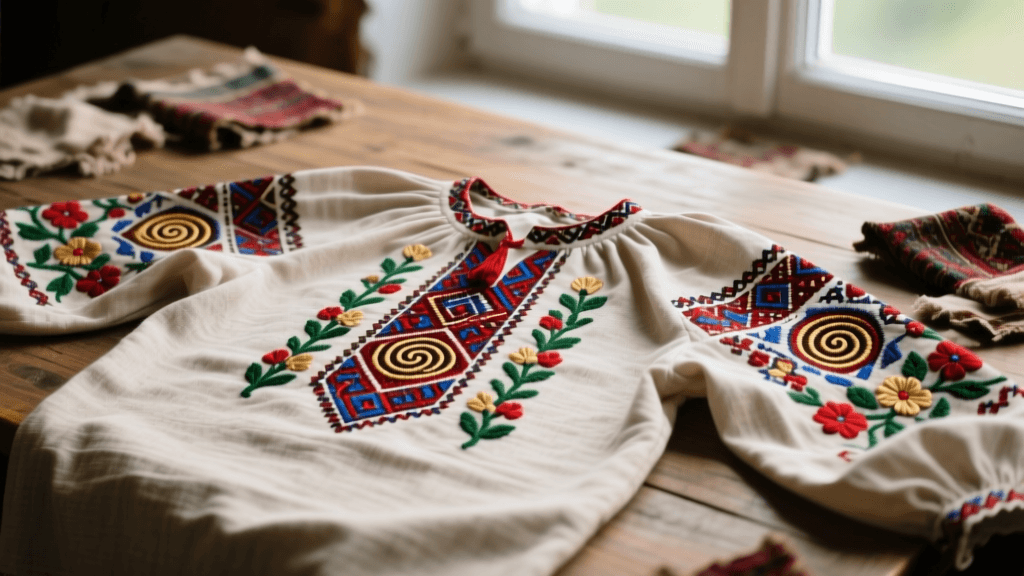
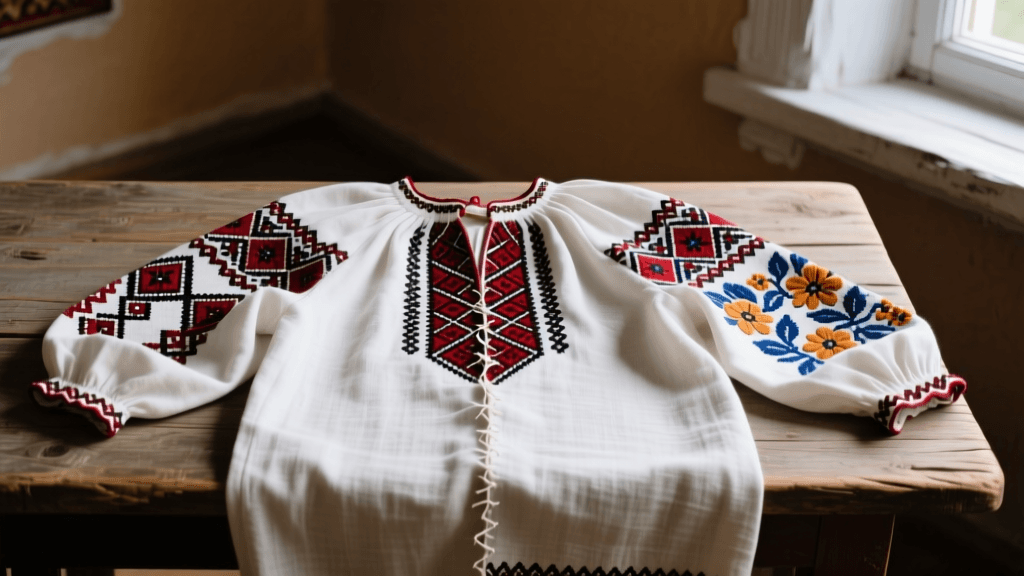
In the landscape of 2026 sustainable fashion, historical European folk dress has transitioned from mere museum artifacts to vital blueprints for zero-waste garment construction. Among the most structurally fascinating and highly sought-after patterns is the traditional Romanian Ie (peasant blouse). Recognized globally for its intricate shoulder embroidery, the Ie is equally remarkable for its underlying geometric architecture. Unlike modern apparel, which relies on curved armholes, complex darts, and significant fabric waste, the Ie is constructed entirely from rectangles and squares. Following its prestigious inscription on the UNESCO Representative List of the Intangible Cultural Heritage of Humanity, the Ie has seen a massive revival among modern makers and slow-fashion designers in 2026 who are eager to adopt its inherently zero-waste pattern drafting techniques.
At The Garment Atlas, we explore how contemporary pattern drafters are adapting these centuries-old modular techniques using modern textiles and digital tools. Whether you are a historical costumer, a sustainable fashion student, or an advanced home sewist, mastering the rectangular construction of the Ie offers a masterclass in geometric garment engineering.
Anatomy of the Ie: Beyond the Embroidery
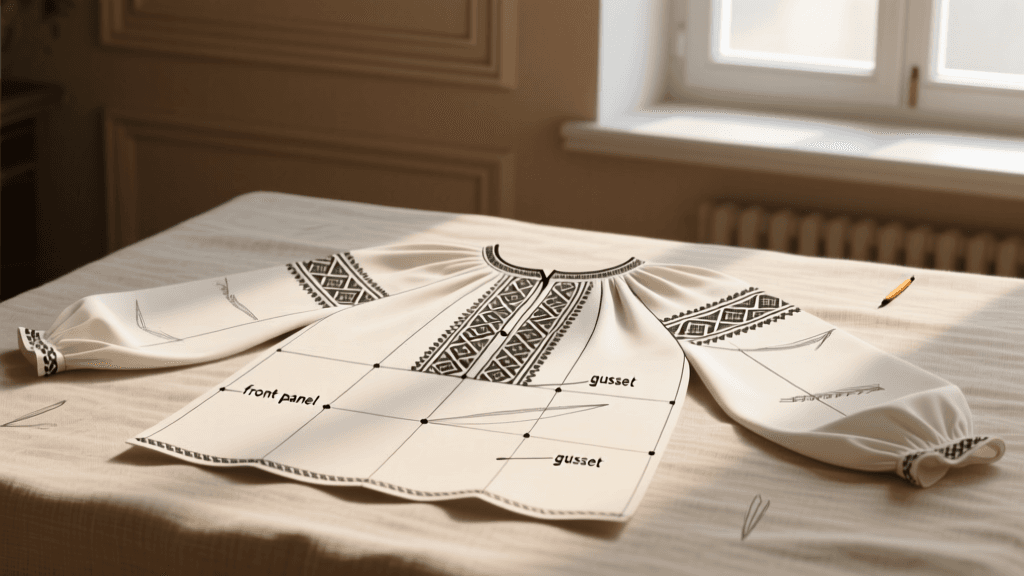
To draft the Ie, one must abandon the modern concept of the "armscye" (curved armhole). The blouse is essentially a tunic built on a grid system. The visual weight of the garment is carried by the embroidery, but the structural integrity relies on the precise proportions of its rectangular components. According to extensive archival research available through Europeana's fashion archives, the traditional Ie consists of five primary geometric zones:
- Piept (Front Panel) and Spate (Back Panel): Two identical or near-identical rectangular panels that form the torso. They are completely flat, relying on the neckline gathering for fit.
- Mânecă (Sleeves): Wide, rectangular tubes that are gathered at both the shoulder edge and the wrist cuff.
- Altiță (Shoulder Panel): A distinct rectangular band that bridges the sleeve and the torso. This is the structural anchor of the garment and the canvas for the densest, most complex embroidery.
- Încreț (Gathering Band): A narrow, heavily embroidered horizontal rectangle situated directly below the Altiță, acting as a visual and structural hinge.
- Pavă (Underarm Gusset): A diamond-shaped (rhombus) insert that connects the front, back, and sleeve rectangles, providing crucial mobility.
The Mathematics of the Pavă (Underarm Gusset)
The most critical construction technique in the Ie is the insertion of the Pavă. In modern pattern drafting, mobility is achieved by cutting a curve into the armhole and adding a sleeve cap. In traditional rectangular cutting, the fabric cannot curve; it must pivot. The Pavă is typically a square piece of fabric, cut on the bias to form a diamond, measuring between 12cm and 18cm per side depending on the wearer's bust and desired range of motion.
When drafting this in 2026, precise mathematical placement is required. The Pavă is inserted at the intersection where the side seam of the torso meets the underarm seam of the sleeve. By setting the diamond into this right-angle corner, the bias stretch of the gusset allows the arm to lift up to 90 degrees without pulling the main body of the blouse upward. Advanced makers in 2026 are using parametric software to calculate the exact bias stretch of their chosen linen or hemp blends, adjusting the Pavă dimensions by 2-3mm to account for modern fabric finishes that lack the mechanical give of hand-woven historical textiles.
Adapting Historical Loom Widths for 2026 Textiles
The greatest challenge for modern pattern drafters is adapting the Ie to contemporary fabric widths. Historically, Romanian weavers used narrow pedal looms that produced fabric widths of exactly 60cm to 70cm (often measured by the "cot," or cubit). The entire modular system of the Ie was designed so that panels could be used directly off the loom with minimal cutting, utilizing the selvedge edges as natural, non-fraying seams.
Today, standard commercial linens and cotton-linen blends are woven at 150cm widths. If a modern maker simply scales up the pattern, the garment will be overwhelmingly voluminous. The 2026 approach to zero-waste drafting involves "nesting" the historical 60cm panels within the 150cm modern width. By cutting the modern fabric into strategic 60cm and 30cm strips, makers can harvest the front, back, and sleeve panels while utilizing the remaining 30cm strips for the Altiță, cuffs, and neckline bindings, achieving a near 100% fabric utilization rate.
Digital Drafting with Parametric Software
In 2026, the most efficient way to draft and grade the Ie is through open-source parametric pattern software like Seamly2D. Because the Ie is entirely based on straight lines and mathematical ratios rather than organic body curves, it is the perfect candidate for parametric drafting.
By inputting the wearer's bust, shoulder-to-wrist, and torso-length measurements, the software automatically generates the rectangular blocks. Makers can set the Altiță width as a fixed parameter (e.g., 14cm) and allow the sleeve length to adjust dynamically. Furthermore, digital drafting allows for the creation of automated "marker" layouts, ensuring that when the pattern is printed or sent to a digital fabric cutter, the zero-waste nesting strategy is perfectly optimized for the 150cm fabric width.
Fabric Layout and Zero-Waste Calculation
Below is a standardized zero-waste cutting layout for a modern size Medium Ie, adapted for 150cm wide medium-weight linen (approx. 180-200 gsm), which remains the most popular choice among heritage sewists in 2026.
| Garment Component | Traditional Loom Width (60cm) | Modern Fabric Width (150cm) | 2026 Zero-Waste Adaptation Strategy |
|---|---|---|---|
| Front/Back Panels | 2 lengths (120cm total) | 1 length (150cm width) | Cut one 70cm length down the center. Use the two 75cm halves for front and back, utilizing the factory selvedge for side seams. |
| Sleeves (Mânecă) | 2 widths (120cm total) | 1 width (150cm) | Cut a 60cm length. Split into two 75cm wide sleeve rectangles. The extra width provides the dramatic traditional gathering. |
| Shoulder (Altiță) | Scrap pieces | Remaining center strip | Harvest two 15cm x 60cm rectangles from the 30cm waste strip left over from the torso panels. |
| Gusset (Pavă) | Scrap from sleeve hem | Cut from Altiță waste | Cut four 15cm x 15cm squares on the bias from the remaining scraps of the shoulder panel strip. |
| Cuffs & Neckband | Woven separately | Selvedge strips | Utilize the structural integrity of the modern fabric's selvedge edges to create the Bentiță (neckband) without hemming. |
Neckline Gathering and the Bentiță Technique
Because the torso and sleeves are flat rectangles, the three-dimensional shaping of the Ie occurs entirely at the neckline. The traditional technique involves a dense, double-row gathering stitch (creț) worked across the top edges of the front, back, and sleeve panels. In 2026, makers are using water-soluble basting threads and mechanical gathering feet on their sewing machines to achieve the mathematically even distribution of folds required for the heavy linen.
Once gathered, the fabric is secured into the Bentiță (a narrow, rectangular neckband). The structural secret of the Bentiță is that it is not merely a decorative finish; it acts as a tension ring that supports the heavy weight of the gathered sleeves and the dense embroidery of the Altiță. Modern drafters recommend interfacing the Bentiță with a lightweight, woven organic cotton fusible to prevent the neckline from stretching out of shape under the weight of contemporary glass beads and metallic threads often used in modern revival embroidery.
Sustainable Sourcing and the Future of Folk Construction
The study of the Romanian Ie aligns perfectly with the broader 2026 fashion industry mandate to reduce textile waste. By understanding the UNESCO's Intangible Cultural Heritage framework that protects these traditional arts, modern designers recognize that preserving the Ie is not just about copying the floral or geometric motifs; it is about preserving the brilliant, zero-waste engineering of the garment itself. Sourcing authentic, unbleached hemp-linen blends from Eastern European micro-mills has become increasingly accessible in 2026, allowing makers to honor both the visual and structural heritage of the garment.
Whether you are drafting by hand using a traditional wooden ruler or generating parametric blocks in Seamly2D, the rectangular construction of the Ie remains a testament to the ingenuity of historical European tailoring. It proves that with the right geometry, a simple flat weave can be transformed into a dynamic, comfortable, and profoundly beautiful garment without wasting a single thread.