Slavic Embroidered Shirts: 2026 Authentic Buyer Guide
The Resurgence of Eastern European Folk Textiles in 2026
The landscape of European folk dress has experienced a profound renaissance as we move through 2026, with collectors, historians, and modern consumers increasingly turning their attention to the rich textile traditions of the Slavic, Balkan, and Eastern European regions. At the heart of this revival is the traditional embroidered shirt—a garment that transcends mere clothing to serve as a wearable archive of cultural identity, spiritual protection, and ancestral craftsmanship. Whether it is the Ukrainian vyshyvanka, the Russian kosovorotka, or the Serbian košulja, these garments are defined by their distinct loom-width construction and intricate, symbolic needlework.
In 2026, the demand for authentic, handcrafted Eastern European folk garments has surged, driven by a global appreciation for slow fashion, sustainable natural fibers, and cultural preservation. However, this popularity has also flooded the market with mass-produced, machine-embroidered imitations. This comprehensive guide will help you navigate the complexities of Slavic and Balkan folk dress, understand the anatomical nuances of traditional construction, and confidently source authentic pieces in today's market.
Core Anatomy of the Traditional Slavic Shirt
To truly appreciate and authenticate a traditional Slavic shirt, one must first understand its foundational construction. Unlike modern tailored garments that are cut to follow the curves of the human body, traditional Eastern European folk shirts are constructed based on the geometry of the loom. According to historical garment analyses archived by institutions like the Metropolitan Museum of Art's Costume Institute, this loom-width construction was designed to minimize fabric waste and preserve the structural integrity of hand-woven textiles.
Key Structural Elements
- Straight Loom-Width Panels: The body of the shirt is typically made from two or three rectangular panels of linen or hemp, woven to the exact width of the artisan's loom (usually 35 to 50 centimeters). These panels are joined by straight seams, resulting in a boxy, voluminous silhouette.
- Absence of Shoulder Seams: In the most archaic and authentic designs, the front and back panels are not cut separately. Instead, a single long piece of fabric is draped over the shoulders, creating a seamless shoulder line. This design was believed to offer spiritual protection, as seams were considered vulnerable entry points for evil spirits.
- Gussets and Godets: To allow for movement and create volume at the sleeves and hem, small diamond-shaped pieces of fabric (gussets) are inserted at the underarm, while triangular panels (godets) are added to the lower sides of the shirt.
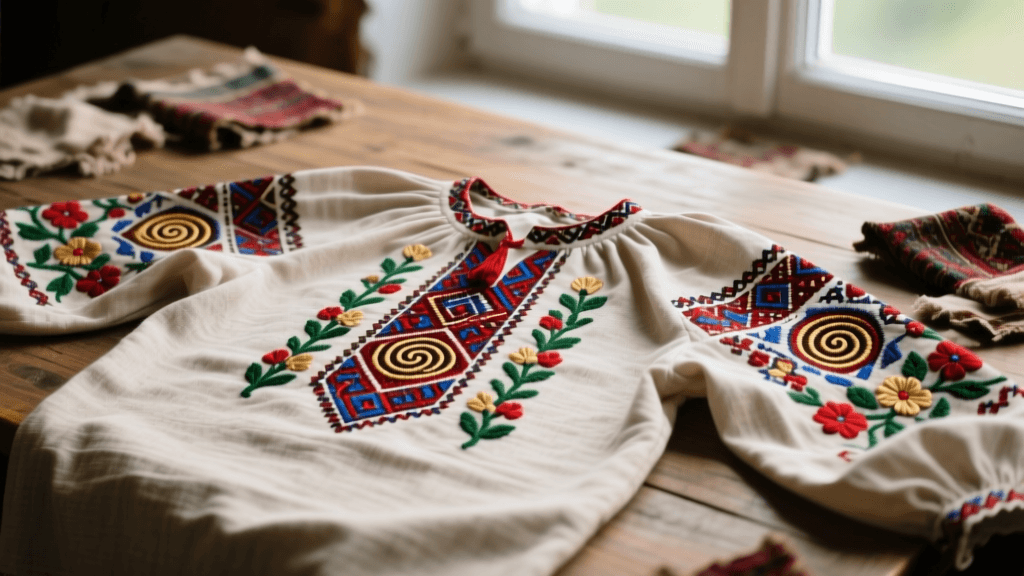
- Protective Embroidery Zones: Embroidery is never placed randomly. It is strategically concentrated at the garment's openings—the collar, the cuffs, the hem, and the shoulder seams. These boundaries were viewed as portals between the physical body and the outside world, requiring the protective magic of specific geometric and floral motifs.
Regional Variations: A Comparative Guide
While the foundational loom-width construction remains consistent across Eastern Europe, the decorative techniques, color palettes, and specific cuts vary dramatically by region. The UNESCO Intangible Cultural Heritage frameworks have been instrumental in documenting and preserving these distinct regional practices, highlighting the incredible diversity within Slavic and Balkan textile traditions.
| Garment Name | Region of Origin | Distinctive Features | Primary Embroidery Techniques | 2026 Avg. Authentic Price |
|---|---|---|---|---|
| Vyshyvanka | Ukraine | Wide sleeves, often gathered at the cuff; central front placket; white-on-white or vibrant red/black. | Cross-stitch, satin stitch, cutwork (reticella), drawn thread work. | $180 - $450+ |
| Kosovorotka | Russia | Asymmetrical side-fastening collar (skewed collar); slightly tapered waist in later variations. | Counted thread work, goldwork (in festive northern variants), geometric cross-stitch. | $150 - $350 |
| Košulja | Serbia / Balkans | Extremely dense embroidery covering the entire front bodice and sleeves; heavy use of wool yarns. | Tent stitch, dense wool cross-stitch, appliqué, heavy fringe at the hem. | $200 - $500+ |
The Ukrainian Vyshyvanka
The vyshyvanka is perhaps the most globally recognized Slavic folk garment. In 2026, authentic Ukrainian vyshyvankas are highly prized for their regional diversity. For instance, shirts from the Poltava region are famous for their ethereal white-on-white embroidery, utilizing complex cutwork and satin stitches to create subtle, textural patterns. In contrast, shirts from the Hutsul region in the Carpathian Mountains feature vibrant, densely packed geometric motifs in red, black, yellow, and green. When sourcing a vyshyvanka, look for the 'pukhlyk'—a traditional gathering technique at the sleeve cuffs that creates a distinct, voluminous puff.
The Russian Kosovorotka
The kosovorotka is instantly identifiable by its asymmetrical collar, which fastens on the left or right side rather than the center. Historically, this design prevented the cross worn by Orthodox Christians from slipping out during rigorous agricultural labor. Northern Russian variants often incorporate intricate red geometric patterns and, in highly festive or wealthy examples, gold and silver thread work. The textiles used in authentic kosovoroktas are often heavier linens or blends of linen and cotton, designed to withstand harsh climates.
The Serbian and Balkan Košulja
Balkan folk shirts, particularly the Serbian košulja, are characterized by their sheer visual weight and density. The embroidery is often executed in thick, hand-spun wool yarns, creating a raised, almost three-dimensional texture on the linen base. The motifs frequently feature stylized floral elements, sun symbols, and protective eyes. In traditional Balkan dress, the shirt was worn beneath heavy woolen aprons and vests, meaning the embroidery was strategically placed on the sleeves and chest where it would remain visible.
Symbolic Motifs and Color Palettes
The visual language of Eastern European embroidery is deeply rooted in pre-Christian agrarian beliefs, later syncretized with Christian symbolism. Understanding these motifs is crucial for collectors and enthusiasts in 2026 who wish to appreciate the garment's narrative.
'The embroidery on a traditional Slavic shirt is not merely decorative; it is a coded language of protection, fertility, and cosmic order. Every stitch acts as a talisman.' — Dr. Elena Rostova, Textile Historian.
Common Protective Motifs
- The Rhombus (Diamond): The most ubiquitous geometric motif, representing a sown field, fertility, and the earth. A rhombus divided into four smaller squares with dots inside symbolizes a bountiful harvest.
- The Sun Star (Rozeta): An eight-pointed star symbolizing the sun, light, and masculine energy. It is frequently placed on the chest and shoulders to ward off darkness and illness.
- The Tree of Life: A stylized floral motif representing the connection between the underworld (roots), the earthly realm (trunk), and the heavens (branches). It is a potent symbol of ancestry and generational continuity.
- Hops and Vines: Wavy, intertwining lines with leaves and buds, symbolizing youth, vitality, and the unbroken cycle of life. Often used as border patterns on hems and cuffs.
The Language of Color
Historically, dyes were extracted from local flora and fauna, limiting the color palette but imbuing each hue with specific meaning. Red is the dominant color across almost all Slavic traditions, representing life force, blood, fire, and protection against evil. Black is often paired with red, representing the earth, sorrow, or the transition to the afterlife, though in some regions (like parts of Ukraine), black is strictly reserved for older men or mourning garments. White symbolizes purity, light, and the divine, which is why white-on-white embroidery is considered the most spiritually elevated and technically demanding style.
2026 Buyer’s Guide: Sourcing Authentic Slavic Shirts
Navigating the 2026 market for heritage textiles requires a discerning eye. The proliferation of fast-fashion 'folk-inspired' blouses means that buyers must know how to differentiate between a genuine artisan-crafted garment and a factory-made costume. For deeper research into historical textile identification, the Victoria and Albert Museum's Textile Collection remains an invaluable digital resource for comparing historical stitch structures.
Red Flags: Identifying Mass-Produced Imitations
- Uniformity of Stitch: If the reverse side of the embroidery looks exactly like the front, or if the stitches are unnaturally uniform and lack the slight tension variations of human hands, it is machine-embroidered.
- Synthetic Fabrics: Authentic shirts are made from natural fibers. If the fabric feels slick, holds static, or melts when a discreet burn test is performed on a loose thread, it is polyester or a poly-blend.
- Modern Tailoring: The presence of darts, curved armholes, or shoulder seams indicates a modern commercial pattern, not traditional loom-width construction.
- Printed 'Embroidery': Some ultra-cheap garments bypass embroidery entirely, using digital printing to mimic the look of cross-stitch. This is easily identified by the lack of thread texture.
Where to Source Authentic Pieces in 2026
In 2026, the most reliable way to acquire authentic Slavic and Balkan folk shirts is through direct engagement with artisan cooperatives and specialized heritage boutiques. Many Ukrainian and Serbian weaving guilds have established direct-to-consumer digital storefronts, allowing buyers to commission custom pieces woven on traditional wooden looms. Expect to pay between $180 and $350 for a high-quality, hand-embroidered linen shirt. Master-level pieces, featuring complex cutwork or goldwork, can easily exceed $600 and are considered investment-grade textile art.
When purchasing vintage or antique pieces from the late 19th or early 20th centuries, always request high-resolution macro photography of the seams and the reverse side of the embroidery. Antique linens should have a distinct slubby texture and a natural, unbleached ecru or soft ivory tone. Avoid pieces that have been chemically bleached to a stark, modern white, as this degrades the historical integrity of the fibers.
Garment Care for Heritage Linens and Hemp
Proper care is essential to preserve the structural integrity and vibrant colors of your Eastern European folk garments. Hand-woven linen and hemp are incredibly durable, but the delicate embroidery threads require gentle handling.
- Washing: Never machine wash an authentic embroidered shirt. Hand wash in cool or lukewarm water using a pH-neutral detergent designed for delicate textiles. Avoid aggressive wringing, which can distort the loom-width panels and snap embroidery threads.
- Drying: Roll the garment in a clean, dry towel to gently press out excess moisture. Lay it flat to dry away from direct sunlight, which can fade natural dyes, particularly the reds and blacks.
- Ironing: Iron the shirt while it is still slightly damp. Always iron on the reverse side, placing a clean cotton cloth between the iron and the embroidery to prevent crushing the three-dimensional stitches.
- Storage: Store the shirt flat in a cool, dry environment. If folding is necessary, pad the folds with acid-free tissue paper to prevent hard creases that can eventually cause the linen fibers to snap. Never store heritage textiles in plastic bags, as this traps moisture and encourages mold growth.
Conclusion
The traditional Slavic and Balkan embroidered shirt is far more than a historical artifact; it is a living testament to the resilience, artistry, and spiritual depth of Eastern European cultures. As we navigate the fashion landscape of 2026, investing in authentic, loom-width garments not only elevates our personal wardrobes but also directly supports the artisan communities keeping these ancient textile traditions alive. By understanding the anatomy, symbolism, and proper sourcing of these remarkable garments, collectors and enthusiasts can ensure that the protective stitches of the vyshyvanka, kosovorotka, and košulja continue to weave their magic for generations to come.