Ancient Greek Chiton Guide 2026: Doric & Ionic Patterns
The Enduring Legacy of the Ancient Greek Chiton in 2026
The revival of classical antiquity in modern historical reenactment, museum exhibitions, and Hellenic cultural festivals has reached remarkable new heights in 2026. Whether you are preparing for a university classics symposium, attending a Mediterranean heritage festival, or practicing Hellenic polytheism, constructing an accurate ancient Greek chiton is an incredibly rewarding endeavor. Unlike the complex, heavily tailored garments of later European eras, the chiton relies on the elegant, mathematical manipulation of uncut, rectangular textiles. This comprehensive guide provides a step-by-step approach to recreating both the Doric and Ionic chiton, utilizing historically accurate materials and modern 2026 sourcing techniques.
According to the Metropolitan Museum of Art's Heilbrunn Timeline of Art History, the fundamental principle of ancient Greek dress was that clothing was not cut and sewn to fit the body, but rather draped and pinned from large, rectangular pieces of woven fabric. This philosophy not only allowed for incredible versatility and comfort in the Mediterranean climate but also meant that a single garment could be adjusted to fit different individuals or styled in myriad ways depending on the occasion.
Doric vs. Ionic Chiton: Understanding the Core Differences
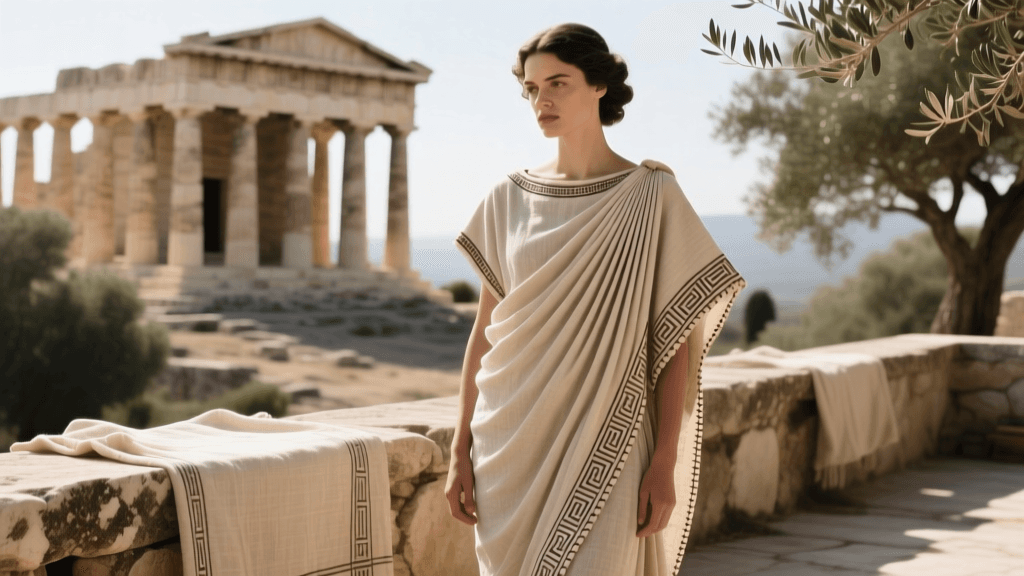
Before cutting your fabric or purchasing your fastenings, it is crucial to understand the two primary variations of the chiton. The distinction between the Doric and Ionic styles is not merely geographical; it reflects differences in textile weights, draping techniques, and historical eras. As noted by the World History Encyclopedia, the evolution of these garments mirrors the broader cultural shifts in ancient Greece, from the austere, martial society of the Archaic period to the more luxurious, cosmopolitan Hellenistic era.
| Feature | Doric Chiton (Peplos) | Ionic Chiton |
|---|---|---|
| Primary Material | Heavy wool or medium-weight linen | Lightweight, fine linen or silk |
| Fastening Method | Pinned at the shoulders (1-2 points) | Sewn or pinned at intervals to form sleeves |
| Drape & Fold | Features an apoptygma (overfold) | No overfold; relies on multiple vertical folds |
| Historical Era | Archaic to Early Classical (6th-5th C. BCE) | Classical to Hellenistic (5th-2nd C. BCE) |
| Modern Reenactment Use | Spartan, Athenian martial, early festival contexts | Priestly, symposium, Hellenistic royal contexts |
Sourcing Authentic Linen and Wool for the 2026 Season
The foundation of any successful historical garment is the textile. In 2026, the market for historically accurate, hand-loomed, and sustainably sourced natural fibers has expanded significantly, making it easier than ever to achieve museum-quality results. For the Ionic chiton, you will need a lightweight, high-thread-count linen. Look for fabrics in the 120 to 150 GSM (grams per square meter) range. This weight provides the necessary fluid drape to create the intricate, rippling folds characteristic of the Ionic style without becoming transparent.
For the Doric chiton (often referred to interchangeably with the peplos when worn with an overfold), a medium-weight linen or a lightweight wool twill is ideal. Aim for a fabric weight of 180 to 220 GSM. This heavier weight allows the fabric to hold its structure, ensuring the apoptygma (the folded-over top section) hangs cleanly and the heavy vertical folds remain crisp throughout a long day of festival activities.
2026 Sustainable Textile Recommendations
- European Flax Linen: Sourced from France or Belgium, this linen is dew-retted, ensuring a soft hand-feel and historically accurate slub texture. Expect to pay between $25 and $35 per yard in the current 2026 market.
- Merino Wool Blends: For colder climate reenactments, a 100% lightweight merino wool woven in a tabby or twill weave offers excellent temperature regulation and historical accuracy.
- Avoid Synthetics: Polyester blends will not drape correctly, do not breathe in warm weather, and will immediately compromise the historical integrity of your garment.
Calculating Your Measurements: The Mathematics of the Drape
Because the chiton is constructed from uncut rectangles, your measurements are based on your body's dimensions rather than traditional pattern drafting. The World History Encyclopedia's guide to ancient Greek clothing emphasizes that the beauty of the garment comes from the excess fabric creating dynamic folds. Here is how to calculate your fabric requirements:
Width Calculation
Measure your wingspan (from fingertip to fingertip with arms outstretched). For a Doric chiton, the fabric width should be approximately your wingspan minus 10 inches, plus a 12-inch overlap. For an Ionic chiton, the width should be at least 1.5 to 2 times your total body circumference to allow for the deep, luxurious pleats and the creation of the false sleeves.
Height Calculation
Measure from the highest point of your shoulder down to your ankle bone. Add 15 to 20 inches to this measurement. This crucial extra length allows for the kolpos—the bloused overhang that is pulled up through the belt, which was a universal feature of both men's and women's chitons in antiquity.
Step-by-Step Construction: The Doric Chiton
While the chiton requires minimal sewing, the finishing of the edges is vital for both aesthetics and durability. Ancient Greek weavers produced cloth on warp-weighted looms, which often left finished selvedges that did not require hemming. However, modern commercial fabrics require edge finishing.
Step 1: Hemming and Fringing. Hem the top and bottom edges of your rectangular fabric using a tight, nearly invisible slip stitch. For added historical flair, you can pull out the horizontal weft threads at the bottom edge and twist the remaining vertical warp threads into small tassels or fringe, a common decorative element seen on classical pottery.
Step 2: Creating the Apoptygma. Fold the top edge of the fabric down towards the inside (or outside, depending on your desired visual effect) by about 12 to 18 inches. This creates the heavy chest covering characteristic of the Doric style.
Step 3: Pinning the Shoulders. Wrap the fabric around your body, ensuring the side seam (which will remain open or loosely tacked) falls on your left side. Bring the front and back top edges together at your shoulders. Secure them using authentic bronze or iron fibulae (brooches). The standard placement is roughly halfway between the base of your neck and the edge of your shoulder.
Step 4: Belting and the Kolpos. Tie a woven wool or leather zone (belt) around your natural waist. Reach inside the garment, grab the fabric at the front and back, and pull it up and over the belt until the hemline reaches your desired length (usually just above the ankle for women, and above or below the knee for men). This creates the elegant, bloused kolpos fold.
Natural Dyeing Techniques for Authentic Coloration
While the pristine white marble of ancient ruins has led to a modern misconception that the ancients wore only white, historical and archaeological evidence proves that ancient Greek textiles were vibrantly colored. In 2026, natural dyeing has seen a massive resurgence among historical costumers seeking botanical authenticity.
Madder Root (Rubia tinctorum): Used extensively in antiquity, madder root produces a range of colors from soft peach to deep brick red, depending on the mordant used. An alum mordant will yield a vibrant terracotta, while an iron modifier will push the color toward a deep, muted burgundy.
Weld (Reseda luteola): The premier yellow dye of the ancient Mediterranean. Weld produces a brilliant, colorfast lemon yellow that was highly prized and frequently used for women's festival garments and bridal wear.
Woad (Isatis tinctoria): Before the widespread importation of indigo, woad was the primary source of blue dye in Europe. It yields a beautiful, earthy slate blue that pairs exceptionally well with bronze jewelry and leather accessories.
Essential Accessories: Fibulae, Zonai, and Jewelry
No chiton is complete without its functional and decorative hardware. The fibula is the most critical component. For a Doric chiton, you will need two large, sturdy bow fibulae or disc fibulae capable of piercing medium-weight linen or wool without tearing the fabric. For an Ionic chiton, which requires multiple pins along the arm to create the illusion of a sleeve, you will need a series of 6 to 10 smaller, delicate pins per arm.
In 2026, several specialized historical reproduction smiths offer lost-wax cast bronze fibulae based directly on museum artifacts from the Agora in Athens. When purchasing, ensure the pin mechanism includes a proper catchplate and that the metal has been annealed so it will not snap under the tension of the heavy fabric.
Finally, consider the himation (a heavy rectangular cloak) for outdoor or evening wear. Draped diagonally across the body and over the left shoulder, the himation provides necessary warmth and completes the classical silhouette, transforming your chiton from a simple undergarment into a full, majestic ensemble fit for the modern reenactment stage.