Slavic Kosovorotka Zero-Waste Pattern Drafting Guide 2026
Introduction to the Kosovorotka and Zero-Waste Heritage
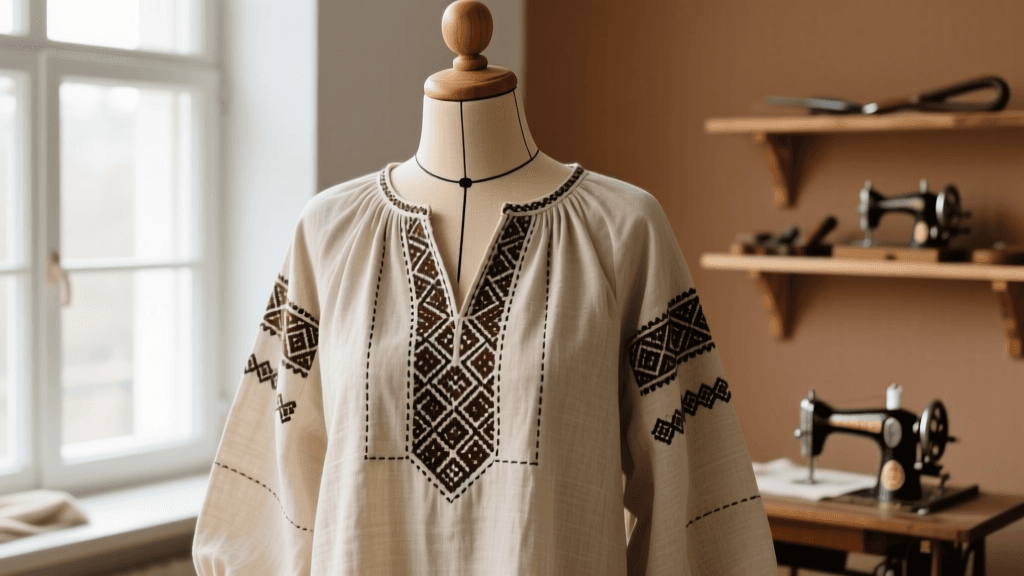
The kosovorotka, traditionally known in broader Eastern European contexts as the rubakha or sorochka, is a cornerstone of Slavic folk dress. Characterized by its distinctive off-center collar fastening and entirely geometric construction, this garment represents a masterclass in historical textile economy. Long before the fashion industry adopted zero-waste pattern cutting as a modern sustainability initiative, peasant communities across Russia, Ukraine, Belarus, and Poland practiced strict, mathematical fabric utilization out of sheer necessity. In 2026, as the global apparel industry grapples with massive textile waste, the traditional Slavic kosovorotka offers a brilliant, time-tested blueprint for sustainable garment construction. This comprehensive guide explores the geometry, drafting techniques, and modern material sourcing required to recreate this iconic piece of European folk dress using authentic zero-waste methodologies.
The Historical Philosophy of Slavic Tailoring
To understand the construction of the kosovorotka, one must first understand the historical value of textiles in Eastern Europe. Prior to the industrialization of textile mills, linen and hemp were woven on narrow handlooms, typically producing fabric widths of only 36 to 40 centimeters (14 to 16 inches). Every single centimeter of this hard-won fabric was precious. Curved armholes, shaped side seams, and tapered sleeves—which generate significant fabric waste—were virtually nonexistent in peasant dress. Instead, traditional tailors relied entirely on rectangles, squares, and triangles. By utilizing the straight grain of the fabric and incorporating strategic gussets, they created garments that allowed for immense freedom of movement for agricultural labor while generating absolutely zero cutting scraps. Exploring Europeana's extensive fashion archives reveals how deeply this geometric pragmatism influenced regional silhouettes across the continent.
Anatomy of the Rubakha Pattern
The genius of the kosovorotka lies in its modular, interlocking components. Unlike modern Western tailoring, which sculpts fabric to the body's curves, the Slavic folk shirt drapes over the body, using tension and gussets to manage mobility. The core pattern consists of four primary elements:
- The Stan (Body Panel): The main torso section, cut as a single, continuous rectangle that folds over the shoulders, eliminating the need for a shoulder seam.
- The Rukav (Sleeves): Cut as simple rectangles or slightly tapered trapezoids, attached directly to the straight edge of the body panel.
- The Polik (Shoulder Gusset): A square or rectangular piece of fabric that bridges the gap between the body panel and the sleeve, providing structural integrity and ease of movement across the chest and back.
- The Lastovitsa (Underarm Gusset): A small square or diamond-shaped piece inserted at the intersection of the side seam and the sleeve seam, preventing the garment from tearing under the stress of repetitive arm movements.
2026 Material Sourcing: European Flax and Linen
Authentic construction requires authentic materials. While historical peasants used handwoven hemp or coarse linen, the 2026 market offers exceptional, sustainably grown European flax linens that honor the heritage of the garment while meeting modern ecological standards. When sourcing fabric for a kosovorotka, you must consider both the weight and the width of the textile, as the fabric width dictates your zero-waste math.
For a standard men's or women's rubakha, a medium-weight linen (approximately 180 to 220 gsm) is ideal. According to the Textile Exchange Linen Standards, European flax remains one of the most environmentally bast fibers available, requiring minimal irrigation and zero synthetic defoliants. In 2026, premium GOTS-certified Lithuanian or Belarusian linen averages between €24 and €32 per meter. Modern looms produce linen in 140 cm (55-inch) widths, which drastically changes the zero-waste nesting layout compared to historical 40 cm handwoven cloth. The challenge for the modern pattern drafter is to adapt the historical rectangular ratios to a 140 cm width without generating offcuts.
Step-by-Step Zero-Waste Drafting & Cutting Layout
Adapting the kosovorotka for a 140 cm fabric width requires precise mathematical nesting. Below is a zero-waste cutting layout for a Medium-sized garment (Chest: 100 cm, Height: 175 cm). The goal is to interlock the sleeves, gussets, and collar pieces within the negative space of the main body panels.
| Pattern Piece | Dimensions (cm) | Quantity | Grainline & Placement |
|---|---|---|---|
| Main Stan (Body) | 140 x 160 | 1 | Lengthwise grain. Folds at shoulder. |
| Rukav (Sleeve) | 65 x 50 | 2 | Cut from the lateral voids of the Stan. |
| Polik (Shoulder Gusset) | 15 x 15 | 2 | Cut from the upper sleeve negative space. |
| Lastovitsa (Underarm) | 12 x 12 | 2 | Cut from remaining sleeve corners. |
| Kosovorotka Placket | 5 x 25 | 2 | Cut from the lower hem allowance voids. |
| Collar Band | 45 x 8 | 1 | Cut from the central neckline void. |
| Cuff (Manzheta) | 30 x 10 | 2 | Cut from the lower lateral voids. |
By mapping the garment this way, the 140 cm width is fully utilized. The 160 cm length provides the necessary drop for the traditional tunic-style hem, while the 140 cm width accommodates the chest circumference plus generous ease. The remaining negative spaces perfectly yield the sleeves, gussets, and binding strips. For an in-depth look at how historical textiles were preserved and analyzed to reverse-engineer these layouts, the Victoria and Albert Museum Textiles Collection provides invaluable structural references.
Traditional Seam Finishes and Construction Techniques
Drafting the pattern is only half the battle; the construction of the kosovorotka relies on specific historical seam finishes that ensure longevity without the use of modern sergers or synthetic threads.
The Flat-Felled Seam (Zaposhivnoy Shov)
Because the rubakha was worn directly against the skin and subjected to rigorous physical labor, all internal seams were enclosed. The flat-felled seam is mandatory for the side seams and sleeve attachments. In 2026, modern sewists can expedite this process using specialized flat-felling presser feet, but the traditional method involves folding one seam allowance over the other and topstitching it down with a heavy linen thread. This not only prevents fraying but adds structural rigidity to the geometric lines of the shirt.
The Off-Center Placket (Kosoy Vorot)
The defining feature of the kosovorotka is its side-fastening collar. Historically, this was believed to protect the wearer's soul (which resided near the heart) from evil spirits entering through the buttons. From a construction standpoint, drafting the off-center placket requires precise reinforcement. You must interface the placket area with a scrap of tightly woven linen and use a traditional buttonhole stitch, as modern machine buttonholes tend to pucker on pure, unblended linen.
Integrating Modern Technology with Heritage Patterns
While the soul of the kosovorotka is deeply historical, 2026 offers remarkable digital tools to refine the zero-waste drafting process. Before cutting into expensive European flax linen, modern makers are utilizing 3D garment simulation software like CLO 3D or Browzwear. These platforms allow you to input the exact drape and bias-stretch coefficients of your specific linen, simulating how the polik and lastovitsa will behave under tension.
Furthermore, if your kosovorotka features traditional vyshyvanka (cross-stitch embroidery) along the collar, cuffs, and chest placket, 2026's digital embroidery mapping tools allow you to project the geometric motifs directly onto the digital pattern pieces. This ensures that when the garment is assembled, the embroidery aligns flawlessly across the shoulder gussets—a common pitfall when embroidering flat pieces before assembly. For those preferring hand-embroidery, water-soluble stabilizers printed with historical Slavic geometric motifs via standard inkjet printers have become a staple in the modern folk-dress revivalist's toolkit.
Conclusion
The Slavic kosovorotka is far more than a historical costume; it is a masterclass in sustainable, zero-waste engineering. By respecting the geometry of the textile and utilizing strategic gussets, traditional Eastern European tailors created garments that were durable, mobile, and entirely waste-free. As we navigate the fashion landscape of 2026, applying these ancient construction patterns to modern, sustainably sourced European linens bridges the gap between heritage preservation and ecological responsibility. Whether you are a historical reenactor, a sustainable fashion designer, or a dedicated hobbyist, mastering the zero-waste draft of the rubakha connects you directly to the ingenuity of European folk traditions.