Authentic Schuhplattler Tracht: 2026 Alpine Dance Festival Guide
The Resurgence of Authentic Schuhplattler Tracht in 2026
The Alpine folk dance revival has reached a remarkable milestone in 2026, with traditional Bavarian and Tyrolean dance troupes reporting record membership and festival attendance. At the heart of this cultural renaissance is the Schuhplattler, a mesmerizing folk dance characterized by rhythmic stomping, thigh-slapping, and breathtaking partner spins. However, performing the Schuhplattler requires far more than enthusiasm; it demands highly specialized, historically accurate traditional garments known collectively as Tracht. Unlike the mass-produced, tourist-oriented costumes found in souvenir shops, authentic dance Tracht is engineered for extreme mobility, durability, and regional pride.
According to the Bayerischer Trachtenverband (Bavarian Tracht Association), the 2026 festival season has seen a strict return to historical accuracy, with dance juries penalizing troupes that wear synthetic fabrics or historically inaccurate silhouettes. For dancers, festival attendees, and cultural enthusiasts preparing for the 2026 Alpine festival circuit, understanding the anatomy, sourcing, and fitting of authentic dance Tracht is essential. This guide breaks down the precise requirements for both male and female folk dance costumes, ensuring you are prepared for the rigorous demands of the dance floor.
Anatomy of the Male Dance Costume: Mobility and Tradition
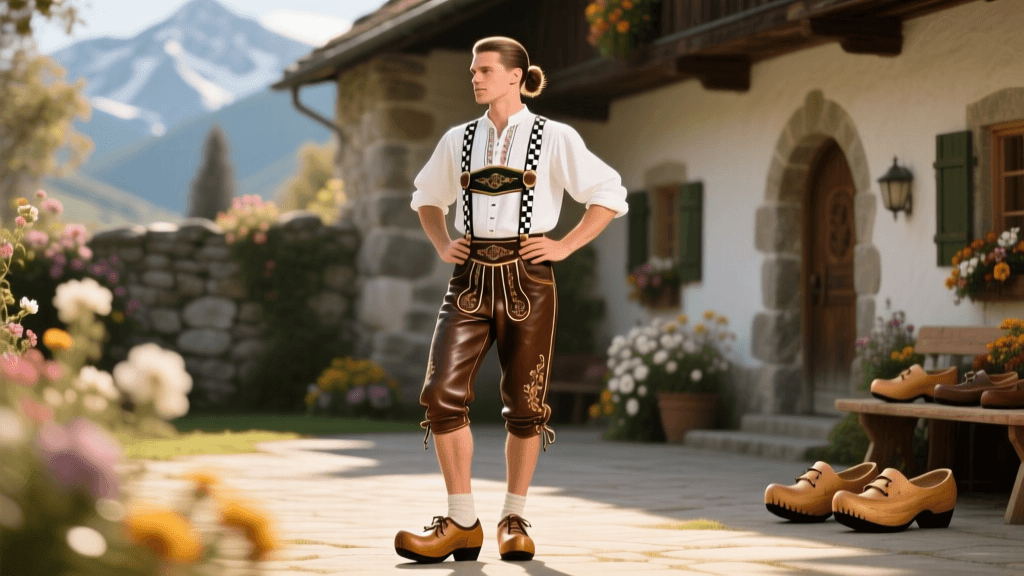
The male Schuhplattler costume is a masterclass in functional leatherwork and alpine tailoring. The centerpiece is the Lederhosen, but not just any pair will suffice for the physical demands of folk dance. For competitive and festival dancing, performers require Hirschleder (deer leather) that has been traditionally brain-tanned or eco-tanned using 2026's advanced sustainable alpine tanneries. The leather must be between 1.2mm and 1.4mm thick—supple enough to allow for deep squats and high kicks, yet durable enough to withstand the repetitive, forceful slapping of the Plattln (the thigh and knee strikes that give the dance its name).
Critical Tailoring Adjustments for Dancers
Standard fashion Lederhosen often restrict movement. Authentic dance Lederhosen feature specific structural adaptations:
- Thigh Gussets (Zwickel): Hidden diamond-shaped leather inserts in the inner thigh and crotch area that provide an extra 15-20 cm of stretch during high kicks and wide stances.
- Drop-Front (Latz): The traditional buttoned drop-front is mandatory for historical accuracy in most Bavarian dance districts (Gaue), secured with genuine horn or carved antler buttons.
- Suspenders (Hosenträger): Crossed suspenders with a reinforced horizontal chest strap (Quersteg) to prevent the heavy leather from slipping during vigorous jumping.
Footwear and Accessories
The Haferlschuh is the only acceptable footwear for traditional Schuhplattler. In 2026, top dance troupes favor Goodyear-welted Haferlschuhe with side-lacing and reinforced toe caps. The sole must be a specific blend of leather and natural rubber to provide the exact acoustic 'slap' required on wooden festival stages without causing joint fatigue. Dancers also wear Loferl (calf warmers) made of ribbed alpine wool, which protect the calves during the striking sequences and keep the muscles warm during outdoor autumn festivals.
The Female Festival Dirndl: Engineering the Perfect Spin
While the male costume focuses on percussive durability, the female dance costume—properly called a Miedergwand or Dirndlgwand in traditional contexts—is engineered for centrifugal force and graceful fluidity. The most visually stunning element of the Schuhplattler is the Dreher, a rapid, multi-revolution spin where the female dancer's skirt flares out into a perfect, horizontal circle. Achieving this physics-defying silhouette requires precise tailoring that fast-fashion brands completely ignore.
Skirt Circumference and Fabric Weight
A standard commercial Dirndl features a skirt hem circumference of roughly 1.5 to 2 meters. For folk dance, this is entirely inadequate. A 2026 authentic dance Dirndl requires a minimum hem circumference of 3.5 to 4 meters. This massive amount of fabric is heavily pleated and attached to a reinforced waistband. The fabric of choice is Schurwolle (virgin alpine wool) or a high-density cotton-linen blend, weighing between 250g and 300g per square meter. This specific weight ensures the skirt flares outward beautifully during the spin, rather than wrapping around the dancer's legs.
The Bodice (Mieder) and Blouse
The bodice must be heavily structured, often featuring internal steel or synthetic boning, to withstand the intense centrifugal pull and the firm grip of the dance partner's hands. The front is typically laced with a silver or brass chain over a contrasting silk or linen panel. Beneath the bodice, the Dirndlbluse (blouse) is made of crisp white cotton batiste with reinforced armholes to prevent tearing during the rapid arm raises and partner swings characteristic of the dance.
2026 Sourcing Guide: Authentic Brands vs. Fast Fashion
Sourcing authentic dance Tracht requires navigating a market flooded with cheap imitations. Retailers like Lodenfrey and specialized regional tailors remain the gold standard for dancers who need garments that will survive years of festival performances. Below is a comparison of the top sources for authentic dance Tracht in 2026.
| Brand / Tailor | Specialty | 2026 Price Range (EUR) | Dance Suitability |
|---|---|---|---|
| Meindl Trachten | Premium Hirschleder & Bespoke Tailoring | €850 - €1,400 | Exceptional; standard for competitive troupes |
| Lodenfrey | Historical Accuracy & Miedergwand | €600 - €1,100 | Excellent; wide selection of dance-weight skirts |
| Angermaier | Modern Alpine & Festival Ready | €350 - €700 | Good; requires tailoring for professional dance |
| Regional Dorf-Schneider | Custom Village Tailors (Bespoke) | €500 - €900 | Superior; custom-measured for individual dancers |
2026 Market Note: Due to the rising demand for sustainably sourced alpine deer leather and ethically spun virgin wool, lead times for bespoke dance Lederhosen and Miedergwand have extended to 12-16 weeks. Dancers preparing for the late-summer festival season must place their orders by early spring.
Practical Fitting Advice and Tailoring Adjustments
When fitting your Tracht for the 2026 festival season, keep these actionable measurements in mind to ensure both historical compliance and dance mobility:
- Dirndl Length: For dance, the skirt must fall precisely to the mid-calf (approximately 75-80 cm from the waist, depending on height). This prevents tripping during complex footwork while allowing the petticoat to remain hidden.
- Apron (Schürze) Alignment: The apron must be exactly 2 cm shorter than the skirt hem. It should be tied in a traditional bow on the left (if single) or right (if married), but for competitive dance, the bow is often tied flat to prevent it from whipping the partner's face during spins.
- Lederhosen Knee Fit: The leg bands of the Lederhosen must sit exactly one finger-width below the kneecap. If they are too tight, they will cut off circulation during deep squats; if too loose, they will slide down during the percussive thigh slaps.
Key 2026 Alpine Folk Dance Festivals
To truly appreciate the craftsmanship of authentic Tracht, one must witness it in its natural habitat. The 2026 Alpine festival calendar is packed with events where traditional dress is not just encouraged, but strictly mandated by festival organizers. According to official Munich festival portals and regional tourism boards, these are the premier events for folk dance enthusiasts this year:
- Bayerisches Gauefest (June 2026): The ultimate gathering of Bavarian Tracht and folk dance troupes. This is where the most historically accurate, hand-embroidered Lederhosen and silk Miedergwand are showcased in competitive Plattler performances.
- Leonhardifahrt (November 2026): While primarily a pilgrimage and horse parade, the evening festival tents feature some of the most vigorous and traditional Schuhplattler dancing in the Alpine region, requiring heavy wool and layered Tracht to combat the late-autumn chill.
- Alpenländischer Volksmusikwettbewerb (Innsbruck, October 2026): Though focused on music, the accompanying dance exhibitions feature Tyrolean variations of the Schuhplattler, showcasing distinct regional differences in leather embroidery and bodice construction.
Conclusion: Honoring the Craft of Alpine Dance
The traditional garments of the Schuhplattler are not mere costumes; they are functional, historical tools that dictate the very rhythm and visual poetry of European folk dance. As the 2026 festival season approaches, investing in authentic, properly tailored Tracht ensures that you are not only respecting centuries of alpine heritage but also equipping yourself with the mobility and durability required to keep these breathtaking traditions alive on the dance floor.