Tudor Kirtle Construction & Authentic Fabric Guide 2026
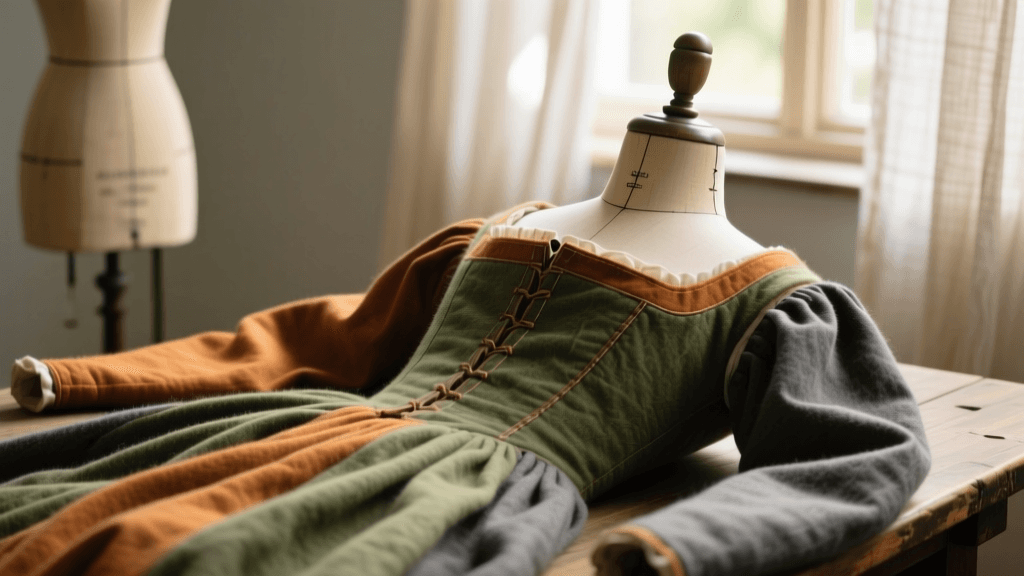
The Renaissance Kirtle: Foundation of 16th-Century Style
The Tudor kirtle remains the quintessential foundational garment for women’s 16th-century European folk dress and courtly fashion. As we navigate the 2026 historical reenactment and living history season, the demand for meticulously accurate, hand-finished garments has never been higher. Unlike the flowing, unstructured medieval houppelandes of the 15th century, the Tudor kirtle introduced a rigid, geometric silhouette that supported the heavy outer gowns and elaborate sleeves characteristic of the Renaissance. According to the Metropolitan Museum of Art's Heilbrunn Timeline of Art History, the shift toward structured tailoring in the 16th century reflected broader socio-economic changes, the rise of specialized guilds, and a new emphasis on the architectural shaping of the human form. This comprehensive guide provides a step-by-step approach to drafting, sourcing, and constructing an authentic Tudor kirtle for modern makers in 2026.
Pattern Drafting: The Four-Panel Bodice
The bodice of a mid-16th-century kirtle is typically drafted using a four-panel system: two front panels and two back panels. The center front usually features a lacing closure, which allows for adjustable fit and ease of dressing, while the center back is cut on the fold or seamed for structural integrity. To begin your draft, take precise measurements of the bust, underbust, waist, and torso length. The distinctive square neckline of the Tudor era should sit precisely at the collarbone, framing the partlet beneath.
In 2026, historical pattern drafting has been revolutionized by accessible digital tools, but the core geometry remains unchanged. The side seams should curve gently to follow the natural waist, while the armscye (armhole) is cut deeper and wider than modern garments to accommodate the voluminous linen smock sleeves worn underneath. For boning, modern makers have largely moved away from traditional rigid reed or steel. Instead, high-grade synthetic whalebone, which became widely available and heavily refined by early 2026, offers the perfect balance of historical flexibility and modern durability. Channel the boning directly into the linen lining layer before attaching the outer wool shell to maintain a smooth, wrinkle-free silhouette.
Sourcing Authentic Textiles in 2026
The success of any historical garment relies heavily on the drape, weight, and weave of the fabric. In 2026, the heritage textile market has seen a massive resurgence in authentic weave reproductions, making it easier than ever to source historically accurate materials. Sourcing the correct wool is paramount for the outer shell, while sturdy linen is required for the interlining and lining.
Historically, broadcloth and kersey were the primary choices for kirtles. Broadcloth is a densely milled, smooth-finished wool that drapes beautifully and resists fraying, making it ideal for the skirt. Kersey is a heavier, twill-weave wool that provides excellent structure for the bodice. Below is a comparative breakdown of the most recommended textiles for kirtle construction available from heritage mills in 2026.
| Fabric Type | Historical Use | 2026 Market Availability | Estimated Cost (per yard) |
|---|---|---|---|
| Wool Broadcloth (100%) | Skirts, Outer Gowns | High (Specialty Heritage Mills) | $55 - $75 USD |
| Wool Kersey (Twill) | Bodices, Winter Kirtles | Medium (Limited Runs) | $60 - $85 USD |
| Heavy Linen Canvas | Interlining, Bodice Support | Very High | $18 - $25 USD |
| Lightweight Linen | Bodice Lining, Smocks | Very High | $15 - $22 USD |
| Silk Taffeta | Foreparts, Sleeves, Trim | Medium (Imported) | $45 - $60 USD |
Skirt Construction and Cartridge Pleating
The skirt of a Tudor kirtle is where the garment truly comes alive, requiring an immense amount of fabric to achieve the signature bell-shaped silhouette. A historically accurate skirt will utilize between 4 to 6 yards of wool broadcloth, gathered into a waistband using a technique known as cartridge pleating or gauging. This method allows massive volumes of heavy wool to be compressed into a small waist measurement while forcing the fabric to spring outward away from the body.
To execute cartridge pleats in 2026, begin by finishing the top edge of your skirt panel. Mark parallel rows of dots along the top edge, typically spaced half an inch apart horizontally and three-quarters of an inch apart vertically. Using a heavy, waxed linen thread, sew running stitches along these rows. Once all rows are stitched, pull the threads simultaneously to draw the fabric up into tight, uniform, tube-like pleats. Bind the top edge with a sturdy linen or wool tape, and stitch the pleated edge directly to the bottom of your finished bodice. This technique requires patience and significant hand-sewing time, but the structural result is unmatched by modern gathering methods.
Layering: Partlets, Foreparts, and Sleeves
A kirtle is rarely worn alone; it is the anchor for a complex layering system. The Royal Museums Greenwich notes that Tudor fashion relied heavily on interchangeable components that allowed wearers to adapt their clothing to different weather conditions and social occasions without requiring entirely new gowns. The partlet, a lightweight linen or silk garment worn over the neck and shoulders, fills in the square neckline of the kirtle. In 2026, sheer linen lawn and delicate silk organza are the preferred materials for summer partlets, often embellished with blackwork embroidery.
For the lower half, the forepart is a decorative panel attached to the front of the kirtle skirt or tied around the waist, designed to be visible through the open front of an overgown. While the kirtle itself was often made of practical, durable wool, the forepart was an opportunity to display wealth through the use of silk taffeta, velvet, or cloth of silver. When sourcing trims for your forepart, look for historically accurate metal-wrapped silk threads and woven passementerie, which have seen a revival among specialized trim weavers operating in the UK and Eastern Europe this year.
Sumptuary Laws and Color Choices
When selecting the color of your kirtle, it is vital to consider the historical context of 16th-century sumptuary laws. The Shakespeare Birthplace Trust highlights that Elizabethan and Tudor sumptuary laws strictly dictated which classes could wear specific fabrics and colors. For a middle-class or working-class folk dress interpretation, stick to naturally dyed colors: madder reds, weld yellows, woad blues, and undyed sheep browns and greys. Avoid deep, vibrant crimsons or true purples, as these were legally restricted to the nobility and royalty. In 2026, several artisan dyers specialize in period-accurate botanical dyeing, offering yarns and fabrics that perfectly replicate the slightly muted, organic tones of the 1500s.
2026 Cost and Time Investment Breakdown
Constructing a fully hand-finished, historically accurate Tudor kirtle is a significant investment of both time and capital. For makers planning their projects for the 2026 festival and reenactment season, here is a realistic breakdown of what to expect:
- Fabric Costs: Expect to spend between $250 and $400 USD on high-quality wool, linen interlining, and linen lining.
- Notions and Boning: Synthetic whalebone, waxed linen thread, and brass lacing hooks will cost approximately $60 to $90 USD.
- Trims and Embellishments: If adding a silk forepart and metal-lace trim, budget an additional $120 to $200 USD.
- Time Investment: Drafting and cutting will take 10-15 hours. Bodice construction and boning will require 20-30 hours. Skirt hemming and cartridge pleating by hand is the most time-intensive phase, often taking 40-60 hours depending on the volume of the skirt.
Conclusion
The Tudor kirtle is a masterpiece of 16th-century engineering, blending structural support with elegant aesthetics. By utilizing historically accurate drafting methods, sourcing premium heritage wools, and mastering traditional hand-sewing techniques like cartridge pleating, modern makers can recreate these garments with stunning authenticity. As the historical dress community continues to grow in 2026, the dedication to accurate material culture ensures that the rich textile traditions of Renaissance Europe remain vibrant, wearable, and deeply respected.