Bavarian Tracht Guide 2026: Authentic Dirndl And Lederhosen
The Renaissance of Alpine Tracht in 2026
In 2026, the European folk dress landscape is experiencing a profound renaissance, particularly within the alpine regions of Germany, Austria, and South Tyrol. Moving away from the mass-produced, synthetic costumes that dominated the early 2010s festival circuit, modern consumers and cultural preservationists are championing 'Slow Tracht.' This movement emphasizes historical accuracy, sustainable textile sourcing, and meticulous regional craftsmanship. Whether you are attending the 2026 Oktoberfest in Munich, the traditional Almabtrieb (alpine cattle drive) in Tyrol, or simply investing in heritage garments, understanding the nuances of authentic Bavarian and Tyrolean folk dress is essential.
According to cultural historians documented in the encyclopedia of traditional Tracht, the term 'Tracht' does not merely mean 'costume'; it translates more accurately to 'what is worn' or 'customary dress.' It is a living tradition, bound by strict regional codes that dictate everything from the weave of the linen to the motif of the embroidery. In this comprehensive 2026 guide, we break down the regional variations, anatomy, and buying considerations for authentic Dirndl and Lederhosen.
Regional Variations: Bavaria vs. Tyrol vs. Salzburg
One of the most common mistakes buyers make is treating all alpine folk dress as a monolith. In reality, Tracht is hyper-local. A garment worn in Upper Bavaria will differ significantly from one worn just fifty miles away in the Austrian Tyrol.
Upper Bavaria (Oberbayern)
The Miesbacher Tracht is arguably the most recognized Bavarian style globally. Characterized by deep, muted colors—navy blues, forest greens, and charcoal greys—it features intricate silk embroidery and heavy wool skirts. The Werdenfelser Tracht, native to the Garmisch-Partenkirchen region, is distinguished by its unique 'Schalk' (a specific type of bodice) and the use of locally sourced Murnau-Werdenfelser cattle leather for accessories.
Tyrol and Salzburg (Austria)
Crossing the border into Austria, the Tyrolean Zillertaler Tracht stands out with its vibrant, contrasting colors and the iconic 'Garnitur' (a heavily embroidered apron and bodice set). Meanwhile, the Salzburger Festspieltracht, often worn at the Salzburg Festival, leans toward high elegance, incorporating luxurious silk brocades, delicate lace blouses, and gold-threaded embroidery that reflects the region's aristocratic history.
The Dirndl: Anatomy and Regional Markers
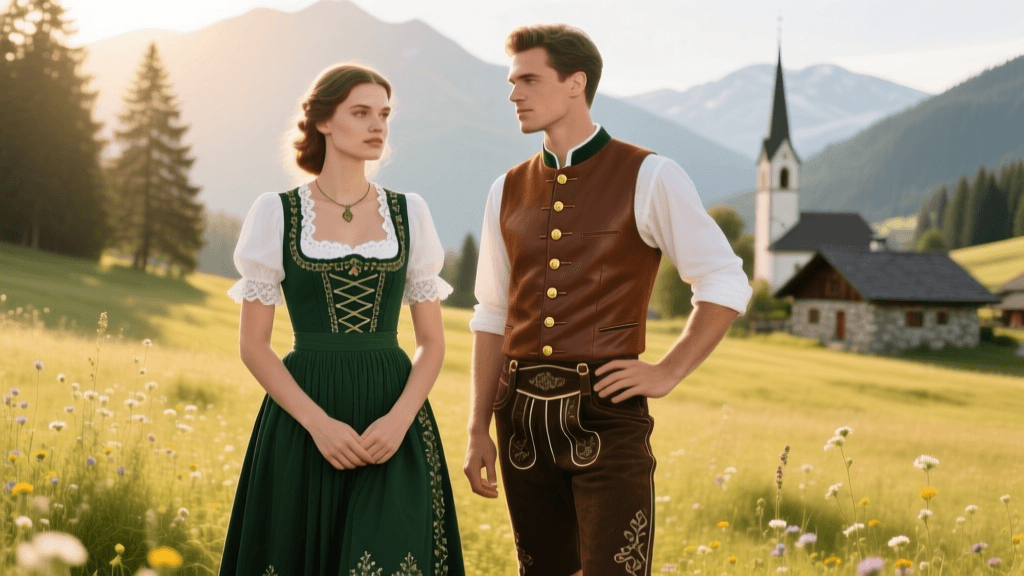
The Dirndl is a four-part ensemble consisting of the bodice (Mieder), blouse (Bluse), skirt (Rock), and apron (Schürze). In 2026, the hallmark of an authentic Dirndl is the construction of the Mieder. Unlike commercial zippers, authentic bodices use front-lacing with silver or horn hooks, or hidden hook-and-eye closures that provide structural support akin to a corset.
- The Blouse: Traditionally made of 100% white cotton batiste or linen. In 2026, GOTS-certified organic linen is the premium standard, featuring hand-stitched smocking (Smokarbeit) at the neckline and sleeves.
- The Skirt: Must be heavily pleated and fall below the knee for traditional settings, though mid-calf is standard for modern festive wear. Authentic skirts use 3 to 4 meters of fabric to achieve the proper swing.
- The Apron Bow Code: The placement of the apron bow remains a vital cultural signifier. Tied on the left indicates the wearer is single; on the right means married or taken; in the center traditionally signifies virginity (though in modern 2026 contexts, it is often used by young women or simply for symmetry); and tied at the back indicates widowhood or that the wearer is a working server.
Lederhosen: Beyond the Beer Tent
Authentic Lederhosen are a masterclass in leatherworking. As detailed by the Bavarian National Museum, the preservation of alpine leatherworking techniques relies on specific tanning methods that have been passed down for generations. Commercial 'costume' lederhosen are often made from stiff, chrome-tanned cowhide or even synthetic PU leather. Authentic pairs, however, utilize Sämischleder (oil-tanned leather) or Hirschleder (deer leather).
Deer leather is prized for its breathability, velvet-like texture, and ability to mold to the wearer's body over time. The embroidery (Stickerei) on the suspenders (Hosenträger) and the front flap (Latz) is not merely decorative; historically, the motifs of edelweiss, oak leaves, and alpine roses denoted the wearer's specific village and hunting guild. In 2026, bespoke embroiderers use the Schrumpfstich (shrink stitch) to ensure the thread moves fluidly with the leather without snapping.
2026 Buyer’s Guide: Authentic Tracht vs. Commercial Costumes
When shopping for European folk dress, distinguishing between heritage garments and fast-fashion costumes is critical. Below is a comparison of what to expect in the current 2026 market.
| Feature | Authentic Heritage Tracht (2026) | Commercial Festival Wear |
|---|---|---|
| Materials | 100% linen, virgin wool, deer/goat leather, silk | Polyester blends, chrome-tanned cowhide, nylon |
| Construction | Hand-pleated skirts, laced bodices, hand-embroidery | Machine-gathered skirts, metal zippers, printed motifs |
| Lifespan | Generational (20-50+ years with proper care) | 1-3 seasons (prone to tearing and fading) |
| Dirndl Price Range | €450 - €1,200+ | €60 - €150 |
| Lederhosen Price Range | €700 - €1,800+ | €90 - €250 |
| Origin | Specialized ateliers in Bavaria, Tyrol, Salzburg | Mass-produced in overseas factories |
Sourcing and Sizing: Practical Advice for 2026
If you are investing in authentic Tracht, precise measurements are non-negotiable. Traditional tailors do not use standard S/M/L sizing. For a Dirndl Mieder, you must provide your underbust, overbust, and natural waist measurements in centimeters. The bodice should fit snugly enough to provide posture support but allow for a full breath and comfortable seating.
For Lederhosen, the leather will stretch up to 2 centimeters in the waist and thighs after a few wears. Therefore, a bespoke pair should feel uncomfortably tight upon the first fitting. When sourcing online in 2026, look for heritage brands like Lodenfrey, Meindl, or specialized regional ateliers that offer virtual consultations and guarantee the use of vegetable-tanned or traditional oil-tanned leathers.
Footwear and Accessories
No Tracht ensemble is complete without the proper footwear and accessories. For men, the traditional Haferlschuh (a sturdy alpine shoe with side lacing and a hobnailed sole) remains the gold standard. In 2026, modern cobblers are offering Haferlschuhe with ergonomic, shock-absorbing insoles without compromising the historical silhouette. Women traditionally wear Dirndlschuhe, which are low-heeled, lace-up or buckle shoes, often paired with hand-knitted wool socks featuring subtle jacquard patterns.
Accessories should be kept minimal but meaningful. A Charivari (a traditional chain worn across the Lederhosen flap) originally served as a hunter's trophy chain, featuring silver coins, badger claws, or deer antler carvings. For women, a velvet choker with a cameo or a silk Halstuch (neck scarf) pinned with an edelweiss brooch adds the perfect finishing touch.
Caring for Heritage Textiles and Leather
Maintaining authentic folk dress requires specific care protocols. Never machine-wash a wool Dirndl skirt or a silk bodice; these must be professionally dry-cleaned by specialists familiar with alpine textiles. The cotton blouse and apron can be gently hand-washed in cool water with a pH-neutral detergent.
Leather care for Hirschleder is equally specific. Because it is oil-tanned, it should never be treated with standard commercial shoe polishes or waterproofing sprays, which will clog the pores and ruin the velvet nap. Instead, use a specialized Hirschleder conditioner—often a blend of pure beeswax and neatsfoot oil—applied sparingly with a soft cloth. As noted in the historical archives of the Dirndl and alpine dress, proper storage is also vital: hang Lederhosen in a breathable cotton garment bag in a climate-controlled room to prevent the leather from drying out or developing mildew.
Conclusion
The 2026 European folk dress market offers an unprecedented opportunity to connect with alpine heritage through mindful consumption. By understanding the regional distinctions between Bavarian and Tyrolean styles, recognizing the hallmarks of authentic materials, and investing in proper care, you ensure that these magnificent garments continue to tell their cultural stories for generations to come. Whether you are raising a stein in Munich or hiking the alpine trails of Salzburg, authentic Tracht is an investment in history, craftsmanship, and timeless style.