Authentic Norwegian Bunad: Regional Variations & Sourcing 2026
The Living Heritage of the Norwegian Bunad in 2026
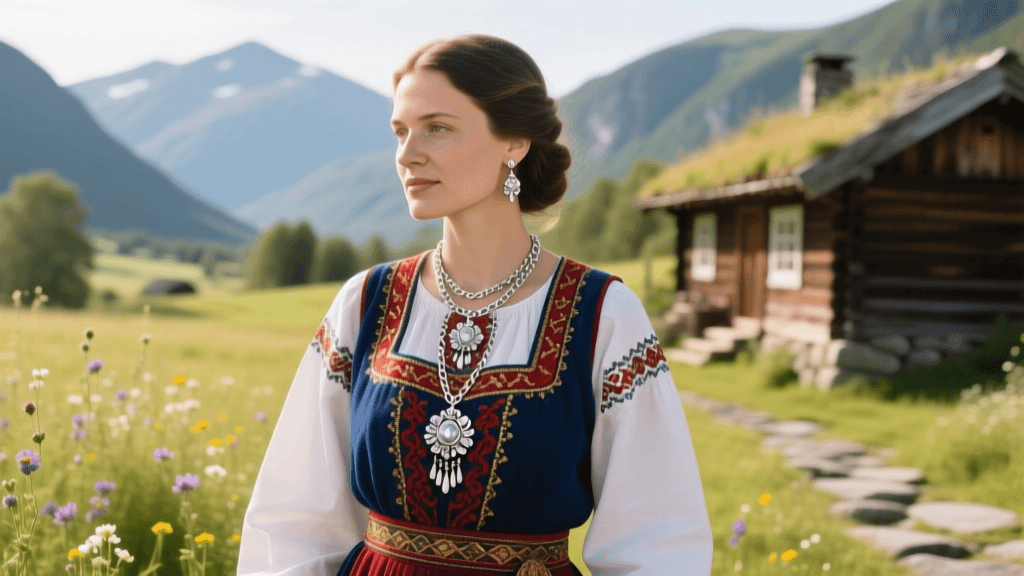
Unlike many European folk costumes that are relegated to museum displays or occasional tourist performances, the Norwegian bunad remains a vibrant, living garment. Worn at weddings, national holidays (particularly Constitution Day on May 17th), and milestone celebrations, the bunad is a profound expression of regional identity and ancestral pride. As we navigate 2026, the appreciation for historically accurate regional folk dress has surged, with younger generations increasingly investing in these heirloom garments.
It is crucial to understand the distinction between a folkedrakt (historical rural clothing worn as everyday or festive attire until the late 19th century) and a bunad (a modern reconstruction or design inspired by historical garments, popularized during the National Romantic period). The Bunad- og folkedraktinstituttet (Institute of Bunad and Folk Costume) strictly oversees these reconstructions, ensuring that new designs introduced in 2026 adhere to rigorous historical and material standards.
Key Regional Variations: A Comparative Guide
Norway boasts over 450 distinct bunad variations, each tied to a specific valley, fjord, or municipality. Below is a comparison of four of the most iconic regional styles, highlighting their unique construction and aesthetic markers.
| Region | Base Fabric & Color | Embroidery Style | Silver Profile |
|---|---|---|---|
| Hardanger | Black, Blue, or Green Wool | Whitework (Kvitsaum) & Cross-stitch | Oxidized silver, elaborate belt plates |
| Setesdal | Heavy Black Wool with Green/Red trim | Minimalist, relies on woven bands | Massive, shiny Viking-style filigree |
| Øst-Telemark | Black Wool with Silk Blouse | Rococo-inspired colorful floral silk thread | Delicate, shiny floral motifs |
| Sunnmøre | Black or Blue Wool, Damask Apron | Woven silk bands, velvet trim | Traditional neck rings (halssmykker) |
The Hardangerbunad: The Mother of All Bunads
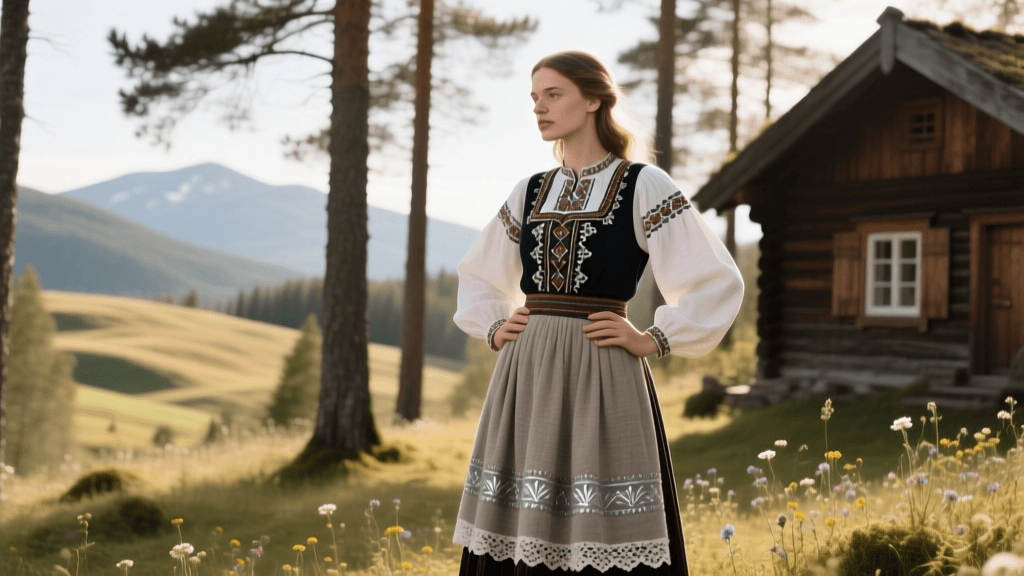
Originating from the Hardanger fjord region, the Hardangerbunad is often considered the first true bunad, gaining national prominence when Queen Maud wore it in the early 20th century. The defining feature of the women's Hardangerbunad is the kvitsaum (whitework embroidery) on the apron and blouse, contrasting sharply against the dark blue or black wool skirt. In 2026, authentic Hardanger aprons are still hand-embroidered by specialized artisans, a process that alone can take over 100 hours.
The Setesdalsbunad: Viking Echoes in the Valley
Setesdal is unique in Norwegian textile history because its folk dress never truly died out; it transitioned directly from a living folkedrakt to a bunad without a period of reconstruction. The Setesdalsbunad features heavy, dark wool with striking green and red woven bands. The accompanying silver is heavily influenced by Viking and medieval aesthetics, featuring large, bold filigree pieces and oxidized brystknapper (chest buttons) that are often passed down through generations.
The Øst-Telemark Bunad: Rococo Embroidery
Telemark is renowned for its rich, colorful floral embroidery, heavily influenced by 18th-century Rococo art and local rose-painting (rosemaling) traditions. The Øst-Telemark bunad utilizes vibrant silk threads embroidered directly onto the black wool bodice and skirt hem. The silver jewelry from Telemark is equally ornate, featuring shiny, detailed floral motifs that catch the light beautifully during outdoor spring celebrations.
Sourcing an Authentic Bunad: Costs and Timelines for 2026
Commissioning a bunad is a significant financial and temporal investment. You cannot simply buy a true, certified bunad off the rack in a standard clothing store. In 2026, a complete women's bunad, including hand-woven fabrics, custom tailoring, and a basic set of sterling silver, typically costs between 40,000 NOK and 70,000 NOK (approximately $3,800 to $6,600 USD). Men's bunads, which require intricate tailoring for the breeches and jackets, range from 35,000 NOK to 60,000 NOK.
Working with a Certified Bunadtilvirker
To ensure authenticity, you must work with a certified bunadtilvirker (bunad maker) or an authorized retailer affiliated with Norsk Husflid (the Norwegian Home Crafts Association). These organizations maintain strict quality controls. When you order a bunad, the lead time is typically 6 to 12 months. This timeline accounts for the hand-weaving of the wool, the custom embroidery, and the multiple fitting sessions required to achieve the perfect, structured silhouette.
2026 Market Tip: Due to global supply chain shifts affecting high-grade European wool and silk threads, many Husfliden stores now recommend placing your fabric orders in the late autumn of the preceding year to secure your spot for spring Constitution Day deliveries.
The Bunad Silver (Bunadsølv): Heirloom Investments
The silver jewelry (bunadsølv) is often the most expensive and sentimental component of the ensemble. A complete silver set for a woman can include a crown or headpiece, a neck ring or chain, a bodice chain (livlenke), belt buckles (beltestøler), and cufflinks. In 2026, a full set of hand-forged sterling silver for a Hardanger or Telemark bunad can easily add 20,000 NOK to 40,000 NOK ($1,900 to $3,800 USD) to your total investment.
When sourcing silver, buyers must choose between shiny and oxidized finishes, which are strictly dictated by regional traditions. For example, Setesdal silver is traditionally shiny and bold, while Hardanger silver often features oxidized details to highlight the intricate filigree patterns. Always purchase silver from registered Norwegian silversmiths to guarantee the 925 sterling stamp and authentic regional motifs.
Proper Fit and Measurement Guidelines
A bunad is tailored to fit like a second skin, particularly the bodice, which provides structural support and dictates the drape of the skirt and apron. When visiting your local Husfliden store or an independent bunadtilvirker for measurements, expect a comprehensive session. If you are ordering remotely in 2026, you will be sent a precise measurement kit and video guide. Key measurements include:
- Overbust and Full Bust: Measured with the specific bunad blouse you intend to wear, as the fabric thickness affects the bodice fit.
- Underbust: Crucial for the placement of the bodice's lower edge and the silver belt.
- Natural Waist: The bunad waist sits higher than modern fashion waists, typically just below the ribcage.
- Back Length: Measured from the prominent vertebra at the base of the neck down to the natural waist, ensuring the bodice does not restrict movement.
- Skirt Length: Traditionally, a women's bunad skirt should fall exactly at the middle of the calf, allowing the embroidered hem and traditional leather shoes to be visible.
Preservation and Care in the Modern Era
Because a bunad is an heirloom meant to last generations, proper care is paramount. The wool should never be machine washed. Instead, it requires professional dry cleaning by specialists who understand historical textiles. The Norsk Folkemuseum textile archives recommend storing the bunad flat in a breathable cotton garment bag, away from direct sunlight, with acid-free tissue paper stuffed into the sleeves and bodice to maintain its structural shape. Silver should be polished regularly with specialized cloths and stored in anti-tarnish pouches to prevent oxidation in shiny pieces.
Conclusion
The Norwegian bunad is far more than a festive costume; it is a meticulously researched, handcrafted bridge to the past. Whether you are drawn to the stark, whitework elegance of Hardanger, the Viking resilience of Setesdal, or the Rococo blooms of Telemark, investing in a regional bunad in 2026 is a commitment to preserving European folk dress traditions. By sourcing through certified artisans and respecting the historical nuances of your chosen region, you ensure that this magnificent textile heritage continues to thrive for generations to come.