Romanian IA Blouse Revival: 2026 Contemporary Styling Guide
The Enduring Allure of the Romanian IA in 2026
The global fashion landscape of 2026 has decisively moved past the fleeting, costume-like interpretations of the 'cottagecore' trend, settling instead into a profound appreciation for heritage minimalism and authentic craftsmanship. At the forefront of this European folk dress revival is the Romanian IA (pronounced 'ee-ah'), the traditional peasant blouse that has captivated designers, artisans, and urban wardrobes alike. Once relegated to museum archives and rural festivals, the IA is now a cornerstone of contemporary slow fashion, celebrated for its intricate geometry, natural fibers, and deep cultural resonance.
Unlike mass-produced peasant tops that flooded fast-fashion racks in previous decades, the 2026 revival demands authenticity, ethical sourcing, and a sophisticated approach to styling. The modern wearer does not want to look as though they are wearing a historical costume; rather, they seek to integrate the soulful, hand-embroidered artistry of Eastern Europe into a sleek, modern urban wardrobe. This guide explores the anatomy of the authentic IA, regional variations, and actionable strategies for styling this masterpiece of European folk dress for the contemporary world.
Anatomy of the Authentic IA: Beyond the Embroidery
To style the IA with respect and intention, one must first understand its architectural construction. The traditional Romanian blouse is not merely a garment; it is a canvas of coded symbols, protective motifs, and regional identity. The recognition of this craft by the UNESCO Intangible Cultural Heritage registry has only amplified global demand for genuine pieces over factory-made imitations.
- Altița (The Shoulder Epaulet): The most defining feature of the IA. This is the dense, rectangular block of embroidery on the shoulder, traditionally meant to protect the wearer from evil spirits. In 2026, the altița serves as the visual anchor of the garment, providing structural weight that allows the blouse to drape elegantly over modern silhouettes.
- Încrețul (The Gathering): Located just below the altița, this is a narrower band of geometric embroidery that conceals the gathering stitches of the sleeve. It acts as a visual transition between the heavy shoulder and the flowing arm.
- Râurile (The Rivers): These are the vertical or diagonal streams of embroidery that flow down the sleeve and the body of the blouse. They symbolize the flow of water and life, creating a lengthening visual effect that is highly flattering in contemporary styling.
The base fabric is equally crucial. Authentic 2026 reproductions and vintage finds rely on hand-woven linen, hemp, or raw cotton. These natural textiles possess a crisp, structured drape that holds the heavy embroidery without sagging—a vital characteristic when pairing the blouse with modern tailoring.
Regional Variations and Color Palettes
While the white-on-white embroidery of the Moldovan region remains popular for minimalist aesthetics, the 2026 urban fashion scene has embraced the bolder, more graphic regional variations of the IA.
Argeș and Muscel
Characterized by the use of metallic gold and silver threads interwoven with deep burgundy or black silk. These blouses catch the light beautifully and transition seamlessly into evening wear, pairing exceptionally well with dark, structured tailoring.
Vrancea
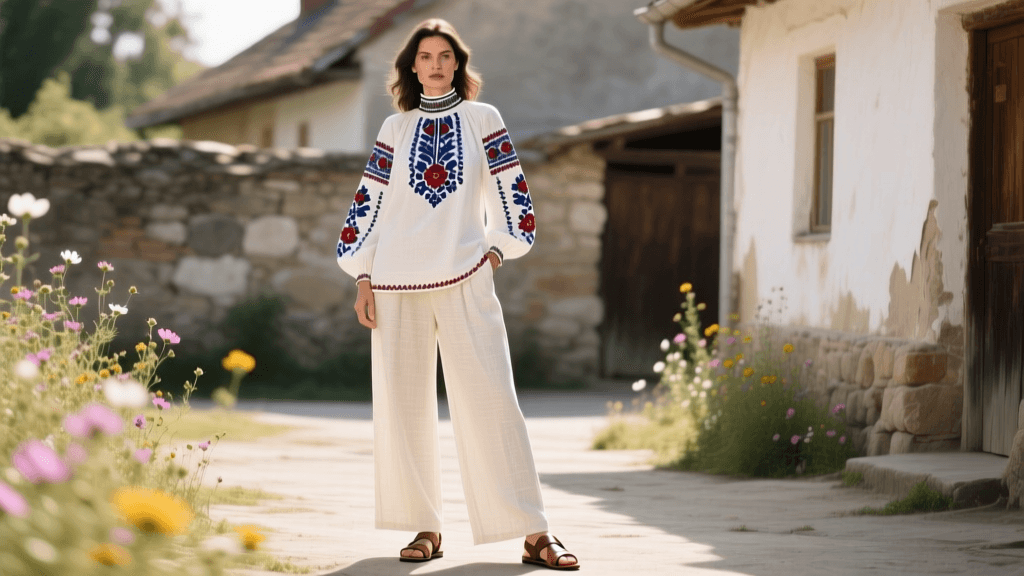
Known for its striking, high-contrast geometric patterns, often utilizing deep indigo, black, and vibrant red on a crisp white or cream background. The graphic nature of Vrancea embroidery aligns perfectly with modern monochromatic streetwear.
Olt
The Olt region favors intricate, curvilinear floral motifs and 'snake' patterns, often rendered in vivid reds and blacks. This style offers a romantic yet fierce aesthetic, ideal for bohemian-leaning contemporary wardrobes.
Contemporary Styling Rules for 2026
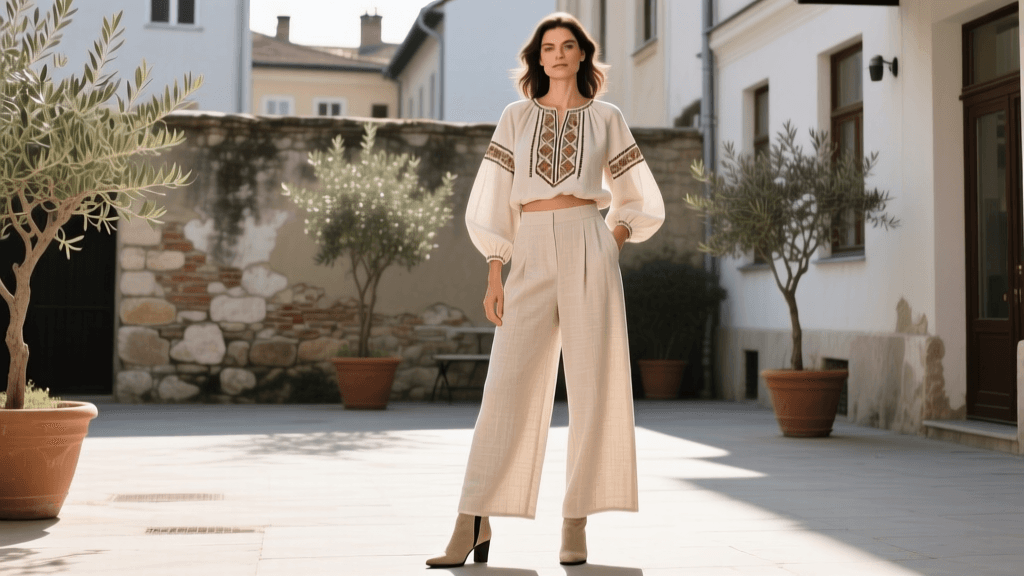
The golden rule of wearing the IA in a modern context is contrast. Because the blouse is inherently voluminous, heavily textured, and rich in historical detail, the rest of the outfit must provide structural grounding. Here are three distinct styling methodologies dominating the 2026 urban fashion scene.
1. The Heritage Boardroom: Tailored Trousers and Structured Blazers
To wear the IA in a professional or high-fashion urban setting, contrast its soft, gathered volume with sharp, masculine-inspired tailoring. Tuck a crisp, linen IA with black-and-red Vrancea embroidery into high-waisted, wide-leg wool trousers. The high waistband captures the excess fabric of the blouse, preventing bulk, while the wide leg mirrors the flowing nature of the traditional garment. Layer a sharply tailored, oversized blazer over the shoulders. The blazer's rigid lapels frame the delicate altița on the shoulder, creating a striking dialogue between corporate power dressing and ancestral craftsmanship. Finish with minimalist leather loafers and a structured top-handle bag.
2. The Artisan Weekend: Raw Denim and Selvedge Edges
For a more relaxed, weekend aesthetic, the IA pairs flawlessly with premium raw denim. The indigo dye of the denim echoes the traditional natural dyes used in Romanian folk textiles. Choose a pair of straight-leg or slight flare selvedge jeans with a high rise. Allow the râuri (embroidered rivers) on the sleeves to cascade over the denim jacket or vest if layering. In 2026, the 'quiet luxury' movement has elevated this look; avoid distressed denim and opt for clean, dark washes that respect the elegance of the embroidery. Ground the outfit with suede ankle boots or minimalist white leather sneakers.
3. Summer Evening Elegance: Silk Midi Skirts and Woven Accessories
For warm-weather evenings, lean into the romantic origins of the blouse by pairing it with a fluid, bias-cut silk or cupro midi skirt in a muted, earthy tone—such as olive, terracotta, or deep plum. The matte texture of the hand-woven cotton or linen IA contrasts beautifully with the subtle sheen of the silk skirt. Belt the waist with a thin, hand-tooled leather belt to define the silhouette. Accessorize with modern interpretations of traditional woven accessories, such as a structured rattan clutch or a macramé shoulder bag, honoring the textile heritage without looking theatrical.
Sourcing the IA: Authenticity vs. Mass Production
As demand has surged, the market has become saturated with inaccurate, mass-produced copies. For the conscious consumer in 2026, understanding the sourcing landscape is essential. The push for artisanal transparency, championed by organizations like Fashion Revolution, encourages buyers to invest in pieces that support living wages and preserve endangered crafts.
| Sourcing Category | Characteristics & Materials | Price Range (2026) | Best For |
|---|---|---|---|
| Authentic Vintage (Pre-1980s) | Hand-spun hemp/linen, natural dyes, intricate hand-stitching. Often shows minor patina or repairs. | $250 - $800+ | Collectors, museum-quality wardrobes, historical purists. |
| Contemporary Artisan (Made-to-Order) | Hand-woven cotton/linen, traditional motifs stitched by rural cooperatives. Supports local economies. | $180 - $450 | Ethical fashion advocates, bespoke fit seekers, slow fashion. |
| Ethical Ready-to-Wear Brands | Machine-embroidered or semi-hand-finished, standardized sizing, high-quality commercial linen. | $90 - $200 | Urban professionals, everyday wear, accessible styling. |
| Fast Fashion Imitations | Synthetic blends (polyester), inaccurate motifs, poor drape, culturally appropriated designs. | $30 - $70 | Not recommended. Lacks structural integrity and cultural respect. |
When purchasing from contemporary artisans or vintage dealers, always request close-up photographs of the reverse side of the embroidery. Authentic hand-stitching will look nearly as neat on the back as on the front, whereas machine embroidery will reveal a chaotic web of backing threads and synthetic stabilizers.
Caring for Hand-Embroidered Heritage Textiles
Proper conservation is vital to maintaining the structural integrity and visual brilliance of the IA. Textile conservationists at institutions like the Victoria and Albert Museum emphasize that historical and artisanal textiles require specialized care to prevent fiber degradation and dye bleeding.
- Washing: Never machine wash an authentic IA. Hand wash in cold water using a pH-neutral, conservation-grade detergent. Avoid aggressive wringing, which can snap the delicate hand-spun fibers and distort the gathering stitches.
- Drying: Roll the blouse in a clean, dry towel to press out excess moisture, then lay it flat on a drying rack away from direct sunlight. Direct UV exposure will rapidly fade natural dyes like madder root and walnut husk.
- Ironing: Always iron the garment inside out on a low-to-medium heat setting, using a pressing cloth to protect the raised embroidery. Ironing directly on the altița can crush the three-dimensional texture of the stitches.
- Storage: Store the IA flat or rolled in acid-free tissue paper. Hanging heavy, embroidered garments on standard hangers will cause the shoulder seams to stretch and tear under the weight of the thread over time.
Conclusion: Wearing History with Modern Intent
The Romanian IA is far more than a seasonal trend; it is a testament to the resilience of European folk art and the enduring human desire to wear meaning on our sleeves. In 2026, styling the IA is an exercise in cultural appreciation and sartorial sophistication. By understanding its regional nuances, respecting its structural anatomy, and pairing it with modern, tailored silhouettes, the contemporary wearer breathes new life into an ancient craft. Whether you are navigating a metropolitan boardroom or attending a summer gallery opening, the authentic IA offers a profound, beautiful connection to the hands that wove, stitched, and preserved it.