Scottish Kilt Pleating and Tartan Drafting Guide 2026
The 2026 Renaissance of Bespoke Highland Dress
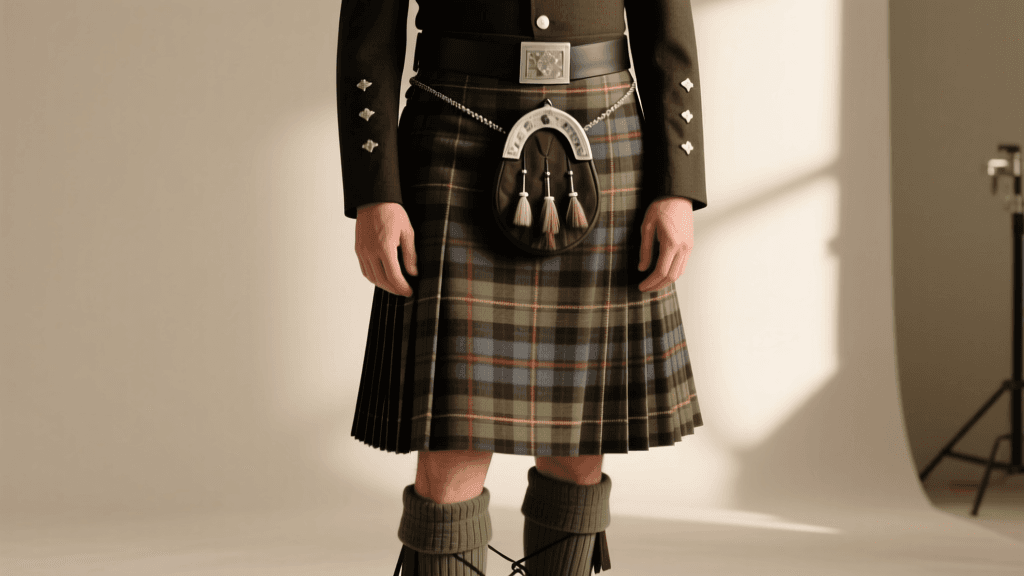
The year 2026 has ushered in a remarkable renaissance for traditional European folk garments, with the Scottish kilt standing at the forefront of this heritage revival. As fast fashion fatigue peaks, a new generation of makers and tailors is returning to the meticulous, mathematically rigorous art of bespoke kiltmaking. Constructing a traditional eight-yard kilt is not merely sewing; it is an exercise in structural engineering, geometric pattern drafting, and historical preservation. Unlike modern garment construction that relies on darts and complex curved seams, the kilt achieves its iconic silhouette entirely through precise pleating, strategic canvas interfacing, and the manipulation of rectangular woven wool.
Whether you are an experienced tailor expanding into historical European folk dress or a dedicated enthusiast tackling your first heritage project, understanding the geometry of the tartan sett and the mechanics of the knife pleat is essential. This comprehensive guide details the exact construction patterns, measurement protocols, and pleating techniques required to draft and build an authentic, hand-stitched Scottish kilt using contemporary 2026 tailoring standards.
Sourcing Materials: Worsted Wool and Modern Canvas
The foundation of any authentic kilt is the tartan cloth. For a traditional adult kilt, you must source 100% worsted wool, typically woven in a 2/2 twill structure which gives the fabric its distinctive diagonal rib and excellent pleat-holding memory. In 2026, the industry standard remains the 16-ounce 'heavyweight' wool for formal and ceremonial wear, though 13-ounce 'medium weight' is increasingly popular for highland dancing and active wear due to its improved breathability and drape.
You will require exactly eight yards (288 inches) of single-width tartan (approximately 54 to 60 inches wide). Additionally, you must procure heavy-duty linen canvas or haircloth for the internal interfacing. The canvas is what gives the kilt its structural rigidity around the waist and hips, preventing the heavy wool from collapsing or sagging over time. Modern kiltmakers in 2026 also utilize laser-guided chalk markers and digital thread-count calipers to ensure absolute precision when mapping the tartan pattern before the first cut is made.
Decoding the Tartan Sett and Thread Count
The 'sett' is the repeating pattern of a tartan. Before drafting your pleats, you must understand the exact dimensions of your chosen sett. According to the Scottish Register of Tartans, every officially recognized tartan has a specific thread count that dictates the sequence and width of colored threads in both the warp and weft. Because the twill weave creates a directional diagonal line, the kiltmaker must identify the 'pivot point' of the sett—the exact thread where the pattern mirrors itself.
When planning your pleats, you must decide whether to 'pleat to the sett' or 'pleat to the stripe'. Pleating to the sett means folding the fabric so that the pattern on the visible face of each pleat perfectly matches the pattern on the flat aprons, creating a continuous, unbroken design across the back of the kilt. Pleating to the stripe involves aligning a single prominent vertical line of the tartan to the edge of every pleat, creating a striking, uniform striped effect on the back while the front aprons retain the full sett pattern. The Victoria and Albert Museum's extensive textile archives note that pleating to the sett is the most common method for modern civilian dress, requiring vastly more mathematical calculation to ensure the hidden under-folds consume the exact correct amount of fabric.
Essential Measurements for the Traditional Kilt
A kilt is not worn on the natural waist like modern trousers; it sits higher, typically at the navel. Taking incorrect measurements is the most common point of failure for novice kiltmakers. You must record the following dimensions with the wearer standing naturally, breathing normally, and wearing only a shirt:
- The Waist: Measured snugly around the navel. This is where the top of the kilt will sit.
- The Hips (or Seat): Measured around the widest part of the buttocks. This dictates the circumference of the kilt at the bottom of the 'fell'.
- The Length: Measured from the floor up to the navel, minus two inches (to ensure the kilt rests just at the top of the knee cap when kneeling). Alternatively, measure from the navel down to the middle of the knee.
- The Fell: The distance from the waist down to the widest part of the hips. This is typically 7 to 9 inches and represents the area where the pleats are stitched down flat before flaring out.
The Mathematics of the Eight-Yard Kilt
The allocation of the eight yards of wool is strictly governed by traditional ratios. Approximately two yards are used for the inner apron, two yards for the outer apron, and the remaining four yards are consumed by the pleats. Because a single knife pleat requires an under-fold and an over-fold, those four yards of fabric will yield roughly 25 to 30 individual pleats, depending on the width of the sett.
| Tartan Type | Sett Size (Inches) | Ideal Visible Pleat Width | Hidden Under-fold | Total Fabric per Pleat |
|---|---|---|---|---|
| Royal Stewart | 6.0 | 3.0 | 5.5 | 8.5 inches |
| Black Watch | 4.5 | 2.25 | 4.0 | 6.25 inches |
| Ancient MacLeod | 5.5 | 2.75 | 5.0 | 7.75 inches |
| Dress Gordon | 7.0 | 3.5 | 6.5 | 10.0 inches |
Executing the Knife Pleat: Precision Folding and Pressing
Creating the pleats is the most labor-intensive phase of kilt construction. Each pleat is a 'knife pleat', meaning the fabric is folded entirely in one direction. When pleating to the sett, the maker must locate the pivot line on the tartan, fold the fabric back on itself so that the visible face matches the flat apron, and pin it securely. The hidden portion of the pleat (the under-fold) is what consumes the bulk of the four yards of fabric.
Once pinned, the pleats must be basted with heavy linen thread about one inch below the top edge to hold them in place. Following basting, the kilt is subjected to intense heat and steam. Using a traditional wooden clapper and a heavy steam iron, the maker presses the pleats flat. The 2/2 twill weave of the worsted wool, when exposed to high heat and moisture, permanently sets the memory of the fold. In 2026, many master tailors use specialized Teflon-coated steam presses to avoid scorching the delicate wool fibers while achieving a razor-sharp crease that will last for decades.
Constructing the Fell and Inner Aprons
The 'fell' is the tailored section between the waist and the hips. Because the human body is not a cylinder but a tapered cone, the flat rectangular pleats must be shaped to hug the small of the back and flare over the hips. This is achieved by tapering the width of the hidden under-folds from the hip line up to the waistline. The maker calculates the difference between the hip measurement and the waist measurement, divides that excess fabric by the number of pleats, and takes in a small wedge (or dart) within the hidden part of each pleat.
Once the pleats are tapered and stitched down the length of the fell using a blind stitch, the internal canvas is applied. The canvas is cut to match the shape of the aprons and the fell, then pad-stitched to the wool. This internal scaffolding is what allows the kilt to support the weight of the heavy wool and the sporran without stretching out of shape. As documented by National Museums Scotland, the evolution of the kilt from the untailored 'Great Plaid' (Féileadh Mór) to the modern tailored 'Little Kilt' (Féileadh Beag) was entirely driven by the introduction of these structured, stitched-down pleats and internal canvas supports during the 18th and 19th centuries.
Finishing Details: Straps, Buckles, and Hems
The final stages of construction involve attaching the leather straps and buckles. The kilt fastens on the right side for the outer apron and the left side for the inner apron. Heavyweight bridle leather is cut, skived, and stitched using a saddle stitch with waxed linen thread. The bottom hem of the kilt is not folded up like a standard garment; instead, the raw edge is either left selvage (if woven on a shuttle loom) or finished with a blind hem stitch to prevent bulk from ruining the drape of the pleats. Finally, the kilt undergoes a final, exhaustive pressing, ensuring that the geometry of the tartan and the sharpness of the knife pleats meet the exacting standards of 2026 heritage tailoring.