Ukrainian Vyshyvanka Guide: Sourcing Linen & Threads in 2026
The Renaissance of Eastern European Folk Dress in 2026
The year 2026 has witnessed an unprecedented global revival of traditional Eastern European and Balkan folk dress. As sustainable fashion and heritage craftsmanship take center stage in contemporary wardrobes, the Ukrainian vyshyvanka—alongside its Balkan cousins like the Serbian zubun and Bulgarian shevitsa—has transcended its ceremonial roots to become a staple of modern, culturally conscious style. For artisans, historians, and fashion enthusiasts, constructing an authentic garment requires more than just a passing appreciation for folklore; it demands a rigorous understanding of historical textiles, regional geometry, and precise material sourcing. This comprehensive guide will walk you through the exact specifications, materials, and techniques needed to source and stitch a museum-quality Eastern European folk shirt in 2026.
Understanding the Anatomy of the Traditional Shirt
Before sourcing materials, it is crucial to understand the structural anatomy of the traditional Slavic shirt. Unlike modern Western patterns that rely on curved armholes and tailored darts, the authentic vyshyvanka is constructed entirely from rectangular pieces of woven cloth. This zero-waste approach honors the historical value of handwoven linen.
- Polotnyshche (Main Body): The primary rectangular panel that forms the torso.
- Ustavka (Shoulder Insert): A rectangular piece connecting the body to the sleeve, often heavily embroidered as it sits prominently on the shoulder.
- Manizhka (Chest Panel): The upper chest area, typically featuring dense, protective geometric motifs.
- Rozporka (Front Slit): The neckline opening, finished with a woven tie or a stand-up collar.
- Manzhet (Cuff): The wrist gathering, serving as a frame for the intricate sleeve embroidery.
Understanding these components allows you to calculate exact fabric yardage. For a standard adult shirt in 2026, you will need approximately 2.5 to 3 meters of fabric, assuming a standard width of 140 centimeters, to accommodate the wide, flowing sleeves characteristic of Carpathian and Dnieper region styles.
Decoding Regional Slavic and Balkan Motifs
Eastern European embroidery is not merely decorative; it is a complex semiotic system. When planning your 2026 project, selecting a specific regional motif ensures historical accuracy and cultural respect.
Ukrainian Hutsul and Pokutia Geometrics
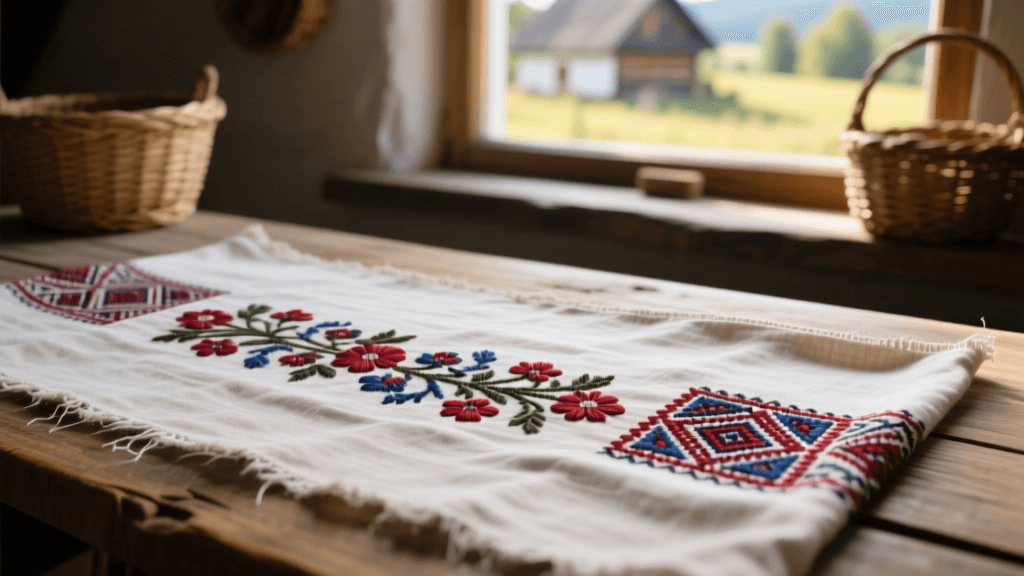
Originating from the Carpathian Mountains, Hutsul embroidery is renowned for its dense, vibrant geometric patterns. The ruzha (eight-petal star rosette) and derevo zhyttia (tree of life) are foundational. These designs require high-count linen to accommodate the minute, precise cross-stitches that create optical illusions of depth and movement.
Poltava White-on-White (Bila po Bilomu)
In stark contrast to the vibrant Hutsul styles, the Poltava region is famous for its sophisticated white-on-white embroidery. This technique relies heavily on texture rather than color, utilizing cutwork, satin stitch, and drawn-thread work. According to the Victoria and Albert Museum's introduction to historical embroidery, such textural techniques require a masterful understanding of thread tension and fabric grain to prevent the linen from warping.
Bulgarian Shevitsa and Serbian Zubun Accents
Moving into the Balkans, the Bulgarian shevitsa features striking diamond shapes and hexagons, often utilizing the Elbetitsa (double cross) motif in deep reds and blacks. Similarly, traditional Serbian folk dress incorporates heavy wool embroidery on linen bases, particularly on the zubun (sleeveless vest) and shirt cuffs. These Balkan styles often utilize the smenka (alternating stitch) to create a ribbed, three-dimensional effect.
Sourcing Authentic Linen and Hemp in 2026
The foundation of any authentic Slavic folk garment is the fabric. In 2026, the market has seen a surge in organic, heritage-breed flax cultivation, particularly from Eastern European mills that have modernized their looms while retaining traditional slub and texture. Avoid mass-produced, chemically bleached linens; authentic embroidery requires a fabric with a visible, even weave to count threads accurately.
| Fabric Weight (GSM) | Thread Count | Best Use | Embroidery Suitability |
|---|---|---|---|
| 140-160 GSM | 28-32 count | Summer blouses, lightweight shirts | Excellent for fine cross-stitch and delicate cutwork |
| 180-210 GSM | 25-28 count | Everyday wear, structured tunics | Ideal for satin stitch, dense geometric patterns |
| 250-300 GSM | 18-22 count | Outerwear, heavy winter shirts, Zubun panels | Best for heavy wool embroidery and raised stitchery |
When sourcing, look for 'evenweave' or 'hardanger' linens from heritage suppliers in Belarus, Ukraine, and Romania. Many specialized online textile merchants in 2026 now offer pre-washed, naturally sun-bleached flax that mimics the exact drape and color of 19th-century antique textiles.
Selecting the Right Embroidery Threads
The choice of thread dictates the longevity and visual impact of your garment. While 20th-century mass production introduced synthetic blends, the 2026 artisan revival strictly favors natural fibers.
- Mercerized Cotton: Brands like DMC and Anchor remain the gold standard for vibrant, colorfast cross-stitch. For historical accuracy, seek out their matte-finish lines, which better replicate the look of hand-dyed cotton.
- Hand-Spun Wool: Essential for Balkan and Carpathian styles. Wool provides a raised, tactile quality that cotton cannot achieve. Sourcing naturally dyed wool from local Balkan cooperatives ensures rich, authentic hues of madder red and walnut brown.
- Silk Floss: Used sparingly for highlights in high-end Poltava and Hutsul pieces. Silk catches the light, giving the geometric stars a subtle, luminous quality.
Essential Hand-Embroidery Techniques
Executing the embroidery requires patience and precision. The most common stitches in Eastern European folk dress include:
- Khrestyk (Cross-Stitch): The backbone of Hutsul and Bulgarian motifs. It is vital to ensure that the top stitch of every cross slants in the exact same direction to maintain a uniform texture.
- Lyshva (Satin Stitch): Used extensively in floral and geometric fillings. The stitches must be laid perfectly parallel and tight to create a smooth, satin-like surface.
- Merezhka (Drawn-Thread Cutwork): A complex technique where warp or weft threads are pulled from the linen, and the remaining threads are bundled and wrapped. As noted in the Encyclopedia Britannica's extensive archives on global embroidery techniques, drawn-thread work represents one of the pinnacles of European textile artistry, requiring immense structural control.
Modern Integration and Textile Conservation
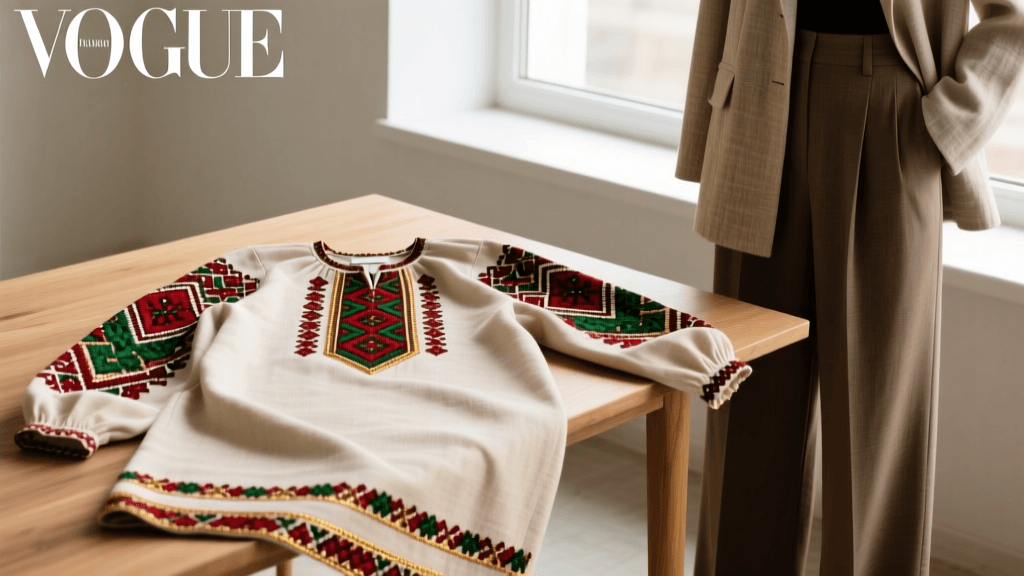
Wearing a handmade vyshyvanka or Balkan folk shirt in 2026 is a statement of cultural pride and sustainable fashion. To integrate these garments into a modern wardrobe, pair a heavily embroidered linen tunic with tailored, high-waisted wool trousers or a minimalist midi skirt. The contrast between the intricate, historical needlework and clean, contemporary silhouettes creates a striking, sophisticated aesthetic.
However, preserving these garments requires strict adherence to historical conservation methods. Never machine-wash a hand-embroidered folk shirt. The agitation can cause the natural linen to shrink at a different rate than the embroidery thread, leading to severe puckering. According to the Victoria and Albert Museum's authoritative guidelines on textile conservation, heritage textiles should be hand-washed in cool water using a pH-neutral, conservation-grade detergent. After washing, the garment should be rolled in a clean towel to extract moisture, then laid flat to dry, and finally pressed on the reverse side using a steam iron over a damp pressing cloth to protect the raised stitches.
Conclusion
Constructing a traditional Eastern European folk garment in 2026 is a deeply rewarding endeavor that bridges the gap between ancestral heritage and modern craftsmanship. By carefully sourcing authentic evenweave linen, selecting natural fibers, and mastering regional stitching techniques, you are not merely making a piece of clothing; you are actively participating in the preservation of Slavic and Balkan cultural history. Whether you are drawn to the stark elegance of Poltava white-on-white or the vibrant geometry of the Carpathians, the vyshyvanka remains a timeless canvas for human creativity and resilience.