Authentic Vyshyvanka & Ie Blouse Sourcing Guide 2026
The Resurgence of Eastern European Textile Heritage in 2026
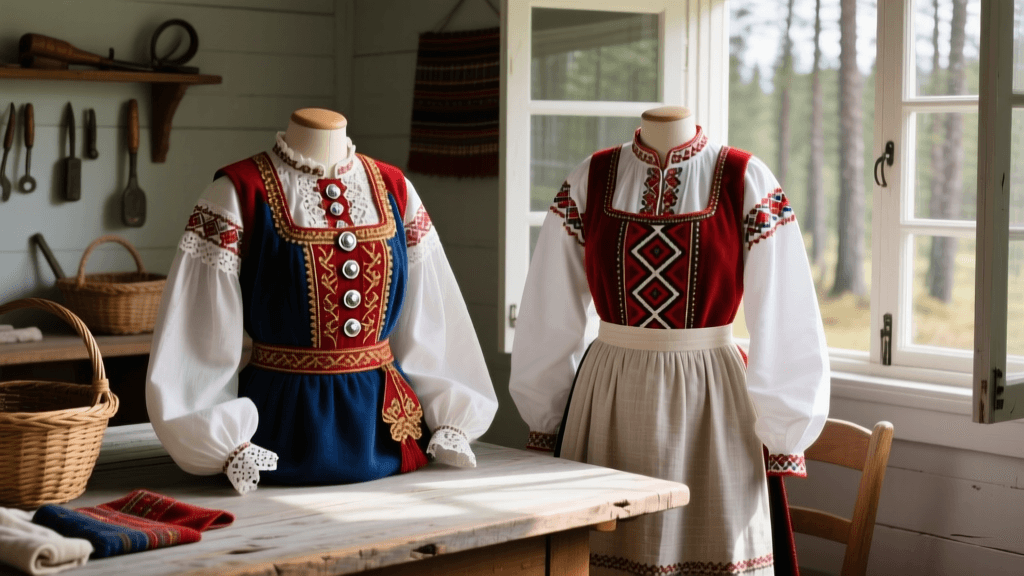
In 2026, the global slow fashion movement has increasingly turned its gaze toward the rich, ancestral textile traditions of Eastern Europe and the Balkans. As consumers pivot away from homogenized fast fashion, there is a profound demand for garments that carry historical weight, cultural narratives, and impeccable artisanal craftsmanship. At the forefront of this revival are two iconic garments: the Slavic Vyshyvanka and the Balkan Ie. Both are traditional embroidered blouses that serve as wearable archives of their respective regions, yet navigating the modern market to find authentic, ethically sourced pieces requires a discerning eye.
This comprehensive guide explores the intricate anatomy of these garments, provides a 2026 market analysis for sourcing authentic pieces, and offers essential care instructions to preserve these textile masterpieces for future generations. Whether you are a collector, a cultural enthusiast, or a conscious consumer, understanding the nuances of Slavic and Balkan embroidery is essential.
Decoding the Stitch: Vyshyvanka vs. Ie
While both the Vyshyvanka and the Ie are fundamentally embroidered linen or hemp blouses, their construction, motifs, and stitching techniques are deeply rooted in distinct cultural cosmologies. Understanding these differences is the first step in authenticating a piece.
The Slavic Vyshyvanka (Ukraine & Surrounding Regions)
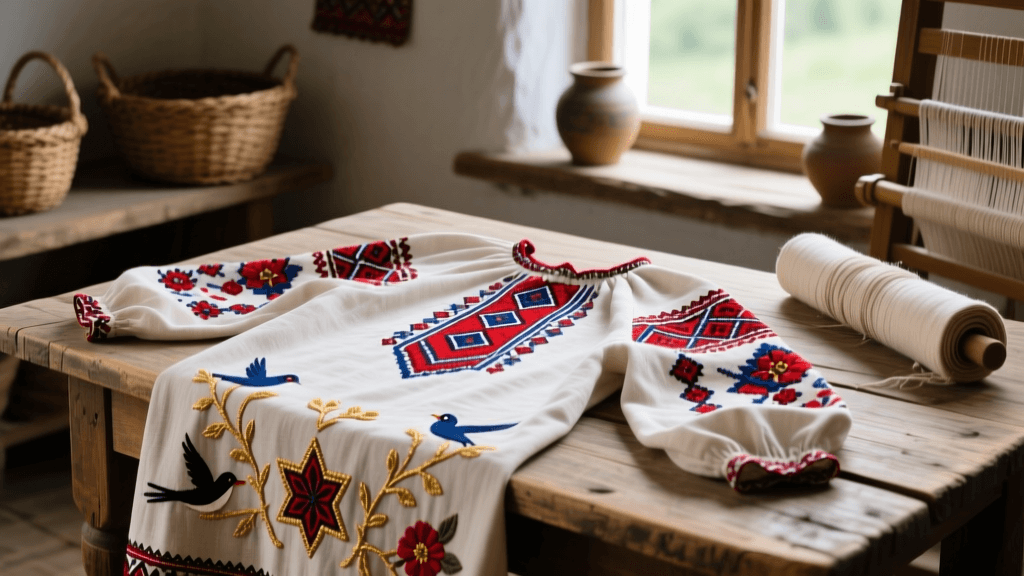
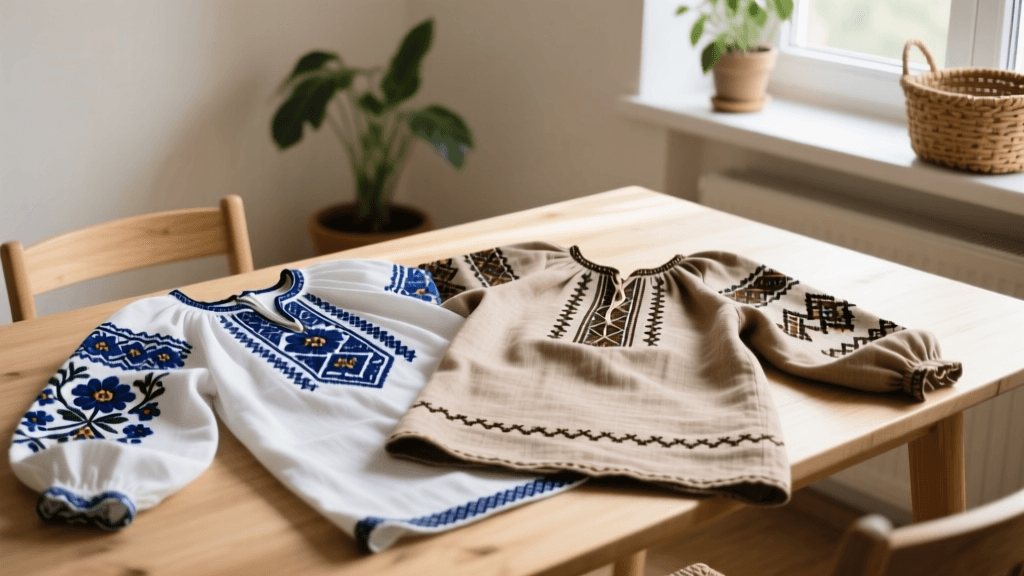
The Ukrainian Vyshyvanka is characterized by its highly structured, geometric motifs and the strategic placement of embroidery on the cuffs, neckline, and chest slit. The embroidery is not merely decorative; it is a protective talisman. Traditional Slavic stitching techniques include nizinka (a type of surface darning that creates a reversible pattern), zavolikannya (a running stitch that creates horizontal bands), and precise cross-stitch. The color palette is historically restricted to specific natural dyes: deep madder red, oak bark black, and occasionally woad blue or weld yellow. The rhombus, symbolizing fertility and the sown field, is the most ubiquitous motif.
The Balkan Ie (Romania & Moldova)
The Romanian Ie is defined by its complex, flowing architecture, most notably the altița (a dense, highly ornate rectangular panel on the shoulder), the increț (a gathering of fabric below the altița), and the râuri (diagonal or vertical 'rivers' of embroidery flowing down the sleeves). Recognized for its profound cultural significance, the traditional techniques of the Ie have been championed by institutions like the UNESCO Intangible Cultural Heritage programs. Unlike the strictly geometric Slavic styles, the Ie frequently incorporates stylized floral, solar, and zoomorphic motifs, utilizing silk threads alongside cotton and wool to create a subtle, lustrous sheen.
The 2026 Sourcing Landscape: Avoiding Mass-Production
The surge in popularity of folk dress has unfortunately led to a market flooded with machine-embroidered replicas produced in overseas factories. In 2026, authenticating a piece requires looking beyond the visual pattern and examining the reverse side of the fabric. Hand-embroidered traditional pieces will show a nearly identical pattern on the inside, with minimal loose threads and organic, slight irregularities in tension. Machine-made copies will feature a chaotic web of backing threads and synthetic stabilizers.
To source authentic garments, buyers must engage directly with heritage cooperatives and certified artisan guilds. Organizations supported by the Ukrainian Institute have established digital registries of master artisans, allowing global buyers to commission bespoke Vyshyvankas directly from villages in the Carpathian Mountains. Similarly, the National Museum of the Romanian Peasant frequently partners with rural weaving and embroidery cooperatives, offering authenticated pieces where the proceeds directly sustain the artisan communities. When purchasing online in 2026, always request a video call with the artisan or a high-resolution macro photograph of the reverse stitching.
2026 Pricing and Valuation Matrix
The cost of an authentic Eastern European embroidered blouse reflects hundreds of hours of meticulous hand-stitching. Below is the 2026 market valuation matrix to help you budget and assess the fairness of a piece's price.
| Garment Tier | Material & Thread | Embroidery Time | 2026 Price Range (USD) |
|---|---|---|---|
| Factory Replica | Poly-blend, Synthetic Thread | Machine (2-4 Hours) | $45 - $120 |
| Semi-Artisan | Commercial Linen, Cotton Thread | Hand/Machine Mix (40+ Hours) | $250 - $450 |
| Master Heritage | Hand-woven Hemp/Linen, Silk/Natural Dye | 100% Hand (200-400 Hours) | $800 - $2,500+ |
| Museum/Antique | Archival Linen, Antique Silk | Historical (Late 19th/Early 20th C.) | $3,000 - $10,000+ |
Regional Variations to Look For
When sourcing a piece, identifying the specific regional origin adds immense value to your collection. Here are the most sought-after regional styles in 2026:
- Hutsul Region (Ukraine): Known for incredibly dense, vibrant embroidery featuring complex geometric stars and crosses, often accented with brass beads or metallic threads.
- Maramureș (Romania): Characterized by a stark, elegant palette of black or dark brown silk thread on pristine white linen, featuring intricate hook and spiral motifs.
- Olt (Romania): Famous for its bold, rhythmic patterns utilizing vivid reds and deep blues, with heavy smocking at the neckline.
- Bukovina (Cross-border): Features a unique blend of Slavic and Balkan influences, often incorporating 'woven' embroidery techniques that mimic the look of loom-woven tapestries.
Archival Care for Linen and Hemp Textiles
Authentic Slavic and Balkan blouses are crafted from natural fibers and dyed with organic or delicate silk threads. Improper care can cause catastrophic dye bleeding or fiber degradation.
- Washing: Never machine wash a hand-embroidered heritage piece. Soak the garment in cold water with a pH-neutral, conservation-grade textile detergent. Avoid agitation; instead, gently press the water through the fabric.
- Drying: Never wring or twist the linen, as this will break the fibers and distort the embroidery tension. Roll the blouse in a clean, white cotton towel to absorb excess moisture, then lay it flat on a drying rack out of direct sunlight.
- Ironing: Iron the garment while it is still slightly damp. Always iron on the reverse side over a thick, padded terry-cloth towel. This prevents the embroidery stitches from being crushed and flattened by the iron's weight.
- Storage: Store the blouse flat in an acid-free archival box lined with unbleached muslin. Avoid hanging the garment for long periods, as the weight of the heavy embroidery can stretch and tear the antique linen shoulders over time.
Styling Traditional Blouses in Contemporary 2026 Wardrobes
The beauty of the Vyshyvanka and the Ie lies in their versatility. In 2026, the most celebrated styling approach is 'heritage juxtaposition'—pairing these voluminous, historically rich blouses with sharply tailored, modern silhouettes. For a sophisticated daytime look, tuck a Maramureș Ie into high-waisted, wide-leg wool trousers, allowing the intricate shoulder altița to serve as the focal point. For evening wear, a black-threaded Hutsul Vyshyvanka paired with a minimalist silk slip skirt creates a striking balance between rustic tradition and modern elegance. Avoid over-accessorizing; let the centuries-old geometry and symbolism of the embroidery speak for itself.
'To wear a traditionally embroidered blouse is not merely to put on a garment; it is to drape oneself in the cosmology, the seasons, and the protective prayers of generations of women who spun the thread and stitched the universe into linen.' — Eastern European Textile Archive, 2026 Exhibition Catalog.
Conclusion
Sourcing an authentic Vyshyvanka or Ie in 2026 is an investment in cultural preservation and sustainable craftsmanship. By understanding the distinct anatomies of Slavic and Balkan embroidery, recognizing the hallmarks of true hand-stitching, and supporting verified artisan cooperatives, you ensure that these ancient textile traditions continue to thrive. Treat these garments not just as clothing, but as wearable heirlooms that carry the enduring spirit of Eastern European heritage into the future.