Viral Mamianqun Hanfu Trends: TikTok & Douyin Styling
The Algorithm's Favorite Skirt: Understanding the Mamianqun Boom
If you have spent any time on the fashion side of TikTok or its Chinese counterpart, Douyin, you have undoubtedly encountered the Mamianqun. Often translated as the 'horse-face skirt,' this traditional Ming Dynasty garment has transcended historical reenactment to become a staple of modern streetwear. Driven by the 'Xin Zhongshi' (New Chinese Style) movement, the Mamianqun is currently dominating viral transition videos, everyday outfit grids, and cultural appreciation discussions across global social media platforms.
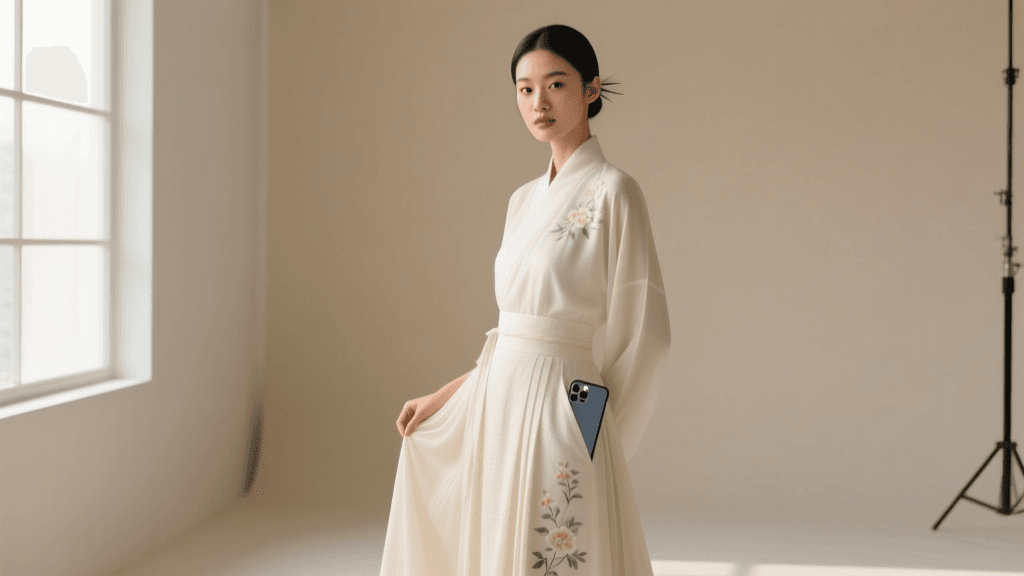
Unlike the highly complex, multi-layered Shenyi or the delicate, sheer fabrics of the Song Dynasty, the Mamianqun is uniquely suited for modern life. Its structural pleats, flat front and back panels, and wrap-around waistband offer a striking silhouette that pairs just as well with a cropped graphic tee as it does with a traditional silk blouse. According to a comprehensive report by BBC News on the broader Hanfu revival, younger generations are increasingly using these garments to forge a distinct cultural identity that bridges the ancient and the avant-garde.
The Viral Catalyst: From Runway Controversy to Douyin Dominance
The Mamianqun's recent explosion in Western and global algorithmic feeds was partly catalyzed by a high-profile fashion controversy. When a major luxury French fashion house released a mid-length skirt bearing a striking resemblance to the traditional horse-face skirt, Chinese netizens and Hanfu enthusiasts took to Douyin and TikTok to educate the public on the garment's origins. As reported by the South China Morning Post, this digital activism sparked a massive wave of creators wearing authentic Mamianqun in everyday settings—from Parisian streets to modern subway stations—proving its versatility and historical weight.
The Mamianqun is not merely a historical artifact; it is a dynamic canvas for modern styling, proving that traditional silhouettes can anchor a contemporary wardrobe.
Anatomy of a Viral Mamianqun: What to Look For
Before attempting to recreate viral Douyin looks, it is crucial to understand the anatomy of the skirt. A true Mamianqun consists of two overlapping panels that create a flat, unpleated section at the front and back (the 'horse face'), while the sides feature deep, structured pleats. When shopping on platforms like Taobao, AliExpress, or specialized Hanfu boutiques, pay attention to the following specifications:
Fabric and Weave
- Zhi Jin (Woven Gold): The most luxurious and traditional option. Metallic threads are woven directly into the fabric, creating intricate, light-catching patterns (often dragons, phoenixes, or floral motifs). Best for high-end transition videos and formal events.
- Jacquard Polyester Blends: The undisputed champion of everyday 'Xin Zhongshi' streetwear. It holds pleats exceptionally well, resists wrinkling, and is machine-washable. This is the fabric of choice for viral daily vloggers.
- Cotton/Linen: Ideal for summer and minimalist aesthetics, though it requires heavy steaming to maintain the sharp side pleats.
Sizing and the 'Ankle-Grazing' Formula
The most common mistake international buyers make is purchasing the wrong length. The viral Douyin aesthetic relies heavily on a skirt that grazes the ankle bone, allowing a glimpse of traditional cloud-toe shoes or modern chunky sneakers. The Formula: Measure from your natural waist to your ankle bone. For a creator who is 165cm (5'5') tall, a skirt length of 95cm to 100cm is usually the sweet spot. Always check the seller's specific length chart, as 'one size' Hanfu skirts vary wildly.
Everyday Styling: The 'Xin Zhongshi' Matrix
The 'New Chinese Style' (Xin Zhongshi) is all about juxtaposition. Douyin creators rarely wear full, historically accurate Ming Dynasty sets for daily streetwear. Instead, they mix the Mamianqun with modern basics. Below is a data matrix of the most viral top pairings currently trending on TikTok and Douyin.
| Top Pairing | Aesthetic Vibe | Best Occasion | Est. Cost (USD) |
|---|---|---|---|
| Cropped Knit Cardigan | Soft, feminine, academia | Cafe hopping, study vlogs | $25 - $45 |
| Oversized Vintage Blazer | Edgy, gender-neutral, high-fashion | Art galleries, night outs | $60 - $120 |
| Mandarin Collar Shirt | Traditional fusion, office-appropriate | Work, formal dinners | $30 - $50 |
| Graphic Streetwear Tee | Y2K meets Ming Dynasty, rebellious | Concerts, skate parks | $15 - $30 |
Recreating the Viral Douyin Transition Video
The hallmark of Hanfu TikTok is the seamless transition video. The most popular format for the Mamianqun is the 'Jacket Throw' or 'Pleat Spin.' Here is a step-by-step technical guide to recreating a viral Douyin-style transition using your smartphone.
1. The Setup and Camera Settings
- Frame Rate: Shoot in 4K at 60fps. This allows you to slow down the footage in post-production for that buttery-smooth, dramatic fabric ripple.
- Exposure Lock: This is the most critical step. Tap and hold your screen to lock the exposure and focus. If the lighting shifts between your 'before' and 'after' clips, the transition will look jarring and amateur.
- Audio Syncing: Choose a trending BGM (Background Music) with a heavy bass drop or a distinct traditional instrument strike (like a Guzheng or Pipa). Mark the exact millisecond of the beat drop.
2. The 'Pleat Spin' Execution
Clip A (Modern Wear): Stand in your modern outfit holding the Mamianqun by the waistband. On the beat drop, throw the skirt upward toward the camera lens, completely obscuring the frame in dark fabric.
Clip B (Full Hanfu): Wear the fully styled Mamianqun. Start the recording with the skirt pulled up over the camera lens (matching the darkness of Clip A). Pull the skirt down and away from the camera while simultaneously spinning to your left. The centrifugal force will cause the side pleats to flare out dramatically.
Editing: Use CapCut or TikTok's native editor to cut exactly on the beat drop where the screen is fully covered by the fabric. Add a subtle 'camera shake' effect on the beat for maximum impact.
Garment Care: Preserving the Viral Pleats
The visual appeal of the Mamianqun relies entirely on the sharpness of its side pleats. The flat 'horse face' panels must remain perfectly smooth, while the side pleats should look sharp enough to cut paper. Here is how Douyin creators maintain their skirts:
- Pleat Clips (Zhe Qun Jia): You can purchase specialized Hanfu pleat clips on AliExpress or Amazon for under $10. After wearing the skirt, re-fold the pleats, secure them with the clips, and hang the skirt by the waistband.
- Washing: Never machine-wash a Zhi Jin (woven gold) Mamianqun. Hand wash in cold water with a mild silk detergent. For everyday polyester jacquard skirts, use a mesh laundry bag on a delicate cycle.
- Ironing: Use a steam iron on a low-to-medium setting. Never drag the iron across the pleats. Instead, press the iron down vertically, lift, and move to the next section to avoid stretching the fabric and ruining the geometric structure.
Final Thoughts on the Digital Hanfu Movement
The viral success of the Mamianqun on TikTok and Douyin represents a fascinating shift in how traditional garments are consumed and styled in the 21st century. It is no longer confined to museum exhibits or niche historical festivals; it is a living, breathing component of global fashion. By understanding the correct sizing, mastering the Xin Zhongshi styling matrix, and utilizing modern video techniques, creators and fashion enthusiasts can participate in this cultural renaissance with both authenticity and modern flair.
For those looking to dive deeper into the historical context of these garments, the Wikipedia archive on the Mamianqun provides an excellent foundational understanding of its evolution from the Song and Ming dynasties to the modern era. Whether you are styling for a streetwear photoshoot or a viral transition video, the horse-face skirt remains a testament to the enduring power of Asian textile traditions.