Viral Hanfu Trends on TikTok & Douyin: The Ultimate Guide
The Digital Renaissance of Traditional Chinese Clothing
Over the past few years, the traditional Chinese garment known as Hanfu has experienced a massive resurgence, transforming from a niche historical hobby into a global fashion phenomenon. This revival is largely fueled by short-form video platforms like TikTok and its Chinese counterpart, Douyin. Millions of creators are showcasing intricate traditional outfits, blending ancient aesthetics with modern cinematic transitions. According to a cultural report by BBC Culture, the Hanfu movement has evolved into a powerful expression of cultural identity among Gen Z, with social media acting as the primary catalyst for its global spread.
For enthusiasts and newcomers alike, navigating the viral trends on these platforms can be overwhelming. From gravity-defying sleeve flicks to meticulously timed outfit transitions, the content is as much about the filmmaking as it is about the fashion. This comprehensive guide breaks down the dominant Hanfu styles trending on TikTok and Douyin, provides actionable filming hacks for viral transitions, and offers a practical buying guide for international audiences.
The Big Three: Dominant Hanfu Styles on Social Media
While Hanfu encompasses thousands of years of Chinese history, three specific dynastic styles consistently dominate the TikTok and Douyin algorithms. Each offers a distinct silhouette, fabric requirement, and vibe that translates beautifully to video.
| Dynasty | Key Garment | Aesthetic Vibe | Avg. Cost (USD) | Best Transition Style |
|---|---|---|---|---|
| Tang (618–907) | Qixiong Ruqun (Chest-High Skirt) | Ethereal, romantic, flowing | $35 - $80 | The Fan Cover / Slow-Mo Spin |
| Song (960–1279) | Beizi (Straight-Collar Coat) | Minimalist, elegant, scholarly | $40 - $120 | The Walking Reveal / Street Style |
| Ming (1368–1644) | Mamianqun (Horse-Face Skirt) | Regal, structured, luxurious | $50 - $150+ | The Sleeve Whip / Stomp Transition |
1. The Tang Dynasty Chest-High Ruqun (Qixiong Ruqun)
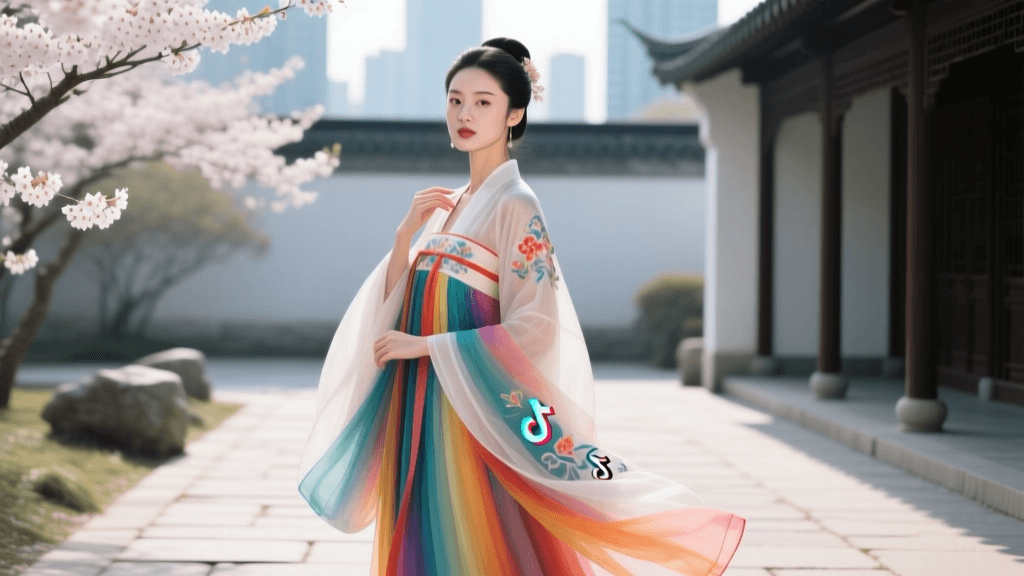
The Tang Dynasty is renowned for its cosmopolitan culture and opulent fashion. The viral Qixiong Ruqun features a skirt tied high above the bust, paired with a sheer, wide-sleeved shawl called a pibo. On TikTok, creators favor the "six-meter skirt" (liumi), which refers to the circumference of the hem. When spun in slow motion, the six meters of lightweight chiffon or silk blend create a breathtaking, cloud-like halo effect. To replicate this, ensure your video is shot at 60fps so you can apply a 0.5x slow-motion effect in post-production without losing frame quality.
2. The Song Dynasty Minimalist Beizi
Contrasting the opulence of the Tang, the Song Dynasty Beizi is a straight-collared, open-front coat with side slits that reach the hip or thigh. It is typically worn over a traditional camisole (dudou) or, for modern styling, a simple ribbed turtleneck. The viral appeal of the Song Beizi lies in its "old money" minimalist aesthetic. Creators often film themselves walking through bamboo forests or modern urban streets, highlighting the garment's clean lines and muted, earthy color palettes like celadon, slate, and ivory. Linen and ramie are the preferred fabrics for an authentic, breathable drape.
3. The Ming Dynasty Mamianqun (Horse-Face Skirt)
As noted by Reuters, the market for traditional clothing has exploded, with the Ming Dynasty Mamianqun becoming a staple even in modern corporate wardrobes in China. The skirt features flat front and back panels with deeply pleated sides. Viral Douyin videos often showcase zhijin (woven gold) Mamianqun, where metallic threads are woven directly into the fabric rather than embroidered on top. The heavy, structured swing of the pleats makes it the absolute best style for "stomp" transitions, where the creator stomps their foot on the beat drop, and the camera cuts to the heavy skirt flaring out in perfect symmetry.
Mastering the Viral "Hanfu Transition" Video
The hallmark of Hanfu content on TikTok and Douyin is the seamless outfit transition. These videos require precise timing, specific audio cues, and a bit of technical know-how. Here is how to execute the two most popular transition styles.
The "Sleeve Whip" Transition (Ming & Tang Styles)
- Setup: Mount your smartphone on a tripod at eye level. Ensure your lighting (natural golden hour or a ring light) is consistent for both clips.
- Clip 1 (Modern Clothes): Stand in your everyday outfit. On the designated beat drop of your chosen audio, aggressively flick your dominant arm's sleeve toward the camera lens, completely covering it. Stop recording the exact millisecond the fabric goes black/dark over the lens.
- Clip 2 (Hanfu): Change into your Hanfu. Start recording with your sleeve already covering the lens in the exact same position. Pull your arm back sharply on the same beat drop to reveal your full traditional outfit.
- Editing: Stitch the two clips together at the exact frame where the lens is covered. Add a subtle "whoosh" sound effect to mask the cut.
The "Fan Cover" Reveal (Tang Style)
This relies on a traditional folding fan or a round silk fan (tuan shan). Hold the fan close to your face in modern attire. Drop the fan downward toward the floor while simultaneously dropping your body weight (a slight squat). Cut the recording. In your Hanfu, start from the squat position with the fan near the floor, and smoothly rise while bringing the fan up to elegantly frame your face. The key to virality here is maintaining perfect eye contact with the lens throughout the movement.
Sourcing Viral Pieces: Costs, Sizing, and Search Terms
Buying Hanfu can be daunting for international buyers, as most viral pieces are sourced directly from Chinese e-commerce platforms like Taobao or specialized indie brands. The South China Morning Post highlights how local brands have scaled up production to meet the massive demand generated by social media trends, making these garments more accessible than ever.
Crucial Sizing Rules: Flat Measurements and the Collar
Unlike Western fashion, which relies on tailored curves and standard S/M/L sizing, traditional Hanfu is constructed using flat pattern drafting. You must measure your flat shoulder width, bust, and waist in centimeters. Furthermore, you must adhere to the jiaoling youren rule: the left side of the cross-collar must always wrap over the right side. Wrapping right-over-left is historically reserved for the deceased and is considered highly taboo. Always double-check your collar alignment before hitting record.
Essential Taobao Search Terms
To find the exact viral pieces you see on your For You Page, use these Mandarin search terms on Taobao or AliExpress:
- Tang Chest-High Skirt: 唐制齐胸襦裙 (Tang zhi qixiong ruqun)
- Song Dynasty Coat: 宋制褙子 (Song zhi beizi)
- Ming Horse-Face Skirt: 明制马面裙 (Ming zhi mamianqun)
- Woven Gold Fabric: 织金 (Zhijin)
Garment Care for the Content Creator
Viral Hanfu pieces, particularly those with woven gold or delicate silk blends, require meticulous care to maintain their camera-ready sheen. Never machine wash a Mamianqun with metallic threads; the agitation will snap the gold filaments and ruin the structured pleats. Instead, hand wash in cold water with a pH-neutral silk detergent. When drying, never wring the fabric. Lay it flat on a drying rack away from direct sunlight. To restore the sharp, viral-worthy pleats of a Ming skirt, use a garment steamer rather than an iron, gently pressing the pleats while the fabric is damp, and hang it with weighted clips to let gravity set the folds.
Conclusion
The intersection of ancient Chinese sartorial traditions and modern social media algorithms has birthed a unique digital subculture. Whether you are drawn to the ethereal flow of Tang Dynasty chiffon, the scholarly elegance of Song Dynasty linen, or the regal structure of Ming Dynasty woven gold, participating in these viral trends requires a blend of historical respect and modern filmmaking technique. By mastering the transition hacks, understanding flat-pattern sizing, and sourcing authentic garments, you can contribute to the global digital tapestry of the Hanfu renaissance.