Evolution of the Chinese Dragon Robe: Ming to Qing Court Fashion
The Pinnacle of Imperial Power: Understanding the Longpao
The Chinese dragon robe, or Longpao, stands as one of the most recognizable and intricate garments in global fashion history. Far more than mere clothing, these robes were wearable cosmologies, encoding the emperor's mandate to rule through elaborate silk tapestries, metallic threads, and strict color hierarchies. For historians, textile collectors, and modern enthusiasts of traditional Asian garments, understanding the evolution of court fashion—particularly the seismic shift from the Han-led Ming Dynasty (1368–1644) to the Manchu-led Qing Dynasty (1644–1912)—is essential. This guide explores the historical evolution of the imperial dragon robe and provides a practical, actionable framework for collectors and tailors looking to commission historically accurate replicas today.
Dynasty Evolution: Ming vs. Qing Court Fashion
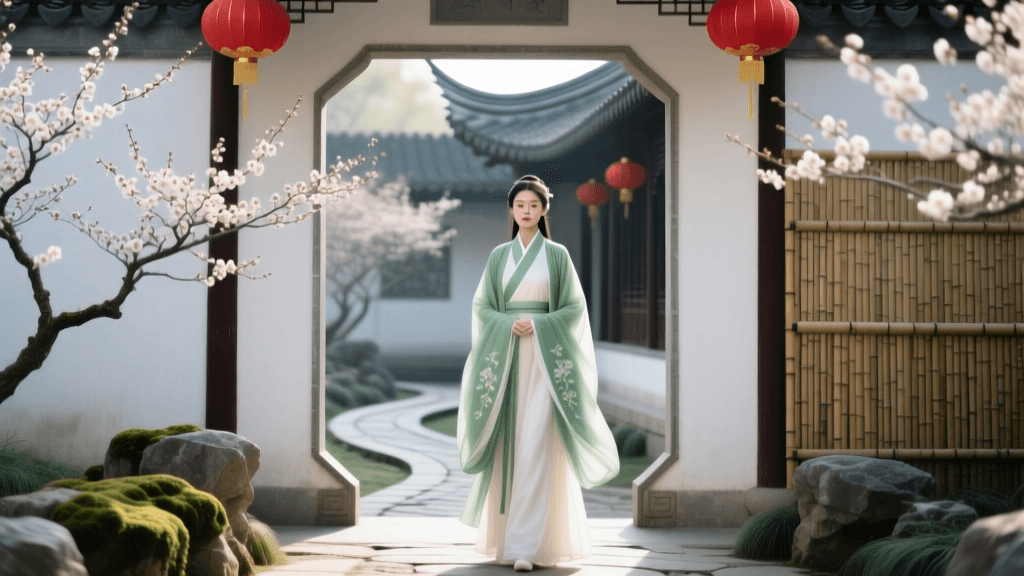
The transition from Ming to Qing court fashion represents a fascinating clash and eventual synthesis of Han Chinese sartorial traditions and Manchu nomadic practicality. Ming court robes, heavily influenced by Song and Tang predecessors, favored voluminous silhouettes, wide sleeves, and round or crossed collars that emphasized a sedentary, scholarly majesty. In contrast, the Manchu rulers of the Qing Dynasty introduced garments adapted for horseback riding and archery. According to the Victoria and Albert Museum's archives on Chinese court dress, the Qing mandated the Tifa Yifu policy, forcing Han Chinese men to adopt Manchu hairstyles and clothing, fundamentally altering the visual landscape of imperial China.
To understand the structural differences, one must look at the tailoring. Below is a comparison chart detailing the primary distinctions between Ming and Qing imperial robes.
| Feature | Ming Dynasty (Han Tradition) | Qing Dynasty (Manchu Tradition) |
|---|---|---|
| Collar | Round collar (Yuanling) or crossed collar | Round collar with a detachable, contrasting neckband |
| Sleeves | Wide, flowing, and open at the wrist | Fitted arms with 'horse-hoof' cuffs (Matixiu) |
| Silhouette | Voluminous, A-line, emphasizing drape | Tailored, slightly tapered, with side slits for riding |
| Fastenings | Hidden ties or simple knot buttons | Ornamental toggles and knotted buttons on the right |
| Skirt Slits | Typically side slits for officials, none for royals | Four slits (front, back, sides) for imperial family |
Decoding the Imperial Motifs and Color Hierarchy
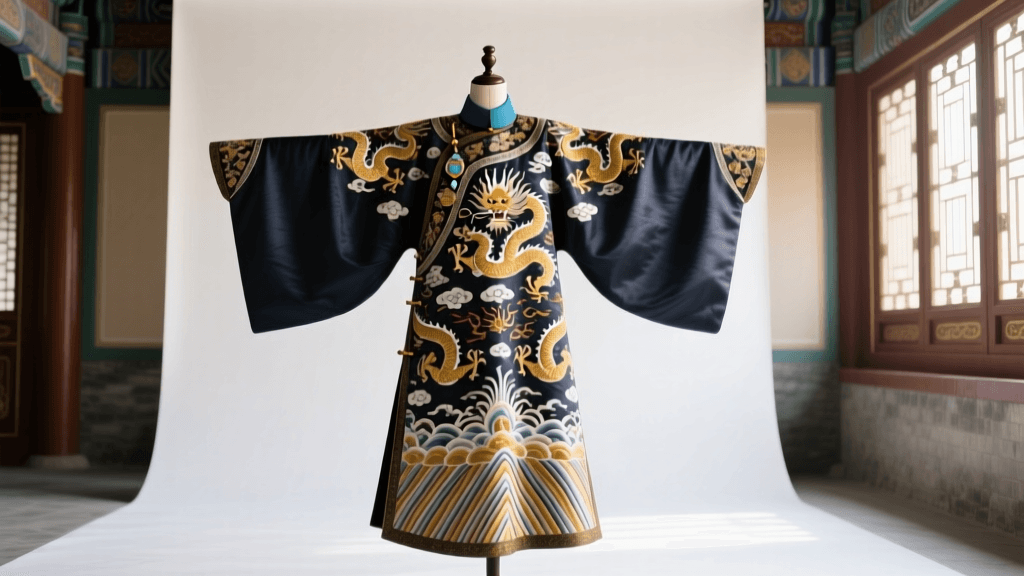
Beyond the cut of the fabric, the true power of the Longpao lay in its motifs. The five-clawed dragon (long) was strictly reserved for the Emperor, while princes and high-ranking officials were relegated to four-clawed dragons (mang). The Qing Dynasty formalized the 'Twelve Symbols of Sovereignty,' which included the sun, moon, stars, mountains, and dragons, strategically placed across the Chaofu (formal court robes) and Jifu (semi-formal festive robes). The color hierarchy was equally rigid: Minghuang (bright yellow) was exclusive to the Emperor, while Xinghuang (apricot yellow) was reserved for the Crown Prince.
Practical Guide: Commissioning a Historically Accurate Replica
For modern collectors, theater costumers, and participants in the high-end historical revival movement, commissioning a bespoke replica of a Ming or Qing dragon robe is a complex but rewarding endeavor. It requires navigating specialized textile markets, understanding historical tailoring measurements, and budgeting for artisanal labor.
Anatomy of the Qing Jifu Robe
When commissioning or cataloging a Qing semi-formal robe (Jifu), collectors must verify the presence of specific structural elements that denote rank and era:
- Lishui (Standing Water): The diagonal striped pattern at the hem representing the universal ocean. The height and color variation of the stripes indicate the specific decade of the Qing era.
- Batixiu (Eight Trigrams): Often woven subtly into the lower skirt portion to represent cosmic balance.
- Matixiu (Horse-Hoof Cuffs): The velvet, hoof-shaped cuff that must fold back precisely to the wrist bone.
Sourcing Authentic Textiles and Artisans
The foundation of any imperial robe is its textile. For Ming replicas, you should source Nanjing Yunjin (cloud brocade) or Suzhou Song Brocade. Nanjing Yunjin, recognized by UNESCO as an Intangible Cultural Heritage, is woven with peacock feather filaments and real gold foil strips. Expect to pay between $400 and $900 USD per meter for authentic, hand-loomed Yunjin from certified heritage workshops in Nanjing. For Qing replicas, Kesi (cut silk) tapestry or heavy Zhangzhou velvet are historically accurate choices. A full-length robe requires approximately 5 to 7 meters of fabric, depending on the width of the loom and the sleeve style.
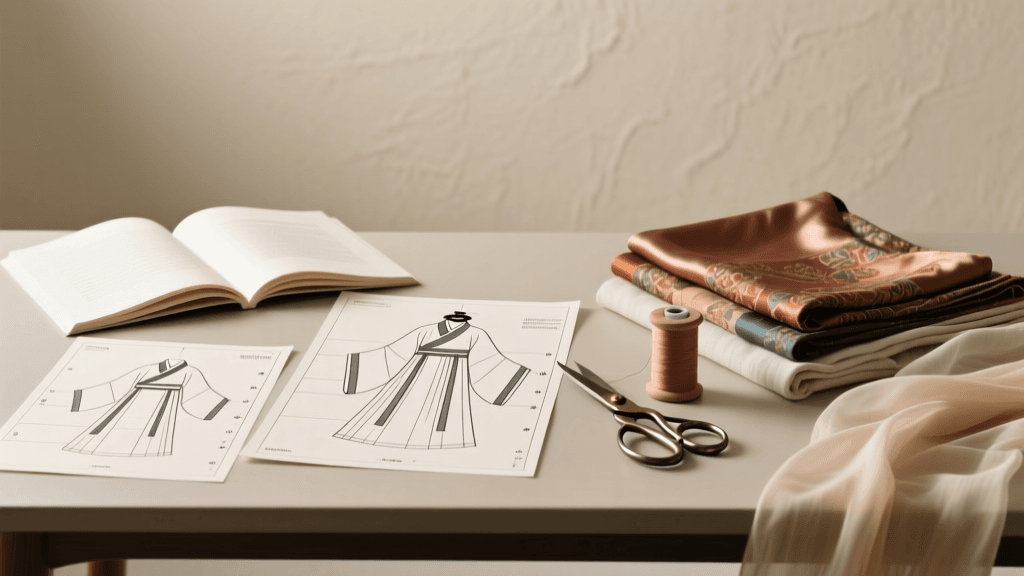
Accurate historical tailoring requires abandoning modern Western sizing. Ming robes utilize flat-pattern cutting, where the fabric is woven to shape or cut in straight lines to preserve the integrity of the brocade motifs. When providing measurements to a master tailor, you must specify the Tongxiu (total sleeve span from wrist to wrist), which should measure at least 220 cm to achieve the proper drape. For Qing Jifu robes, the tailored sleeve must extend exactly 15 cm past the wearer's wrist bone so that the velvet cuff can be folded back during formal court audiences and extended to cover the hands in the presence of the Emperor.
If you are commissioning a robe with hand-embroidered motifs rather than woven brocade, prepare for an extensive timeline. Master embroiderers in Suzhou utilizing the Su Xiu technique can take anywhere from 800 to 1,500 hours to complete the gold-couched dragons and seed-pearl accents on a single Chaofu. Consequently, the lead time for a fully bespoke, hand-embroidered Qing court robe is typically 12 to 18 months. Costs for this level of artisanal labor range from $8,000 to $25,000 USD, depending on the density of the gold threads and the use of authentic materials like coral and lapis lazuli for the court beads (Chaozhu).
Preservation and Archival Care
Once acquired, preserving these heavy silk and metallic garments requires strict environmental controls. Never hang a replica or antique Longpao on a standard hanger; the weight of the gold threads and heavy brocade will distort the shoulder seams and cause irreversible tearing. Instead, store the robe flat in an acid-free, unbuffered archival box lined with washed, unbleached cotton muslin. Use acid-free tissue paper to gently stuff the sleeves and collar to maintain their three-dimensional structure.
For cleaning, avoid water and modern chemical dry cleaning, which will tarnish the metallic gold strips. Rely on specialized textile conservators who use low-suction micro-vacuuming and soft-bristle brushing to remove particulate matter. Furthermore, when sourcing antique robes from auction houses or private dealers, always request a blacklight (UV) inspection. Modern synthetic dyes and metallic paints will fluoresce brightly under UV light, immediately revealing 20th-century restorations or outright forgeries masquerading as 18th-century Qing court garments.
Conclusion
The evolution of the Chinese dragon robe from the flowing elegance of the Ming Dynasty to the structured, equestrian-influenced majesty of the Qing Dynasty offers a profound window into Asian court fashion. Whether you are studying the Metropolitan Museum of Art's historical timelines of Qing Dynasty art or actively commissioning a piece for a private collection, respecting the historical measurements, textile origins, and symbolic motifs is paramount. By supporting heritage weavers and master tailors, collectors play a vital role in keeping the intricate legacy of Chinese imperial fashion alive for future generations.