Hanfu Destination Tourism: Styling & Social Media Guide
The Rise of Hanfu Destination Tourism
Over the past decade, traditional Chinese clothing has transitioned from a niche historical interest into a massive cultural and economic phenomenon. Driven by the modern Hanfu movement, millions of young people and tourists are now integrating historical garments into their daily lives and travel itineraries. This surge in popularity has given birth to a unique sector of the travel industry: Hanfu destination tourism. Cities with deep historical roots have transformed into living backdrops, where visitors don traditional silk robes, intricate hairpieces, and jade accessories to capture stunning content for platforms like Douyin, Xiaohongshu (Little Red Book), and Instagram.
For content creators, travel bloggers, and cultural enthusiasts, planning a Hanfu-focused trip requires more than just booking a flight. It demands an understanding of regional historical aesthetics, fabric behavior on camera, and the logistics of styling in unfamiliar cities. This comprehensive guide will walk you through the top destinations, the economics of renting versus buying, and the actionable styling tricks needed to make your social media content go viral.
Top 3 Destinations for Hanfu Social Media Content
Different Chinese cities are celebrated for specific dynastic aesthetics. Matching your Hanfu style to the correct historical and architectural backdrop is crucial for visual authenticity and algorithmic success on social media.
1. Xi'an: The Tang Dynasty Dream
Known historically as Chang'an, Xi'an is the undisputed capital of Tang Dynasty (618–907 AD) aesthetics. The Tang era was characterized by cosmopolitan openness, vibrant colors, and bold silhouettes. The premier location for content creation here is the Datang Everbright City, a massive pedestrian area that lights up at night with thousands of lanterns.
- Recommended Garments: Qixiong Ruqun (chest-high skirts) with wide, draped Pibo (shawls). Bold colors like crimson, gold, and emerald green perform exceptionally well against the warm, glowing architecture.
- Makeup & Hair: Tang makeup is famous for its elaborate nature. Think Huadian (forehead floral decals), bold red lip gradients, and high, swept updos adorned with gold buyao (step-hairpins) and peonies.
- Best Time to Shoot: Blue hour (just after sunset) when the sky provides a cool contrast to the warm, golden lantern light of the architecture.
2. Hangzhou: Song Dynasty Elegance
Hangzhou offers a stark contrast to Xi'an's opulence. As the capital of the Southern Song Dynasty (1127–1279 AD), the city's aesthetic is rooted in intellectual refinement, minimalism, and harmony with nature. The West Lake Cultural Landscape of Hangzhou provides a misty, ethereal backdrop perfect for subdued, elegant content.
- Recommended Garments: Beizi (long, open-front overcoats) worn over pleated skirts or narrow-sleeved blouses. Stick to a muted, celadon, pearl, or pastel color palette. Fabrics should be lightweight and matte, such as raw silk or fine linen.
- Makeup & Hair: Keep it minimal. Soft, sweeping willow-leaf eyebrows, subtle pink blush, and half-up hairstyles secured with simple jade or wooden hair sticks.
- Best Time to Shoot: Early morning (6:00 AM - 8:00 AM) to capture the morning mist rolling off the lake and to avoid the heavy tourist crowds.
3. Luoyang: Wei, Jin, and Tang Majesty
Luoyang is a city that bridges multiple eras, but it is particularly famous for the ethereal, free-spirited styles of the Wei and Jin dynasties, as well as the imperial majesty of the Tang. Shooting near the UNESCO World Heritage site of the Longmen Grottoes or the ancient Sui-Tang Luoyang City ruins provides a sense of monumental scale and historical gravity.
- Recommended Garments: Wei-Jin style features wide, flowing sleeves and crossed collars that convey a sense of scholarly detachment and wind-swept movement. Alternatively, heavily embroidered Tang-style round-collar robes (Yuanlingpao) work well for gender-neutral or masculine-leaning styling.
- Props: Bamboo flutes, calligraphy scrolls, and woven bamboo hats.
Rental vs. Purchasing: A Tourist's Dilemma
When planning a Hanfu tourism trip, the first logistical hurdle is deciding whether to rent locally or purchase your own garments online. Both options have distinct advantages depending on your travel style, budget, and content goals.
| Feature | Local Rental Shop (In-City) | Purchasing Online (Taobao/Independent Brands) |
|---|---|---|
| Cost (Approx.) | 150 - 400 RMB ($20 - $55 USD) per day | 200 - 1,500+ RMB ($28 - $210+ USD) per set |
| Makeup & Hair | Usually included or available as an add-on (50-150 RMB) | Must hire a separate freelance MUA or do it yourself |
| Convenience | High. Dress, shoot, and return. No luggage hassle. | Low. Requires steaming, packing, and carrying heavy silks. |
| Authenticity & Quality | Variable. Often mass-produced, polyester blends. | High. Access to authentic weaves, real silk, and accurate cuts. |
| Hygiene | Shared garments; inner layers must be worn carefully. | Brand new, tailored to your exact measurements. |
Pro Tip for Creators: If you are shooting a high-production campaign or a brand partnership, always purchase your own Hanfu from established brands like Shisanyu, Zhongling, or Minghuatang. The camera easily picks up the cheap sheen of rental polyester, whereas authentic silk jacquard and matte brocades absorb and reflect light beautifully, elevating your social media content.
Styling for the Algorithm: Douyin and Xiaohongshu Trends
To capture the attention of the algorithm on Chinese social media platforms, your styling must align with current visual trends while maintaining historical respect. According to cultural analyses featured in China Daily's cultural heritage archives, the fusion of ancient aesthetics with modern cinematic techniques is what drives virality.
Fabric Choice and Wind Dynamics
Static poses are out; dynamic movement is in. When selecting your Hanfu, prioritize fabrics that react beautifully to the wind. A Mamianqun (horse-face skirt) with a 6-meter hem circumference made of lightweight chiffon or organza will create a stunning 'blooming' effect when you spin. For sleeves, look for 'Guangxiu' (wide sleeves) that measure at least 80cm in width, allowing for dramatic 'sleeve toss' transitions popular on Douyin.
Color Theory Against Architecture
Social media feeds are highly visual. Use color theory to make your subject pop against the background:
- Red Walls (Forbidden City / Xi'an Walls): Avoid wearing solid red, which will cause you to blend in. Opt for stark white, deep navy, or metallic gold.
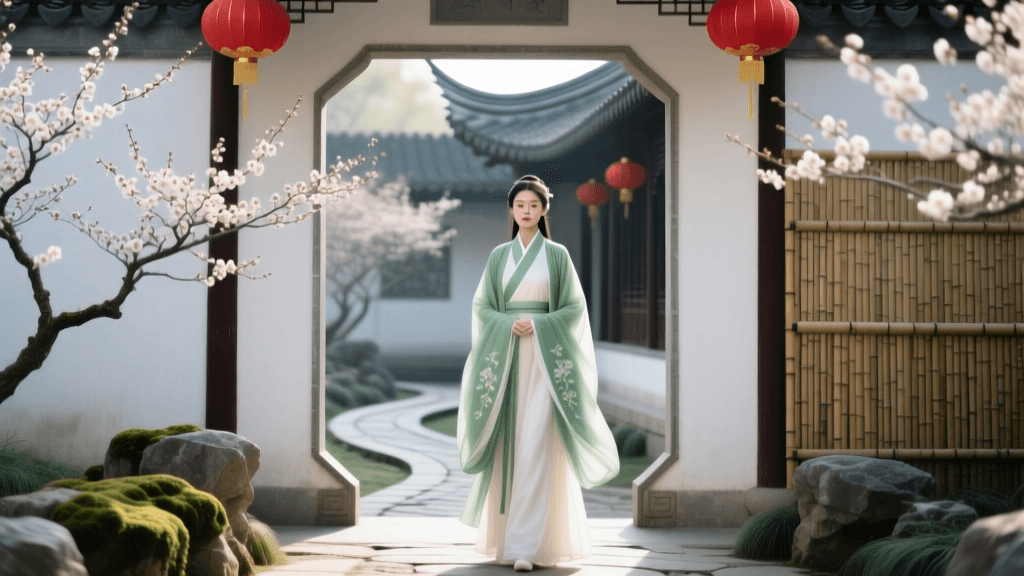
- Grey Brick / Jiangnan Water Towns: Wear high-saturation colors like ruby red, bright tangerine, or deep plum to create a striking focal point.
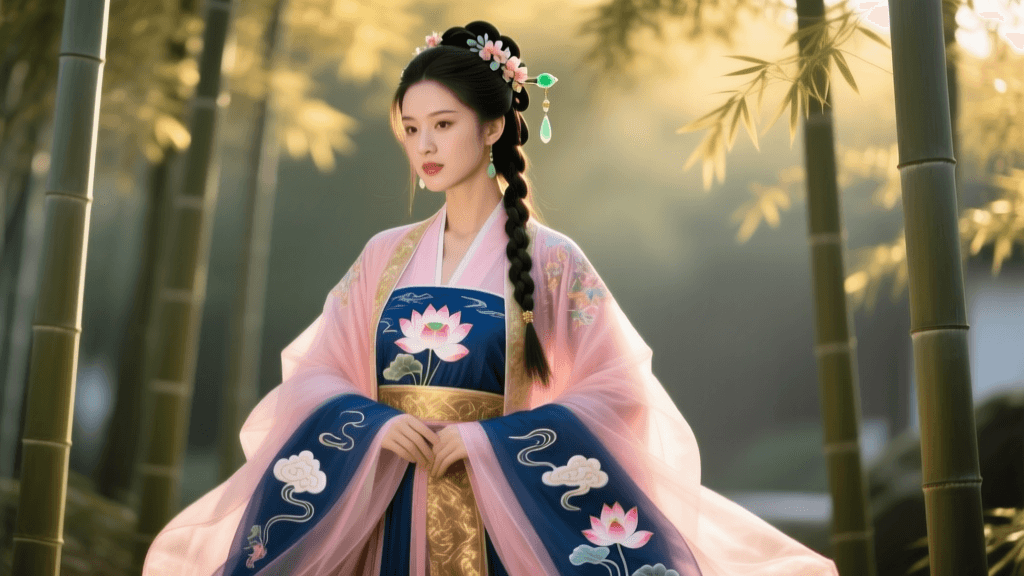
- Lush Greenery / Bamboo Forests: Wear soft pastels, celadon, or ivory to maintain a harmonious, 'fairy-like' (Xianqi) aesthetic.
Essential Props for Storytelling
Props give your hands something to do and add narrative depth to your photos. Never leave your hotel without:
- Oil-Paper Umbrellas: Essential for rainy day shoots in Hangzhou or Suzhou.
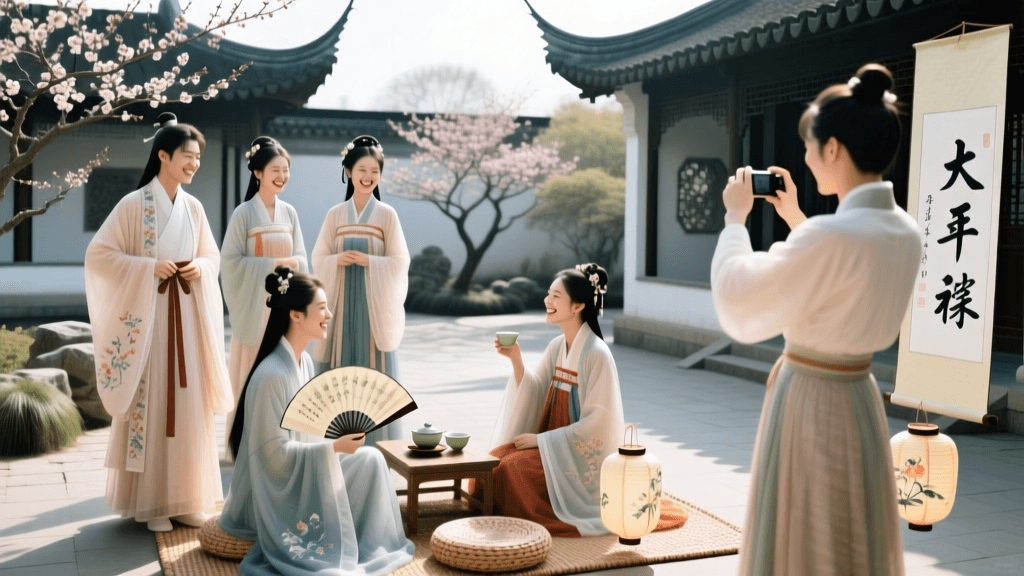
- Round Silk Fans (Tuanshan): Perfect for framing the face or hiding the lower half of the face for a mysterious, classical look.
- LED Lanterns: For night shoots in Luoyang or Xi'an, a traditional-looking paper lantern fitted with a warm LED bulb provides a portable, flattering fill light for your face.
Photography and Posing for Maximum Engagement
Capturing the perfect Hanfu photo requires an understanding of both the garment's structure and the environment. Here are actionable photography tips to ensure your content stands out.
Camera Settings and Focal Lengths
If you are using a mirrorless camera or a high-end smartphone, focal length dictates the mood of the image. Use a 35mm or 24mm equivalent lens when you want to showcase the grandeur of the architecture alongside the full sweep of the Hanfu skirt. Switch to an 85mm portrait lens to compress the background, isolate the intricate embroidery on the collar, and capture the delicate details of the hair accessories and jade pendants.
The 'Three Movement' Posing Technique
Stiff, front-facing poses often look like costume catalogues. To achieve the coveted 'cinematic' look trending on Xiaohongshu, utilize continuous burst mode and direct your subject to perform these three movements:
- The Sleeve Toss: Flick the wrists outward and upward, allowing the long silk cuffs to catch the air. Look slightly past the camera lens.
- The Glance Back: Walk slowly away from the camera, then pause and turn the head over the shoulder. This highlights the back embroidery and the drape of the Pibo shawl.
- The Prop Interaction: Open a paper umbrella or adjust a hairpin. Capturing the subject in the middle of an 'action' makes the historical garment feel like a living, breathing wardrobe rather than a museum exhibit.
Conclusion
Hanfu destination tourism is more than just a trend; it is a vibrant, community-driven revival of Asian traditions that bridges the ancient and the modern. By carefully selecting your destination, understanding the nuances of dynastic styling, and applying modern social media photography techniques, you can create breathtaking content that honors the rich tapestry of Chinese cultural heritage. Whether you are wandering the lantern-lit streets of Xi'an or the misty shores of Hangzhou, the right preparation will ensure your traditional garments shine both in person and on the digital stage.