The Ultimate DIY Hanfu Sewing Guide: Patterns & Fabrics
The Renaissance of Handmade Hanfu
The global Hanfu movement has transcended mere street fashion, evolving into a profound cultural renaissance that connects millions with traditional Chinese heritage. While purchasing ready-made garments from specialized retailers is convenient, the DIY Hanfu community is rapidly growing. Sewing your own Hanfu offers unparalleled benefits: a perfect custom fit, significant cost savings, and a meditative connection to the historical craftsmanship of ancient China. A high-quality, authentic silk Hanfu set from a premium brand can easily cost between $150 and $300, whereas a dedicated DIY sewist can create a comparable, historically inspired garment for $40 to $80 by sourcing their own materials.
However, transitioning from Western sewing patterns to traditional Chinese garment construction requires a paradigm shift. Western tailoring relies on three-dimensional shaping using darts, curved seams, and set-in sleeves. In contrast, traditional Hanfu is rooted in two-dimensional, flat-pattern cutting. As noted in the Encyclopedia Britannica's overview of Chinese clothing, the historical elegance of these garments relies entirely on the natural drape of the fabric, the strategic overlap of collars, and the structural support of tied sashes rather than restrictive tailoring. This guide will walk you through the essential steps of fabric selection, pattern sourcing, and sewing techniques to create your first authentic Hanfu.
Choosing Your First Silhouette
Before purchasing fabric, you must select a silhouette that matches your skill level and intended use. The Hanfu wardrobe is vast, spanning thousands of years of dynastic evolution. For beginners, it is best to start with structurally simple garments that require minimal complex fitting.
- Jiaoling Ruqun (襦裙): The quintessential Hanfu, consisting of a cross-collar top (Ru) and a pleated or A-line skirt (Qun). This is the most forgiving and beginner-friendly project, as the skirt requires only basic gathering or pleating, and the top is a simple T-shape.
- Beizi (褙子): A popular open-front jacket from the Song Dynasty. It features straight, narrow sleeves and side slits. Because it is worn open over an inner layer, the fit is incredibly relaxed, making it an excellent second project.
- Aoqun (袄裙): A Ming Dynasty staple featuring a lined, cross-collar or round-collar top with a horse-face skirt (Mamianqun). The Mamianqun requires advanced pleating and precise mathematical calculations for the overlapping panels, making it better suited for intermediate sewists.
The Ultimate Fabric Selection Guide
Fabric choice is the single most critical factor in DIY Hanfu sewing. Because traditional patterns lack darts and tailoring, the garment's silhouette is entirely dictated by the fabric's weight, drape, and stiffness. Historically, silk was the premier choice. According to UNESCO's Intangible Cultural Heritage records, Chinese sericulture and silk craftsmanship have been refined over millennia, creating textiles that possess a unique fluidity and luster unmatched by modern synthetics. However, modern sewists have a wider array of accessible options.
Below is a comprehensive comparison chart to help you select the right textile for your project:
| Fabric Type | Cost (USD/Yard) | Drape Quality | Sewing Difficulty | Best Hanfu Style |
|---|---|---|---|---|
| Silk Charmeuse / Crepe | $20 - $45 | Excellent, fluid | High (slippery) | Ming Aoqun, Tang Qixiong |
| Linen / Linen Blends | $12 - $25 | Moderate, structured | Low (easy to handle) | Song Beizi, Everyday Ruqun |
| Cotton Sateen / Poplin | $8 - $15 | Low, crisp | Low (very stable) | Inner garments, Lining |
| Polyester Chiffon | $5 - $10 | High, airy | Medium (frays easily) | Tang Dynasty Pibo (shawls) |
| Jacquard Brocade | $15 - $30 | Low, heavy, stiff | Medium (bulky seams) | Winter Ao, Outer Jackets |
Pro Tip: Always pre-wash and dry your fabric according to its care instructions before cutting. Natural fibers like linen and cotton can shrink up to 10%, which would ruin the precise measurements required for a cross-collar.
Sourcing and Adapting Patterns
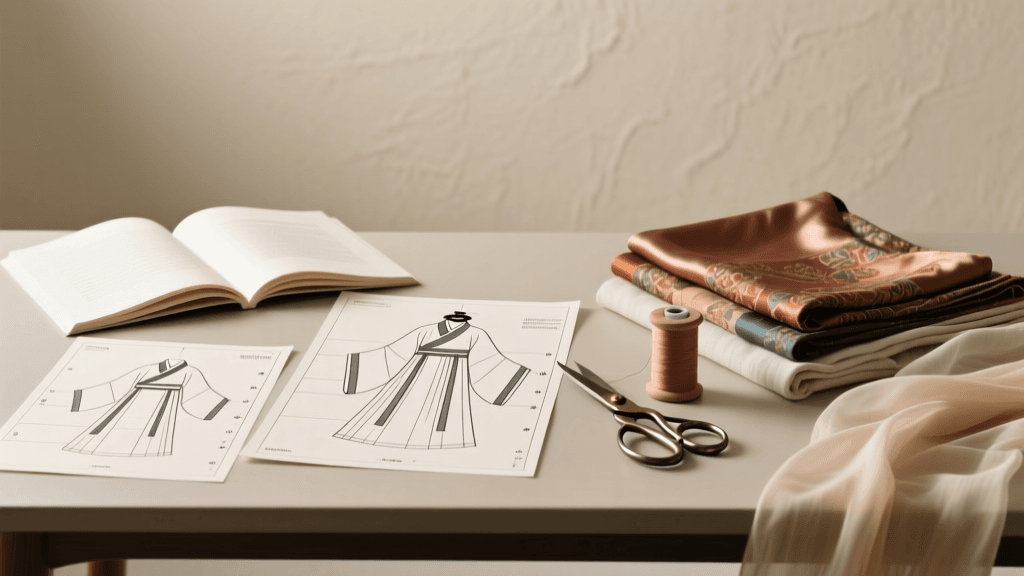
Finding commercial Hanfu patterns in local craft stores can be challenging outside of Asia. Fortunately, the digital sewing community has bridged this gap. Platforms like Etsy and independent sewing blogs offer PDF patterns specifically drafted for Hanfu. When purchasing a pattern, look for creators who provide "flat-lay" drafting instructions or grid-based scaling charts, which are traditional methods used in Chinese garment making.
If you are drafting your own pattern, remember the golden rule of traditional Hanfu: the fabric is cut in flat, geometric shapes. Sleeves are typically cut as one continuous piece with the bodice, creating a distinct shoulder slope and wide armholes. There are no armholes to set in, which drastically reduces sewing time and eliminates the frustration of easing sleeve caps.
Essential Measurements and the Cross-Collar Rule
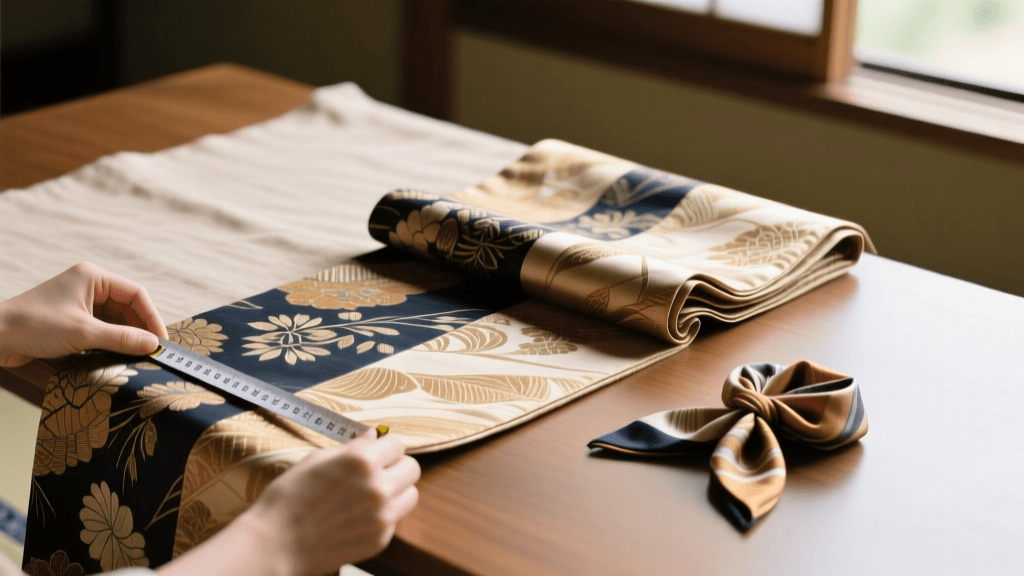
Taking measurements for Hanfu differs significantly from Western dressmaking. You do not need to measure your bust, waist, or hip curves. Instead, focus on these three critical dimensions:
- Arm Span (Wingspan): Measure from wrist to wrist with your arms outstretched. This determines the total width of the bodice and sleeves. Traditional Hanfu sleeves often extend past the hands, so add 4 to 8 inches to your actual wingspan depending on the desired sleeve length.
- Garment Length: Measure from the base of your neck (the prominent vertebra) down to your desired hemline. For a standard Ru (top), this usually falls at the hips or upper thigh.
- Skirt Length: Measure from your natural waist (or underbust for chest-high skirts) down to your ankles.
The most vital structural element to master is the Jiaoling Youren (交领右衽), which translates to "cross collar, right lapel." This means the left side of the garment must always cross over the right side, forming a 'y' shape at the neckline. Historically, reversing this (left over right) was strictly reserved for dressing the deceased. Ensuring your pattern is drafted to accommodate this overlap is non-negotiable for historical accuracy.
Sewing Techniques for a Professional Finish
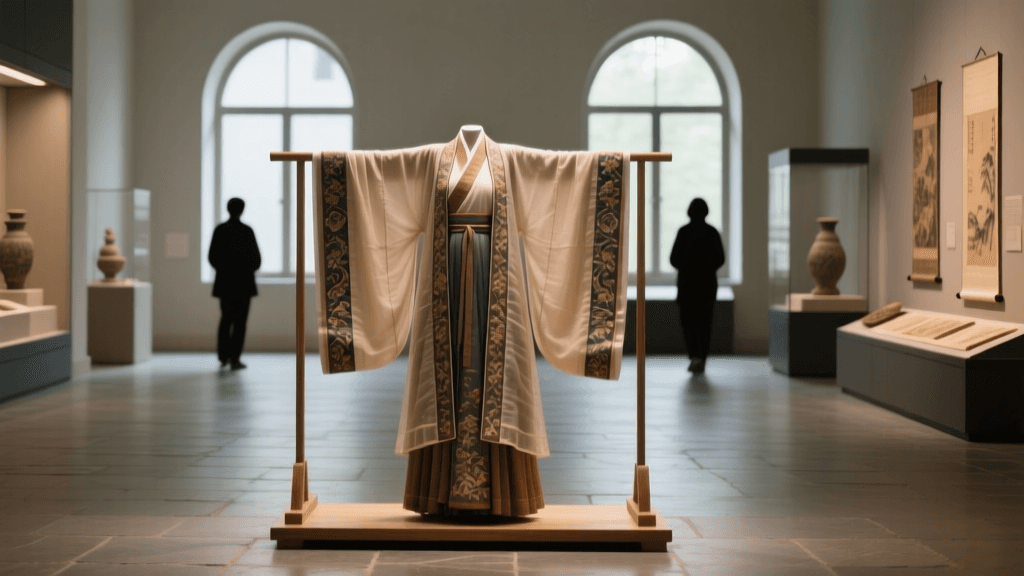
Because Hanfu garments are often unlined or made from lightweight fabrics, finishing your raw edges is crucial for both durability and aesthetics. The Peabody Essex Museum's extensive Chinese art collection showcases historical garments where interior finishing is just as immaculate as the exterior, a testament to the high standards of traditional craftsmanship.
Mastering the Collar
The cross-collar is the focal point of the Hanfu. To prevent it from gaping or wrinkling, you must use a medium-weight fusible interfacing on the collar band. Cut the interfacing slightly narrower than the fabric allowance to prevent it from peeking out at the edges. When attaching the collar to the neckline, ease the fabric carefully and use plenty of silk pins or wonder clips to hold the layers together before stitching.
Seam Finishes
For unlined silk or linen garments, French seams are the gold standard. They completely enclose the raw edge, providing a clean, professional look on the inside of the garment. To sew a French seam, stitch your fabric wrong sides together with a narrow 1/4 inch seam allowance. Trim the allowance, press, fold the fabric right sides together, and stitch again with a 3/8 inch allowance.
Essential Tools for the DIY Sewist
- Walking Foot: Essential for feeding slippery silks and bulky brocades evenly through your machine.
- Rotary Cutter and Mat: Hanfu requires cutting massive, continuous pieces of fabric. A rotary cutter ensures perfectly straight, snag-free lines.
- Silk Pins: Ultra-fine pins that will not leave permanent holes in delicate woven fabrics.
- Point Turner: Crucial for achieving sharp, crisp corners on collars, cuffs, and tie-ends.
Final Thoughts on Your Hanfu Journey
Sewing your own Hanfu is a deeply rewarding endeavor that bridges the gap between ancient artistry and modern maker culture. By understanding the philosophy of flat-pattern cutting, respecting the drape of your chosen textiles, and mastering foundational techniques like the cross-collar and French seams, you can create garments that are not only historically resonant but beautifully tailored to your unique form. Take your time, honor the process, and enjoy the profound satisfaction of wearing a piece of history crafted entirely by your own hands.