Nishijin-ori and Yuzen: Mastering Kimono Silk Fabrics
The Soul of the Kimono: Woven vs. Dyed Silk
The soul of the traditional Japanese kimono lies not merely in its silhouette, but in the breathtaking mastery of its textiles. When exploring Asian traditions, understanding the dichotomy between woven (ori) and dyed (some) fabrics is essential for collectors, fashion historians, and enthusiasts. Among the myriad of regional techniques, Kyoto’s Nishijin-ori weaving and Yuzen resist-dyeing stand as the twin pillars of luxury kimono craftsmanship. This guide delves deep into the artisanal processes, fabric characteristics, and practical considerations for sourcing and maintaining these exquisite silk masterpieces.
The Woven Marvel: Nishijin-ori Brocade
Nishijin-ori is not a single fabric, but a designation for the multi-layered, intricately patterned woven textiles produced in the Nishijin district of Kyoto. With a history spanning over 1,200 years, this technique reached new heights during the Meiji period when Kyoto artisans traveled to Lyon, France, to study the Jacquard loom. By integrating this technology, they were able to produce complex brocades with unprecedented speed and precision, while maintaining the soul of Japanese aesthetics.
Authentic Nishijin-ori is renowned for its use of luxurious materials, including metallic threads wrapped in gold or silver leaf, and heavily twisted silk crepes. The resulting fabric is thick, structured, and possesses a distinct acoustic quality—a satisfying rustle known as scroop—when moved.
Actionable Advice: Identifying and Sourcing Nishijin-ori
When shopping for a Nishijin-ori obi or kimono, verify its authenticity by looking for the official certification stamp from the Nishijin Textile Industrial Association. Genuine pieces are heavy; a standard maru obi (the most formal, double-sided woven belt) can weigh over 2 kilograms. Expect to pay between $800 and $5,000 for a vintage piece in excellent condition, while newly commissioned artisan obi can easily exceed $15,000. According to the Nishijin Textile Center, the weaving of a single complex obi can take a master artisan several months of continuous labor.
The Painted Silk: Yuzen Resist-Dyeing
While Nishijin-ori builds patterns into the very structure of the fabric, Yuzen dyeing treats the silk as a blank canvas. Developed in the late 17th century by fan painter Miyazaki Yuzensai, this technique revolutionized kimono fashion by allowing for pictorial, free-flowing designs that were not constrained by the grid of a loom.
The hallmark of traditional hand-painted Yuzen (tegaki-yuzen) is the use of a rice-paste resist (itome-nori). Artisans draw intricate outlines with this paste, which acts as a dam to prevent adjacent dyes from bleeding into one another. After dyeing, the paste is washed away in cold running water, leaving crisp, pristine white lines that define the motifs.
Kyo-Yuzen vs. Kaga-Yuzen
- Kyo-Yuzen (Kyoto): Characterized by vibrant, contrasting colors, abundant use of gold leaf (surihaku), and embroidery. Motifs often include stylized courtly items, fans, and geometric patterns.
- Kaga-Yuzen (Kanazawa): Favors a more naturalistic, subdued palette known as the Kaga Gosai (five colors: indigo, ochre, green, maroon, and purple). Designs heavily feature realistic flora, often incorporating mushikui (insect-eaten leaves) to reflect the beauty of impermanence.
Collectors should also learn to distinguish between hand-painted Yuzen and stencil-dyed Kata-yuzen. Hand-painted pieces feature subtle color gradients (bokashi) that bleed softly within the resist lines, whereas stencil dyeing often leaves microscopic, uniform dot patterns or harder edges where the paste was applied through paper stencils.
Fabric Comparison: Woven vs. Dyed Silk
To make informed purchasing or curatorial decisions, it is crucial to understand how these two techniques affect the drape, weight, and usage of the garment. The Victoria and Albert Museum's comprehensive guide to kimono craftsmanship highlights how the choice between woven and dyed silks dictates the formality and seasonal appropriateness of the garment.
| Feature | Nishijin-ori (Woven Brocade) | Yuzen (Resist-Dyed Silk) |
|---|---|---|
| Primary Technique | Jacquard loom weaving with pre-dyed threads | Hand-painting and rice-paste resist dyeing on white silk |
| Texture and Drape | Stiff, structured, heavy; holds its shape rigidly | Soft, fluid, lightweight; drapes elegantly over the body |
| Common Applications | Obi (belts), formal outer layers (uchikake), haori | Kosode/kimono bodies, juban (undergarments), summer wear |
| Cost (New Artisan) | $5,000 - $20,000+ | $3,000 - $12,000 |
| Formality Level | Highest (when woven with gold/silver threads) | High to Highest (depending on crests and motif placement) |
Practical Guide: Sourcing and Measuring Kimono Silk
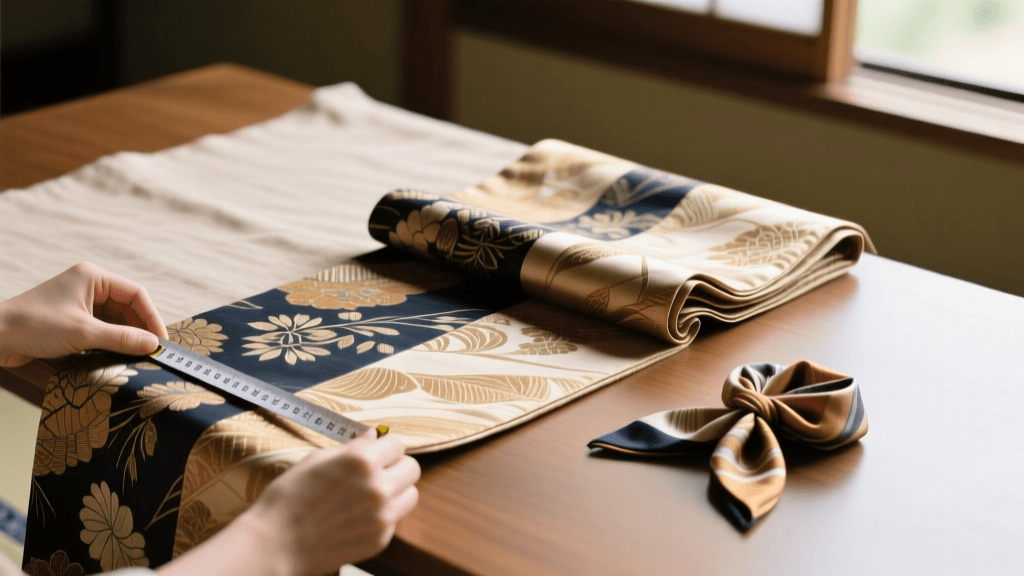
For those looking to commission a bespoke kimono or purchase raw fabric for tailoring, understanding the traditional bolt system is non-negotiable. Kimono silk is not sold by the yard off a wide roll; it is sold in a specific bolt called a tanmono.
Tanmono Dimensions and Tailoring
A standard silk tanmono measures approximately 36 to 38 centimeters (about 14 inches) in width and 12 to 13 meters (about 13 to 14 yards) in length. This narrow width is a direct legacy of the traditional backstrap and treadle looms used in Japan for centuries.
Pro Tip for Tailors: Because the fabric is so narrow, a kimono is constructed from straight, rectangular panels like the maemigoro (front body) and okumi (front overlap). This means almost zero fabric waste during the cutting process. When commissioning a tailor, expect to pay between $200 and $600 for hand-stitching (wasai), which allows the seams to breathe and be easily unpicked for cleaning.
When sourcing vintage tanmono, always measure the width carefully. Pre-World War II bolts can be as narrow as 32 cm, which may not provide enough overlap for modern, larger wearers. Always verify the hip measurement allowance before purchasing to ensure the front panels will overlap correctly according to traditional dressing rules.
Care, Maintenance, and Storage
Preserving artisan kimono fabrics requires specialized knowledge. The structural integrity of Nishijin-ori and the delicate dyes of Yuzen demand vastly different care protocols.
The Maruhaki Washing Process
Never attempt to wash a silk kimono at home. Traditional dry cleaning uses harsh chemicals that can strip the silk of its natural sericin oils and tarnish metallic threads. Instead, seek out a specialist who performs maruhaki (whole washing). This involves completely unpicking the kimono into its original rectangular panels, washing them gently in water with specialized mild detergents, stretching them on bamboo frames to dry (shinshi), and then re-tailoring the garment. This process costs between $150 and $300 and should be done only once every decade or two, depending on wear.
Storage Best Practices
- Wrapping: Always wrap silk kimono in tatou paper, a specially treated, acid-free Japanese paper that absorbs excess moisture and prevents yellowing. Never use plastic bags, which trap humidity and encourage mold.
- Folding: Fold the kimono strictly along its original seam lines to prevent permanent creasing in the middle of the woven or dyed patterns.
- Pest Control: Place natural camphor or specialized Japanese insect repellents (shounou) in the corners of your wooden storage chest (tansu). Ensure the chemicals do not directly touch the silk, as they can cause localized discoloration, especially on Yuzen dyed fabrics.
Conclusion
Whether you are captivated by the architectural brilliance of a Nishijin-ori brocade or the fluid, painterly grace of a Yuzen silk, understanding the craftsmanship behind these textiles elevates your appreciation of Japanese sartorial traditions. By respecting the historical dimensions of the tanmono, investing in proper artisan tailoring, and adhering to strict conservation methods, collectors and wearers alike can ensure these wearable masterpieces survive for generations to come. For further exploration into the evolution of these garments, the Metropolitan Museum of Art's exhibitions on Kimono Style offer unparalleled visual archives of historical weaving and dyeing techniques.