Viral Hanfu Trends on TikTok & Douyin: A Styling Guide
The Hanfu Renaissance on Short-Form Video
The intersection of ancient Chinese sartorial traditions and modern algorithmic feeds has birthed a global phenomenon. If you have spent any time on TikTok or its Chinese counterpart, Douyin, you have likely encountered the mesmerizing swirl of a Hanfu transition video. What began as a niche historical appreciation hobby has exploded into a multi-billion dollar fashion movement, driven heavily by the visual power of short-form video. The Hanfu Movement, which seeks to revive the traditional clothing of the Han Chinese, has found its ultimate catalyst in these platforms, allowing creators to showcase centuries-old silhouettes to billions of viewers worldwide.
According to cultural analyses by The World of Chinese, the viral nature of Hanfu on social media is not just about aesthetics; it is deeply tied to modern cultural identity and the 'Guochao' (national trend) movement. Young consumers are blending historical accuracy with modern streetwear, creating a dynamic new fashion lexicon. In this guide, we break down the most viral Hanfu trends dominating your For You Page, how to style them for everyday wear, and the technical secrets behind those breathtaking Douyin transitions.
Top 3 Viral Hanfu Styles Dominating Your FYP
1. The Mamianqun (Horse-Face Skirt) Phenomenon
No garment has dominated TikTok and Douyin quite like the Mamianqun, or Horse-Face Skirt. Originating in the Song and Ming dynasties, this wrap-around skirt features flat front and back panels with heavily pleated sides. The skirt went globally viral following a high-profile controversy involving a major European luxury brand, which sparked a massive wave of cultural pride and content creation among Chinese netizens.
How to Style It (Xin Zhongshi): The viral 'New Chinese Style' (Xin Zhongshi) approach pairs the ornate, heavily embroidered Mamianqun with modern, minimalist tops. Creators frequently style Ming-dynasty skirts with crisp white button-down shirts, tailored blazers, or even simple ribbed turtlenecks. This juxtaposition of ancient textile artistry with modern corporate or casual wear is the hallmark of the viral Mamianqun aesthetic.
Practical Care & Maintenance: The pleats are the soul of the Mamianqun. To maintain the viral 'swish' seen in videos, you must use a specialized pleat board (available on Taobao for around $5 USD) when washing. Never machine wash a silk or brocade Mamianqun; always hand wash in cold water with a pH-neutral detergent, clamp the pleats while damp, and hang dry.
2. Song Dynasty Minimalist Elegance
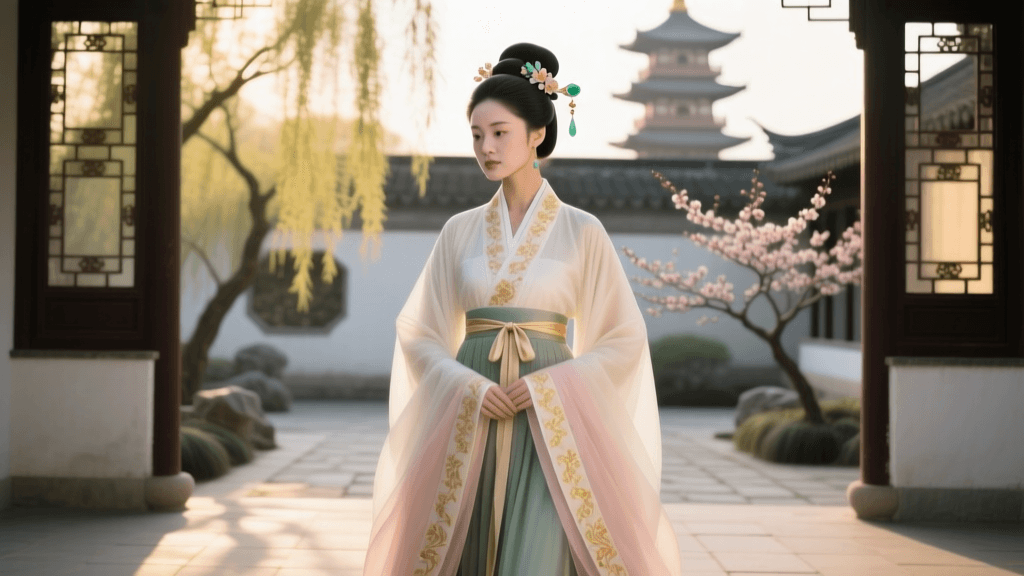
While Tang dynasty Hanfu is loud and opulent, the Song dynasty aesthetic has gone viral on TikTok as the ultimate 'clean girl' or 'old money' historical equivalent. The defining garment is the Beizi, a long, open-front jacket with narrow sleeves, typically worn over a pleated skirt or wide-leg trousers. The color palettes are muted—celadon greens, soft pearlescent whites, and dusty blues.
Styling for the Algorithm: Song dynasty Hanfu performs exceptionally well in 'Get Ready With Me' (GRWM) and 'day in the life' vlogs. Its understated elegance translates well to modern coffee shop aesthetics and museum visits. To replicate the viral Douyin look, layer a sheer, organza Beizi over a solid-colored camisole and a high-waisted pleated skirt. Accessorize with a single, delicate jade hairpin and a minimalist bamboo fan.
3. Tang Dynasty Fairycore (Qixiong Ruqun)
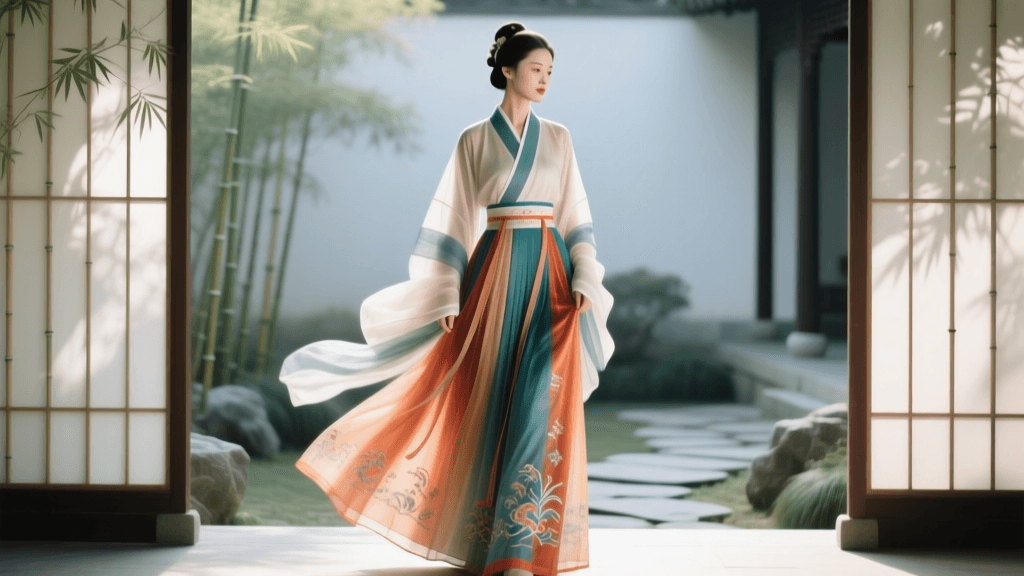
The 'Fairycore' trend on TikTok owes much to the Tang dynasty Qixiong Ruqun, a high-waisted chest skirt paired with a short, wide-sleeved blouse. This silhouette is incredibly forgiving and creates a dramatic, flowing effect that is perfect for slow-motion transition videos. The viral appeal lies in the vibrant, translucent fabrics—think gradient pinks, sunset oranges, and shimmering golds—that catch the light during spins.
'Hanfu is not just a costume; it is a wearable connection to our ancestry. When we post on Douyin, we are showing the world that our history is alive, evolving, and undeniably beautiful.' — Popular Hanfu creator and cultural commentator.
Douyin vs. TikTok: Understanding the Algorithm and Aesthetics
While TikTok and Douyin share a parent company, their user bases and algorithmic preferences have spawned distinctly different Hanfu subcultures. Understanding these differences is crucial for creators and brands looking to tap into the market.
| Feature | Douyin (China) | TikTok (Global) |
|---|---|---|
| Primary Aesthetic | High-production, cinematic, historical accuracy | Everyday wear, fusion, Fairycore, cosplay |
| Transition Style | Elaborate makeup reveals, location jumps, slow-mo | Quick spins, fan drops, beat-sync outfit changes |
| Music Choice | Guzheng covers, traditional opera, epic scores | Trending pop audio, lo-fi, sped-up viral tracks |
| Purchasing Path | Direct Taobao/Tmall links embedded in video | Linktree to Taobao agents, Amazon, or Etsy |
Industry reports from RadiiChina indicate that the commercialization of Hanfu is heavily driven by Douyin's integrated e-commerce, where a viral video can sell out a boutique's inventory in minutes. On global TikTok, the focus remains more on community building, cultural education, and aesthetic appreciation, with purchases often routed through third-party proxy agents.
How to Recreate Viral Hanfu Transitions and Poses
The hallmark of a successful Hanfu video is the transition. Here is a step-by-step guide to recreating the viral 'Fan Drop' transition seen across both platforms:
- Step 1: The Setup (Modern Outfit). Film yourself in modern clothes holding an open paper or silk fan covering your face. Ensure your lighting is consistent (natural golden hour light or a ring light set to 5600K).
- Step 2: The Action. Drop the fan downward in a swift, deliberate motion while simultaneously jumping slightly or spinning. Stop recording the moment the fan leaves your face.
- Step 3: The Reveal (Hanfu). Change into your full Hanfu ensemble, complete with hair and makeup. Hold the fan in the exact same downward position where you stopped the first clip.
- Step 4: The Continuation. Hit record and pull the fan away, revealing the Hanfu, then transition into a slow-motion spin to showcase the skirt's volume.
- Step 5: Editing. Use CapCut or TikTok's native editor to splice the clips exactly on the beat drop. Shoot in 60fps for the Hanfu reveal to allow for buttery smooth slow-motion in post-production.
Where to Buy Viral Hanfu Pieces (and What to Avoid)
Sourcing authentic, high-quality Hanfu can be daunting for international buyers. While Amazon and Etsy offer convenience, they often stock mass-produced, inaccurate 'costume' grade garments that will be immediately called out by the community. To get the pieces you see on Douyin, you must navigate the Chinese domestic market.
The Taobao Agent Route: Most serious enthusiasts use proxy shopping agents like Superbuy, CSSBuy, or Wegobuy. These platforms allow you to paste Taobao or Tmall URLs, purchase the items domestically in China, and have them shipped internationally. Look for established Hanfu brands on Taobao such as Shisan Yu (Thirteen Remainders), Zhongzheng Hanfu, and Chunyuan.
Sizing and Measurements: Hanfu sizing relies heavily on precise centimeter measurements, not standard S/M/L charts. Before ordering, take the following measurements:
- Skirt Length: Measure from your natural waist to the desired hemline (usually 3cm above the ground to avoid tripping during transitions).
- Chest Measurement: Crucial for Tang dynasty Qixiong Ruqun to prevent the high-waisted skirt from slipping during movement.
- Shoulder Width: Important for Song dynasty Beizi jackets to ensure the seam sits correctly and the narrow sleeves drape elegantly.
Pro-Tip: Always budget an extra $15-$30 for international shipping via EMS or DHL, as Hanfu sets (especially those with heavy brocade or embroidery) can weigh over 1.5kg.
Conclusion
The viral explosion of Hanfu on TikTok and Douyin is more than a fleeting internet trend; it is a profound cultural renaissance packaged for the digital age. Whether you are drawn to the everyday versatility of the Mamianqun, the quiet luxury of Song dynasty minimalism, or the ethereal beauty of Tang dynasty Fairycore, there has never been a better time to integrate traditional Chinese garments into your wardrobe. By understanding the styling nuances, mastering the viral transitions, and sourcing authentic pieces, you can participate in this beautiful, living history.