Collecting Antique Taisho Kimonos: A Vintage Silk Guide
The Golden Age of Japanese Silk: Taisho and Early Showa Eras
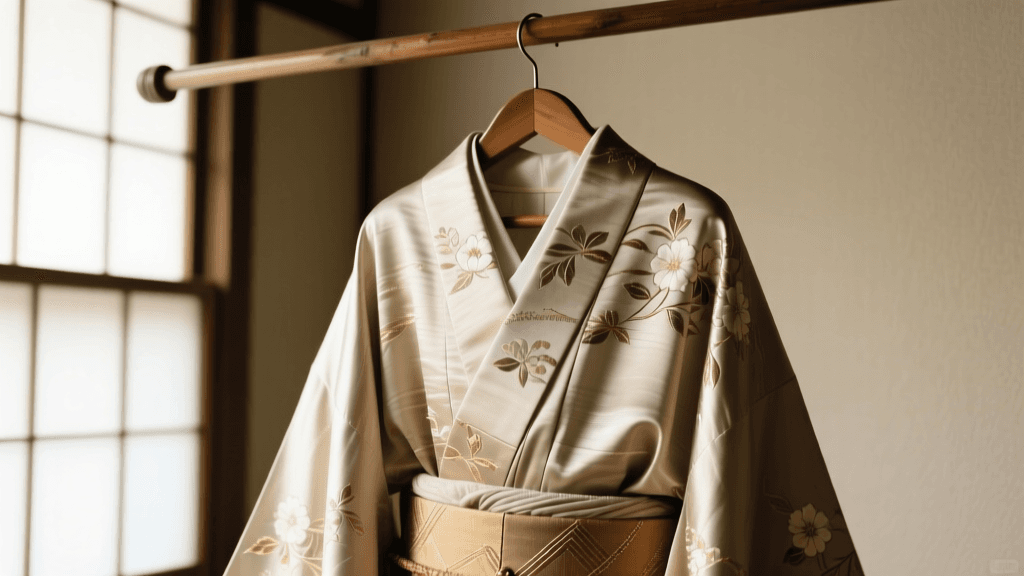
For serious collectors of Asian traditional garments, the Taisho (1912–1926) and early Showa (1926–1945) eras represent a golden age of Japanese textile design. During this period, Japan experienced rapid modernization, Westernization, and a cultural flourishing that directly influenced the aesthetics of the kimono. The rise of the 'Mobo' and 'Moga' (Modern Boy and Modern Girl) subcultures created a demand for garments that reflected global Art Deco movements, abstract geometrics, and bold, unprecedented color palettes. According to the Metropolitan Museum of Art's Heilbrunn Timeline of Art History, the evolution of the kimono during these decades serves as a visual record of Japan's complex negotiation between indigenous traditions and international modernism.
Collecting antique kimonos from this specific window requires a nuanced understanding of textile production, historical context, and conservation science. Unlike post-WWII garments, which were often standardized and mass-produced for a shrinking formal-wear market, pre-war silks boast a level of artisanal experimentation and structural integrity that is highly prized in today's vintage market.
Key Textile Types for the Vintage Collector
When navigating estate sales, auction houses, or specialized dealers, identifying the specific weave and dye technique is the first step in authenticating and valuing a piece.
Meisen: The Art Deco Marvel
Meisen is arguably the most collectible textile from the Taisho and early Showa periods. Originally developed as a durable, affordable silk for everyday wear, advancements in ikat (kasuri) weaving techniques transformed Meisen into a high-fashion medium. Weavers utilized methods like hogushi-gasuri (warp ikat) and yokoso-gasuri (weft ikat) to create sharply defined, vibrant patterns. Because Meisen was woven using pre-dyed threads, the designs often feature a distinct, slightly blurred edge that gives the fabric a unique, painterly quality. Collectors actively seek out Meisen kimonos featuring modernist motifs such as skyscrapers, airplanes, and abstract cubist shapes.
Oshima Tsumugi: Mud-Dyed Mastery
Originating from Amami Oshima, Oshima Tsumugi is a highly complex, mud-dyed pongee silk. The intricate kasuri patterns are created by binding microscopic sections of silk thread with cotton thread before dyeing them in iron-rich mud and tea-based tannins. This labor-intensive process results in a fabric that is incredibly lightweight, wrinkle-resistant, and characterized by a subtle, matte sheen. Authentic antique Oshima Tsumugi can be identified by examining the individual threads; the kasuri pattern should be visible on both the front and back of the fabric, and the dye should penetrate the core of the thread entirely.
Yuzen: Formal Resist-Dyeing
For formal occasions, antique Yuzen kimonos remain the pinnacle of Japanese dyeing arts. Using a rice-paste resist technique, artisans hand-paint elaborate scenes of nature, literature, and seasonal motifs directly onto the silk. Pre-WWII Yuzen pieces often feature extensive use of gold leaf (surihaku) and intricate embroidery. When collecting vintage Yuzen, pay close attention to the condition of the metallic elements, as gold leaf applied over early 20th-century adhesives can flake or oxidize over time.
Identifying Authentic Pre-WWII Garments
Distinguishing a genuine Taisho-era kimono from a mid-century reproduction requires a trained eye for structural and material clues.
- Lining Colors and Materials: Pre-WWII kimonos frequently feature vibrant red silk linings (momihon), particularly in women's formal and semi-formal wear. After the war, material shortages and changing tastes led to the widespread use of plain white, cream, or synthetic linings. A pristine, hand-stitched red silk lining is a strong indicator of an older, higher-quality garment.
- Sleeve Proportions: The furisode (long-swinging sleeves) of the Taisho era often featured deeper, more dramatic drops than modern equivalents. Additionally, the okumi (the front overlapping panel) on antique garments may be cut at a slightly different angle, reflecting the tailoring standards of the time before post-war commercial standardization.
- Signs of Recycling and Basting: Historically, kimonos were entirely unpicked for cleaning and then re-sewn. Finding faint fold lines, old needle holes, or shikko (small ink marks used by tailors to align patterns) inside the seam allowances is a hallmark of a genuine antique that has lived a full life in Japan.
Collectors note that the transition from natural dyes to synthetic aniline dyes during the Taisho era allowed for unprecedented color vibrancy, particularly in the deep reds and purples of Meisen silks, which remain remarkably colorfast today if kept out of direct sunlight.
Condition Grading and Market Valuation
Valuing antique silk requires a strict assessment of its condition. Silk is a protein fiber susceptible to 'shattering' (structural degradation), light damage, and acidic staining. Below is a standardized grading chart used by vintage textile appraisers.
| Grade | Condition Description | Estimated Value (USD) |
|---|---|---|
| Mint | No visible flaws, pristine silk strength, original basting stitches intact, vibrant lining. | $400 - $1,200+ |
| Excellent | Minor wear on the hem or collar, faint spots on the lining, no structural weakness. | $150 - $400 |
| Good | Visible but small stains, minor seam stress, slight yellowing on fold lines (yama-zaki). | $60 - $150 |
| Fair | Large stains, localized fabric weakening, fading on the shoulders, missing lining sections. | $25 - $60 |
| Poor | Shattering silk, severe discoloration, tears (valuable only for study, upcycling, or patching). | $5 - $25 |
Note: Values fluctuate based on the rarity of the specific motif, the presence of a known artisan's seal, and current trends in the global vintage fashion market.
Archival Storage and Preservation Techniques
Proper conservation is non-negotiable for antique textiles. The proteins in silk are highly sensitive to environmental fluctuations, pests, and acidic materials. When storing these delicate silks, the Canadian Conservation Institute recommends maintaining a stable environment with a relative humidity of 45% to 55% and a temperature around 18°C to 20°C (64°F to 68°F).
The Art of Tatoushi and Folding
Never store antique kimonos in plastic bags or sealed plastic bins, as this traps moisture and encourages mold growth. Instead, use traditional Japanese tatoushi—large, breathable envelopes made from acid-free washi paper. If authentic washi is unavailable, use unbuffered, acid-free archival tissue paper to wrap the garment. When folding, pad the creases with rolled, acid-free tissue to prevent permanent stress fractures along the fold lines, which is where silk shattering most commonly occurs.
Mushiboshi: The Seasonal Airing
In Japan, the practice of mushiboshi (insect airing) is performed twice a year, typically in late autumn and early winter when the air is dry and crisp. Carefully unfold the kimono and drape it over a specialized bamboo drying rack or a clean, cotton-covered surface in a shaded, well-ventilated room. Never expose antique silk to direct sunlight, as UV radiation will rapidly degrade the fibers and bleach the aniline dyes. This process allows trapped moisture to escape and deters textile pests like clothes moths and carpet beetles.
Sourcing Authentic Vintage Pieces
Building a high-quality collection requires knowing where to look. While online auction sites offer convenience, they often lack the detailed condition reports necessary for evaluating fragile antiques.
- Kyoto's Toji Flea Market: Held on the 21st of every month, Toji is a treasure trove for vintage textiles. Arrive at dawn to sift through the furugi (old clothes) stalls before the best Taisho-era Meisen and Oshima pieces are snatched up by international dealers.
- Tokyo's Oedo Antique Market: Located at the Tokyo International Forum, this market features higher-end, curated vintage dealers. It is an excellent venue for finding formal Yuzen and pristine, museum-quality garments, though prices reflect the premium curation.
- Specialized Proxy Services: For collectors outside Japan, utilizing specialized Japanese auction proxy services that provide high-resolution macro photography of the silk weave and lining is essential for verifying authenticity and condition before bidding.
Conclusion
Collecting antique Taisho and early Showa kimonos is an exercise in cultural preservation. Each garment is a tangible artifact of a rapidly changing Japan, woven with the artistic ambitions and technological advancements of its time. By mastering the identification of historical textiles, applying rigorous condition grading, and adhering to museum-standard conservation practices, collectors ensure that these magnificent silk canvases survive to tell their stories for generations to come.