Ainu Attus and Ryukyuan Bashofu: Indigenous Textiles
Introduction to Japan's Indigenous Textile Heritage
Japan is globally renowned for its iconic garments like the silk kimono and the casual cotton yukata. However, the Japanese archipelago is also home to rich, distinct indigenous cultures with their own profound textile traditions. At the northern and southern extremes of the country, the Ainu people of Hokkaido and the Ryukyuan people of Okinawa have cultivated unique weaving practices that reflect their respective environments, spiritual beliefs, and historical autonomy. For collectors, cultural historians, and ethical fashion enthusiasts, understanding these garments—specifically the Ainu attus and the Ryukyuan bashofu—offers a gateway into the diverse tapestry of Asian traditions. This guide explores the craftsmanship, contemporary market realities, and practical care for these extraordinary indigenous textiles.
Ainu Attus: The Elm Bark Cloth of the North
The Ainu, the indigenous people of Hokkaido, Sakhalin, and the Kuril Islands, possess a deeply animistic culture where every natural element holds a spirit, or kamuy. Their traditional everyday workwear, known as attus, is a testament to this harmonious relationship with nature. Unlike the silk garments of the mainland Japanese aristocracy, attus was designed for durability, warmth, and utility in the harsh northern climate. According to the National Ainu Museum and Park (Upopoy), the preservation of attus weaving is a critical component of modern Ainu cultural revitalization.
Craftsmanship and the Backstrap Loom
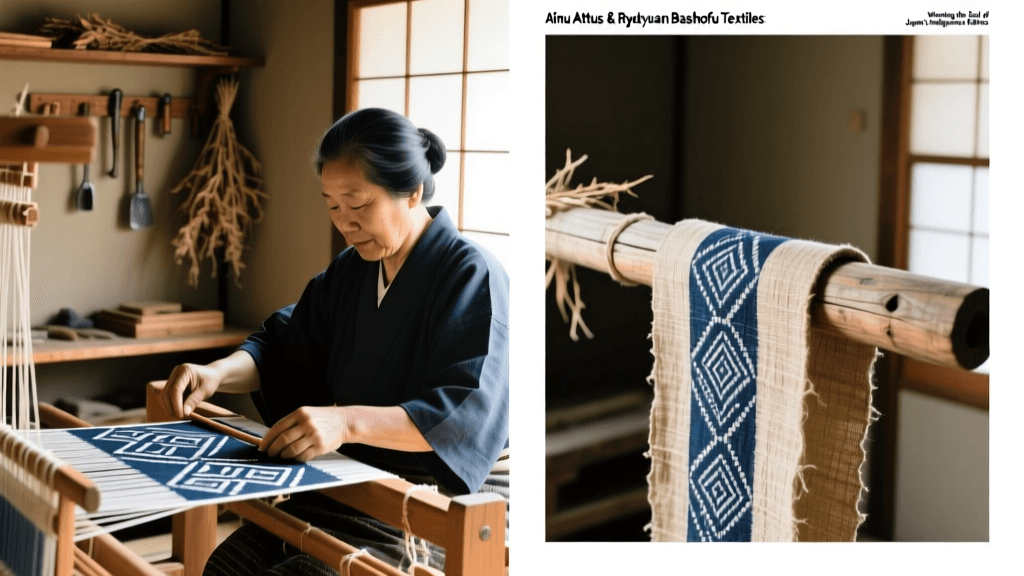
The primary material for attus is the inner bark of the ohyo (Japanese elm) tree, though nina (Manchurian elm) and shina (Japanese linden) are also used. Harvesting occurs in early spring when the sap rises, making the bark easier to peel. The outer bark is stripped away, and the precious inner layers are boiled in ash lye or water, dried, and then meticulously split into fine threads by hand.
Weaving is traditionally done on a backstrap loom, known as an upuk pe, which allows the weaver to control the tension of the warp threads using their own body weight. Because the loom is relatively narrow, attus fabric is typically woven in strips measuring about 30 to 40 centimeters in width, which are then stitched together to create robes, sashes, and leggings. The resulting fabric is remarkably strong, water-resistant, and breathable.
Practical Guide: Buying, Pricing, and Caring for Attus
If you are looking to acquire authentic attus pieces, it is essential to understand the market and proper maintenance.
- Product Types & Pricing: Small accessories like coin purses or smartphone cases woven from attus typically range from $40 to $80 USD. Traditional obi (sashes) or modern table runners cost between $200 and $500 USD. A fully tailored, authentic attus robe can exceed $1,500 USD, depending on the fineness of the thread and the complexity of the appliqué embroidery.
- Measurements & Sizing: Because traditional robes are constructed from straight, narrow strips of fabric, they are generally one-size-fits-most, relying on the sash to secure the garment to the body. When buying modern adaptations, request the exact shoulder-to-hem measurement, which usually falls between 90 cm and 110 cm.
- Care Instructions: Attus is highly durable but susceptible to prolonged moisture and UV degradation. Spot clean with a damp cloth and mild soap. For deeper cleaning, professional dry cleaning is recommended. Store the garment flat in a cool, dry place, stuffed with acid-free tissue paper to maintain its structural integrity.
Ryukyuan Bashofu: The Banana Fiber Cloth of the South
Traveling over 2,000 kilometers south of Hokkaido to the subtropical islands of Okinawa, we encounter the Ryukyuan people and their legendary textile: bashofu. The Ryukyu Kingdom was a prosperous maritime trading hub, and its textiles reflect a blend of indigenous innovation and foreign influence. Bashofu is woven from the fibers of the Musa basjoo, or Japanese fiber banana. As recognized by the Japan National Tourism Organization's traditional crafts registry, Kijoka no Bashofu is designated as a National Important Intangible Folk Cultural Property, highlighting its immense historical value.
The Grueling 40-Step Process of Bashofu
Creating bashofu is arguably one of the most labor-intensive textile processes in the world, involving over 40 distinct steps. The banana trees are cultivated for three years without the use of pesticides. Once harvested, the trunks are boiled in wood ash, and the fibers are scraped, graded, and dried. The finest fibers, taken from the innermost layers of the trunk, are reserved for high-quality garments.
These fibers are then hand-twisted into yarn, dyed using natural plant dyes like fukugi (happiness tree) or indigo, and woven on a treadle loom. The sheer volume of raw material required is staggering: it takes approximately 200 banana trees to harvest enough fiber to weave a single, standard-sized kimono. The entire process, from planting to the final weave, can take several months of continuous labor.
Practical Guide: Sourcing and Maintaining Bashofu
Acquiring bashofu is an investment in wearable art. Due to the scarcity of skilled weavers and the immense time required for production, genuine Kijoka no Bashofu is rare and highly prized.
- Product Types & Pricing: A standard, authentic bashofu kimono starts at around $5,000 USD and can easily reach $15,000 to $30,000 USD for master-weaver pieces with complex kasuri (ikat) patterns. Smaller items, such as bashofu neckties, bookmarks, or tea cozies, offer a more accessible entry point, ranging from $50 to $150 USD.
- Timing & Commissioning: If you commission a custom piece directly from a weaving cooperative in Ogimi Village, Okinawa, expect a waiting period of 6 to 12 months. The weaving season is heavily dependent on the humid subtropical climate, as the threads can snap if the air is too dry.
- Care Instructions: Unlike silk, bashofu becomes softer and more comfortable with wear and washing. Hand wash the garment in cold water using a neutral pH detergent. Never wring the fabric; instead, press the water out gently between two towels. Iron on a low setting using a protective pressing cloth. Avoid storing in plastic bags, as the natural fibers need to breathe to prevent mildew in humid environments.
Comparative Analysis: Attus vs. Bashofu
To better understand the distinct characteristics of these two indigenous textiles, refer to the comparison chart below:
| Feature | Ainu Attus | Ryukyuan Bashofu |
|---|---|---|
| Primary Fiber | Inner bark of Japanese Elm (ohyo) | Japanese Fiber Banana (Musa basjoo) |
| Region of Origin | Hokkaido (Northern Japan) | Okinawa (Southern Japan) |
| Loom Type | Backstrap Loom (upuk pe) | Treadle Loom |
| Production Time (1 Kimono) | 1 to 2 months | 6 to 12 months |
| Average Cost (Full Garment) | $1,500 - $3,000 USD | $5,000 - $30,000+ USD |
| Texture & Feel | Rough, sturdy, highly durable | Lightweight, breathable, linen-like |
Contemporary Relevance and Ethical Sourcing
Both the Ainu and Ryukyuan textile traditions faced severe threats of extinction during the 20th century due to forced assimilation policies and the influx of cheap, mass-produced textiles. Today, however, there is a robust movement to preserve these crafts. The Japanese Agency for Cultural Affairs has played a pivotal role in subsidizing master artisans and training apprentices to ensure these techniques survive.
For international buyers and collectors, ethical sourcing is paramount. When purchasing attus or bashofu, always seek out certified cooperatives, indigenous-run galleries, or government-registered craft associations. Avoid ‘tribal-style’ souvenirs sold in generic tourist shops, as these are often machine-made imports that exploit indigenous motifs without supporting the communities. True appreciation of these garments requires acknowledging the indigenous artisans who have fought to keep their ancestral threads unbroken.
Conclusion
“The threads of the elm and the banana tree are not merely materials; they are the physical manifestation of our ancestors' resilience and our deep connection to the land.”
The textile traditions of the Ainu and Ryukyuan peoples offer a profound counter-narrative to the mainstream history of Japanese fashion. While the silk kimono represents the refined aesthetics of the mainland courts, the robust attus and the ethereal bashofu speak to the ingenuity, endurance, and environmental harmony of Japan's indigenous communities. By understanding the meticulous craftsmanship, respecting the cultural significance, and investing ethically in these garments, we ensure that the weaving traditions of the north and south continue to thrive for generations to come.