Decoding Hanfu In Traditional Chinese Scroll Paintings
The Intersection of Art and Sartorial History
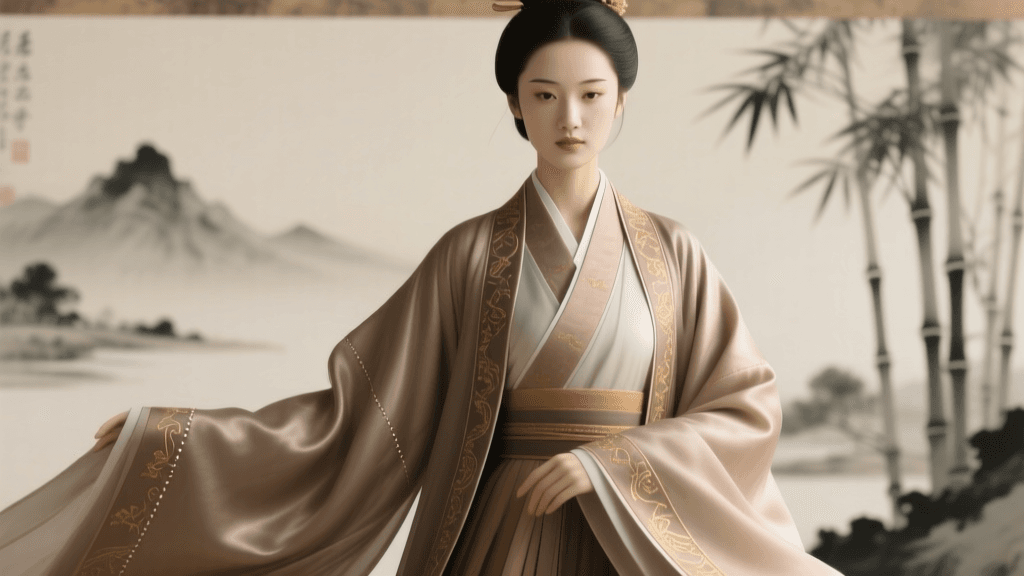
Traditional Chinese scroll paintings are not merely masterpieces of brushwork and composition; they are invaluable historical archives that document the evolution of Asian traditional garments. For historians, textile enthusiasts, and modern Hanfu revivalists, these scrolls offer a visual encyclopedia of sartorial customs, fabric drapery, and social hierarchies. Unlike Western portraiture, which often prioritized individual facial features, classical Chinese figure painting placed immense emphasis on the flow, structure, and symbolic weight of clothing. By learning to 'read' these garments, viewers can unlock profound insights into the cultural and climatic realities of ancient China.
According to The Metropolitan Museum of Art's Heilbrunn Timeline of Art History, the depiction of figures in Chinese art was deeply intertwined with the moral and social order of the time. Clothing was the primary visual indicator of a subject's rank, profession, and ethnic identity. Through careful analysis of handscrolls and hanging scrolls, we can trace the transition from the voluminous, diaphanous silks of the Tang dynasty to the structured, heavily layered brocades of the Ming era.
Decoding the Visual Language of Ancient Textiles
Chinese painters developed highly specialized brushwork techniques, known as miaofa (line drawing methods), specifically to render different fabric weights and textures. Understanding these techniques is crucial for identifying the materials depicted in a painting.
Pigments, Brushwork, and the Illusion of Fabric Weight
To determine whether a painted figure is wearing lightweight summer silk or heavy winter hemp, one must observe the artist's line work and pigment choices. The gao gu you si miao (high ancient thread line) technique uses smooth, continuous, and rounded strokes to depict the flowing, weightless nature of fine silks and gauze. Conversely, the zhe lu miao (folded reed line) features sharp, angular, and interrupted strokes, which artists used to illustrate the stiff, heavy folds of layered winter garments, ramie, or thick brocades.
Furthermore, the use of mineral pigments provides clues about textile dyeing. Cinnabar (red) and malachite (green) were often used to depict expensive, colorfast dyed silks reserved for the elite, while muted ink washes represented undyed hemp or linen worn by commoners.
Dynastic Silhouettes: A Comparative Guide
The silhouette of Hanfu changed dramatically across dynasties, reflecting shifting cultural influences, climate variations, and sumptuary laws. The table below provides a structured comparison of how these garments were represented in scroll art.
| Dynasty | Dominant Silhouette in Art | Key Garment Depicted | Brushwork Technique for Fabric | Notable Artwork Example |
|---|---|---|---|---|
| Tang (618–907) | Voluminous, high-waisted, expansive | Qixiong Ruqun (Chest-high skirt), Pibo (Shawl) | Flowing, rounded, continuous lines | Court Ladies Adorning Their Hair with Flowers by Zhou Fang |
| Song (960–1279) | Slender, understated, elongated | Beizi (Parallel-collar jacket), narrow sleeves | Angular, precise, delicate outlines | Banana and Palm and genre paintings by Su Hanchen |
| Ming (1368–1644) | Structured, heavily layered, wide | Aoqun (Jacket and skirt), Mamianqun (Horse-face skirt) | Stiff, deliberate, geometric folds | Spring Morning in the Han Palace by Qiu Ying |
How to 'Read' Hanfu in Scroll Paintings: An Actionable Guide
For collectors, historians, and Hanfu practitioners looking to accurately reconstruct historical garments, scroll paintings serve as primary blueprints. Here is a practical, step-by-step guide to analyzing clothing in traditional art.
1. Identify the Collar and Closure (Jiaoling Youren)
The most fundamental rule of Hanfu is jiaoling youren—the left side of the collar must cross over the right. When examining a scroll, zoom in on the neckline. If a figure is depicted with the right side over the left, it traditionally signifies either a deceased individual (as burial customs reversed the closure) or a foreigner from the northern steppes. This detail is critical for verifying the historical accuracy of modern reproductions.
2. Analyze Sleeve Proportions and Drape
Sleeve width in paintings often denotes the wearer's social status and the occasion. In Tang dynasty scrolls, court ladies are frequently depicted with sleeves so wide they pool on the floor, indicating a life of leisure and the use of expensive, wide-loom silk. In contrast, Song dynasty scholars are shown with narrower, more practical sleeves, reflecting the era's Neo-Confucian emphasis on modesty and restraint. When measuring sleeves for a custom reproduction, note that a 'wide sleeve' in Ming art typically translates to a physical measurement of 60cm to 80cm in circumference at the wrist.
3. Spotting Rank and Status via Motifs and Accessories
As noted in Encyclopedia Britannica's comprehensive guide to Chinese Painting, the use of line and detail in figure painting was heavily codified to reflect social strata. Look for the Bixi (a ceremonial knee cover) hanging from the waist belt of male officials, or the intricate jade pendants (Yupei) worn by noblewomen. The presence of a Mamianqun (horse-face skirt) with distinct, flat front and back panels and pleated sides is a hallmark of Ming dynasty women's formal wear, often decorated with woven gold thread (zhijin) in paintings of the imperial court.
Where to View and Study Authentic Scroll Art Today
To truly appreciate the textile details in these masterpieces, one must view them in person or through high-resolution digital archives. The physical act of unrolling a handscroll mimics the passage of time and reveals garments in sequential context.
- The Metropolitan Museum of Art (New York, USA): The Met's Asian Art department frequently rotates its fragile scroll collection. General admission is $30 USD. Visit on weekday mornings to avoid crowds and request the 'Chinese Painting and Calligraphy' gallery rotations.
- National Palace Museum (Taipei): Home to thousands of imperial scrolls. Admission is approximately $10 USD (300 TWD). Their digital archive offers gigapixel-resolution scans where individual silk threads and embroidery motifs can be seen.
- Victoria and Albert Museum (London, UK): While famous for physical textiles, the V&A also holds significant scroll collections. Researchers can explore the Victoria and Albert Museum's Asian Collections online database to cross-reference painted garments with surviving physical textile fragments.
'In Chinese art, the garment is not merely a covering for the body; it is the architectural framework of the soul, dictating how the figure moves, breathes, and interacts with the cosmos.' — Traditional Chinese Aesthetics
Practical Tips for Digital and Physical Research
When studying digital archives, utilize the zoom function to examine the hems of the garments. Artists often painted subtle drag marks or mud stains on the hems of commoners' hemp skirts, while the hems of noblewomen's silk skirts were depicted hovering cleanly above the ground, sometimes supported by unseen attendants. If you are commissioning a Hanfu tailor based on a specific painting, always provide them with high-resolution crops of the waist pleats and armhole seams, as these structural elements are where historical accuracy is most frequently lost in modern commercial reproductions.
Conclusion
Traditional Chinese scroll paintings are vital, living documents for the study of Asian traditional garments. By understanding the brushwork techniques used to depict fabric weight, recognizing the dynastic shifts in silhouettes, and knowing where to access high-quality archival materials, enthusiasts and scholars can bridge the gap between two-dimensional art and three-dimensional sartorial history. Whether you are a historian decoding the rank of a Ming official or a tailor recreating a Tang dynasty Pibo, the scrolls remain the ultimate authoritative guide to the elegance and complexity of Hanfu.