DIY Kimono Upcycling: Repurpose Vintage Silk Into Modern Decor
The Renaissance of Vintage Kimono Silk
The global sustainable fashion movement has sparked a renewed interest in heritage garments, driving crafters and designers to look toward historical textiles for inspiration and raw materials. Among the most coveted of these materials is vintage Japanese kimono silk. With their intricate dyeing techniques, rich embroidery, and unparalleled craftsmanship, discarded or damaged kimonos offer a treasure trove of high-quality fabric for modern DIY upcycling projects. Rather than allowing these beautiful garments to languish in storage or end up in landfills, upcycling breathes new life into them, transforming them into contemporary fashion accessories and home decor.
According to the Metropolitan Museum of Art's Heilbrunn Timeline of Art History, Japanese textile arts have long been revered for their complex weaving, dyeing, and embroidery techniques, which historically denoted social status, seasonality, and regional identity. By repurposing these textiles today, DIY enthusiasts are not only engaging in eco-friendly crafting but also acting as custodians of a rich cultural legacy. This guide will walk you through the practical steps of sourcing, preparing, and transforming vintage kimono silk into stunning modern pieces.
Sourcing and Selecting Your Vintage Kimono
The first step in any upcycling project is acquiring the right materials. You do not need to spend hundreds of dollars on pristine, wearable antique kimonos for DIY projects. Instead, look for 'craft grade' or 'upcycling grade' kimonos. These garments typically have minor flaws such as small stains, fading, or tears that make them unsuitable for wearing but perfectly fine for cutting into smaller panels.
- Where to Buy: Online marketplaces like Etsy and eBay are excellent resources. Search for terms like 'vintage kimono fabric', 'salvage kimono', or 'haori jacket craft'. Local Japanese antique shops, estate sales, and specialized online kimono recyclers are also great avenues.
- Cost Expectations: A craft-grade vintage silk kimono typically ranges from $15 to $45. Haori (shorter jackets) usually cost between $20 and $50, depending on the intricacy of the lining and the exterior motifs.
- Yardage: A standard women's kimono yields approximately 12 to 14 yards of narrow fabric (about 14 inches wide per panel). A haori yields less but offers wider continuous panels, making it ideal for larger projects like tote bags or table runners.
Understanding Japanese Silk Weaves
Not all kimono silk behaves the same way under a sewing machine needle. Familiarizing yourself with traditional Japanese weave types will help you choose the right fabric for your specific project.
- Chirimen (Crepe Silk): Characterized by a pebbled, textured surface created by highly twisted weft threads. Chirimen is relatively stable, hides needle holes well, and is excellent for structured bags and pouches.
- Rinzu (Damask Silk): A glossy, smooth fabric with woven patterns that catch the light. Rinzu is slippery and delicate, making it best suited for home decor items like throw pillows or framed textile art where it will not endure heavy friction.
- Tsumugi (Pongee): Woven from pre-dyed, slubbed silk threads, tsumugi has a matte finish and a texture similar to raw linen. It is highly durable and holds its shape beautifully, making it the premier choice for upcycled apparel like cardigans or skirts.
Essential Tools for Silk Upcycling
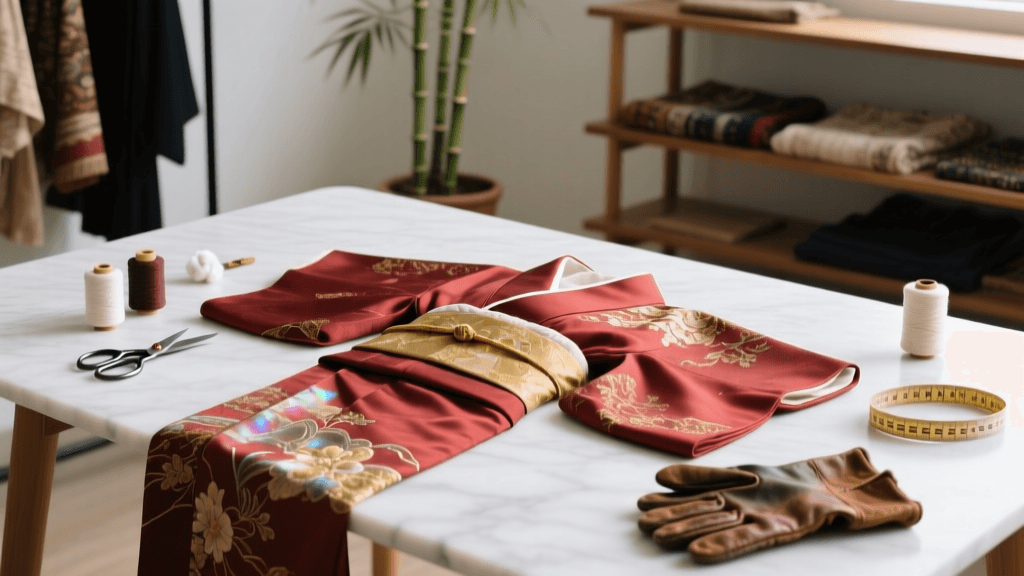
Working with vintage silk requires specialized tools to prevent snagging, fraying, and irreversible damage. Invest in the following items before beginning your project:
- Clover Ergonomic Seam Ripper: Essential for safely unpicking the dense, hand-sewn stitches of a vintage kimono without slicing the delicate silk.
- Micro-Serrated Shears: Standard scissors will cause slippery silk to slide and fray. Micro-serrated blades grip the fabric for a clean, precise cut.
- Rotary Cutter and Self-Healing Mat: For cutting long, straight panels without shifting the fabric grain.
- Fusible Interfacing: Vintage silk is often too flimsy for modern bag-making or upholstery. A lightweight woven fusible interfacing, such as Pellon SF101, adds necessary body and stability.
- Microtex/Sharp Needles: Use size 60/8 or 70/10 Microtex needles in your sewing machine. Universal needles have a rounded tip that can snag and pull delicate silk fibers.
The Preparation Phase: Unpicking and Cleaning
Traditional kimonos are constructed from straight, rectangular panels of fabric known as tanmono. They are sewn together using a simple running stitch, which was designed to allow the garment to be completely taken apart for washing and re-sewing. To harvest the fabric, use your seam ripper to carefully undo the side seams, shoulder seams, and sleeves. This process is meditative but time-consuming; expect to spend 2 to 3 hours unpicking a single kimono.
Once disassembled, the panels must be cleaned. Do not machine wash vintage silk. Instead, hand wash the panels in cool water using a pH-neutral detergent specifically formulated for protein fibers, such as Eucalan or a gentle baby shampoo. Gently agitate the water, let the silk soak for 15 minutes, and then roll the panels in a clean cotton towel to press out excess moisture. Lay them flat on a drying rack away from direct sunlight to prevent the natural dyes from fading.
Project 1: The Modern Haori Cardigan
The haori is a traditional Japanese hip- or thigh-length jacket worn open over a kimono. Its loose, forgiving silhouette translates effortlessly into a modern, bohemian-style cardigan. Because the haori is already open at the front and features wide sleeves, it requires minimal structural alteration.
Step-by-Step Instructions
- Remove the Lining: Most vintage haori are fully lined with contrasting silk. Carefully unpick the lining from the neckline, front edges, and sleeves. You can save this lining silk for a separate project, such as a delicate scarf or pocket square.
- Stabilize the Edges: Apply a 1-inch strip of lightweight fusible interfacing along the inside of the front opening and the neckline to prevent the silk from stretching out of shape when worn.
- Modernize the Hem and Cuffs: To give the haori a contemporary finish, sew a 2-inch band of solid-colored cotton ribbing or velvet to the bottom hem and the sleeve cuffs. This adds a modern textural contrast and weighs down the lightweight silk, improving the drape.
- Finish the Seams: Since vintage silk frays easily, finish all internal seam allowances with a narrow zigzag stitch or bind them in silk bias tape for a couture finish.
Time Investment: 4-5 hours. Estimated Cost: $35 (Haori) + $10 (Ribbing/Interfacing) = $45.
Project 2: The Heirloom Silk Tote Bag
Transforming the vibrant, heavily patterned back panel of a vintage kimono into a statement tote bag is one of the most popular upcycling projects. The wide, uninterrupted canvas of the back panel perfectly showcases large motifs like cranes, peonies, or rolling waves.
Step-by-Step Instructions
- Cut the Panels: Cut two identical rectangular panels from the most visually striking part of the kimono. Standard tote dimensions are 15 inches wide by 17 inches tall. Cut matching panels for the interior lining using heavy-duty cotton canvas or linen.
- Interface the Silk: Iron the Pellon SF101 fusible interfacing to the wrong side of both silk panels. This step is non-negotiable; it turns delicate silk into a robust material capable of holding heavy items like books or laptops.
- Construct the Bag: Place the silk panels right sides together and sew the sides and bottom using a 1/2-inch seam allowance. Repeat for the canvas lining, but leave a 4-inch gap in the bottom seam for turning.
- Attach Handles: Use high-quality leather or thick cotton webbing handles. Pin them securely to the top edge of the silk bag, ensuring they are centered and spaced evenly (typically 4 inches from each side edge).
- Assemble and Topstitch: Insert the silk bag into the canvas lining (right sides together). Sew around the entire top edge. Pull the bag through the gap left in the lining, push the lining inside, and topstitch 1/4 inch from the top edge to secure the handles and close the lining gap.
Time Investment: 3-4 hours. Estimated Cost: $25 (Kimono panel) + $15 (Canvas/Leather handles) = $40.
Project Comparison and Planning Guide
Choosing the right project depends on your available time, budget, and sewing proficiency. Refer to the table below to plan your next upcycling endeavor.
| Project Type | Difficulty Level | Time Investment | Estimated Cost | Best Fabric Type |
|---|---|---|---|---|
| Modern Haori Cardigan | Intermediate | 4 - 6 Hours | $40 - $55 | Tsumugi, Chirimen |
| Heirloom Silk Tote Bag | Beginner/Intermediate | 3 - 4 Hours | $35 - $50 | Rinzu, Chirimen |
| Framed Textile Art | Beginner | 1 - 2 Hours | $20 - $30 | Rinzu, Embroidered Silk |
| Silk Table Runner | Beginner | 2 - 3 Hours | $25 - $40 | Chirimen, Tsumugi |
Conservation and Long-Term Care
Once you have transformed your vintage silk into a modern item, proper care is essential to ensure its longevity. Silk is a protein fiber that is highly susceptible to environmental damage. The Victoria and Albert Museum's conservation department notes that silk is particularly sensitive to prolonged exposure to ultraviolet light and fluctuating humidity levels, which can cause the fibers to become brittle and shatter over time.
Pro-Tip for Upcyclers: Never store your upcycled silk items in plastic bins, as plastic traps moisture and encourages mold growth. Instead, wrap them in acid-free tissue paper and store them in breathable cotton pillowcases or archival textile boxes.
When it comes to cleaning your finished projects, avoid harsh chemicals and agitation. For upcycled bags and home decor, spot cleaning with a damp cloth and mild soap is usually sufficient. If a silk cardigan or apparel piece requires a deeper clean, take it to a professional dry cleaner who specializes in vintage and delicate textiles, and be sure to point out any areas where modern interfacing or non-silk trims have been added.
Conclusion
Upcycling vintage kimono silk is a deeply rewarding practice that bridges the gap between historical reverence and modern sustainability. By understanding the unique properties of traditional Japanese weaves, utilizing the proper tools, and approaching the preparation process with patience, you can salvage forgotten textiles and transform them into breathtaking, functional art. Whether you are stitching a structured tote bag or tailoring a flowing haori cardigan, you are participating in a centuries-old tradition of textile appreciation, ensuring that the beauty of these garments continues to be admired for generations to come.