Sourcing and Authenticating Vintage Taisho Kimono
The world of vintage Japanese garment collecting is a profound journey through textile history, artistry, and cultural evolution. For serious collectors and enthusiasts of Asian traditions, the Taisho era (1912–1926) represents a golden age of kimono design. This brief but culturally explosive period bridged the strict, traditional aesthetics of the Meiji era and the rapid Westernization of the early Showa period. Sourcing and authenticating vintage Taisho kimono requires a trained eye, an understanding of historical context, and a rigorous approach to garment preservation. In this comprehensive guide, we will explore the defining characteristics of Taisho textiles, how to assess their condition, where to source them, and how to preserve these fragile historical artifacts for future generations.
The Taisho Roman Aesthetic: A Cultural Shift
To authenticate a Taisho kimono, one must first understand the cultural backdrop of its creation. The Taisho period was marked by a burgeoning middle class, increased urbanization, and a fascination with Western art movements such as Art Nouveau and Art Deco. This cultural blending gave rise to the 'Taisho Roman' aesthetic, a romantic and cosmopolitan style that heavily influenced fashion, architecture, and the decorative arts. As noted by the Victoria and Albert Museum, the early twentieth century was a period of rapid modernization in Japan, where traditional garments began to reflect global artistic trends while maintaining their indigenous structural integrity.
Unlike the subdued, nature-focused motifs of the preceding Meiji era, Taisho kimono embraced bold geometry, vibrant contrasts, and unconventional imagery. It was an era of experimentation, where the kimono was still the primary daily garment for women, but its decorative language was rapidly evolving to reflect a modernizing society.
Key Identifiers of Taisho Era Garments
When evaluating a potential acquisition, collectors should look for specific hallmarks that date a garment to the 1910s and 1920s. These identifiers span motifs, color palettes, and structural elements.
Motifs and Patterns
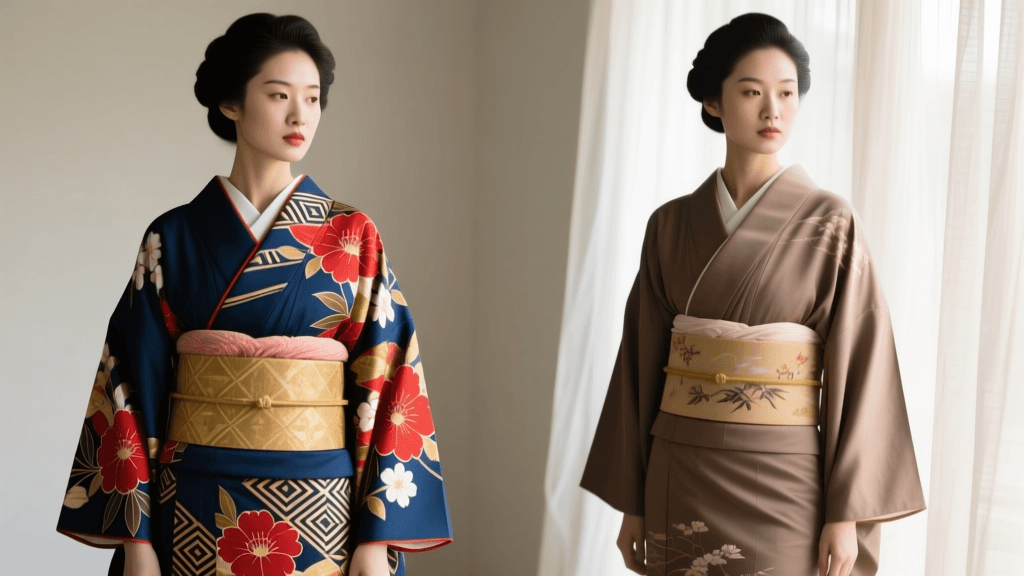
Taisho textiles frequently feature Art Deco geometry, large-scale abstract shapes, and romanticized Western motifs. It is common to find stylized roses, clovers, and even architectural elements integrated into traditional yuzen dyeing or shibori tie-dye techniques. The Metropolitan Museum of Art highlights how Japanese textiles of this period absorbed Western artistic movements, resulting in dramatic, sweeping patterns that often ignored the traditional boundaries of the kimono's seams.
Color Palettes
The colors of the Taisho era are distinctly moody and saturated. Collectors should look for deep mustard yellows, rich purples, burnt oranges, and striking crimson reds. These were often paired with stark black or deep navy blue backgrounds to create a high-contrast, dramatic visual effect that appealed to the modern, urban woman of the 1920s.
Linings and Structural Details
One of the most reliable ways to date a vintage kimono is by examining its lining, known as the doura (body lining) and hakkake (hem lining). Taisho and early Showa kimono are famous for their vibrant, often contrasting silk linings. A brilliant crimson or deep red silk lining, sometimes featuring a woven saya (glossy pattern), is a strong indicator of a Taisho or early Showa origin. Additionally, the sleeves of Taisho kimono tend to be slightly deeper and more flowing than the restrictive sleeves of the Meiji era, reflecting a shift toward more relaxed silhouettes.
Authenticating and Assessing Condition
Acquiring a century-old silk garment comes with inherent risks. Silk is a protein fiber that is highly susceptible to environmental damage, improper storage, and chemical degradation. A thorough condition assessment is critical before purchasing any vintage Taisho kimono.
Silk Shattering and Weighted Silk
The most fatal flaw in vintage silk is 'shattering,' a condition where the fabric becomes brittle and splits along the fold lines. In the 1920s, it was common practice to treat silk with metallic salts (like tin chloride) to add weight and improve the drape of the fabric. Over time, these salts oxidize and essentially burn the silk from the inside out. If a kimono feels unusually heavy but the fabric sounds like dry paper when gently manipulated, it is likely weighted silk that has begun to shatter. Shattered silk cannot be repaired and should generally be avoided by collectors unless the piece is being acquired purely for study or salvage.
Dye Bleeding and Stains
Inspect the garment for ase-mi (sweat stains), which typically appear as yellowish or grayish rings around the underarms and the back of the collar. Because Taisho kimono feature highly saturated dyes, moisture can cause severe dye bleeding, where dark colors migrate into lighter areas of the fabric. While some surface stains can be mitigated by a professional Japanese textile conservator, deep-set dye migration is often permanent and significantly diminishes the garment's value.
Seams and Alterations
Authentic vintage kimono are constructed using straight, hand-stitched seams without curved tailoring. Check the shoulder seams and the okumi (front overlapping panels) for signs of modern machine stitching or crude alterations. A true Taisho garment will feature meticulous, nearly invisible hand-stitching, and the fabric will be cut from standard bolt widths (approximately 36 centimeters), meaning the garment's width is determined by the number of fabric panels rather than custom cutting.
Sourcing Strategies for Collectors
Finding authentic Taisho kimono in excellent condition requires patience and a strategic approach to sourcing. The secondary market for Japanese antiques is vast, but navigating it requires specialized knowledge.
- Japanese Online Auctions: Platforms like Yahoo! Auctions Japan are treasure troves for vintage textiles. Because the site is in Japanese and requires a domestic shipping address, international collectors must use proxy bidding services such as Buyee or ZenMarket. Search terms like 'Taisho roman,' 'antique kimono,' and 'vintage silk' (translated to Japanese) yield the best results.
- Antique Markets: For those who can travel to Japan, physical markets offer the advantage of tactile inspection. The Oedo Antique Market at the Tokyo International Forum, held on the first and third Sundays of the month, features dozens of vendors specializing in vintage kimono, obi, and accessories. Always bring a magnifying glass and a soft cotton cloth to handle the textiles respectfully.
- Specialty Dealers: Reputable online dealers based in Kyoto and Tokyo often curate high-end vintage collections. While their prices are higher than raw auction sites, they provide professional cleaning, accurate dating, and detailed condition reports.
Pricing and Value Matrix
The value of a Taisho kimono fluctuates based on condition, rarity of the motif, and the presence of artisan signatures. Below is a general pricing guide for the current collector's market.
| Condition & Era | Estimated Value (USD) | Collector Demand |
|---|---|---|
| Taisho (Mint, Rare Motif) | $400 - $1,200+ | Very High (Museum Quality) |
| Taisho (Excellent, Standard) | $150 - $350 | High (Wearable/Display) |
| Taisho (Good, Minor Flaws) | $50 - $120 | Moderate (Study/Upcycling) |
| Taisho (Shattered/Poor) | $10 - $30 | Low (Salvage/Textile Art) |
Archival Storage and Preservation
Once you have acquired a vintage Taisho kimono, proper preservation is paramount to halt degradation and protect your investment. According to the Canadian Conservation Institute, controlling relative humidity, temperature, and light exposure is the most critical factor in caring for historical textiles.
The Traditional Method: Tatoushi and Tansu
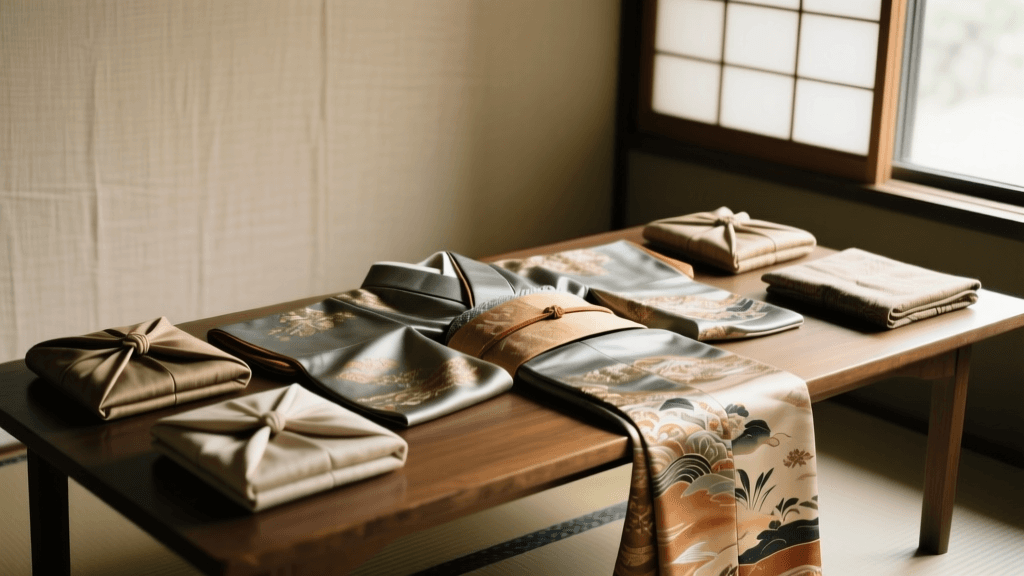
In Japan, kimono are traditionally stored in a tansu (a wooden chest, often made of paulownia or cedar). Paulownia wood is highly prized because it naturally regulates humidity and is resistant to insects. The kimono is folded along its original seam lines and wrapped in tatoushi, a specialized, acid-free, breathable paper. Never store vintage silk in plastic bags or sealed plastic bins, as silk requires air circulation and trapped moisture will rapidly encourage mold growth and silk rot.
Modern Archival Practices
If you do not have access to a traditional paulownia tansu, you must recreate its microclimate. Store the folded kimono in an acid-free, archival-quality textile box. Line the box with unbleached, washed cotton muslin. Place silica gel desiccant packets (buffered to prevent over-drying) in the corners of the storage area to maintain a relative humidity of around 45% to 50%. Keep the storage environment dark, as the vibrant aniline dyes used in the Taisho era are highly fugitive and will fade irreversibly if exposed to ultraviolet light.
'A Taisho kimono is not merely a piece of clothing; it is a canvas that captures the exact moment Japan looked outward to the world while holding tightly to its silk-woven roots. To preserve one is to preserve a fleeting era of romantic modernism.'
Conclusion
Collecting vintage Taisho kimono is a deeply rewarding pursuit that blends historical research with textile connoisseurship. By understanding the unique aesthetic markers of the Taisho Roman era, rigorously assessing the physical condition of the silk, and employing archival storage techniques, collectors can ensure that these magnificent garments survive for another century. Whether sourced from a bustling Tokyo antique market or a quiet online auction, every Taisho kimono holds a century of stories, waiting to be carefully unfolded and appreciated by a new generation of guardians.