Restoring Vintage Silk Kimonos: 2026 Archival Storage Guide
The Evolution of Silk Preservation in 2026
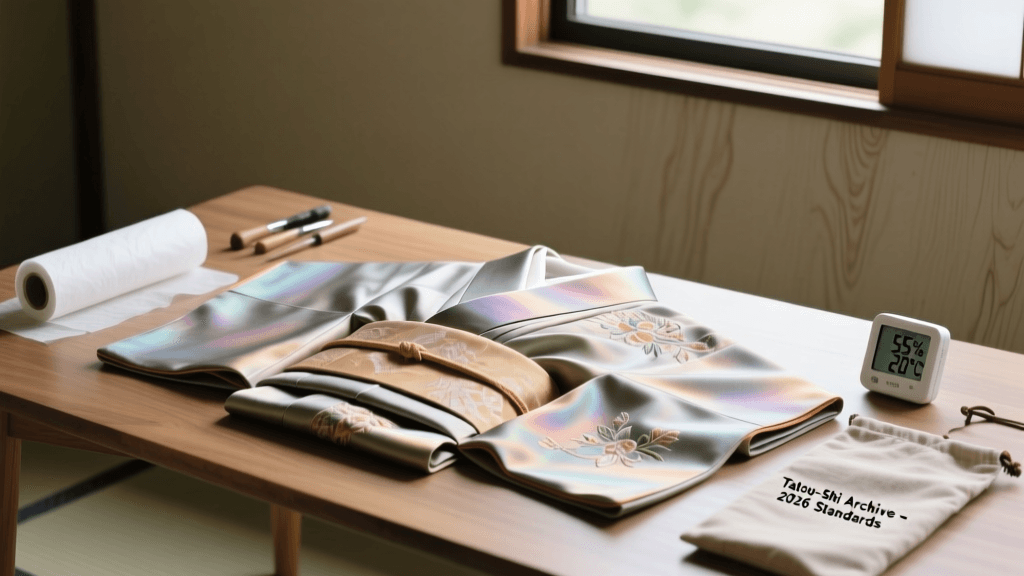
Preserving vintage silk kimonos and obis requires a delicate balance between honoring centuries-old Japanese textile traditions and utilizing cutting-edge conservation science. As we navigate 2026, the standards for museum-grade archival storage have evolved significantly. Serious collectors, archivists, and inheritors of family heirlooms now recognize that simply placing a folded garment in a wooden drawer is no longer sufficient to combat the accelerated degradation caused by modern environmental fluctuations. Today, the integration of traditional tatou-shi (wrapping paper) with advanced micro-climate monitoring represents the gold standard in Asian garment care.
Silk is a protein fiber composed primarily of fibroin. While incredibly strong, it is highly susceptible to photo-oxidation, acid hydrolysis, and biological attacks from mold or insects. In 2026, leading conservationists emphasize a proactive approach to preservation, focusing on stabilization, proper cleaning, and the creation of inert storage environments. This comprehensive guide details the exact methodologies required to restore, fold, and archive your vintage silk kimonos for future generations.
Understanding Silk Degradation and Stain Removal
Before a vintage kimono can be archived, it must be meticulously cleaned. Invisible stains—such as perspiration, sugars from spilled sake, or natural body oils—will oxidize over time, leading to irreversible brown spotting and localized silk shattering. The traditional Japanese cleaning method known as maru-arai (whole garment washing) remains the premier technique for comprehensive restoration.
The 2026 Maru-arai Process
Modern maru-arai utilizes specialized, pH-neutral enzymatic solvents that break down protein-based and tannin stains without stripping the delicate silk sericin or bleeding the natural dyes. Unlike harsh dry-cleaning chemicals used in the past, today's eco-friendly hydrocarbon solvents are specifically calibrated for antique textiles. According to guidelines published by the American Institute for Conservation's Textile Specialty Group, solvent-based cleaning is preferred for water-sensitive dyes and metallic threads, ensuring the structural integrity of the silk fibroin is maintained.
For localized stains, conservators in 2026 employ targeted micro-abrasion and ultrasonic spot-cleaning tools. These devices use high-frequency sound waves in a localized aqueous bath to lift particulate matter from the weave without agitating the surrounding fragile fibers.
Tatou-shi vs. Modern Archival Tissue: A Material Comparison
Once cleaned, the kimono must be wrapped. Historically, kimonos were wrapped in tatou-shi, a thick, handmade washi paper derived from the bark of the paper mulberry tree (kozo). While beautiful and traditional, not all vintage tatou-shi is chemically stable. Below is a comparison of wrapping materials utilized by top conservators in 2026.
| Material | pH Level | Pros | Cons | Best Use Case |
|---|---|---|---|---|
| Traditional Tatou-shi (Handmade Washi) | Neutral (7.0) | Breathable, culturally authentic, excellent drape. | Can harbor acidity if not specifically manufactured for archival use; expensive. | Display, short-term storage, and culturally significant heirlooms. |
| Unbuffered Acid-Free Tissue | Neutral (7.0) | Chemically inert, safe for protein fibers (silk/wool). | Less structural support than heavier papers. | Primary wrapping layer for all vintage silk kimonos and obis. |
| Buffered Archival Tissue | Alkaline (8.5 - 9.5) | Contains calcium carbonate to absorb environmental acids. | Alkalinity can degrade protein fibers over time. | Strictly for cellulose fibers (cotton, linen). Never use on silk. |
| Archival Tyvek Softwrap | Neutral (7.0) | Water-resistant, tear-proof, highly durable. | Non-traditional aesthetic, less breathable in high humidity. | Outer protective layer for garments stored in non-climate-controlled areas. |
For silk garments, the Canadian Conservation Institute strictly recommends unbuffered, acid-free materials. The alkaline reserve in buffered tissues can cause the amino acids in silk to break down, leading to fiber embrittlement. In 2026, the best practice is to wrap the silk kimono in unbuffered acid-free tissue, and then optionally place it inside a custom-made, archival-grade tatou-shi envelope for structural support and cultural authenticity.
The Precise Art of Tato-ori (Folding)
Improper folding creates permanent creases that eventually turn into stress fractures along the silk weave. The traditional folding method, tato-ori, is designed to distribute the weight of the fabric evenly and align the seams to prevent awkward tension.
Step-by-Step Folding Guide
- Preparation: Lay the kimono face down on a clean, padded surface. Ensure your hands are clean and free of lotions, or wear powder-free nitrile gloves to prevent oil transfer.
- The Sleeves: Fold the left sleeve back over the body of the kimono, aligning the sleeve edge with the center back seam. Repeat with the right sleeve.
- The Collar: Fold the left front panel over the right front panel, ensuring the collars lie flat and parallel. The traditional rule is left over right (as wrapping right over left is reserved for the deceased).
- The Length: Fold the bottom hem up to meet the top collar. If the kimono is exceptionally long, make a soft, padded fold at the waist using a roll of acid-free tissue to prevent a sharp crease at the hip.
- Tissue Padding: Insert small, crumpled 'sausages' of unbuffered acid-free tissue into the folds of the sleeves and the collar. This prevents hard creases and maintains the three-dimensional shape of the garment.
Never hang a vintage silk kimono for long-term storage. The weight of the fabric, combined with heavy metallic embroidery or lined hems, will cause the silk shoulders to stretch, tear, and permanently deform.
Creating a Micro-Climate: Temperature, Humidity, and Monitoring
The environment in which the wrapped kimono is stored is just as critical as the materials touching the fabric. In 2026, smart-home integration has made museum-grade climate control accessible for private collectors.
Optimal Environmental Parameters
- Relative Humidity (RH): Maintain a strict RH between 45% and 55%. Fluctuations cause the silk fibers to expand and contract, leading to mechanical fatigue. High humidity invites mold and attracts silverfish, while low humidity makes the silk brittle.
- Temperature: Keep the storage area cool, ideally between 60°F and 65°F (15°C - 18°C). Lower temperatures significantly slow the chemical rate of silk degradation and dye fading.
- Light Exposure: Store garments in complete darkness. Ultraviolet (UV) and even ambient visible light will permanently shatter silk fibers and bleach natural dyes.
Modern collectors utilize wireless IoT data loggers placed directly inside their storage chests or archival boxes. These 2026 smart sensors track temperature and humidity spikes, sending real-time alerts to your smartphone if the micro-climate deviates from the safe parameters. For wooden chests (tansu), it is vital to seal the interior wood with an archival barrier film, such as Marvelseal, to prevent acidic wood off-gassing from migrating into the silk.
Restoring Tarnished Zari and Gold Leaf (Surihaku)
Many vintage kimonos feature zari (metallic threads) or surihaku (gold leaf applied with adhesive). These elements require specialized care. Older zari threads were often made by wrapping thin strips of silver or gold foil around a silk or cotton core. Over time, the silver tarnishes, turning black and staining the surrounding silk.
In 2026, conservators use non-aqueous, specialized silver-tarnish reducing cloths to gently lift oxidation from metallic threads without introducing moisture. For flaking surihaku, consolidation is performed using conservation-grade, reversible adhesives like isinglass or specialized cellulose ethers, applied under a microscope to re-adhere the gold leaf to the silk base. Never attempt to clean metallic threads with standard liquid solvents, as the moisture will cause the metal foil to separate from its core and permanently disintegrate.
Conclusion: A Commitment to Cultural Heritage
Preserving a vintage silk kimono is an act of cultural stewardship. By combining the meticulous folding techniques of tato-ori, the chemical safety of unbuffered archival tissues, and the precision of 2026 climate-monitoring technology, you ensure that these magnificent garments survive the ravages of time. Whether you are safeguarding a Taisho-era wedding uchikake or a mid-century everyday kimono, adhering to these museum-grade protocols will keep the silk vibrant, the dyes true, and the history intact for the centuries to come.