2026 Vintage Silk Kimono Care: Stain Removal & Storage Guide
The Resurgence of Vintage Silk in 2026
As we navigate through 2026, the global appreciation for vintage Asian garments has reached unprecedented heights. Collectors, fashion enthusiasts, and cultural preservationists are increasingly investing in antique and mid-century silk kimonos. However, owning a piece of Japanese textile history comes with profound responsibilities. Silk is a delicate protein fiber that is highly susceptible to environmental degradation, improper handling, and chemical damage. The intersection of traditional Japanese preservation techniques and modern 2026 conservation science offers the best pathway to protect these masterpieces for future generations. Whether you have inherited a Showa-era chirimen silk kimono or recently acquired a Taisho-era rinzu piece at auction, understanding the precise mechanics of garment care is essential.
Identifying Silk Weaves and Vulnerabilities
Before applying any cleaning or storage method, it is crucial to identify the specific type of silk you are working with. Japanese kimonos are typically crafted from three primary silk weaves, each presenting unique conservation challenges. Chirimen is a crepe silk characterized by its textured, crinkled surface. This texture is achieved by twisting the weft threads tightly before weaving. When exposed to water, chirimen can shrink or lose its signature crinkle, making water-based stain removal incredibly risky. Rinzu is a damask-style satin weave that is smooth, lustrous, and often features intricate woven patterns. While less prone to shrinking than chirimen, rinzu is highly susceptible to water spotting and friction damage. Finally, Ro and Sha are sheer, gauze-like silks used for summer garments. Their open-weave structure makes them extremely fragile and prone to snagging. Recognizing these structural differences is the first step in the 2026 conservation protocol, ensuring that your cleaning methods do not inadvertently destroy the textile's integrity.
Modern Stain Removal: The 2026 Conservation Approach
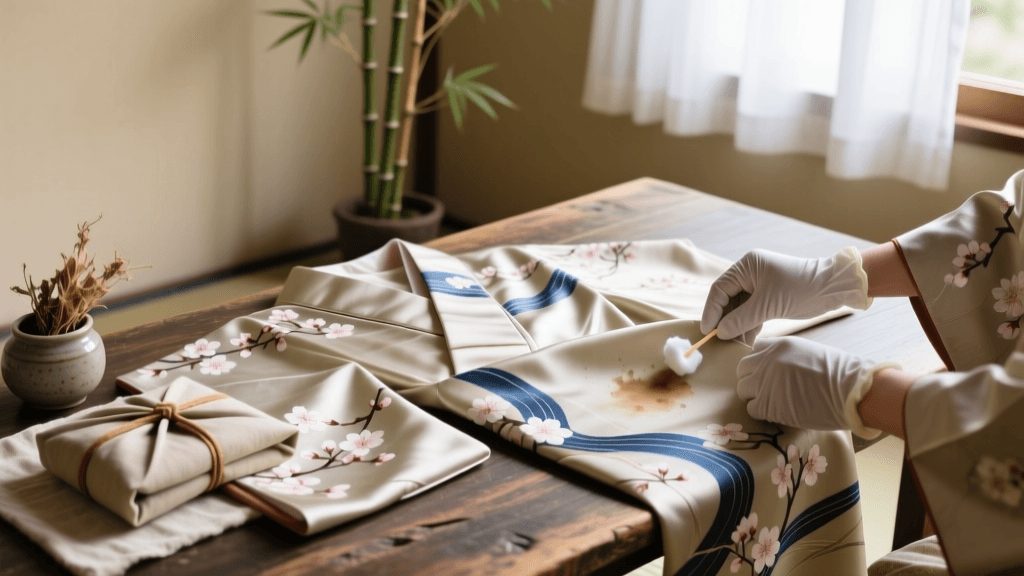
Historically, aggressive chemical solvents were used to treat stains on vintage garments, often leading to long-term fiber degradation and dye bleeding. In 2026, the standard for at-home and professional textile conservation prioritizes pH-neutral, minimally invasive techniques. The most common issues facing vintage kimonos are yellowing (oxidation of the silk proteins or residual sericin), foxing (brown spots caused by fungal growth or metallic impurities), and localized water spots.
For surface dust and light particulate matter, avoid using modern vacuum cleaners, even on low settings, as the suction can distort the weave. Instead, use a soft, natural-hair hake brush to gently sweep the surface of the garment while it is laid flat on a clean, acid-free cotton sheet. If you encounter localized, non-protein stains, conservation-grade dry sponges (vulcanized rubber sponges) can be gently dabbed over the area to lift particulate grime without introducing moisture.
When dealing with organic stains, modern conservators recommend against the use of household enzyme cleaners, which are often too alkaline for vintage silk. Instead, specialized conservation detergents like Orvus WA Paste, heavily diluted in distilled water, can be used for spot testing on hidden seam allowances. However, the golden rule of 2026 kimono care remains unchanged: when in doubt, avoid water entirely. Water can cause the natural dyes used in vintage kimonos to bleed instantly, resulting in irreversible damage. For severe staining, the garment must be entrusted to a professional.
Mastering Tatoshi: The Traditional Folding Method
The Japanese have perfected the art of garment storage over centuries, and the tatoshi (or tatoushi) folding method remains the gold standard in 2026. Tatoshi refers both to the specific folding technique and the acid-free paper wrappers used to encase the garment. This method prevents deep creases from forming along the same lines, which can eventually lead to silk shattering (where the fibers break along the fold line).
To properly fold a kimono using the tatoshi method, follow these precise steps:
- Preparation: Lay the kimono face down on a clean, flat surface. Ensure your hands are clean and free of lotions or oils. Place a sheet of unbuffered, acid-free tatoshi paper (typically measuring around 85cm by 100cm) beneath the garment.
- Folding the Sleeves: Fold the left sleeve back onto the body of the kimono, aligning the edge with the center back seam. Repeat with the right sleeve, overlapping it slightly over the left.
- Folding the Sides: Fold the left side of the kimono body toward the center back seam. Then, fold the right side over the left, creating a long, narrow rectangle.
- Folding the Length: Fold the bottom hem up to meet the collar, leaving a small gap to prevent a hard crease at the exact edge of the fabric. Fold the garment in half one more time to create a compact rectangle.
- Wrapping: Carefully fold the edges of the acid-free tatoshi paper over the garment, tucking the flaps in securely without using any tape or adhesive.
Climate-Controlled Storage Solutions
Proper folding is only half the battle; the storage environment dictates the long-term survival of the silk. According to the Canadian Conservation Institute, maintaining a stable microclimate is critical for protein fibers. Fluctuations in temperature and relative humidity (RH) cause the silk fibers to expand and contract, leading to mechanical stress and eventual tearing. In 2026, the recommended baseline for silk storage is a temperature of 18°C to 20°C (64°F to 68°F) with a relative humidity strictly maintained between 45% and 55%.
Below is a comparison of common storage methods utilized by collectors today:
| Storage Method | Temperature Control | Humidity (RH) | Pros | Cons |
|---|---|---|---|---|
| Traditional Cedar Chest (Tansu) | Ambient Room | Variable (30-70%) | Natural pest repellent, culturally authentic, aesthetic appeal | Wood acidity can transfer to silk, poor humidity control |
| Modern Archival Box (Acid-Free) | Requires HVAC (18-20°C) | Requires HVAC (45-55%) | Complete pH neutrality, stackable, protects from light and dust | Requires external climate control systems to be effective |
| Standard Bedroom Closet | Ambient (20-24°C) | Variable (30-60%) | Highly convenient, accessible for frequent wearers | High risk of light damage, dust accumulation, and pest intrusion |
For serious collectors in 2026, the modern archival box lined with unbuffered acid-free tissue paper is the superior choice. If you must use a traditional cedar chest for aesthetic or cultural reasons, it is imperative to line the interior with a barrier of washed, unbleached cotton muslin or archival polyester film to prevent the acidic wood oils from migrating into the silk.
Pest Management and Light Exposure
Silk is a protein, making it an attractive food source for webbing clothes moths (Tineola bisselliella) and carpet beetles. The Victoria and Albert Museum's textile care guidelines emphasize that prevention is vastly superior to chemical eradication. In 2026, the use of traditional mothballs (naphthalene or paradichlorobenzene) is strongly discouraged, as these chemicals off-gas toxic fumes that can react with silk dyes and pose severe health risks to humans.
Instead, modern preservation relies on integrated pest management (IPM). Utilize non-toxic pheromone traps specifically designed for clothes moths to monitor and disrupt breeding cycles. Place these traps in the corners of your storage room, never directly inside the archival boxes or touching the garments. Additionally, light exposure is a silent killer of vintage textiles. Ultraviolet (UV) and even high-intensity visible light cause photo-oxidation, leading to irreversible fading and fiber embrittlement. Always store kimonos in total darkness, and when displaying them, use UV-filtering acrylic cases and limit light exposure to under 50 lux.
When to Consult a Professional Shimi-Nuki Specialist
While at-home maintenance is vital for preventative care, certain situations demand the expertise of a professional. In Japan, the art of kimono stain removal is known as shimi-nuki. These specialists possess an encyclopedic knowledge of natural dyes, mordants, and silk weaves. If your vintage kimono suffers from severe foxing, widespread yellowing, or if the silk has begun to shatter along the fold lines, do not attempt DIY restoration. A professional conservator can perform techniques such as localized re-dyeing, backing fragile silk with supportive conservation fabrics, and utilizing specialized solvent chambers that are unavailable to the general public.
Conclusion
Preserving a vintage silk kimono in 2026 requires a harmonious blend of respect for traditional Japanese methods and adherence to modern textile conservation science. By identifying your silk weaves, utilizing the tatoshi folding method, maintaining strict climate controls, and avoiding harsh chemicals, you ensure that these exquisite garments survive as tangible links to Asian cultural heritage. Treat your vintage silk not merely as clothing, but as a delicate, living artifact that requires patience, precision, and profound care.