2026 Hanfu Storage Rotation & Seasonal Maintenance Guide
The 2026 Hanfu Collector's Dilemma: Preserving Cultural Heritage
As the global appreciation for traditional Chinese garments continues to surge in 2026, enthusiasts and collectors find themselves managing increasingly expansive and valuable Hanfu wardrobes. The modern Xin Zhongshi (new Chinese style) movement has beautifully merged historical accuracy with contemporary wearability, resulting in a renaissance of intricate textiles like Zhuanghua brocade, Luo silk, and hand-embroidered ramie. However, owning museum-quality replicas and authentic antique-inspired pieces comes with a significant responsibility: proper seasonal storage and maintenance.
Unlike modern fast fashion, traditional Hanfu garments are constructed using natural protein and cellulose fibers that are highly susceptible to environmental degradation, pest infestations, and structural stress. Whether you are transitioning your breathable Song dynasty Beizi into summer rotation or packing away your heavy Ming dynasty Aoqun for the winter, a meticulous storage strategy is non-negotiable. This comprehensive 2026 guide will walk you through the exact protocols used by textile conservators to ensure your Hanfu collection remains pristine for generations.
Pre-Storage Preparation: The Golden Rule of Textile Care
The most critical step in seasonal rotation occurs before the garment ever enters a storage box. Never store a worn Hanfu without proper cleaning. Invisible perspiration, body oils, and microscopic food particles act as a magnet for pests and will oxidize over time, leaving permanent yellow stains on delicate silks and linens.
Cleaning Protocols by Fabric
- Mulberry Silk & Luo (Gauze): Avoid harsh agitation. In 2026, the industry standard for home care involves pH-neutral, enzymatic silk washes that break down protein-based stains without stripping the sericin coating. For heavily embroidered pieces or metallic-threaded brocades, professional dry cleaning specializing in heritage textiles is mandatory.
- Ramie & Linen: These cellulose fibers can withstand gentle hand-washing. Ensure they are rinsed thoroughly, as residual alkaline detergents will cause the fibers to become brittle and snap over time.
- Cotton Blends: Machine washing on a delicate cycle in a mesh bag is acceptable for everyday cotton Hanfu, but they must be completely air-dried to prevent mildew before long-term storage.
Fabric-Specific Storage Matrix
Different historical periods utilized vastly different textiles, each requiring a unique microclimate. Refer to the matrix below to determine the ideal storage parameters for your specific garments.
| Fabric Type | Historical Era / Garment | Ideal Storage Method | Target Humidity (RH) | Rotation Frequency |
|---|---|---|---|---|
| Mulberry Silk / Duan | Tang / Song Dynasty Ruqun | Flat, rolled with acid-free tissue | 50% - 55% | Every 4 months |
| Zhuanghua Brocade | Ming Dynasty Ao (Jackets) | Flat archival boxes, padded | 45% - 50% | Every 6 months |
| Ramie / Summer Linen | Summer Hanfu, Zhiduo | Hanging on padded hangers | 45% - 55% | Seasonal |
| Heavy Cotton / Wool | Winter Cloaks (Doupeng) | Folded with cedar blocks | 40% - 45% | Seasonal |
Mastering the Mamianqun: Pleat Preservation Techniques
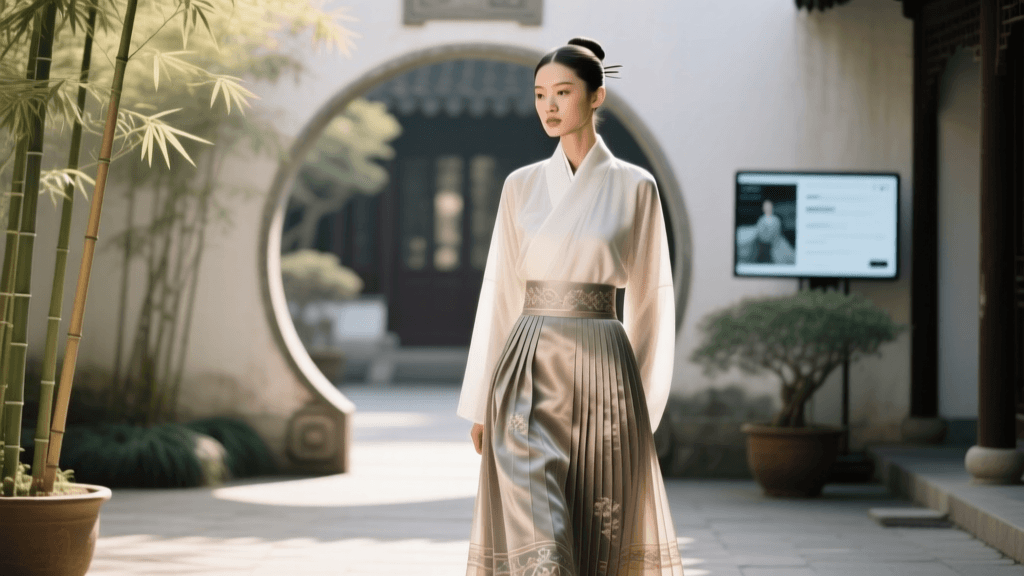
The Mamianqun (horse-face skirt) remains one of the most iconic and structurally complex garments in the Hanfu wardrobe. The sharp, knife-like pleats are achieved through intense heat and pressure during manufacturing, but they are notoriously fragile when subjected to long-term hanging or improper folding.
In 2026, textile conservators strongly advise against hanging Mamianqun for extended periods, as the sheer weight of the fabric will cause the pleats to stretch and drop, particularly in silk-blend variations. Instead, utilize the Accordion Tissue Method:
- Lay the skirt completely flat on a clean, cotton-covered surface.
- Align the pleats perfectly, ensuring the 'horse face' panels are centered.
- Cut strips of archival, acid-free tissue paper and gently insert them into the deep folds of each pleat. This prevents the sharp creases from crushing the warp threads over time.
- Fold the skirt in thirds, avoiding direct folds across the primary decorative motifs.
- Store in a breathable cotton garment bag or an acid-free archival box.
Hanging vs. Flat Archival Storage
Knowing when to hang and when to fold is a cornerstone of garment preservation. According to the Victoria and Albert Museum's guide on caring for textiles, gravity is the enemy of heavy, historic-style garments. The warp threads of a heavily embroidered Ming-style Ao can suffer irreversible micro-tears if hung on standard wire or thin wooden hangers.
When to Hang
Lightweight garments such as Song dynasty Beizi, Banbi (half-sleeves), and everyday cotton Ruqun can be safely hung. Always use broad, padded hangers wrapped in unbleached muslin or cotton to distribute the weight across the shoulder seams and prevent 'hanger horns' from forming on the delicate fabric.
When to Store Flat
Any garment weighing over 800 grams, featuring extensive metallic thread embroidery, or adorned with heavy beadwork must be stored flat. Use museum-grade, acid-free polypropylene storage boxes. Line the bottom with washed, unbleached cotton sheets, and roll the garments rather than folding them sharply to prevent permanent crease lines where the fibers can eventually snap.
Smart Climate Control for 2026 Wardrobes
The integration of smart home technology has revolutionized personal textile conservation. Fluctuations in temperature and relative humidity (RH) cause natural fibers to expand and contract, leading to structural fatigue and the blooming of mold spores. The ideal environment for a Hanfu collection is a stable 18°C to 20°C (64°F to 68°F) with an RH between 45% and 55%.
In 2026, collectors are utilizing Wi-Fi-enabled smart hygrometers placed directly inside their archival storage boxes and wardrobes. These devices send push notifications to your smartphone if the humidity spikes above 60% (the danger zone for mildew) or drops below 40% (which causes silk to become brittle). Pairing these sensors with smart dehumidifiers in your storage room ensures a proactive, rather than reactive, approach to climate management.
Pest Management Without Chemical Damage
Silk is a protein fiber, making it an irresistible food source for clothes moths and carpet beetles. However, traditional chemical mothballs containing naphthalene or paradichlorobenzene are strictly forbidden in modern textile conservation. The Metropolitan Museum of Art's Textile Conservation department notes that the off-gassing from these chemicals not only poses severe health risks to humans but also causes irreversible yellowing and degradation of protein-based fibers and metallic threads.
Safe, Natural Alternatives
- Virgin Cedarwood Blocks: Cedar naturally repels moths and absorbs excess moisture. Sand the blocks lightly every six months to release the natural oils, and replace them annually.
- Dried Lavender & Neem Leaves: Sachets of dried lavender or traditional neem leaves offer excellent pest deterrence while imparting a subtle, culturally resonant fragrance to your storage boxes.
- Pheromone Traps: For early detection, place non-toxic moth pheromone traps in the corners of your wardrobe to monitor for any potential infestations before they reach your garments.
The Seasonal Rotation Calendar
To maintain the longevity of your collection, establish a strict bi-annual rotation schedule aligned with the equinoxes.
Spring Transition (March / April)
- Inspect & Air: Remove winter garments from storage. Inspect for any signs of pest activity or mold. Hang them in a shaded, well-ventilated area for 24 hours to allow the fibers to 'breathe' and release any trapped odors.
- Clean & Repair: Address any loose threads or missing hooks before storing winter pieces. Wash or dry clean all winter Hanfu before placing them into long-term summer storage.
- Refresh Deterrents: Replace cedar blocks and lavender sachets in the storage boxes.
Autumn Transition (September / October)
- Summer Assessment: Check lightweight silk and ramie pieces for sun damage or perspiration stains that may have been missed during the summer months.
- Re-Pleat Mamianqun: If your horse-face skirts have lost their sharpness during summer wear, consult a professional Hanfu tailor for a steam-pressing and pleat-resetting service before winter storage.
- Climate Check: Calibrate your smart hygrometers and ensure your wardrobe's dehumidification system is prepared for the damp, cold months ahead.
Conclusion: Stewardship of the Silk Road Legacy
Caring for a Hanfu collection in 2026 is about more than just maintaining clothing; it is an act of cultural stewardship. By understanding the unique biochemical properties of traditional Asian textiles and implementing museum-grade storage rotations, you ensure that the artistry of the Silk Road's weaving legacy remains vibrant, wearable, and structurally sound. Treat your garments with the reverence they deserve, and they will continue to tell the story of Asian heritage for decades to come.