Murasaki Shikibu's Junihitoe Legacy: Modern Layering
The Historical Fashion Icon: Murasaki Shikibu and the Heian Court
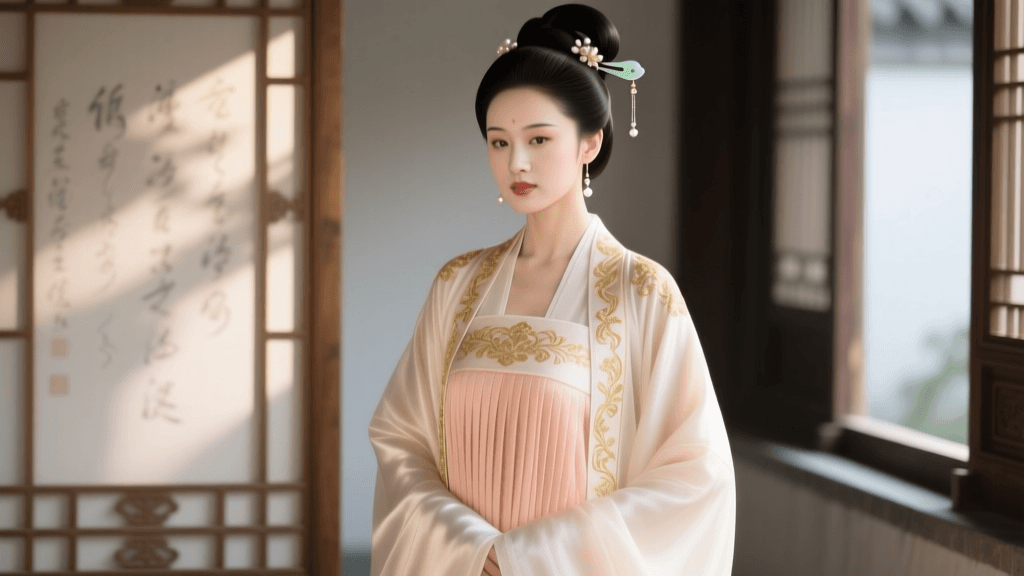
When discussing the foundational pillars of Japanese textile history and sartorial elegance, few figures cast a shadow as long as Murasaki Shikibu. Best known as the author of The Tale of Genji in the early 11th century, Murasaki was not only a literary genius but also a meticulous observer and participant in the highly codified fashion culture of the Heian period (794–1185). As a lady-in-waiting at the Imperial Court, her writings provide some of the most detailed historical records of the junihitoe, the iconic multi-layered silk garments worn by court women. According to Murasaki Shikibu's biographical records, the Heian court treated fashion as a profound expression of aesthetic sensitivity, seasonal awareness, and social rank.
Murasaki’s legacy in Japanese fashion is inextricably linked to the concept of miyabi (courtly elegance) and the meticulous layering of colored silks. In her diaries and literature, she frequently critiqued the color combinations of her peers, establishing a strict cultural standard for what was considered tasteful. Today, her influence survives not in the daily wearing of heavy court robes, but in the underlying color theory and layering techniques that continue to dictate formal kimono dressing. For modern kimono enthusiasts, understanding Murasaki’s world is the key to mastering the art of the collar and the seasonal transitions that define traditional Japanese dress.
Decoding the Junihitoe: The Ultimate Layering System
The term junihitoe translates literally to 'twelve unlined robes,' though the actual number of layers varied based on the season, the wearer's rank, and the specific occasion. At its peak, the ensemble could weigh up to 20 kilograms (44 pounds). The true artistry of the junihitoe was not found in the outermost layer, but in the microscopic slivers of color that peeked out at the neckline, the cuffs, and the hem. The Heian period aesthetics prioritized subtlety; a lady’s taste was judged entirely by how she orchestrated the gradient of her hidden layers.
The foundational layers included the kosode (a basic robe with small sleeve openings), followed by the hitoe (an unlined inner robe). Over this, the wearer would don the itsutsuginu, a set of five brightly colored robes with progressively longer hemlines and sleeves. The outermost layers consisted of the uchiginu (a stiffened silk robe that gave the outfit its structural shape), the uwagin (a glossy outer robe), and the karaginu (a short, Chinese-style jacket). Finally, for the most formal occasions, a long, pleated apron-like train called the mo was tied at the waist. While the full junihitoe is today reserved exclusively for the Japanese Imperial family during weddings and enthronement ceremonies, its structural DNA remains embedded in modern kimono undergarments.
The Art of Kasane no Irome: Seasonal Color Theory
The most enduring fashion legacy of Murasaki Shikibu’s era is kasane no irome, the system of layered color combinations. Because the robes were cut to identical shapes, the visual interest relied entirely on the contrasting colors of the silk stacked upon one another. These combinations were strictly governed by the seasons, and wearing a spring combination in autumn was considered a severe social faux pas.
- Sakura (Cherry Blossom): Worn strictly in late March to early April. The outermost layer is pristine white, layered over progressively deeper shades of pink, mimicking the blooming of cherry blossoms against the snow.
- Yamabuki (Japanese Kerria): Worn in early summer. A vibrant yellow outer layer is placed over a deep, verdant green, representing the bright kerria flowers blooming against their leaves.
- Kiku (Chrysanthemum): Worn in late autumn. A bright yellow or white outer layer is layered over deep burgundy or black, reflecting the imperial flower's resilience in the cold.
- Koyori (Autumn Leaves): Worn in November. Shades of crimson and orange are layered over dark brown or slate grey, capturing the exact moment leaves turn before falling.
Murasaki Shikibu frequently used these color metaphors in The Tale of Genji to signify the emotional states and shifting fortunes of her characters. The rigid adherence to this seasonal calendar laid the groundwork for the modern kimono evolution, particularly the strict rules surrounding koromogae (the seasonal wardrobe change).
Adapting Heian Layering for the Modern Kimono Wardrobe
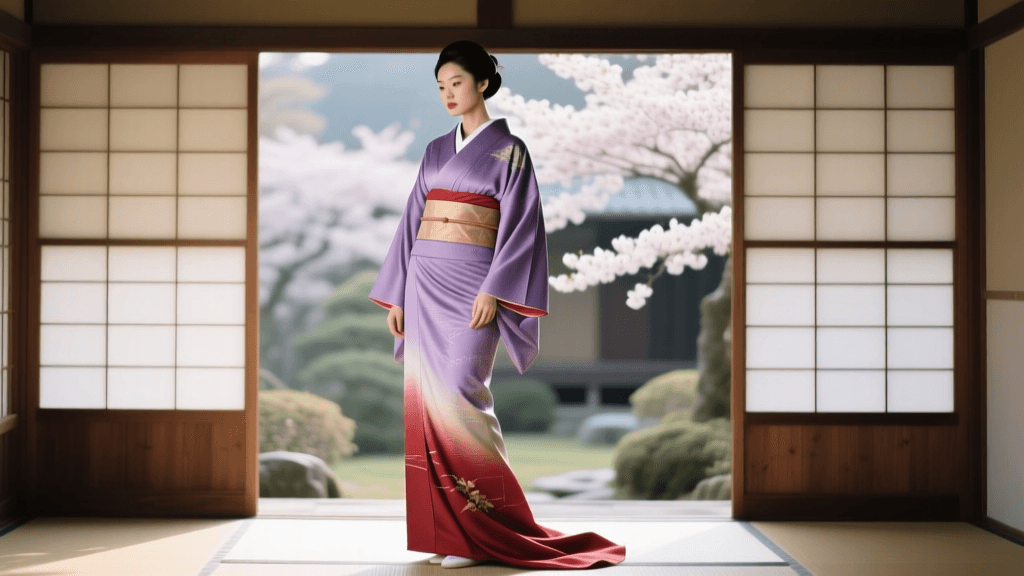
While the modern kimono wearer does not don twelve layers of silk, the visual illusion of the junihitoe is preserved through the strategic use of the nagajuban (long undergarment) and the kasane-eri (layered collar). By carefully manipulating the collars at the neckline, a modern wearer can pay homage to Murasaki’s layered aesthetic without the physical burden of Heian court dress.
Sourcing and Styling Modern Kasane Collars
To achieve the Heian look today, you will need to invest in a kasane-eri set. Unlike a standard han-eri (half-collar) which is a single strip of fabric sewn onto the undergarment, a kasane-eri consists of two or three pre-attached layers of fabric designed to fan out slightly at the nape of the neck and the chest.
Actionable Styling Steps:
- Preparation: Begin with a clean, white or pastel nagajuban. Ensure the eri-shin (collar stiffener) is inserted to maintain a crisp, unbroken line at the back of the neck.
- Attachment: Pin or baste the kasane-eri to the nagajuban collar. The innermost color should sit closest to the neck, with the outer colors fanning outward.
- The Measurement Rule: The secret to authentic Heian layering is the visibility gap. Adjust the collars so that exactly 0.5 cm to 1.0 cm of each underlying layer is visible at the nape of the neck, and 1.0 cm to 1.5 cm is visible at the chest (the komon V-shape).
- Cuff Layering: To mimic the itsutsuginu sleeves, wear a hadajuban (innermost undershirt) with long sleeves, or attach separate silk sode-gutsu (sleeve covers) to the nagajuban sleeves, allowing 1 cm of the under-sleeve to peek past the main kimono sleeve.
Modern Wardrobe Data Table: Costs, Measurements, and Timing
For collectors and practitioners looking to build a wardrobe that honors the Heian layering tradition, below is a structured breakdown of the necessary components, their modern equivalents, and the financial and temporal investments required.
| Garment Component | Traditional Heian Name | Modern Equivalent | Average Cost (USD) | Key Measurements & Timing |
|---|---|---|---|---|
| Innermost Robe | Kosode / Hitoe | Hada-juban & Susoyoke | $40 - $90 | Cotton/Silk blend; worn year-round. |
| Five-Layer Robes | Itsutsuginu | Kasane-eri (Layered Collar) | $25 - $120 | Shows 0.5cm - 1.5cm per layer. |
| Stiffened Robe | Uchiginu | Nagajuban with Eri-shin | $80 - $300 | Collar width: 110cm; Ro (summer) or Awase (winter). |
| Outer Jacket | Karaginu | Haori or Michiyuki | $150 - $800+ | Worn over kimono; removed indoors. |
| Seasonal Change | Koromogae | Wardrobe Transition | N/A (Time Investment) | June 1st (Summer) & Oct 1st (Winter). |
Fabric Seasonality and Care for Layered Silk
Murasaki Shikibu’s era demanded an intimate knowledge of textiles. Today, maintaining a layered kimono wardrobe requires the same dedication to fabric care. The modern equivalent of the Heian summer wardrobe is the ro or sha (woven gauze) silk, which is breathable and semi-transparent. Winter layering utilizes awase (lined silk).
Care Instructions for Silk Collars and Undergarments:
- Spot Cleaning: The kasane-eri collars absorb sweat and makeup. After every wear, use a specialized silk eraser or a damp cloth with a pH-neutral detergent to gently dab the innermost collar layer. Never rub the silk, as it will fray the delicate threads.
- Airing Out: Heian court ladies aired their robes on wooden racks to prevent mold. Modern practitioners should hang their nagajuban and kasane-eri on a wide, padded kimono hanger in a well-ventilated, shaded room for 24 hours before storing.
- Storage: Store silk collars flat in tatou-shi (acid-free paper) inside a cedar chest. Avoid plastic bins, which trap moisture and cause the silk to yellow and degrade.
Conclusion
The fashion legacy of Murasaki Shikibu is a testament to the idea that true elegance lies in the details. While the heavy, sweeping robes of the Heian court have largely faded into ceremonial history, the soul of the junihitoe lives on in every meticulously adjusted collar and every seasonally appropriate color combination seen on the streets of Kyoto today. By understanding the historical mechanics of kasane no irome and applying them to modern kimono dressing, contemporary wearers do more than just put on a garment; they participate in a thousand-year-old dialogue about nature, time, and beauty.