The Kimono in Pop Culture: Media's Impact on Japanese Fashion
The Cinematic and Digital Evolution of the Kimono
For decades, global media has been fascinated by the Japanese kimono, though its representation has undergone a radical transformation. In early Hollywood cinema, the kimono was frequently utilized as an exoticized costume, often draped incorrectly and stripped of its deep cultural and structural significance. Films in the mid-20th century routinely ignored the strict rules of kitsuke (the art of kimono dressing), leading to widespread misconceptions about how the garment functions. However, the modern digital era—driven by the global explosion of anime, manga, and high-fidelity video games like Ghost of Tsushima and Sekiro: Shadows Die Twice—has sparked a renaissance of authentic interest. Today, international fans are not merely consuming the aesthetic; they are actively studying the mechanics, history, and regional variations of traditional Japanese garments.
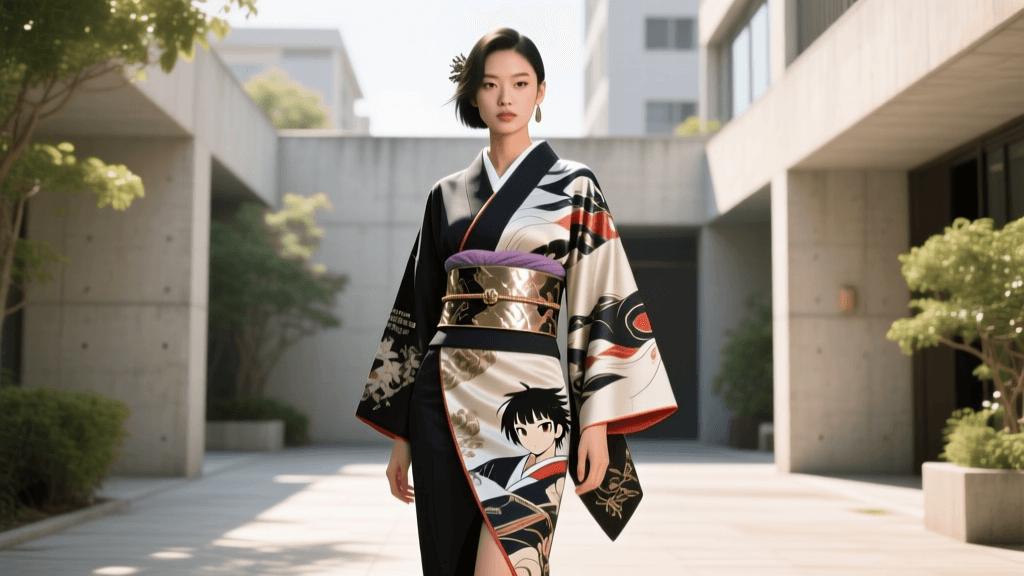
This shift from passive exoticism to active appreciation was notably highlighted by the Victoria and Albert Museum's 'Kimono: Kyoto to Catwalk' exhibition. The exhibition meticulously traced the garment's journey from the streets of Edo-period Kyoto to global high fashion and pop culture, proving that the kimono has always been a dynamic, evolving fashion item rather than a static historical relic. Modern media has embraced this dynamism, blending traditional silhouettes with contemporary streetwear, cyberpunk aesthetics, and fantasy elements.
Traditional vs. Pop-Culture Styling: A Comparison
When adapting the kimono for global pop culture events, conventions, or streetwear, the styling rules often shift from strict formality to expressive functionality. Below is a comparison chart detailing the differences between traditional formal wear and modern media-inspired styling.
| Feature | Traditional (Formal / Ceremony) | Pop-Culture / Streetwear Fusion |
|---|---|---|
| Obi Type | Fukuro obi (approx. 30cm wide, heavily brocaded) | Hanhaba obi (16cm wide, cotton/silk, reversible) |
| Obi Knot | Taiko musubi (drum knot) or Niju-daiko | Bunko musubi (bow knot) or creative origami folds |
| Footwear | Zori (woven or leather sandals) with white tabi | Geta (wooden clogs), combat boots, or chunky sneakers |
| Layering | Nagajuban (full undergarment) with han-eri (collar) | Simplified hadajuban, or turtleneck/t-shirt underneath |
| Fabric | Rinzu (silk damask), Ro (silk gauze for summer) | Cotton yukata, denim, polyester blends, upcycled silks |
| Avg. Cost (USD) | $300 - $2,500+ (New, formal sets) | $40 - $150 (Vintage or new casual sets) |
Actionable Guide: Styling the Modern 'Pop-Culture' Kimono
Whether you are assembling a high-quality cosplay, attending an anime convention, or integrating a haori (jacket) into your daily streetwear, understanding the correct measurements and layering techniques is crucial. The most accessible entry point into Japanese fashion is the yukata (casual summer cotton kimono) or a vintage wool/silk casual kimono.
Essential Measurements and Fit
Unlike Western clothing, kimonos are cut in straight lines and rely on folding and tying for fit. When sourcing a garment online, pay attention to these critical measurements:
- Mitake (Length): The ideal length should be roughly equal to your height minus 10-15 cm. This allows for the ohashori (the waist fold that adjusts the hem to the ankle). A standard pop-culture yukata length is around 125-140 cm.
- Yuki (Sleeve Span): Measured from the center of the back neck to the wrist. Traditional fit requires the sleeve to reach the wrist bone (approx. 65-70 cm for most adults). However, modern streetwear styling often embraces shorter, vintage sleeves (55-60 cm) for a more relaxed, contemporary silhouette.
- Sode-guchi (Sleeve Opening): Ensure the opening is wide enough to allow your hand to pass through comfortably, typically 22-25 cm.
The Core Accessories Kit
To achieve a secure and authentic silhouette without the bulk of formal wear, invest in these specific modern kitsuke tools:
- Koshihimo (Waist Ties): Purchase 100% cotton or silk koshihimo (approx. 210 cm long and 4 cm wide). You will need at least three: one for the lower waist, one for the upper chest, and one to secure the obi.
- Datejime (Wide Belt): A soft, elastic or silk datejime (approx. 8-10 cm wide) is wrapped over the koshihimo to smooth out the front panel and prevent the obi from slipping.
- Obi-ita (Obi Board): A thin, flexible plastic or cardboard board inserted into the front of the obi to keep the fabric perfectly flat and wrinkle-free, essential for a clean, anime-accurate aesthetic.
Step-by-Step: Tying the Bunko Musubi (Bow Knot)
The Bunko musubi is the quintessential knot for yukata and pop-culture styling. It is youthful, relatively easy to tie, and visually striking. Here is how to execute it using a hanhaba obi (half-width obi, 16 cm x 350 cm):
- The Te (Blade): Measure out about 40-50 cm from one end of the obi. Fold this section in half lengthwise. This will form the center loop of your bow.
- The Tare (Tail): Wrap the longer end of the obi around your waist twice, pulling it tight over the datejime. Ensure the center back is smooth.
- The Tie: Bring the long tail up and over the folded 'Te' section at the front, then pull it tight to secure the obi to your body.
- The Bow: Twist the 'Te' section to create a loop, then wrap the remaining long tail tightly around the center of the loop 2-3 times to form the bow's knot.
- The Finish: Tuck the remaining tail under the obi at the back. Rotate the entire obi clockwise to move the bow to your back, adjusting the loops to look like butterfly wings.
Sourcing Authentic Pieces: Budgeting and Timing
Building a wardrobe of traditional Japanese garments for media-inspired styling does not require a luxury budget. The global secondhand market is flooded with high-quality, vintage pieces due to changing demographics in Japan. According to historical context provided by the Metropolitan Museum of Art's Heilbrunn Timeline of Art History, the mass production of textiles in the early 20th century made these garments widely accessible, resulting in a massive surplus of vintage pieces today.
Where to Buy and What to Expect
- Online Japanese Thrift Stores: Sites like Ichiroya, Yamato, and various eBay sellers based in Kyoto or Osaka offer authenticated vintage kimono. Expect to pay $30-$60 for a beautiful, mid-century silk kimono, and $15-$25 for a cotton hanhaba obi.
- Local Antique Malls: In cities with historic Japanese populations (e.g., Los Angeles, Honolulu, London), local antique shops often carry unsorted kimono for as little as $20.
- Timing Your Purchases: The best time to buy summer yukata is in late August or early September, when Japanese retailers heavily discount end-of-season festival wear. For heavy winter wools and silks, shop in early April as the weather warms.
Upcycling and DIY in the Fandom Community
A major trend in global pop-culture fashion is the upcycling of damaged or stained vintage kimono. Because traditional kimono are constructed from single bolts of fabric (tanmono) using straight seams, they are incredibly easy to deconstruct and repurpose. Fandom communities frequently purchase 'damaged' silk kimono (often sold for under $15 online due to small stains on the hem) and transform them into modern haori jackets, wide-leg hakama trousers, or even structured corsetry for cosplay. This practice not only saves beautiful textiles from landfills but also allows fans to create bespoke, one-of-a-kind garments that bridge the gap between Edo-period craftsmanship and modern convention fashion.
Respectful Representation in Global Media
As the kimono becomes more prevalent in global streetwear and media, the line between cultural appreciation and appropriation is frequently debated. The golden rule of wearing any traditional Japanese garment, regardless of the setting, is migi-mae: the left side of the garment must always wrap over the right side. Wrapping right-over-left is strictly reserved for dressing the deceased for burial. Adhering to this fundamental rule demonstrates a baseline respect for the culture.
Furthermore, understanding the historical weight of the garment elevates the wearer's experience. Exhibitions like The MET's 'The Kimono Style' emphasize that the kimono is a canvas of social identity, artistry, and seasonal awareness. By taking the time to learn proper dressing techniques, sourcing authentic textiles, and understanding the seasonal motifs (such as wearing cherry blossom patterns only in early spring, or maple leaves in autumn), global fans transition from mere consumers of a pop-culture aesthetic to active, respectful participants in a living sartorial tradition.