The Mamianqun Guide: Styling the Hanfu Revival's Iconic Skirt
The Heart of the Hanfu Revival: Why the Mamianqun?
The modern Hanfu revival movement, known in Chinese as the Hanfu Yundong, has transformed from a niche internet subculture in the early 2000s into a mainstream cultural and fashion phenomenon across China and the global diaspora. While the movement encompasses thousands of years of sartorial history across the Han, Tang, Song, and Ming dynasties, one specific garment has emerged as the undisputed breakout star of the 2020s: the Ming Dynasty mamianqun, or horse-face skirt. According to extensive cultural reporting by BBC News on the Hanfu revival, the mamianqun has successfully crossed the boundary from historical reenactment into everyday modern streetwear, prized for its elegance, structural versatility, and seamless integration with contemporary wardrobes.
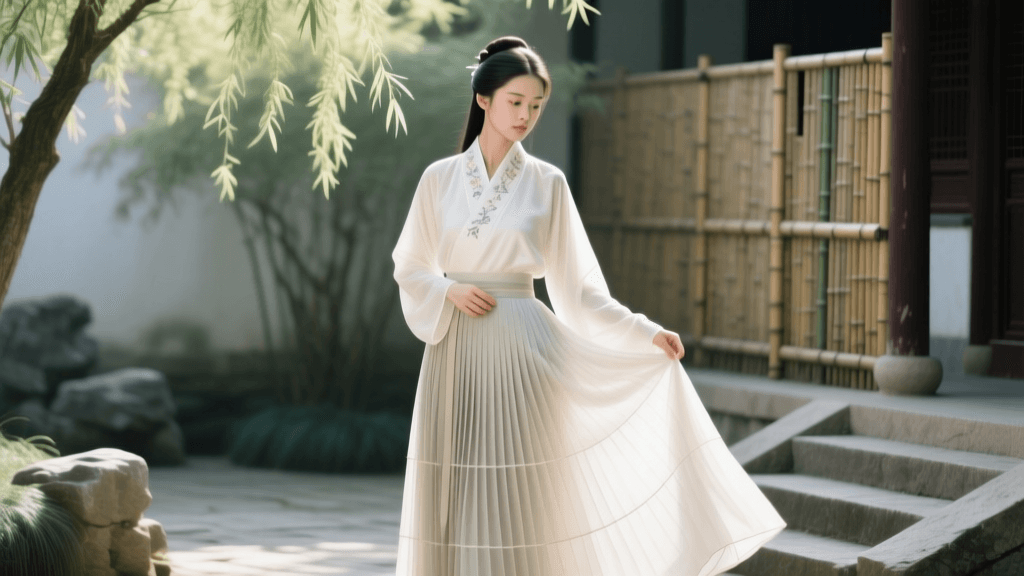
Unlike the flowing, ethereal silhouettes of the Tang and Song dynasties, the Ming Dynasty mamianqun offers a structured, grounded, and highly tailored aesthetic. Its architectural pleats and flat front panels make it uniquely suited for modern life, allowing wearers to navigate subway turnstiles, office environments, and formal events with equal grace. For newcomers to the Hanfu revival movement, the mamianqun is universally recommended as the ultimate entry point. This comprehensive guide will walk you through the anatomy, precise sizing mathematics, styling techniques, and purchasing logistics required to acquire your first authentic horse-face skirt.
Anatomy of the Horse-Face Skirt
To properly wear and care for a mamianqun, one must first understand its unique structural engineering. The skirt is constructed from two overlapping trapezoidal panels of fabric. The defining features include:
- Guang Mian (Flat Panels): The smooth, unpleated sections at the front and back of the skirt. These panels serve as the primary canvas for the garment's most elaborate decorations, including woven gold motifs, embroidery, or intricate jacquard patterns.
- Zhe (Pleats): The densely folded sections on the left and right sides of the skirt. Traditional Ming skirts typically feature knife pleats or box pleats that remain hidden when standing still but fan out beautifully during movement.
- Yao Tou (Skirt Head): The waistband, traditionally made of a contrasting, sturdy white or off-white cotton/linen blend to reduce bulk and provide friction, preventing the heavy skirt from slipping down the waist.
- Overlapping Closure: The skirt wraps around the body and secures with long ties. The overlapping design ensures modesty and prevents the skirt from falling open when walking or sitting.
Practical Buying Guide: Sizing and Measurements
The most common mistake beginners make when purchasing a mamianqun is treating it like a standard Western skirt. Because the skirt relies on an overlapping wrap closure rather than a zipper or elastic, precise mathematical calculations based on your natural waist and hip measurements are mandatory. If the skirt is too small, you will experience 'bao yao' (exploding pleats), where the side pleats pull open and expose the legs, ruining the structural integrity and modesty of the garment.
How to Measure:
- Natural Waist: Measure the narrowest part of your torso, usually just above the belly button. The mamianqun sits at the natural waist, not the low hip.
- Hip Circumference: Measure the widest part of your hips and buttocks.
- Skirt Length: Measure from your natural waist down to your desired hemline. For a traditional floor-sweeping look, measure to the ankle bone and subtract 2 cm. For modern, practical streetwear, measure to the mid-calf.
The Golden Formula: To ensure proper overlap and prevent the pleats from exploding, the total flat waist measurement of the skirt (before tying) must be your Natural Waist + 10 to 15 cm. Furthermore, the total circumference of the skirt's pleats when laid flat must comfortably accommodate your hip measurement plus at least 5 cm of ease.
Standard Sizing & Fit Chart for Mamianqun
| Your Natural Waist | Your Hip Circumference | Recommended Skirt Waist (Flat) | Minimum Pleat Circumference | Standard Skirt Length |
|---|---|---|---|---|
| 64 - 68 cm | 88 - 92 cm | 78 - 82 cm | 95 cm | 95 - 100 cm |
| 70 - 74 cm | 94 - 98 cm | 84 - 88 cm | 102 cm | 98 - 103 cm |
| 76 - 80 cm | 100 - 104 cm | 90 - 94 cm | 108 cm | 100 - 105 cm |
| 82 - 88 cm | 106 - 112 cm | 98 - 104 cm | 115 cm | 102 - 108 cm |
Styling Your Mamianqun for Modern Life
As highlighted in cultural analyses by Sixth Tone regarding the Hanfu movement, the true power of the mamianqun lies in its adaptability. You do not need to wear a full historical Ming Dynasty ensemble to participate in the revival. The skirt acts as a bridge between antiquity and modernity.
Traditional Ming Dynasty Pairings
For historical accuracy and formal events, pair your mamianqun with a Ming-style ao (a lined, cross-collar or standing-collar top with a curved hem and side slits). Add a pibo (a draped silk scarf) over the shoulders and a yunjian (cloud collar) for weddings, festivals, or tea ceremonies. Footwear should consist of traditional embroidered cloud shoes (yunxie) or archer boots.
Contemporary 'Hanfu Element' Streetwear
For the office, university, or daily errands, the mamianqun pairs spectacularly with modern garments. Because the skirt's waistband is thick and structured, it acts similarly to a high-waisted corset or tailored trouser waist.
- Tops: Crisp white button-down shirts, fitted turtleneck sweaters, or tailored blazers. Tucking a modern silk blouse into the skirt creates a sophisticated, high-fashion silhouette.
- Outerwear: Leather moto jackets, long wool trench coats, or modern denim jackets provide a striking textural contrast to the flowing, ornate pleats of the skirt.
- Footwear: Modern Mary Jane shoes, Chelsea boots, or even sleek white sneakers. The heavy drape of the jacquard fabric grounds the outfit, allowing for bolder shoe choices.
Recommended Brand Tiers, Fabrics, and Price Points
The Hanfu market is vast, primarily centered on Chinese e-commerce platforms like Taobao. Understanding the fabric types and brand tiers will help you allocate your budget effectively. The most sought-after fabric for Ming skirts is zhijin (woven gold), where metallic threads are integrated directly into the loom, or tihua (jacquard), which offers subtle, tone-on-tone patterns.
Budget Tier ($30 - $60 USD)
Brands like Lanyuan or Huazheng offer entry-level polyester jacquard skirts. While the fabrics may lack the weight and drape of silk, they are machine-washable, highly durable, and perfect for testing different colors and lengths. Expect standard machine embroidery rather than woven motifs.
Mid-Range Tier ($80 - $180 USD)
Brands such as Shisanyu and Zhuangzi dominate this space. Here, you will find high-quality woven gold (zhijin) fabrics, meticulous heat-pressed pleats that survive washing, and historically accurate color palettes inspired by Ming dynasty artifacts. This is the sweet spot for most revival enthusiasts.
High-End / Luxury Tier ($250 - $800+ USD)
Minghuatang is widely considered the gold standard of the Hanfu revival. Their mamianqun skirts utilize genuine silk, real gold-wrapped threads, and museum-grade historical patterns. The drape, weight, and light-catching qualities of a Minghuatang skirt are unparalleled, making them investment pieces for serious collectors and brides.
Navigating Pre-Orders and Taobao Timelines
Unlike fast fashion, authentic Hanfu is largely produced on a made-to-order basis to minimize textile waste and manage the high costs of specialized looms. When shopping on Taobao or specialized Hanfu boutiques, you will frequently encounter the Yushou (pre-order) system.
- The Deposit (Dingjin): You pay a non-refundable deposit (usually 20% to 30% of the total cost) to secure your size and color.
- The Manufacturing Window: Skirts are typically woven and sewn in batches. Expect a waiting period of 45 to 90 days. Some highly complex woven gold skirts can take up to six months.
- The Balance (Weikuan): Once the batch is complete, the seller will notify you to pay the remaining balance. The skirt is then shipped via international forwarding agents if you reside outside of China.
Pro-Tip: Always use a reliable Taobao proxy service (like Superbuy or CSSBuy) if you do not have a Chinese bank account or a domestic shipping address. Factor in an additional $20-$40 for international shipping, as mamianqun skirts are heavy, often weighing between 800g and 1.2kg due to the dense pleating and metallic threads.
Caring for Your Traditional Garments
Maintaining the sharp, architectural pleats of a mamianqun requires specific care routines. Never wring or twist the skirt. For mid-range and high-end skirts, hand wash in cold water with a mild, pH-neutral detergent. If the skirt features real woven gold or silk, dry cleaning is strongly recommended to prevent the metallic threads from tarnishing or the silk from warping.
The Pleat Maintenance Hack: After washing, while the skirt is still damp, lay it flat on a towel. Align the pleats perfectly and use specialized skirt pleat clips (or standard binder clips with a protective cloth barrier) to clamp the pleats together at the hem and the waist. Hang the skirt to dry. Once completely dry, remove the clips and use a steam iron on a low setting, hovering over the pleats to set them without crushing the woven gold motifs. Store the skirt hanging by the waistband ties, never folded, to preserve the structural integrity of the side folds.
By understanding the precise measurements, historical context, and modern styling potential of the mamianqun, you can confidently participate in the Hanfu revival movement. This remarkable garment is not merely a costume of the past, but a living, breathing evolution of Asian sartorial tradition that continues to shape global fashion today.