Chinese Couture: Traditional Garments on Global Runways
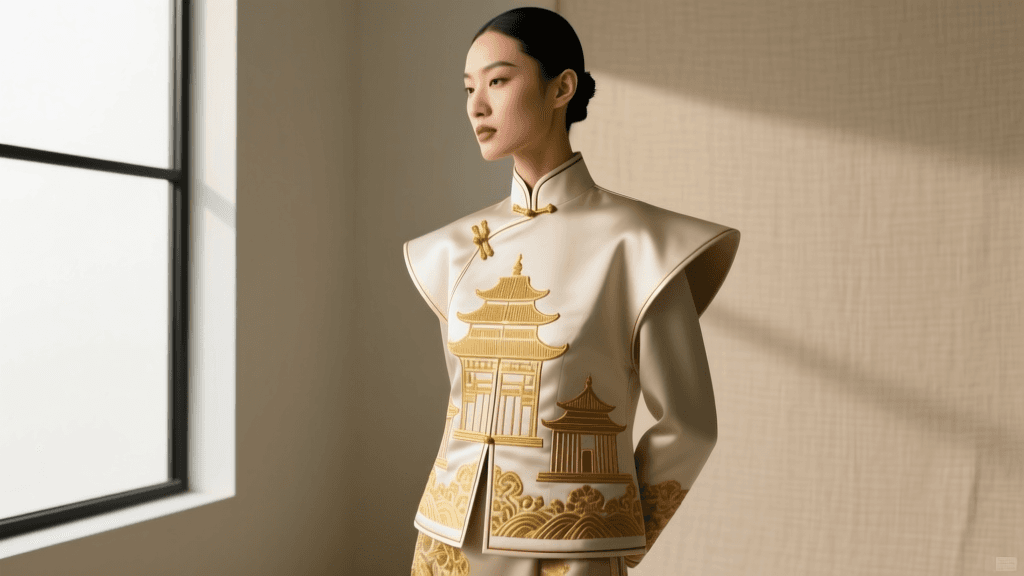
The Paradigm Shift: From Orientalism to Authentic Couture
For decades, the presence of Chinese aesthetics on Western runways was largely defined by pastiche—a superficial blending of dragon motifs, mandarin collars, and silk brocades that often veered into caricature. However, the contemporary fashion landscape has undergone a radical transformation. Today, the integration of traditional Chinese garments into international haute couture is driven by deep structural appreciation, historical accuracy, and a reverence for intangible cultural heritage. This shift was notably catalyzed by landmark institutional retrospectives, such as The Metropolitan Museum of Art's 'China: Through the Looking Glass', which challenged the global fashion industry to look beyond surface-level exoticism and examine the profound architectural and textile innovations inherent in Chinese sartorial history.
Modern couturiers—both from legacy Chinese fashion houses like Shang Xia and Guo Pei, and international maisons—are now deconstructing and elevating ancient silhouettes. They are utilizing centuries-old weaving techniques and botanical dyeing processes to create garments that command the highest echelons of the global luxury market. For the serious collector, fashion historian, or enthusiast, understanding this intersection of ancient tradition and modern runway provides a roadmap for investing in and styling truly authentic, couture-level Chinese fashion.
Architectural Silhouettes: The Mamianqun on the Runway
The Mamianqun, or 'horse-face skirt,' has emerged as one of the most significant structural exports from traditional Hanfu to modern couture. Originating in the Song and Ming dynasties, the Mamianqun is a masterpiece of functional geometry. It consists of two overlapping panels of fabric that wrap around the body, featuring flat, unpleated front and back sections (the 'horse faces') flanked by heavily pleated side panels. This design was historically engineered to allow women ease of movement while riding horses or navigating palatial steps, all while maintaining strict modesty.
On the modern runway, designers are adapting the Mamianqun's overlapping panel structure into avant-garde evening wear and structured bridal couture. By replacing traditional heavy brocades with modern silk organza, taffeta, or even sustainable vegan leathers, couturiers are creating skirts that offer dramatic volume without the need for restrictive crinolines. The flat front panel serves as an ideal canvas for elaborate, narrative-driven embroidery, a technique frequently showcased in Parisian haute couture presentations.
Textile Alchemy: Xiangyunsha and Gambiered Gauze
While silhouette provides the architecture, textile provides the soul. In the realm of high-end Chinese couture, few fabrics are as revered as Xiangyunsha, also known as Gambiered Canton Gauze. Recognized as a vital part of China's intangible cultural heritage, Xiangyunsha is the result of a grueling, entirely natural dyeing process that can only be executed in the specific humid climate of the Pearl River Delta during a narrow window of months each year.
The silk is repeatedly dipped in the tannin-rich juice of the Dioscorea cirrhosa (a type of yam) and then coated with iron-rich river mud. A chemical reaction between the tannin and the iron creates a unique, dark, lustrous finish that is water-resistant, naturally cooling, and possesses a distinct, papery rustle known in the industry as 'scroop.' International luxury brands have begun sourcing authentic Xiangyunsha for capsule couture collections, valuing its organic, unpredictable color variations and its profound sustainability narrative.
The Pinnacle of Craft: Su Embroidery in Haute Couture
No discussion of Chinese couture is complete without addressing Su embroidery (Suzhou embroidery). As noted by the UNESCO Intangible Cultural Heritage list for Chinese sericulture and silk craftsmanship, the mastery of silk manipulation in China is unparalleled. Su embroidery is famous for its 'double-sided' technique and the meticulous splitting of silk threads. A master artisan can split a single silk thread into 1/16th or even 1/48th of its original thickness, allowing for gradients and details that mimic the brushstrokes of traditional ink-wash paintings.
In international haute couture, Su embroidery is utilized to create bodices and trains that require thousands of hours of handwork. Unlike machine-made beadwork, the microscopic silk threads catch the light with a soft, organic luminescence. Couture houses commission entire ateliers in Suzhou to execute singular, runway-specific garments, blurring the line between a wearable garment and a museum-grade textile artwork.
Data Table: Traditional Elements in Modern Couture
| Traditional Element | Historical Origin | Modern Couture Application | Estimated Cost / Investment |
|---|---|---|---|
| Mamianqun (Horse-Face Skirt) | Ming Dynasty | Structured evening skirts, modular bridal wear, architectural pleating | $1,500 - $8,000 USD |
| Xiangyunsha (Gambiered Gauze) | Qing Dynasty, Guangdong | Avant-garde outerwear, sustainable luxury capsule collections | $150 - $400 USD (per meter of fabric) |
| Su Embroidery | Song Dynasty, Suzhou | Haute couture bodices, bespoke lapels, heirloom bridal trains | $10,000 - $50,000+ USD (per garment) |
| Qipao / Cheongsam Silhouette | 1920s Shanghai | Modern bias-cut evening gowns, structural corsetry integration | $3,000 - $15,000 USD |
Actionable Guide: Commissioning and Styling Couture-Level Chinese Fashion
For those looking to invest in, commission, or style traditional Chinese garments with a couture sensibility, a strategic approach is required. The intersection of heritage and high fashion demands precise knowledge of materials, tailoring, and modern integration.
1. Sourcing Authentic Materials
If you are commissioning a bespoke piece, the fabric is your primary investment. When sourcing Xiangyunsha, request the 'turtle shell' (guijia) pattern, which indicates the authentic mud-coating process. Authentic Xiangyunsha will have a distinct, earthy scent when first unwrapped and a darker, almost black hue on one side with a rich brown on the reverse. Be prepared to pay between $150 and $400 USD per meter. For silk brocades (Zhuanghua), ensure the metallic threads are real gold or silver foil wrapped around a silk core, rather than synthetic polyester films, which lack the necessary drape and breathability.
2. Tailoring and Measurements
Traditional garments rely on flat-cutting and draping rather than the Western method of darting and seaming to fit the body's curves. When commissioning a modern couture Qipao or an adapted Ruqun top, provide your tailor with the following specific metrics:
- Natural Waist: Measured exactly at the navel line (crucial for the high-waisted Mamianqun).
- Drop Shoulder Measurement: Traditional Chinese garments use extended shoulder seams that drape down the arm. Specify if you want a 'modern set-in sleeve' or a 'traditional dropped shoulder' for an authentic silhouette.
- Skirt Length: For a modern runway look, request a length of 105cm to 115cm (depending on your height) so the pleats graze the instep without dragging, allowing the intricate hem embroidery to remain visible.
3. Styling for the Modern Wardrobe
The key to wearing couture-level Chinese fashion in a contemporary setting is contrast. Avoid wearing a full, historically accurate Hanfu ensemble to a modern formal event unless it is a dedicated cultural gala. Instead, deconstruct the look:
- The Couture Skirt: Pair a heavily embroidered, Ming-dynasty-inspired Mamianqun with a minimalist, structured Western blazer or a simple silk camisole. The contrast between the architectural pleats and modern minimalism creates a striking, high-fashion silhouette.
- The Outer Layer: Utilize a Xiangyunsha Pifeng (a traditional open-front overcoat) as a dramatic duster over a modern, tailored jumpsuit or a sleek column dress. The stiff, lustrous texture of the gambiered gauze adds an immediate avant-garde edge to minimalist evening wear.
- Accessories: Forego heavy, traditional hairpieces. Instead, opt for a single, museum-grade jade hairpin or a modern gold cuff inspired by ancient bronzeware to anchor the look without overwhelming it.
Conclusion
The elevation of Chinese traditional garments onto the international couture runway is not merely a passing trend; it is a long-overdue recognition of one of the world's most sophisticated sartorial histories. By understanding the structural genius of the Mamianqun, the botanical alchemy of Xiangyunsha, and the microscopic precision of Su embroidery, enthusiasts and collectors can engage with these garments on their own terms. Whether you are commissioning a bespoke piece for your archive or styling heritage textiles for the modern red carpet, the fusion of ancient Chinese craftsmanship and contemporary haute couture offers a profound, wearable art form that transcends time and borders.