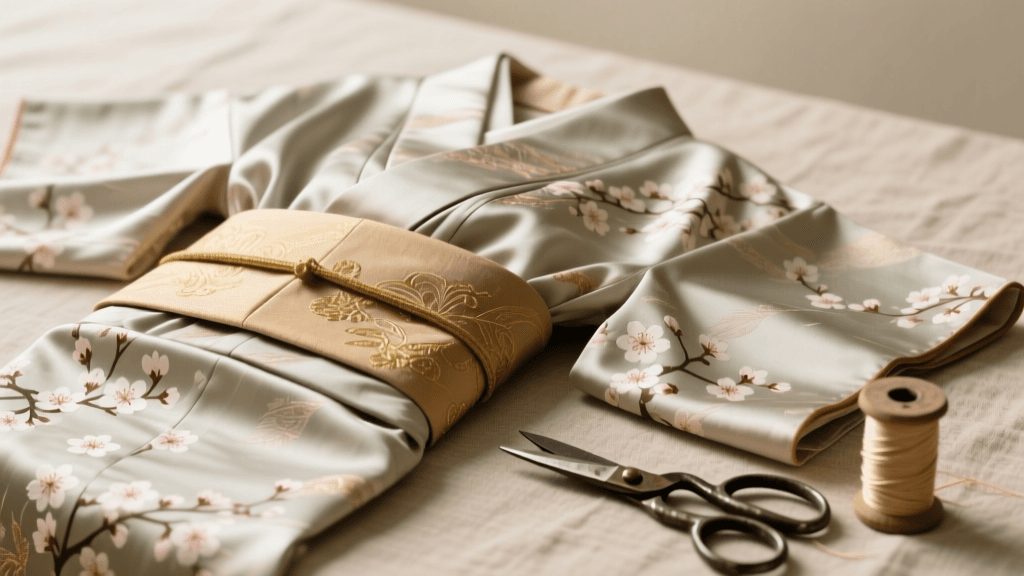
Styling the Vintage Haori in Modern Streetwear Fashion
The Evolution of the Haori: From Battlefield to Boulevard
The intersection of traditional Japanese garments and contemporary streetwear has birthed some of the most compelling fashion movements of the 21st century. At the forefront of this sartorial revolution is the haori, a traditional Japanese hip- or thigh-length jacket. Originally designed as a functional layer for samurai to wear over their armor and kimono during the Sengoku period, the haori has transcended its martial origins to become a highly coveted staple in modern global streetwear.
During the Edo period (1603–1867), strict sumptuary laws dictated who could wear certain garments. The haori was initially restricted to the samurai class and male elites. However, as the merchant class grew in wealth and influence, geisha and wealthy commoners began adopting the haori, often hiding luxurious, intricate linings beneath austere exteriors to bypass restrictive fashion laws. According to the Metropolitan Museum of Art, this duality of modest exteriors and extravagant interiors remains a defining characteristic of Japanese aesthetic philosophy, one that deeply resonates with modern streetwear enthusiasts who value hidden details and premium construction.
Why the Haori is the Ultimate Streetwear Layering Piece
In the lexicon of modern streetwear, layering is paramount. The haori offers a unique architectural silhouette that differs vastly from Western outerwear. Lacking buttons, zippers, or a collar, the haori drapes naturally over the shoulders, creating a fluid, T-shaped profile that accommodates a wide range of body types and underlying garments. Its open front allows for dynamic movement and easy ventilation, making it an ideal transitional piece for spring and autumn.
Fashion critics and cultural historians have noted a significant surge in the appreciation for heritage Japanese textiles. As reported by The Japan Times during the Victoria and Albert Museum's landmark 'Kimono: Kyoto to Catwalk' exhibition, contemporary designers and street-style icons are increasingly looking to historical Japanese garments not as costumes, but as foundational pieces of high fashion and daily wear. The haori, with its versatile length and striking textile options, bridges the gap between vintage thrift-store finds and luxury avant-garde fashion.
Sourcing Authentic Vintage Haori: Costs, Fabrics, and Timing
Building a streetwear wardrobe with authentic vintage haori requires an understanding of the market. The best time to source vintage pieces is during the seasonal transitions in Japan (March-April and September-October) when local recycle shops in Tokyo's Shimokitazawa and Koenji districts restock their inventory. Online platforms like eBay, Etsy, and specialized vintage kimono exporters also offer year-round access, though shipping costs and import duties must be factored into your budget.
| Haori Type | Primary Material | Average Cost (USD) | Best Season to Buy | Streetwear Vibe |
|---|---|---|---|---|
| Everyday Haori | Cotton / Wool Blend | $40 - $90 | Autumn / Winter | Rugged, Workwear, Casual |
| Formal Haori | Silk (Rinzu / Chirimen) | $120 - $300+ | Spring / Summer | Avant-Garde, High-Fashion |
| Summer Haori | Ro (Gauze) / Linen | $60 - $150 | Early Spring | Techwear, Lightweight Layering |
| Haoran (Men's) | Silk / Tsumugi | $80 - $200 | Year-round | Minimalist, Darkwear |
Mastering the Fit: Understanding Japanese Garment Measurements
Unlike Western jackets that rely on chest and waist measurements, the haori is sized using traditional Japanese metrics. Because the garment is open at the front, the chest measurement is largely irrelevant. Instead, focus on the following three dimensions to ensure a proper streetwear fit:
- Yuki (Sleeve Span): Measured from the center back of the neck, across the shoulder, and down to the end of the sleeve. A standard vintage haori has a yuki of 60cm to 68cm. For a modern oversized streetwear look, aim for a yuki that extends past your wrist bone.
- Katahaba (Shoulder Width): The distance between the shoulder seams. Vintage haori often feature dropped shoulders (ranging from 55cm to 70cm), which perfectly complements the relaxed, slouchy aesthetic of brands like Yohji Yamamoto or Visvim.
- Mitake (Back Length): Measured from the base of the collar to the bottom hem. A typical haori falls between 75cm and 85cm, hitting around the mid-thigh. This length is ideal for layering over hoodies and longline tees without overwhelming your proportions.
Three Actionable Ways to Style a Haori Today
Integrating a historical garment into a contemporary wardrobe requires a thoughtful approach to proportion and texture. Here are three distinct styling methodologies for the modern haori:
1. The Urban Techwear Silhouette
Pair a lightweight, semi-sheer summer silk haori with technical cargo pants and chunky sneakers (such as Nike ACG or Salomon). The contrast between the delicate, traditional woven patterns of the silk and the utilitarian, water-resistant nylon of modern techwear creates a striking visual tension. Leave the haori untied to allow for maximum movement and a billowing, dynamic silhouette when walking.
2. Elevated Darkwear Minimalism
For fans of the avant-garde darkwear aesthetic popularized by brands like Julius or Rick Owens, opt for a men's haoran or a plain black silk haori with a subtle geometric mon (family crest). Layer it over a high-neck black turtleneck, wide-leg pleated trousers, and leather derby shoes. The stark monochrome palette highlights the drape and texture of the fabric, letting the garment's architectural cut take center stage.
3. Harajuku Eclectic Layering
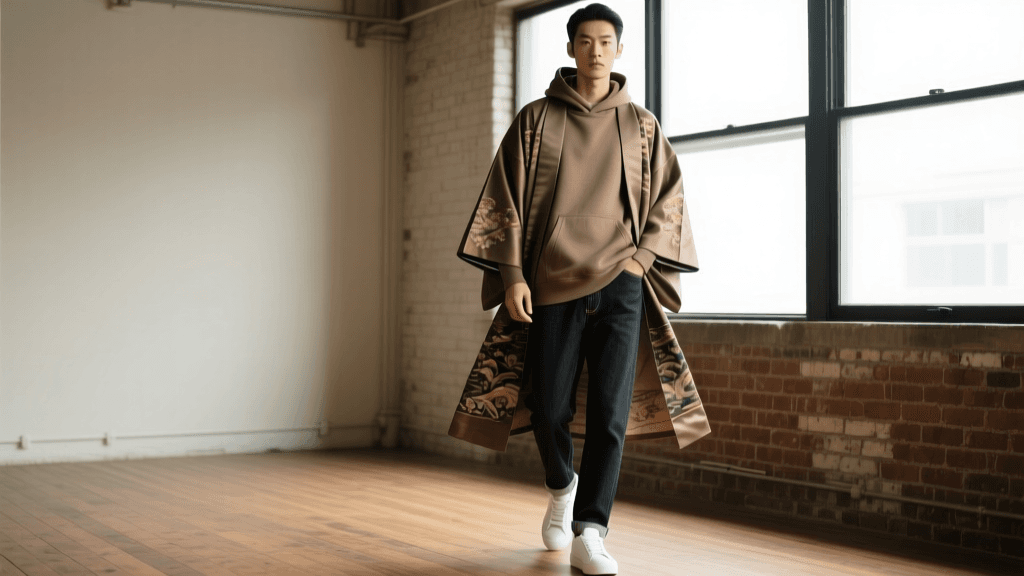
Embrace the vibrant, rule-breaking spirit of Harajuku street fashion by using a brightly colored or heavily patterned vintage silk haori as a statement outer layer. Wear it over an oversized graphic hoodie, distressed denim, and skate shoes. To ground the look and prevent it from feeling like a costume, ensure that your accessories—such as a modern baseball cap or a contemporary crossbody bag—are distinctly modern.
The Haori Himo: To Tie or Not to Tie?
Traditionally, the haori is secured at the front using a haori himo, a decorative braided cord that attaches to small loops inside the lapels. In a formal or traditional context, tying the himo is mandatory. However, in the realm of modern streetwear, the himo is often removed entirely. Allowing the haori to hang open creates a duster-coat effect that is much more aligned with contemporary outerwear styling. If you choose to keep the himo, consider swapping the traditional silk cord for a modern paracord or a leather strap to further blend the historical with the contemporary.
Caring for Your Vintage Silk and Cotton Haori
Preserving the integrity of vintage textiles is crucial for maintaining their value and aesthetic appeal. Cotton and wool-blend haori can often be hand-washed in cold water with a mild, pH-neutral detergent, then laid flat to dry. Silk haori, however, require specialized care. The Kyoto Costume Institute emphasizes the importance of proper textile conservation; therefore, vintage silk pieces should only be dry-cleaned by professionals experienced with historical garments. When storing your haori, avoid wire hangers, which can distort the shoulder seams. Instead, use padded wooden hangers and store the garments in breathable cotton garment bags away from direct sunlight to prevent the dyes from fading.
Conclusion: Wearing Heritage with Respect
The incorporation of the haori into global streetwear is a testament to the timelessness of Japanese design. By understanding the garment's history, mastering its unique measurements, and styling it with intentional, modern context, fashion enthusiasts can celebrate Japanese heritage without reducing it to a mere costume. The vintage haori is more than just a jacket; it is a wearable piece of history that continues to evolve, proving that true style transcends both time and borders.