Seasonal Hanfu Guide: Fabrics & Styles for China's Climates
Introduction to Hanfu and China's Diverse Climates
The revival of Hanfu (traditional Han Chinese clothing) is not merely a fashion trend; it is a profound reconnection with centuries of textile artistry, cultural philosophy, and sartorial elegance. However, China is a vast country with dramatically diverse climatic zones. From the biting, sub-zero winters of Harbin in the northeast to the sweltering, tropical humidity of Hainan in the south, wearing Hanfu requires a strategic understanding of traditional fabrics, garment layering, and seasonal adaptations.
Historically, the Chinese wardrobe was deeply attuned to the twenty-four solar terms of the lunar calendar. The choice of textile was a matter of both survival and social etiquette. Today, modern Hanfu enthusiasts face the same geographical challenges. This comprehensive guide explores how to select, layer, and care for seasonal Hanfu fabrics, ensuring both historical authenticity and modern comfort across China's varied climates.
The Foundation: Zhongyi (Undergarments) Across Seasons
Before discussing outer garments, one must understand the Zhongyi (中衣), the foundational undergarment worn beneath almost all traditional Hanfu ensembles. The Zhongyi acts as a barrier between the body's oils and the delicate outer silks, while also providing structural shape.
- Summer Zhongyi: Crafted from lightweight, breathable cotton or bamboo-linen blends (approx. 100-120 GSM). These wick moisture away from the skin in humid climates.
- Spring/Autumn Zhongyi: Medium-weight cotton or soft modal blends (150-180 GSM) that offer mild insulation without overheating.
- Winter Zhongyi: Modern thermal fabrics or soft, brushed cotton flannel. While traditionalists might use quilted cotton, modern hidden thermal wear is widely accepted for extreme cold.
Spring: Transitional Layering and Breathable Silks
Spring in regions like Jiangnan (south of the Yangtze River) is characterized by mild but highly fluctuating temperatures, frequent breezes, and the onset of the plum rain season. The key to spring Hanfu is versatile layering.
Recommended Fabrics
Spring calls for fabrics that offer a gentle drape and moderate breathability. Crepe de Chine and silk satin in the 12 to 16 momme (mm) range are ideal. These silks provide a beautiful, fluid movement that catches the spring breeze. For more casual or daily wear, cotton-linen blends (around 140 GSM) offer a slightly more structured, matte aesthetic that is easy to maintain.
Recommended Styles
The Beizi (褙子), an open-front jacket with side slits, is the quintessential spring garment. Worn over a thin Zhongyi and paired with a Songku (narrow-legged trousers) or a flowing skirt, the Beizi allows the wearer to easily adjust to changing temperatures. In slightly cooler northern springs, the Ruqun (shirt and skirt ensemble) with a cross-collar top provides excellent neck coverage against lingering winds.
Summer: Beating the Humidity with Ramie and Gauze
Summers in Southern and Central China are notoriously hot and humid. Traditional Chinese textile artisans developed highly specialized, breathable fabrics specifically engineered to combat the oppressive heat of the Yangtze River basin and Lingnan regions.
Recommended Fabrics
Ramie (Xiabu): Often referred to as 'Chinese linen,' ramie is a bast fiber that has been cultivated in China for millennia. It is highly absorbent, dries quickly, and possesses natural antibacterial properties. A high-quality ramie Hanfu is crisp, cool to the touch, and softens beautifully with each wash.
Luo (Silk Gauze): An ancient, complex weaving technique that creates a breathable, mesh-like structure in the silk. Luo is incredibly lightweight and was historically favored by nobility for summer wear.
Xiangyunsha (Gambiered Canton Gauze): A highly prized, intangible heritage textile from Guangdong. As recognized by the UNESCO Intangible Cultural Heritage lists detailing the broader context of Chinese silk and craftsmanship traditions, the processing of silk with natural dyes and river mud creates unique, cooling properties. Xiangyunsha is dyed using the juice of the Dioscorea cirrhosa tuber and coated with iron-rich mud from the Pearl River. The result is a dark, crackling, waterproof silk that feels remarkably cool against the skin and repels insects. Authentic Xiangyunsha is expensive, often costing between $80 and $150 USD per meter.
Recommended Styles
The Qixiong Ruqun (chest-high skirt ensemble) from the Tang Dynasty is highly popular in summer. By securing the skirt above the bust and wearing a lightweight, wide-sleeved top, air can circulate freely around the legs and torso. The Bijia, a sleeveless, open-sided vest, is also excellent for layering over thin tops without adding bulk or heat.
Autumn: Crisp Air and Structured Elegance
Autumn brings crisp, dry air and vibrant foliage, particularly in Northern and Central China (such as Beijing and Xi'an). The temperature drops steadily, requiring garments that offer wind resistance and structural elegance.
Recommended Fabrics
Autumn is the season for Jacquard weaves and heavier silks (19 to 22 momme). According to The Metropolitan Museum of Art, historical Chinese silk weaving techniques, including complex brocades and patterned weaves, were highly developed to create textiles that were not only visually stunning but also more durable and insulating. Modern Jacquard cottons and silk-wool blends are also excellent choices, providing a rich texture that complements the autumn aesthetic.
Recommended Styles
The Aoqun (袄裙), featuring a lined, cross-collar jacket (Ao) worn over a skirt, is perfect for autumn. The jacket's lining provides necessary warmth, while the structured collar protects the neck from dry winds. The Pifeng (披风), a cloak-like garment with wide sleeves, can be draped over the shoulders for an added layer of sophistication and warmth during cool autumn evenings.
Winter: Insulation and Opulent Brocades
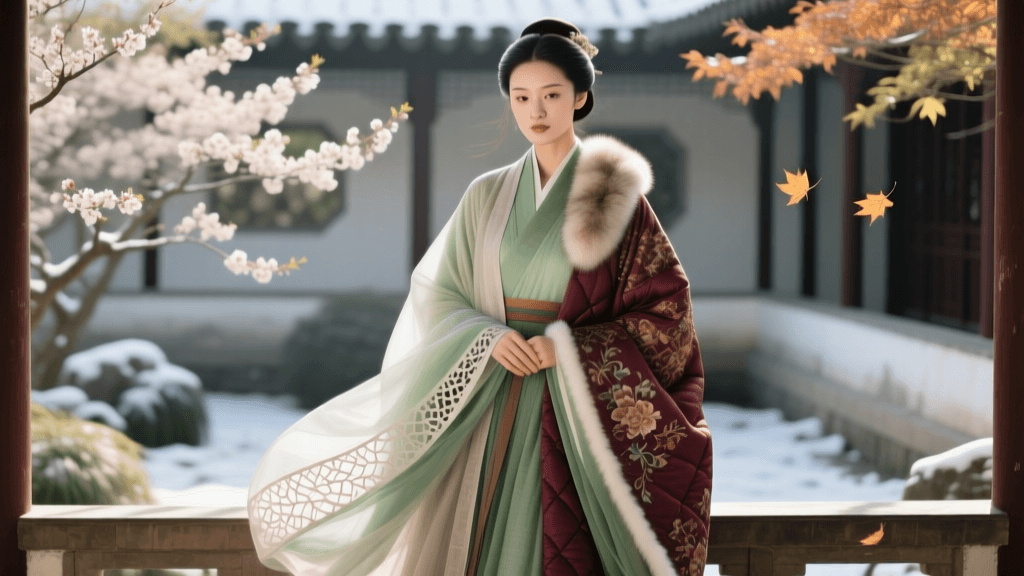
Winters in Northern China, particularly in the Northeast (Dongbei), are harsh, dry, and bitterly cold. Traditional winter Hanfu prioritizes deep insulation, windproofing, and opulent, heavy textiles.
Recommended Fabrics
Zhuanghua (Brocade): Heavy, richly patterned silk brocades, often interwoven with metallic threads or heavy wool, are the cornerstone of winter Hanfu. Velvet and Zhi (traditional woolen textiles) are also utilized for their heat-retaining properties. Modern winter Hanfu often incorporates hidden layers of down or synthetic thermal batting, as well as luxurious faux rabbit fur or sheepskin trims along the collars and cuffs to block drafts.
Recommended Styles
The Mamianqun (horse-face skirt) is a winter staple. Its overlapping pleats allow for thick thermal leggings to be worn underneath without disrupting the garment's silhouette. The Dahu, a sleeveless, side-slit vest worn over a thick Ao jacket, provides core warmth while allowing arm mobility. For extreme cold, the Doupeng (a hooded, full-body cloak) is wrapped around the entire ensemble, creating a microclimate of warmth.
Comprehensive Seasonal Hanfu Fabric & Style Chart
| Season | Primary Climate Zone | Primary Fabric | Weight / Spec | Recommended Style | Avg. Cost (USD) |
|---|---|---|---|---|---|
| Spring | Jiangnan / Central | Crepe de Chine, Cotton-Linen | 12-16 mm / 140 GSM | Beizi, Songku, Ruqun | $45 - $90 |
| Summer | Lingnan / Southern | Ramie, Luo, Xiangyunsha | Lightweight / Open Weave | Qixiong Ruqun, Bijia | $60 - $250+ |
| Autumn | North / Central | Jacquard, Heavy Silk, Wool Blends | 19-22 mm / 220 GSM | Aoqun, Pifeng | $70 - $150 |
| Winter | Northeast / Northern | Brocade, Velvet, Wool, Faux Fur | Heavyweight / Lined | Mamianqun, Dahu, Doupeng | $100 - $300+ |
Modern Practicalities: Sourcing, Care, and Maintenance
Owning seasonal Hanfu requires a commitment to proper textile care, as traditional fibers behave very differently from modern synthetics.
Washing and Care
- Ramie and Linen: These fabrics can be machine washed on a gentle cycle with cold water, but they must be removed immediately to prevent deep wrinkling. Ramie softens over time, so initial stiffness is normal.
- Silk (Crepe, Satin, Luo): Always hand wash in cold water using a pH-neutral silk detergent. Never wring silk; instead, roll it in a clean towel to absorb excess moisture and lay it flat to dry away from direct sunlight, which degrades the protein fibers.
- Xiangyunsha: This mud-dyed silk requires specialized care. It should only be gently hand-washed in cool water without harsh detergents, as the iron-mud coating can be stripped by alkaline soaps.
- Brocade and Velvet: Dry cleaning is highly recommended for heavy winter brocades and velvet to maintain their structural integrity and prevent shrinking.
Sourcing Authentic Garments
While e-commerce platforms like Taobao and specialized international boutiques offer a wealth of options, buyers must scrutinize fabric descriptions. Look for specific fiber content (e.g., '100% Mulberry Silk' or 'Pure Ramie') rather than vague terms like 'silky polyester.' For heritage fabrics like Xiangyunsha, seek out sellers based in Foshan or Guangzhou who can provide certification of the traditional dyeing process.
Conclusion
Dressing in Hanfu is a dynamic dialogue between the wearer, the garment, and the environment. By understanding the historical and practical applications of seasonal fabrics—from the cooling embrace of summer ramie and Xiangyunsha to the protective warmth of winter brocade and wool—enthusiasts can experience traditional Chinese clothing not as a static costume, but as a living, breathing sartorial tradition perfectly adapted to the rhythms of nature and the diverse climates of China.