Miao Ethnic Clothing: Indigo Batik & Silver Ornaments
The Living Heritage of Miao Textiles and Adornment
The Miao people, widely known in the West as the Hmong, possess one of the most visually striking and culturally profound sartorial traditions in Asia. Historically lacking a formal written language, the Miao transformed their garments into wearable archives. Every stitch, dye pattern, and silver motif encodes centuries of migration, mythology, and clan identity. Today, the traditional clothing of the Miao ethnic minority is not merely a relic of the past but a vibrant, living practice that continues to evolve while maintaining deep roots in ancestral craftsmanship. For textile enthusiasts, collectors, and cultural historians, understanding the intricate processes behind Miao indigo batik and heavy silver adornment offers a masterclass in sustainable, heritage-driven fashion.
The Art of Indigo Batik (Lajian) and Embroidery
The foundation of traditional Miao clothing in regions like Southeast Guizhou is the mastery of indigo dyeing and batik, known locally as Lajian. Unlike mass-produced textiles, authentic Miao batik is a painstaking, multi-generational process. Artisans use a specialized copper knife called a lajiao to draw intricate geometric and floral patterns onto raw hemp or cotton cloth using melted beeswax. The wax acts as a resist agent. Once the wax cools and hardens, the fabric is submerged in a natural indigo fermentation vat.
Creating the indigo vat is an art form in itself. The process requires fermenting indigo leaves (Strobilanthes cusia) with wood ash, sweet rice wine, and mineral-rich spring water. This fermentation process takes anywhere from 15 to 30 days to achieve the correct alkalinity and color depth. The cloth is dipped repeatedly—sometimes up to twenty times—over several weeks to achieve the deep, lustrous navy-blue hue characteristic of Miao textiles. After the final dyeing, the fabric is boiled to melt away the beeswax, revealing crisp, white patterns against the deep indigo background. The slight cracking of the wax during the process often leaves beautiful, organic 'ice-crackle' veins in the dye, a hallmark of authentic hand-drawn batik.
Following the batik process, garments are often embellished with Cixiu (embroidery). Miao embroidery is legendary for its complexity, utilizing over a dozen distinct stitching techniques, including the seed stitch, couching, and the incredibly rare three-dimensional braided stitch. Motifs frequently feature the butterfly mother (a central figure in Miao creation mythology), dragons, water buffalo, and stylized birds. A single, heavily embroidered festival jacket can take a skilled artisan anywhere from six months to two years to complete, making these garments highly prized heirlooms.
The Weight of Heritage: Miao Silver Ornaments
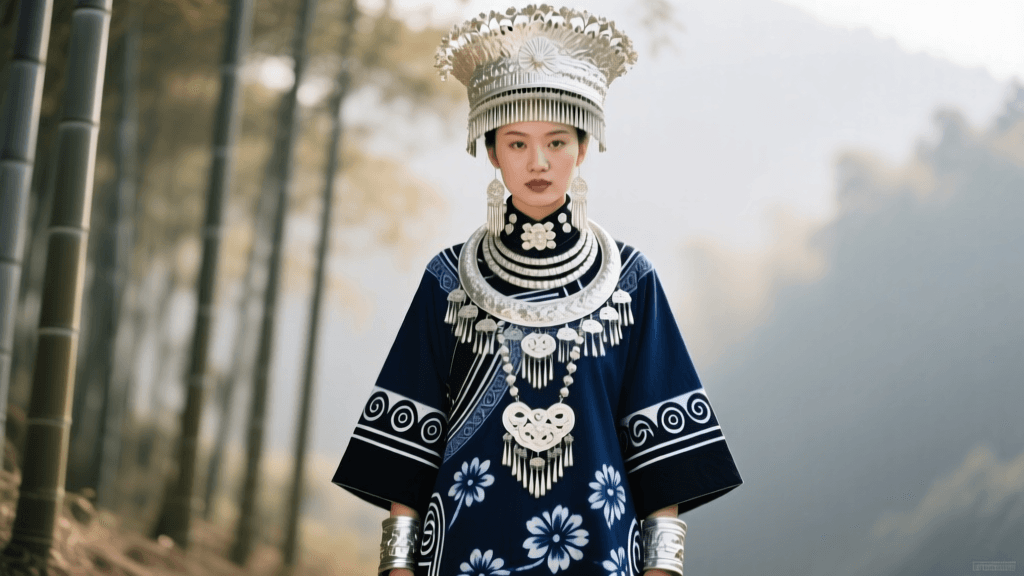
No Miao festival ensemble is complete without its spectacular silver ornaments. For the Miao, silver represents light, purity, and a potent talisman against evil spirits. It is also a traditional store of family wealth, passed down from mother to daughter. During major festivals like the Lusheng Festival or the Miao New Year, women don elaborate silver headdresses, horned crowns, multi-layered necklaces, and heavy chest plates.
The craftsmanship involved in Miao silversmithing is extraordinary. Artisans employ techniques such as repoussé, filigree, and intricate braiding to transform solid silver into delicate, shimmering pieces that mimic the sounds of nature. The silver bells and pendants attached to the garments create a rhythmic, chiming sound as the wearer dances, which is believed to summon the blessings of the ancestors. According to cultural resources and historical archives documented by institutions like the Britannica, the accumulation and display of silver have long been central to Miao social structures, marital dowries, and community status.
Regional Variations: A Comparison Chart
The Miao are not a monolith; they are divided into numerous subgroups, often categorized by the dominant colors of their traditional dress or their geographic location. Below is a comparison of the primary garment styles across three major Miao regions:
| Region | Jacket Style | Skirt Type | Silver Usage | Primary Motifs |
|---|---|---|---|---|
| Southeast Guizhou (Xijiang/Leishan) | Cross-collared, heavily embroidered lapels, cropped length | Pleated indigo skirt (up to 15 meters of fabric) | Massive silver horns, multi-tiered necklaces, heavy chest locks | Butterfly mother, dragons, water buffalo |
| Western Hunan (Xiangxi) | Long, loose-fitting tunics with wide embroidered bands on sleeves and hem | Loose indigo trousers or simple wrap skirts | Delicate silver hairpins, smaller neck rings, embroidered baby carriers | Stylized flora, geometric borders, birds |
| Yunnan (Wenshan/Honghe) | Short, fitted jackets with vibrant cross-stitch appliqué | Short, brightly colored pleated skirts with batik patterns | Silver bangles, coin-adorned belts, moderate headdresses | Abstract geometry, mountain landscapes, hemp flowers |
Practical Guide: Sourcing, Tailoring, and Styling
For collectors, designers, or cultural enthusiasts looking to acquire authentic Miao garments, navigating the market requires knowledge, patience, and a respect for the craft. Mass-produced, machine-embroidered replicas flood tourist markets, but authentic, handmade pieces are available if you know where to look.
Where to Source and Expected Costs
To source authentic pieces, travel to the artisan hubs of Kaili, Xijiang Miao Village, or Shidong in Guizhou Province. In these areas, you can purchase directly from local women's cooperatives or independent silversmiths.
- Vintage/Antique Jackets (1950s-1980s): Sourced from local collectors or specialized antique markets in Kaili. Expect to pay between $300 and $1,500 USD, depending on the density of the embroidery and the condition of the indigo.
- Custom Commissioned Jackets: Ordering a new, hand-embroidered jacket directly from an artisan cooperative typically costs between $800 and $2,500 USD. Be prepared for a waiting period of 4 to 8 months.
- Authentic Silver Ornaments: Traditional silversmiths charge based on the daily market weight of silver plus a craftsmanship fee. Expect to pay $1.20 to $2.00 per gram. A full, authentic festival silver horn headdress can weigh between 3 kg and 8 kg, placing the cost anywhere from $3,500 to over $10,000 USD. Lighter, everyday silver hairpins and bangles range from $150 to $500 USD.
Tailoring Measurements and Fit
Traditional Miao jackets are designed with a distinct silhouette that differs significantly from Western tailoring. They are generally cut flat, without darts, relying on the drape of the fabric and the wrap of the sash. If you are commissioning a piece or adapting a vintage jacket for modern wear, note the following standard measurements for a women's cross-collared top:
- Length: Typically cropped, measuring 45 cm to 55 cm from the nape of the neck to the hem.
- Shoulder Width: Dropped shoulders are common; measure between 40 cm and 48 cm.
- Sleeve Circumference: Sleeves are wide to accommodate thick embroidery bands, often measuring 35 cm to 45 cm at the wrist.
- Styling Tip: Pair a heavily embroidered, cropped Miao jacket with high-waisted, wide-leg linen trousers or a modern, solid-colored pleated midi skirt to balance the visual weight of the garment without overwhelming the silhouette.
Caring for Indigo and Silver
Preserving these garments requires specific care routines, as the natural materials are sensitive to modern chemicals.
- Indigo Textiles: Never wash authentic indigo-dyed fabrics in a washing machine or with harsh alkaline detergents, which will strip the natural dye. Hand wash separately in cold water using a pH-neutral soap. Expect some color bleeding during the first few washes; this is normal for natural indigo. Always air dry in the shade, as direct sunlight will fade the deep blue hue to a dull gray.
- Silver Ornaments: Miao silver is often an alloy containing a small percentage of copper for durability, making it prone to tarnishing. Store silver pieces in individual anti-tarnish cloth bags. To clean heavily oxidized silver without damaging the intricate filigree, use the electrochemical method: line a glass bowl with aluminum foil, add boiling water, a tablespoon of baking soda, and a pinch of salt. Submerge the silver for 3 to 5 minutes, then rinse with distilled water and buff gently with a microfiber cloth.
Preserving the Craft: Ethical Considerations
As global interest in ethnic minority textiles grows, so does the risk of cultural appropriation and the exploitation of local artisans. When purchasing Miao clothing, it is vital to ensure that the financial benefits return to the communities that created them. Organizations and initiatives supported by international cultural bodies, such as those tracked by UNESCO's Intangible Cultural Heritage programs, frequently highlight the importance of safeguarding these traditional crafts against industrial exploitation.
Avoid buying 'vintage' pieces from unverified online auction sites, as this often encourages the stripping of silver and embroidery from damaged garments, destroying their historical context. Instead, seek out certified fair-trade cooperatives or reputable galleries that provide provenance and ensure the artisans are paid a living wage. Museums and cultural institutions, such as the extensive Asian textile collections found at the Metropolitan Museum of Art, serve as excellent benchmarks for understanding the historical accuracy, construction, and profound cultural weight of these garments.
By approaching Miao ethnic clothing with a mindset of preservation, respect, and ethical consumption, enthusiasts can help ensure that the rhythmic chiming of silver and the deep blue scent of indigo fermentation continue to thrive for generations to come. These garments are not just fashion; they are the resilient, beautiful memory of a people woven into the very fabric of their existence.