Banarasi vs Kanchipuram Silk: Bridal Sari Fabric Guide 2026
The Evolution of South Asian Bridal Silk in 2026
When it comes to South Asian bridal fashion, few textiles command the reverence, artistry, and enduring legacy of handloom silk. As we navigate the 2026 bridal season, modern brides are increasingly seeking a harmonious balance between ancestral heritage and contemporary comfort. The debate between the two titans of Indian textile weaving—Banarasi silk from the North and Kanchipuram silk from the South—remains at the forefront of bridal trousseau planning. Both fabrics are masterclasses in craftsmanship, yet they offer vastly different aesthetics, drapes, and structural qualities. Understanding the nuances of these textiles is essential for any bride looking to make an informed, culturally rich, and visually stunning choice for her wedding day.
In 2026, the global shift towards sustainable luxury and slow fashion has profoundly impacted the handloom sector. Brides are no longer just looking for heavy, ornate garments; they are investing in breathable weaves, organic zari (metallic thread), and ethically sourced mulberry silk. This comprehensive guide will dissect the fabric and textile choices between Banarasi and Kanchipuram silks, providing actionable advice on styling, authentication, and care for the modern bride.
Understanding Banarasi Silk: The Northern Masterpiece
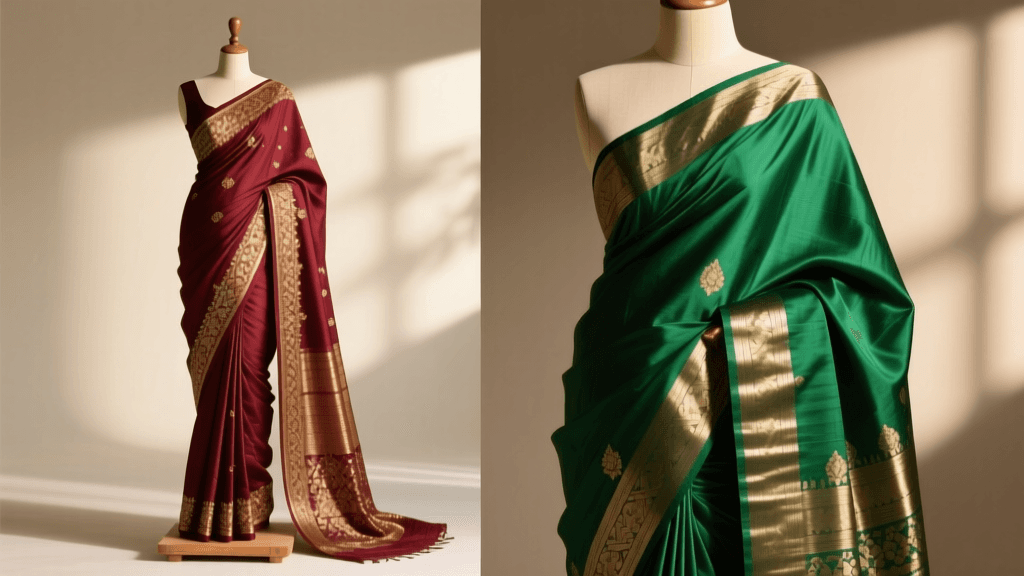
Hailing from the ancient, spiritually charged city of Varanasi (formerly Benares) in Uttar Pradesh, Banarasi silk is celebrated for its Mughal-inspired intricacy and fluid drape. The textile is woven on traditional pit looms, often requiring two to three weavers and taking anywhere from 15 days to six months to complete a single bridal sari, depending on the complexity of the motifs.
The hallmark of a traditional Banarasi sari is its use of Katan (pure silk) and the lavish application of zari. In 2026, the market has seen a massive resurgence in the demand for real gold and silver zari, though high-quality tested zari (copper core with silver and gold electroplating) remains popular for budget-conscious buyers. The motifs are deeply symbolic, featuring kalga (paisley), bel (creeper vines), and intricate jaal (trellis) patterns that create a continuous, shimmering brocade effect across the fabric.
One of the most significant 2026 trends in Banarasi textiles is the rise of lightweight variants. While traditional heavy brocades are still favored for the main wedding ceremony, brides are increasingly opting for Banarasi Organza (Kora) with zari work, or Banarasi Georgette, for pre-wedding events like the Sangeet or Mehndi. These fabrics offer the regal aesthetic of Varanasi weaving but with a featherlight drape that allows for hours of dancing and movement without fatigue.
Exploring Kanchipuram Silk: The Southern Heritage
Originating from the temple town of Kanchipuram in Tamil Nadu, Kanchipuram silk (often spelled Kanjeevaram) is the undisputed queen of South Indian bridal wear. Unlike the fluid, all-over brocade of the Banarasi, Kanchipuram silk is defined by its structural integrity, vibrant color blocking, and distinct weaving techniques.
The fabric is woven from pure mulberry silk, which is notably thicker and more durable than the silk used in Northern weaves. The defining technical marvel of the Kanchipuram sari is the Korvai technique, where the border is woven separately and interlocked with the body of the sari so strongly that even if the fabric tears, the border will not detach. Similarly, the Petni technique is used to join the contrasting pallu (the loose end of the sari) to the body. This results in a textile that is heavy, crisp, and holds its pleats impeccably.
In 2026, the Kanchipuram color palette has evolved. While auspicious bridal reds, mustard yellows, and parrot greens remain staples, there is a surging demand for pastel Kanchipurams—think powder blues, blush pinks, and mint greens—accented with minimalist, matte-finish gold borders. The motifs are heavily inspired by South Indian temple architecture, featuring gopurams (temple towers), lotus blossoms, and mythological peacocks.
Comprehensive Fabric Comparison Chart
To help you visualize the differences, here is a detailed comparison of Banarasi and Kanchipuram silk textiles for the 2026 bridal market:
| Feature | Banarasi Silk | Kanchipuram Silk |
|---|---|---|
| Origin Region | Varanasi, Uttar Pradesh (North) | Kanchipuram, Tamil Nadu (South) |
| Primary Silk Type | Katan (soft, twisted silk), Organza, Georgette | Pure Mulberry Silk (thick, lustrous) |
| Weave Technique | Brocade / Jacquard, continuous motifs | Korvai (interlocking border), Petni (pallu join) |
| Weight & Drape | Medium to Heavy; fluid, soft, clingy drape | Heavy to Very Heavy; crisp, structured, holds pleats |
| Zari (Metallic Thread) | Flatter zari, often woven into the entire background | Rounder, thicker zari, concentrated on borders/pallu |
| Ideal Climate | Best for cooler climates or air-conditioned venues | Versatile, but heavy weight can be warm in peak summer |
| 2026 Avg. Bridal Price | ₹45,000 – ₹1,50,000+ ($550 – $1,800+ USD) | ₹35,000 – ₹1,20,000+ ($425 – $1,450+ USD) |
Key Factors for Choosing Your 2026 Bridal Fabric
1. Venue and Climate Considerations
Your wedding venue should heavily dictate your textile choice. If you are planning an outdoor summer wedding in a humid climate, a heavy, pure mulberry Kanchipuram might become uncomfortable after a few hours. In this scenario, a lightweight Banarasi Katan or a modern, breathable tissue-silk Banarasi is a superior choice. Conversely, for a grand, indoor winter reception or a traditional temple wedding where structured elegance is paramount, the crisp, regal weight of a Kanchipuram silk is unmatched.
2. Draping Style and Silhouette
The way you intend to drape your sari will also influence your fabric decision. The Kanchipuram silk's stiffness makes it the absolute best choice for the traditional South Indian Madisar drape or the classic Nivi drape with perfectly sharp, fan-like pleats. The fabric's weight ensures the pleats stay anchored. Banarasi silk, being more fluid and pliable, is ideal for modern, experimental drapes, pre-pleated sari gowns, or the Gujarati seedha pallu style, as it falls gracefully over the shoulder without adding excessive bulk.
3. Blouse Pairings
In 2026, mix-and-match styling is dominant. A heavy Kanchipuram sari is often paired with a contrasting, lightweight brocade or velvet blouse to balance the visual weight. A Banarasi sari, which often features all-over jaal work, pairs beautifully with a solid silk blouse featuring heavy, localized embroidery or pearl work, allowing the sari's intricate weave to remain the focal point.
Verifying Authenticity: Silk Mark and Handloom Certifications
With the rise of power-loom replicas and synthetic blends flooding the market, authenticating your bridal silk has never been more critical. When investing thousands of dollars in a heritage garment, you must look for official certifications.
The most vital certification to look for is the Silk Mark, an initiative by the Silk Mark Organisation of India (under the Ministry of Textiles). This label guarantees that the fabric is 100% pure natural silk. Power-loom duplicates made of polyester or art silk will not carry this mark. Additionally, look for the Handloom Mark, which certifies that the textile was woven by hand on a traditional loom, ensuring your purchase supports the livelihoods of artisan communities rather than mass-production factories.
For a deeper understanding of the historical context and the evolution of these weaving techniques, the Victoria and Albert Museum's South Asian textile archives offer incredible insights into how Mughal and Dravidian influences shaped the brocade and zari work we see today. Furthermore, the Ministry of Textiles, Government of India has recently launched 2026 initiatives to protect geographical indications (GI) for both Varanasi and Kanchipuram weaves, ensuring that only textiles produced in these specific regions can legally bear their names.
Care and Maintenance for Heirloom Silks
Both Banarasi and Kanchipuram silks are designed to be heirloom pieces, passed down through generations. However, their care requirements differ slightly due to their zari content and silk weight.
- Cleaning: Never hand-wash bridal silks at home. The metallic zari can tarnish, and the silk can lose its luster. Always opt for professional dry cleaning, specifically requesting a mild solvent that protects metallic threads.
- Storage: Store your silk sari in a cool, dark, and dry place. Wrap the garment in unbleached muslin or pure cotton cloth to allow the fabric to breathe. Avoid plastic covers, which can trap moisture and cause yellowing or fungal growth.
- Preserving the Zari: To prevent the zari from oxidizing and turning black, fold the sari with the zari work facing inward. Place silica gel packets in your storage wardrobe to control humidity, but never use naphthalene balls or chemical mothballs, as their harsh fumes can permanently discolor both the silk and the metallic threads.
- Refolding: Every three to four months, take the sari out and refold it along different lines. This prevents permanent crease marks and avoids the weakening or tearing of the silk fibers along the original fold lines.
Conclusion
Choosing between Banarasi and Kanchipuram silk is not merely a decision about fabric; it is a choice between two distinct philosophies of South Asian artistry. The Banarasi offers a fluid, romantic, and intricately detailed brocade that moves with the body, while the Kanchipuram provides a structured, vibrant, and architecturally sound masterpiece that commands the room. By understanding the textile weights, weaving techniques, and 2026 market trends outlined in this guide, you can confidently select a bridal sari that not only honors centuries of Asian tradition but also perfectly aligns with your personal style and wedding day vision.