2026 Silk Road Textile Finds: Replicating Samite & Jin Silk
The Resurgence of Silk Road Archaeology in 2026
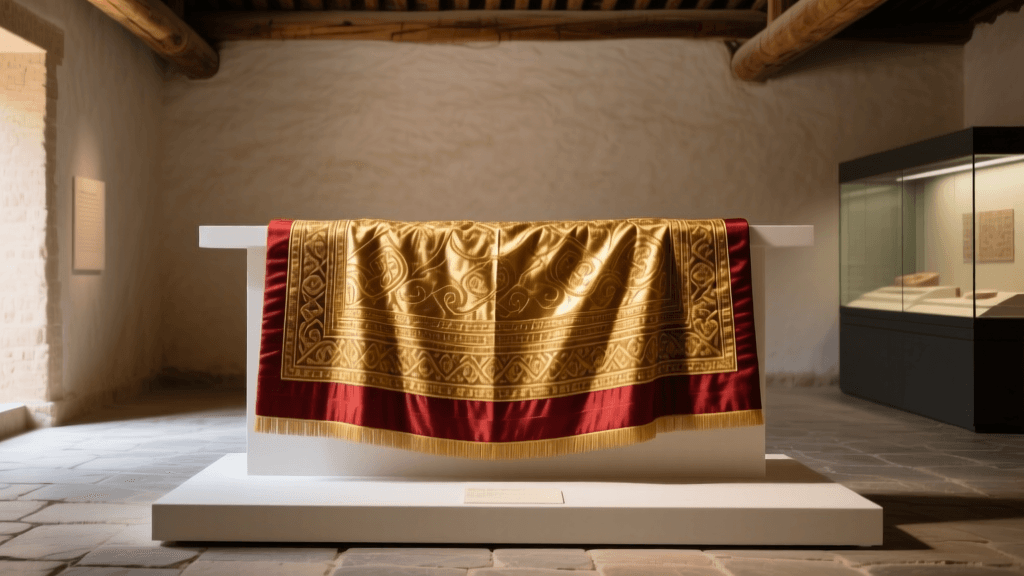
The ancient Silk Road was never merely a conduit for trade; it was a vast, pulsing artery of cultural, artistic, and technological exchange. In 2026, the global archaeological community is witnessing a renaissance in textile conservation and analysis, driven by the groundbreaking 'Threads of the Tarim' international exhibition tour. This unprecedented initiative has brought newly excavated and meticulously conserved fabrics from the Tarim Basin, the Astana Cemetery, and the Yingpan archaeological sites to the forefront of historical fashion research. For historians, collectors, and traditional garment enthusiasts, the 2026 discoveries offer a profound look into how ancient weavers blended Hellenistic, Persian, and Han Chinese motifs into single, breathtaking garments.
Unlike ceramic or metallic artifacts, textiles are notoriously fragile. The extreme aridity of the Taklamakan Desert has acted as a natural vacuum seal, preserving polychrome wools, early felts, and complex silk brocades that would have otherwise decayed centuries ago. Today, the focus has shifted from mere excavation to high-fidelity replication. Institutions are now utilizing advanced 2026 digital loom technology to recreate these ancient weaves, allowing modern scholars and collectors to study the drape, weight, and tactile qualities of garments that haven't been felt in over a millennium.
Decoding the Weaves: Samite vs. Jin Brocade
Two of the most significant textile structures dominating the 2026 Silk Road discourse are Samite and Jin brocade. While both were highly prized luxury goods exchanged across Eurasia, their structural engineering and cultural origins are vastly different. Understanding these differences is crucial for anyone studying historical Asian garments or looking to commission authentic replicas.
Samite, a weft-faced compound twill, was heavily influenced by Sasanian Persian and Byzantine weaving traditions. It is characterized by its thick, heavy drape and the way the weft threads completely obscure the warp, allowing for large, sweeping, and highly detailed curvilinear patterns. Conversely, Jin silk is a warp-faced compound tabby, a pinnacle of Han and Tang dynasty Chinese weaving. In Jin brocade, the warp threads dictate the pattern, resulting in a fabric that is incredibly dense, structurally rigid, and capable of holding sharp, geometric, and intricate repeating motifs.
| Feature | Samite (Weft-Faced Compound Twill) | Jin Brocade (Warp-Faced Compound Tabby) |
|---|---|---|
| Origin / Influence | Persian / Byzantine / Sogdian | Han / Tang Dynasty Chinese |
| Structural Basis | Weft threads form the pattern and surface | Warp threads form the pattern and surface |
| Drape and Handfeel | Heavy, fluid, supple, thick | Dense, structured, crisp, rigid |
| Common Motifs | Pearl roundels, confronting animals, florals | Cloud bands, geometric lattices, mythical beasts |
| 2026 Replica Cost | $450 - $600 per meter | $700 - $950 per meter |
Technological Breakthroughs in Textile Conservation
The ability to accurately replicate these ancient textiles in 2026 is largely due to recent leaps in non-invasive conservation technology. According to the UNESCO Silk Roads programme, the integration of multispectral imaging and AI-assisted thread mapping has revolutionized how we understand degraded historical fabrics. Multispectral imaging allows conservators to 'see' beneath the surface discoloration of a 1,500-year-old textile, identifying the original chemical signatures of ancient dyes such as madder root, indigo, weld, and the exceedingly rare Tyrian purple.
AI-Assisted Jacquard Loom Programming
Once the original dye palette and weave structure are mapped, the data is fed into AI-driven Jacquard looms. In previous decades, recreating a complex Jin brocade required master weavers to manually calculate thousands of warp intersections—a process that could take months for a single yard of fabric. In 2026, specialized heritage ateliers use algorithmic modeling to instantly translate the fragmented archaeological data into digital punch-card equivalents. This ensures that the tension, warp density, and weft insertion perfectly match the original artifact, resulting in replicas that are structurally identical to the ancient garments.
A Collector’s Guide to 2026 Authentic Replicas
For collectors, museums, and historical costumers, sourcing authentic Silk Road replicas requires a discerning eye. The market has seen an influx of mass-produced 'brocades' that merely print or lightly emboss historical patterns onto modern synthetic blends. True replication requires traditional materials and structural integrity. The Metropolitan Museum of Art's Heilbrunn Timeline of Art History notes that the true value of Silk Road textiles lies in their complex compound structures, which cannot be faked by surface-level printing.
When commissioning or purchasing Samite or Jin silk in 2026, adhere to the following actionable guidelines:
- Verify the Weave Structure: Examine the reverse side of the fabric. A true Samite will show a distinct twill diagonal on the back, while a true Jin will show the contrasting warp floats. If the back is a messy tangle of loose threads or a solid color, it is a modern damask or print, not a compound weave.
- Demand Natural Dyes: High-end 2026 replicas utilize traditional vat and mordant dyeing. Ask the atelier for a dye certificate. Synthetic dyes will appear overly vibrant and lack the subtle, organic depth of historical plant and insect dyes.
- Check the Warp Density: Authentic Jin brocade replicas should boast a warp density of at least 80 to 120 threads per centimeter. This extreme density is what gives the fabric its historical rigidity and durability.
- Seek Authorized Ateliers: Purchase only from institutions or ateliers affiliated with recognized heritage bodies, such as the China National Silk Museum's authorized replication workshops, which adhere to strict archaeological standards.
Preservation and Storage for Heavy Brocades
Owning a museum-grade replica of a Silk Road textile comes with the responsibility of proper archival storage. Because these compound weaves are exceptionally heavy and dense, they are prone to structural stress and gravity-induced distortion if stored improperly. The Victoria and Albert Museum's Asian collections conservation department emphasizes that heavy silks and wools require specialized support to prevent the warp threads from snapping under their own weight over time.
Best Practices for 2026 Archival Storage
- Roll, Never Fold: Folding heavy Samite or Jin brocade will create permanent stress fractures in the silk fibers. Always roll the textile around an acid-free, archival-grade honeycomb paper tube. Wrap the textile in washed, unbleached cotton muslin before rolling to protect it from dust and light.
- Climate Control: Maintain a strict relative humidity (RH) of 45% to 55%. Fluctuations in humidity cause the silk warp and the weft threads to expand and contract at different rates, leading to puckering and structural failure.
- Pest Management: While silk is somewhat resistant to certain pests, the woolen garments often found alongside Silk Road silks are highly susceptible to clothes moths. Use pheromone traps in the storage area and avoid chemical mothballs, which can off-gas and permanently stain or degrade historical fibers.
- Light Exposure: Limit display lighting to a maximum of 50 lux. Even with natural dyes, prolonged exposure to UV radiation will cause the complex polychrome patterns to fade irreversibly.
'The textiles of the Tarim Basin are not just fabrics; they are the physical manifestation of a world deeply connected by trade and curiosity. When we replicate a Jin brocade today, we are not merely copying a pattern; we are resurrecting the exact mathematical and artistic mindset of an ancient artisan.' — Lead Conservator, 2026 Threads of the Tarim Exhibition.
The Future of Historical Fashion Research
As we move through 2026 and look toward the future, the intersection of archaeology and textile engineering continues to blur the lines between the ancient and the modern. The meticulous replication of Silk Road Samite and Jin brocades provides invaluable insights into the drape, movement, and visual impact of historical Asian garments. For the dedicated collector and the passionate historian, these replicas offer a tangible, breathtaking connection to the merchants, weavers, and travelers who once walked the dunes of the Taklamakan, binding continents together with every throw of the shuttle.