Choosing Hakama: Martial Arts vs Tea Ceremony Wear
The Philosophy and Evolution of the Hakama
The hakama is one of the most iconic garments in Japanese traditional clothing. Originally designed as equestrian wear for samurai to protect their legs while riding horses, the hakama evolved during the Edo period into a symbol of status, formality, and martial prowess. Today, the hakama remains a vital component of the traditional Japanese wardrobe, but its design, fabric, and purpose have bifurcated into two distinct paths: the dynamic, rigorous world of Budo (martial arts) and the serene, highly ritualized realm of Chado (the tea ceremony).
For practitioners, collectors, and enthusiasts of Asian traditions, understanding the nuanced differences between a martial arts hakama and a tea ceremony hakama is essential. Wearing the wrong garment to a dojo or a chashitsu (tea room) is not merely a fashion faux pas; it disrupts the harmony, safety, and etiquette intrinsic to these disciplines. In this comprehensive guide, we will explore the anatomical differences, fabric choices, and practical buying advice for both styles, ensuring you select the perfect traditional uniform for your mindful practice.
Anatomy of the Hakama: Shared Foundations
Before diving into the differences, it is important to understand the shared anatomy of the traditional umanori (horse-riding) hakama, which features divided legs like trousers. Both martial arts and tea ceremony hakama share the following structural elements:
- Seven Pleats: The standard hakama features seven deep pleats (five in the front, two in the back). These represent the seven virtues of Bushido (the samurai code of conduct): benevolence, courtesy, justice, loyalty, piety, prudence, and rectitude.
- Himo (Ties):strong> Long and short fabric ribbons used to secure the garment around the waist.
- Koshi-ita (Back Plate):strong> A stiff, trapezoidal panel at the lower back that rests against the wearer's lumbar region.
- Machi (Gusset):strong> The inner seam structure that allows for freedom of movement and prevents tearing.
While these elements are present in both styles, their execution, materials, and dimensions vary drastically based on the physical demands of the discipline.
The Martial Arts Hakama (Budo)
In disciplines such as Aikido, Kendo, Iaido, and Kyudo, the hakama is subjected to extreme physical stress. It must withstand aggressive grabbing, rapid footwork (suriashi), and deep, explosive stances. According to the All Japan Kendo Federation, the dignity and uniformity of Kendo equipment are paramount, and the hakama must reflect a practitioner's discipline while allowing unrestricted combat movement.
Fabric, Weight, and Movement
Martial arts hakama are engineered for durability and structure. The most common fabrics include heavy-weight cotton, poly-cotton blends, and Tetron (a specialized Japanese polyester). Aikido practitioners often prefer heavy, non-bleeding indigo-dyed cotton (aizome) or thick poly-cotton, as the fabric needs to withstand being grabbed by training partners during throwing techniques. Kendo and Iaido practitioners typically favor lightweight, pleat-retaining polyester blends, which allow for rapid striking and drawing of the sword without the heavy fabric tangling around the ankles.
The Rigid Koshi-ita
In Budo, the koshi-ita (back plate) is highly rigid, often reinforced with plastic or thick rubber. This serves two purposes: it supports the lower back during deep stances and prevents the saya (sword scabbard) or shinai (bamboo sword) from slipping out of the obi (belt) during vigorous movement.
The Tea Ceremony Hakama (Chado)
The tea ceremony, or Chado (The Way of Tea), is an exercise in tranquility, mindfulness, and aesthetic appreciation. As outlined by the Urasenke Foundation, the principles of Wa (harmony), Kei (respect), Sei (purity), and Jaku (tranquility) extend directly to the practitioner's attire. In formal tea gatherings, male practitioners (and occasionally female practitioners in specific academic or graduation contexts) wear a hakama that prioritizes silent grace, elegant draping, and subdued beauty over physical durability.
Silk, Synthetics, and Seiza Etiquette
Unlike the rough cotton of the dojo, the tea ceremony hakama is traditionally woven from silk, specifically a textured silk called Sendai-hira or fine wool. Today, high-quality polyester silk-substitutes are widely used for their ease of care and affordability. The fabric must be soft and fluid, allowing it to drape beautifully and silently when the practitioner kneels in seiza (the formal kneeling posture). A stiff, noisy martial arts hakama would disrupt the quiet atmosphere of the chashitsu and make kneeling deeply uncomfortable.
Color Codes and Formality
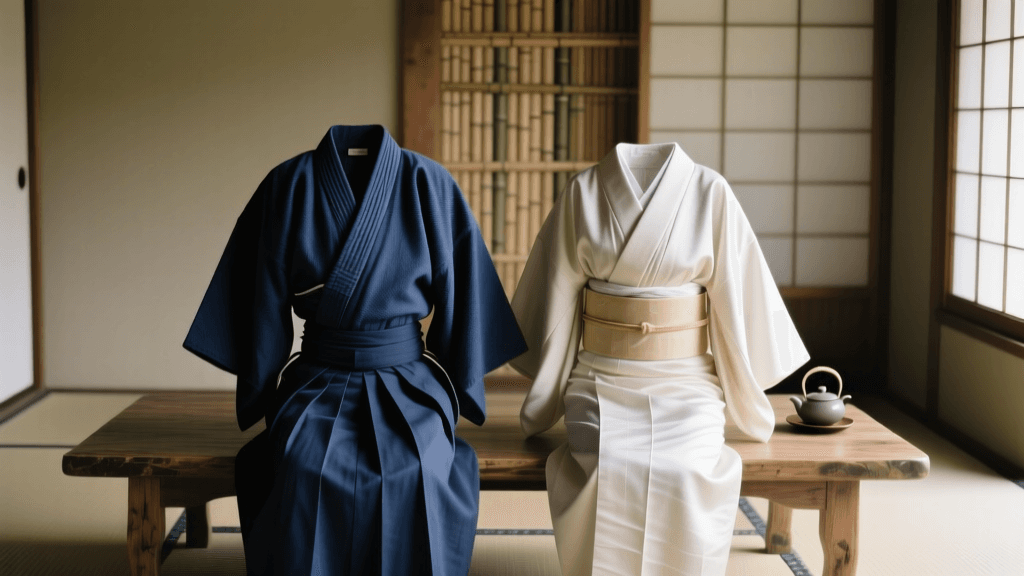
Tea ceremony attire adheres to strict seasonal and formal color codes. While martial arts hakama are almost exclusively navy, black, or white, tea ceremony hakama embrace the Japanese aesthetic of iki (subdued elegance). Acceptable colors include charcoal grey, deep olive, muted plum, and subtle striped patterns (shima). The colors must not distract from the tea utensils or the seasonal scroll displayed in the alcove.
Comparison Chart: Budo vs. Chado Hakama
To help you make an informed purchasing decision, refer to the structured comparison below:
| Feature | Martial Arts (Budo) Hakama | Tea Ceremony (Chado) Hakama |
|---|---|---|
| Primary Fabric | Heavy cotton, Tetron, Poly-cotton | Silk, Sendai-hira, Soft Polyester |
| Koshi-ita (Back Plate) | Rigid, reinforced with plastic/rubber | Soft, flexible, or entirely absent |
| Pleat Stiffness | Stiff, heavily pressed to hold shape | Fluid, soft, designed to drape naturally |
| Standard Colors | Navy (Kon), Black, White | Charcoal, Olive, Plum, Subtle Stripes |
| Primary Purpose | Durability, stance support, weapon retention | Aesthetic drape, silent movement, seiza comfort |
| Average Cost (USD) | $60 - $250 | $120 - $600+ |
Practical Guide: Measuring, Tying, and Maintenance
Purchasing a hakama requires precise measurements, as an ill-fitting garment will restrict movement in the dojo or look sloppy in the tea room. Furthermore, maintaining the garment's pleats requires specific traditional techniques.
Sizing and Measurements
Hakama sizing is generally denoted by numbers (e.g., Size 22 to 30), which correspond to the length of the garment. To find your correct size:
- Stand straight and locate your navel (heso).
- Measure straight down to the prominent bone on the outside of your ankle (kurubushi).
- For Budo, the hem should rest exactly at the ankle bone to prevent stepping on the fabric during lunges.
- For Chado, the hem may fall slightly lower, resting just over the top of the foot when standing, as the tea room requires slower, gliding steps.
Tying the Himo
The front ties are significantly longer than the back ties. In martial arts, the knot is tied tightly at the front or side, with the ends tucked securely to prevent them from whipping around during sparring. In the tea ceremony, the knot is tied with meticulous symmetry at the front, and the excess fabric is folded and tucked neatly into the waistband, presenting a clean, unbroken line that reflects the principle of purity (Sei).
Pleat Care and Washing Instructions
Maintaining the seven pleats is a meditative practice in itself. Follow these actionable care steps:
- Washing: Never machine wash a silk orSendai-hira tea ceremony hakama; dry clean only. Poly-cotton Budo hakama can be hand-washed in cold water. Aizome (indigo) cotton hakama will bleed dye for the first several washes; wash them separately in cold water with a cup of white vinegar to help set the dye.
- Drying: Never wring out a hakama. Gently press out excess water and hang it to dry in the shade. Direct sunlight will fade indigo and silk rapidly.
- Pleat Clipping: While the garment is still slightly damp, fold it along its original crease lines. Use specialized wooden hakama-ita (pleat boards) or simple wooden clothespins to clamp the pleats in place until completely dry. This eliminates the need for ironing, which can scorch silk and create unnatural, glossy shine marks on cotton.
- Storage: Store the hakama flat or folded in the traditional multi-panel fold. Hanging a hakama on a standard hanger for long periods will stretch the waistband and distort the koshi-ita.
Conclusion: Honoring the Discipline Through Attire
Whether you are stepping onto the tatami mat to practice Iaido or entering the nijiriguchi (crawling-in entrance) of a tea room, your hakama is an extension of your mindset. The martial arts hakama is a tool of resilience, designed to absorb the rigors of physical combat while maintaining the dignified silhouette of the samurai. Conversely, the tea ceremony hakama is an instrument of harmony, woven to whisper softly with your movements and reflect the quiet beauty of the present moment. By understanding the distinct material properties, structural differences, and cultural etiquette of these garments, you ensure that your traditional attire honors the centuries-old lineage of your chosen discipline. For further reading on Japanese cultural heritage and traditional garments, the Agency for Cultural Affairs of Japan provides extensive resources on the preservation of these vital sartorial arts.