Vintage Silk Kimono Preservation & Mold Care Guide 2026
The Evolving Climate Threat to Heritage Silk in 2026
Preserving vintage silk kimonos and intricately woven obis is a meticulous endeavor that requires a deep understanding of textile chemistry and environmental control. Silk is a natural protein fiber composed primarily of fibroin and sericin. While it possesses remarkable tensile strength, it is highly susceptible to environmental degradation, particularly from fluctuating humidity, ultraviolet light, and biological threats like mold. As we navigate the climate realities of 2026, collectors and cultural institutions are facing unprecedented challenges. Erratic global weather patterns have led to severe indoor humidity fluctuations, even in climate-controlled homes, making the preservation of heritage Asian garments more complex than ever before.
When relative humidity (RH) exceeds 65%, the risk of fungal spore germination on protein fibers increases exponentially. Conversely, when RH drops below 40%, silk becomes brittle, leading to micro-fractures along the fold lines of stored kimonos. This guide outlines the most current, museum-grade preservation strategies, mold remediation techniques, and archival storage protocols to ensure your vintage silk garments survive for future generations.
Identifying and Understanding Mold on Vintage Silk
Mold on a vintage kimono often presents as a powdery or velvety surface growth, sometimes accompanied by a distinct, earthy odor. It may appear as white, green, or black spotting, often localized along the seams, the inner lining (doura), or areas where the silk was folded and stored in poorly ventilated spaces. The spores feed on organic residues, including natural body oils, starches from traditional rice paste resist-dyeing techniques, and even the silk protein itself.
According to conservation guidelines published by the Victoria and Albert Museum (V&A), mold not only stains textiles but actively digests the fibers, causing irreversible structural weakening. The V&A emphasizes that treating mold requires a multi-step approach focusing on isolation, dry removal, and environmental correction, rather than the application of liquid fungicides which can cause dyes to bleed and fibers to swell.
Step-by-Step Mold Remediation for Kimonos
If you discover mold on a vintage silk kimono, immediate and careful action is required. Never attempt to wash a vintage kimono with water or commercial detergents, as this will set the mold stains and likely ruin the delicate yuzen or shibori dyes.
- Step 1: Isolation and Quarantine. Immediately place the affected kimono in a sealed plastic bag to prevent spores from spreading to other garments in your collection. Move it to a well-ventilated area, ideally outdoors or in a room with a HEPA air purifier.
- Step 2: Dry Brushing. Wear an N95 mask and nitrile gloves. Using a brand-new, ultra-soft natural bristle brush (such as a hake brush), gently brush the mold spots in one direction. Do not scrub, as this will grind the spores into the silk weave.
- Step 3: HEPA Vacuuming. Use a museum-quality HEPA vacuum. Place a piece of flexible plastic mesh or a fiberglass window screen over the nozzle, secured with a rubber band. This prevents the delicate silk from being sucked into the vacuum while allowing the spores to be extracted. Hover the nozzle just above the fabric; do not press it against the silk.
- Step 4: Freezing (Optional but Recommended). For severe infestations, place the dry kimono in a sealed plastic bag with all air pressed out, and place it in a deep freezer at -20°C (-4°F) for 72 hours. This halts biological activity and kills active spores, though it does not remove the physical residue.
Archival Storage: Building a Microclimate
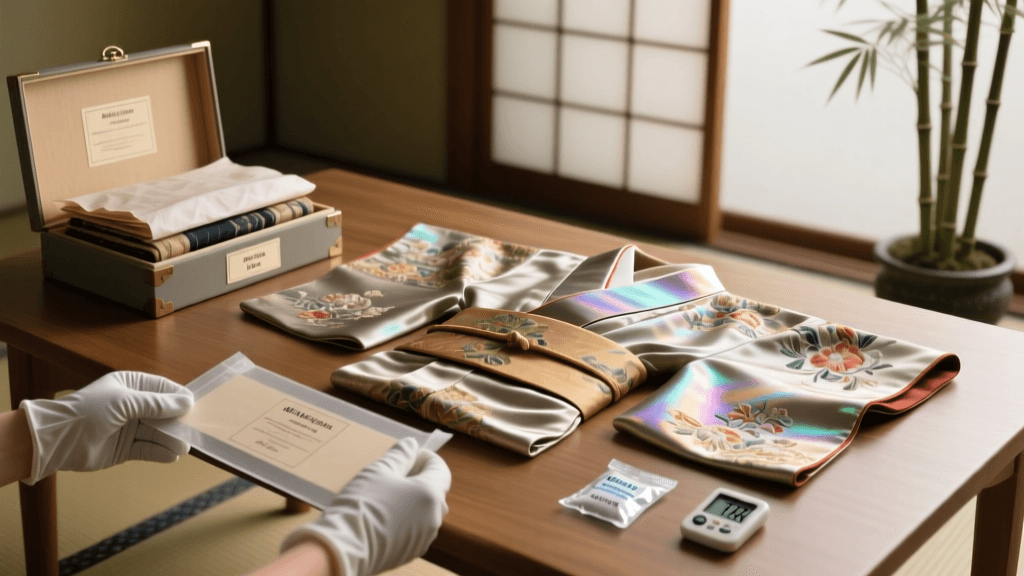
Once a garment is clean and stable, proper storage is the cornerstone of preservation. The Canadian Conservation Institute (CCI) provides extensive guidelines on textile storage, emphasizing the need for pH-neutral environments and the elimination of mechanical stress. In 2026, the standard for kimono storage has moved away from traditional cedar chests—which off-gas acidic volatile organic compounds (VOCs) that yellow silk—toward inert, archival-grade enclosures.
A kimono should never be hung on a standard hanger for long-term storage, as the sheer weight of the silk and the heavy brocade or metallic threads of the obi will cause shoulder distortion and seam tearing. Flat storage is the gold standard. The garment should be folded using acid-free tissue paper to pad the folds, preventing sharp creases that lead to fiber breakage.
2026 Archival Material Comparison Chart
Selecting the right materials for wrapping and boxing your kimono is critical. Below is a comparison of the most common storage materials utilized by collectors and archivists today.
| Material | Acidity (pH) | Breathability | Best Use Case | Est. 2026 Cost |
|---|---|---|---|---|
| Traditional Tatou Paper | Neutral (7.0) | High | Short-term wrapping, traditional aesthetics | $15 - $25 / sheet |
| Unbleached Cotton (Shiraishi) | Slightly Acidic (6.0-6.5) | Very High | Outer dust covers, requires annual washing | $20 - $35 / yard |
| Acid-Free Buffered Tissue | Alkaline (8.5) | Moderate | Padding folds (Note: avoid for pure protein silk) | $10 / pack |
| Unbuffered Acid-Free Tissue | Neutral (7.0) | Moderate | Ideal for padding silk folds and interleaving | $12 / pack |
| Archival Coroplast Box | Neutral (7.0) | Low | Long-term flat storage, pest-proof, rigid | $45 - $80 / box |
The Role of Traditional Tatou Paper vs. Modern Alternatives
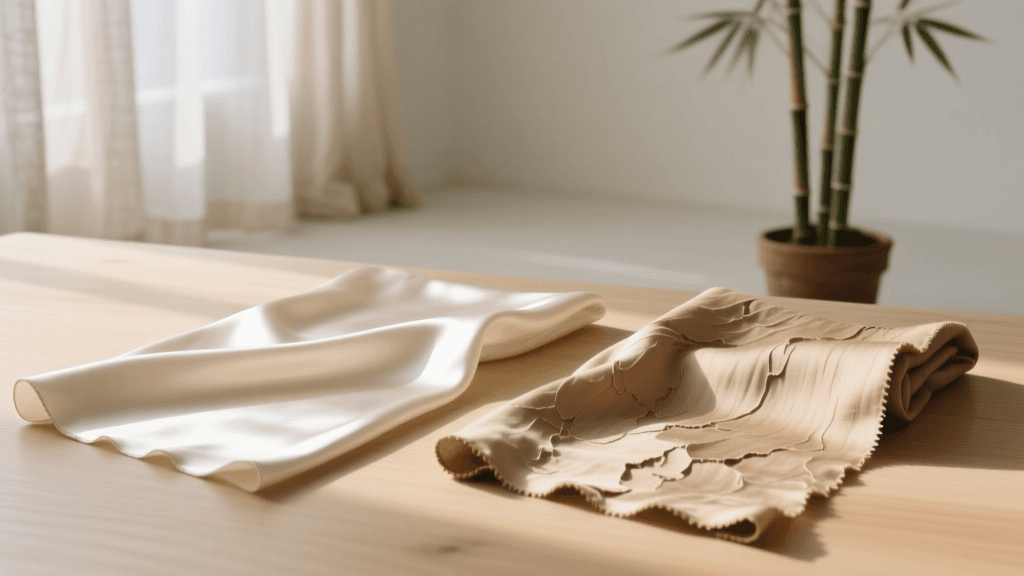
In Japan, kimonos have historically been wrapped in tatou (traditional paper) and stored in tansu (wooden chests). While authentic, handmade Japanese mulberry paper (washi) is chemically stable and highly breathable, many modern commercial papers labeled as 'tatou' contain hidden optical brighteners and acidic sizing agents that degrade silk over time. If you choose to use traditional paper, ensure it is certified acid-free and lignin-free by a reputable archival supplier.
For the outermost layer of protection in 2026, many conservators recommend using unbuffered, acid-free tissue paper to wrap the kimono, followed by a layer of washed, unbleached muslin or cotton. This dual-layer approach provides a buffer against dust and light while allowing the silk to 'breathe,' preventing the trapping of ambient moisture that leads to localized mold blooms.
When to Seek Professional Somemono Restoration
While dry cleaning and archival storage can be managed at home, certain types of damage require the expertise of a professional somemono (traditional dye and textile) specialist. You should seek professional restoration if:
- The kimono has active, deeply ingrained mold stains that brushing and vacuuming cannot remove.
- There is significant dye bleeding or color transfer between the lining and the outer silk.
- The metallic threads (surihaku) or delicate couched embroidery are fraying or detaching.
- The silk has suffered from 'shattering' (where the fabric splits along the weave due to historical weighted silk processing).
Professional restorers in 2026 utilize advanced, non-aqueous solvent cleaning systems and microscopic re-weaving techniques that are entirely safe for heritage textiles, though these services can cost anywhere from $300 to over $1,500 depending on the garment's condition and historical significance.
Your 2026 Kimono Maintenance Calendar
Preservation is not a one-time event; it is an ongoing cycle of monitoring and care. Implement this seasonal maintenance schedule to keep your collection safe year-round.
Spring (April - May)
As the weather warms and humidity begins to rise, perform a full visual inspection of your collection. Look for early signs of pest activity (like webbing or frass) and check your RH data loggers to ensure your storage environment remains between 45% and 55% humidity.
Summer (June - August)
This is the highest risk period for mold due to peak humidity. Do not open your archival boxes on rainy or highly humid days. Ensure your dehumidifiers are functioning optimally. Replace or regenerate your silica gel cassettes if they have reached their moisture capacity.
Autumn (September - October)
Traditionally, this is the season for mushiboshi (airing out the garments). Choose a crisp, dry, overcast day. Unfold the kimonos and let them rest flat on clean, white cotton sheets in a shaded, well-ventilated room for a few hours. This allows trapped odors and moisture to dissipate. Never expose vintage silk to direct sunlight, as UV radiation causes irreversible photodegradation and fading.
Winter (November - January)
Indoor heating systems can drastically lower ambient humidity, turning silk brittle. Monitor your hygrometers closely. If the RH drops below 40%, consider using a humidifier in the room where the garments are stored, or introduce localized humidification cassettes inside the archival boxes to maintain a stable microclimate.
Conclusion
Caring for vintage silk kimonos and obis is a profound responsibility that bridges the gap between historical artistry and modern conservation science. By understanding the specific vulnerabilities of protein fibers, utilizing museum-grade archival materials, and adhering to a strict, climate-aware maintenance calendar, collectors can ensure these magnificent examples of Asian traditional dress remain vibrant and structurally sound for decades to come. The preservation techniques available in 2026 offer unprecedented control over the storage environment, empowering enthusiasts to protect their heritage garments against the unpredictable elements of the modern world.