Vintage Silk Kimono Preservation & Kinran Restoration 2026
Introduction to Heirloom Silk Conservation in 2026
Preserving Asian garments, particularly Japanese silk kimonos and obi sashes, requires a meticulous approach that bridges historical craftsmanship with modern conservation science. In 2026, as global climate patterns introduce more severe seasonal humidity fluctuations, protecting heirloom textiles from mold, silk shattering, and metallic tarnish is more critical than ever. Whether you have inherited a Taisho-era silk crepe kimono or a mid-century Showa brocade obi, the preservation strategies you employ today will determine whether these garments survive for another century.
Unlike everyday modern clothing, vintage Asian garments are constructed from organic protein fibers and specialized metallic threads that react aggressively to improper environments. This comprehensive guide details the latest museum-grade storage protocols, smart environmental monitoring techniques, and safe restoration methods for kinran (gold brocade) and ginran (silver brocade) threads, ensuring your collection remains pristine in 2026 and beyond.
Understanding Silk Degradation and Kinran Tarnish
To properly care for vintage kimonos, one must understand the materials involved. Traditional Japanese silk weaves such as omeshi (crepe), rinzu (damask), and tsumugi (pongee) are highly susceptible to 'silk shattering.' This phenomenon occurs when the silk fibers break down into a fine dust, often exacerbated by historical silk-weighting processes where metallic salts were used to make the fabric feel heavier. Once shattering begins, it is irreversible, making preventative storage the only viable conservation method.
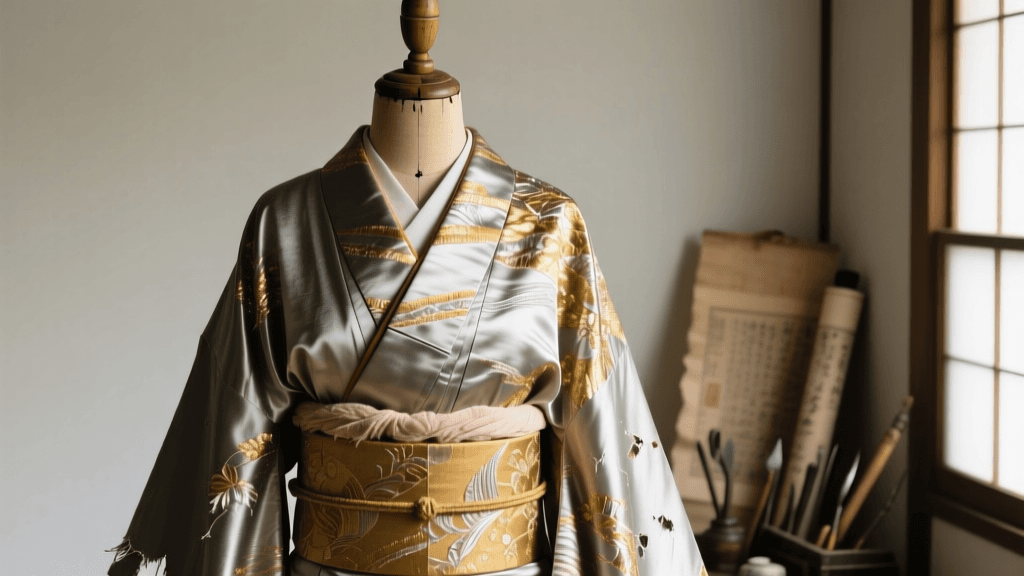
Furthermore, formal obi sashes frequently feature kinran (gold metallic threads) and ginran (silver metallic threads). Historically, these threads were created by applying genuine gold or silver leaf to lacquered paper or animal hide, which was then cut into ultra-thin strips and wrapped around a silk core. While gold is largely inert, silver is highly reactive. Ginran threads tarnish rapidly when exposed to sulfur compounds in the air, off-gassing from improper storage boxes, or high humidity, turning the once-brilliant silver into a dull, blackened brown.
Museum-Grade Storage Solutions: A 2026 Comparison
Proper storage is the first line of defense against textile degradation. The days of simply hanging vintage kimonos in a standard closet are over; gravity stresses the fragile shoulder seams, and ambient light fades natural dyes. Below is a comparison of the most effective archival storage methods recommended by textile conservators in 2026.
| Storage Method | Material Composition | Pros | Cons | 2026 Estimated Cost |
|---|---|---|---|---|
| Paulownia Tansu | Paulownia Wood | Naturally regulates humidity, fire-resistant, pest-deterrent | Heavy, requires annual airing, expensive | $800 - $2,500 |
| Archival Coroplast Box | Extruded Polypropylene | Chemically inert, pest-proof, lightweight, stackable | Traps moisture if not monitored with desiccants | $85 - $150 |
| Cotton Tatou Wrap | Unbleached Organic Cotton | Breathable, traditional, prevents hard creases | Requires frequent washing, offers no structural support | $40 - $90 |
| Acid-Free Tissue Buffer | Buffered Cellulose | Prevents dye transfer, cushions folds, neutralizes acids | Degrades and turns acidic over 5-7 years, needs replacing | $25 - $45 |
According to the Canadian Conservation Institute, flat storage in chemically inert boxes lined with acid-free tissue is the gold standard for fragile textiles. If using a traditional Paulownia tansu, ensure the wood has been properly cured and is not emitting acidic vapors that could damage metallic threads.
Environmental Controls and Smart Monitoring
Textiles require a stable microclimate. In 2026, affordable smart sensors have revolutionized home archival storage. The ideal environment for vintage silk is a temperature of 65°F to 70°F (18°C to 21°C) with a relative humidity (RH) strictly maintained between 45% and 55%. Fluctuations in RH cause the silk fibers and metallic paper threads to expand and contract at different rates, leading to delamination and cracking of the kinran and ginran.
Place a Wi-Fi-enabled environmental monitor, such as the latest Temp Stick or Govee Bluetooth/Wi-Fi data loggers, directly inside your storage box or tansu drawer. These devices will send push notifications to your smartphone if the humidity spikes above 60% (mold risk) or drops below 40% (desiccation and shattering risk). For localized humidity control, utilize silica gel cassettes designed specifically for archival enclosures, which can be recharged annually in a standard oven.
Step-by-Step Kinran and Ginran Restoration
Restoring tarnished metallic threads on an obi sash is a delicate process. Liquid silver polishes, water, and chemical dips are strictly forbidden, as moisture will dissolve the animal hide glue binding the metallic leaf to the paper core, causing the thread to disintegrate instantly.
Never apply liquid solvents, water, or commercial metal polishes to historic metallic threads. The organic core and adhesive layers will fail upon contact with moisture, resulting in catastrophic loss of the brocade pattern.
If your ginran threads have tarnished, follow these dry conservation steps:
- Step 1: Surface Cleaning. Use a vulcanized rubber soot sponge (often called a dry cleaning sponge). Gently dab—never rub—the surface of the metallic threads to lift surface oils and particulate soil. The sponge will crumble slightly as it absorbs dirt.
- Step 2: Micro-Vacuuming. Cover the nozzle of a low-suction HEPA vacuum with a piece of fine fiberglass screen mesh secured by a rubber band. Hover the nozzle an inch above the brocade to remove the rubber sponge debris and loose dust without pulling on the fragile threads.
- Step 3: Mechanical Tarnish Reduction. For severe silver sulfide tarnish on ginran, professional conservators use a fiberglass scratch pen or a micro-spatula under high magnification to gently lift the tarnish layer. For home preservation, it is highly recommended to halt at Step 2 and accept the historical patina, as aggressive mechanical removal risks exposing the bare paper core.
- Step 4: Consolidation. If you notice the metallic leaf flaking off the paper core, do not attempt to glue it back with standard adhesives. Consult a professional textile conservator who can apply a reversible, conservation-grade cellulose ether consolidant.
Safe Stain Removal for Vintage Crepe and Rinzu Silk
Spot-cleaning vintage silk at home carries immense risk. Water leaves permanent 'water rings' on silk crepe due to the way the liquid alters the twist of the yarns. If you discover localized staining, avoid commercial stain removers entirely. The Victoria and Albert Museum emphasizes that light exposure and improper cleaning are the leading causes of irreversible textile damage in private collections.
For minor surface soiling, lay the garment completely flat on a clean, white cotton sheet. Use a soft, natural-bristle hake brush to gently sweep the silk in one direction, dislodging embedded dust. If a stain must be addressed, utilize a specialized conservation surfactant applied with a micro-swab, working from the outside of the stain inward to prevent wicking. However, for any garment predating 1980, professional dry cleaning by a specialist who understands Asian textile construction and dye chemistry is the only safe route.
Pest Management and Prevention in 2026
Carpet beetles and clothes moths view protein-based silk as a primary food source. In 2026, integrated pest management (IPM) relies on monitoring rather than chemical fumigation, which can degrade dyes and metallic threads. Place pheromone-baited sticky traps in the corners of your storage room to monitor for male moth activity. If an active infestation is suspected, the safest eradication method is anoxic treatment or deep freezing.
To deep freeze a silk kimono, seal it inside an airtight polyethylene bag with a desiccant packet to prevent condensation. Place it in a standard chest freezer at -4°F (-20°C) for a minimum of 72 hours. Remove the bag and allow it to thaw slowly at room temperature for 24 hours before opening the seal. This process effectively kills all life stages of textile pests without introducing toxic chemicals to your heirloom garments.
Conclusion
The preservation of vintage silk kimonos and metallic-woven obi sashes is an act of cultural stewardship. By adopting 2026's best practices in archival storage, utilizing smart environmental sensors, and adhering to strict dry-cleaning protocols for kinran and ginran threads, collectors can ensure these masterpieces of Asian textile art remain vibrant and intact. Treat every garment not merely as clothing, but as a fragile historical document that requires a stable, respectful, and scientifically informed environment to survive the passage of time.