Kimono Fabric Sound & Texture: A Sensory Guide 2026
The Hidden Language of Kimono Textiles
When we think of the traditional Japanese kimono, our minds immediately gravitate toward its visual splendor: the vibrant Yuzen dyes, the intricate Nishijin brocades, and the elegant drape of the silhouette. However, to truly understand the kimono in 2026, one must look beyond the visual and embrace the garment as a full-body sensory experience. The modern slow fashion movement has sparked a profound renaissance in tactile and acoustic apparel, placing the physical sensation of wearing traditional Japanese garments at the forefront of cultural appreciation.
A kimono is not merely a covering; it is an acoustic instrument and a tactile landscape. The way a fabric moves against itself, the weight of the weave on the shoulders, and the thermal regulation against the skin all contribute to an immersive experience that has been refined over centuries. As of 2026, sensory-focused kimono fittings in Kyoto and Tokyo are utilizing acoustic-dampened rooms to allow wearers to hear the precise resonance of their garments, proving that the 'feel' and 'sound' of a kimono are just as vital as its appearance.
The Acoustic Signature: Understanding Kinu-zure
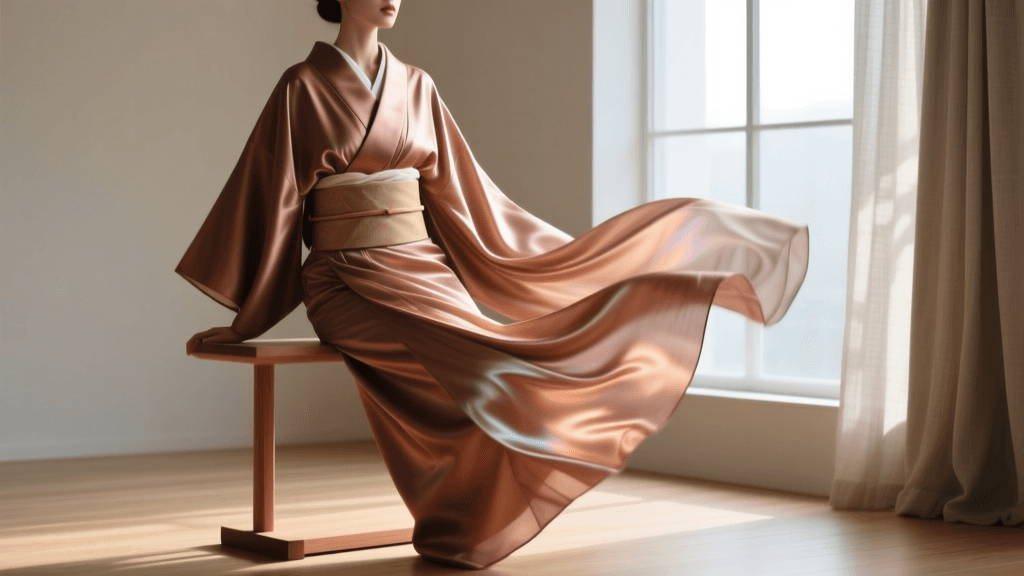
In Japanese, the poetic term for the rustling sound of silk is kinu-zure (衣擦れ). This auditory phenomenon is not an accident of tailoring, but a celebrated feature of traditional silk weaving. The sound is generated by the friction of the silk fibers rubbing against one another as the wearer moves. Historically, during the Heian period, the kinu-zure was considered a mark of elegance and refinement; it announced a noblewoman's approach through the dark, winding corridors of the palace long before she was seen.
The acoustic signature of a kimono is deeply tied to its weave structure and the presence of sericin, the natural protein gum that coats silk fibers. According to textile historians at the Metropolitan Museum of Art, the processing of Japanese silk involves carefully managing this sericin. If the silk is completely degummed, it becomes exceptionally soft and fluid but loses its crisp, resonant acoustic properties. Master weavers intentionally leave trace amounts of sericin or utilize high-twist yarns to preserve the structural integrity that creates the beloved rustle.
Different weaves produce distinctly different sounds. A plain-weave habutae silk produces a soft, liquid whisper, akin to a gentle breeze through leaves. In contrast, a chirimen (crepe) silk, which utilizes heavily twisted weft threads that are later relaxed to create a pebbled surface, generates a louder, more pronounced rustle. This crisp sound is highly prized in formal garments, as it projects an aura of vitality and presence.
Tactile Profiles: Weight, Drape, and Temperature
Beyond sound, the tactile feedback of a kimono dictates how the wearer carries themselves. The physical weight of the garment influences posture, encouraging the upright, gliding gait traditionally associated with kimono wearing. In 2026, textile conservators and fashion anthropologists emphasize that understanding these tactile profiles is essential for anyone looking to curate an authentic wardrobe.
The Textile Spectrum
Chirimen (Crepe Silk): Characterized by its bumpy, textured surface, chirimen is highly breathable and exceptionally resistant to wrinkling. Tactilely, it feels dry and slightly granular against the skin, providing a stimulating sensory feedback that keeps the wearer grounded. Its heavy drape makes it ideal for formal autumn and winter kimono.
Habutae (Plain Weave Silk): This is the quintessential 'liquid' silk. Smooth, cool to the touch, and lightweight, habutae glides over the skin with virtually no friction. It is frequently used for the nagajuban (under-kimono) because its frictionless nature allows the heavier outer kimono to slide effortlessly over it, facilitating movement.
Tsumugi (Pongee Silk): Woven from pre-dyed yarns, often spun from the inner layers of the silk cocoon or broken threads, tsumugi has a nubby, slubbed texture. Despite being 100% silk, it feels remarkably similar to fine wool or raw cotton. It is matte, warm, and lacks the glossy sheen and loud rustle of chirimen, offering a quiet, rustic, and deeply comforting tactile experience. The traditional crafting of these textured silks, such as the renowned Yuki-tsumugi, is recognized by UNESCO as an Intangible Cultural Heritage, highlighting the global importance of preserving these unique tactile crafts.
Asa (Hemp and Ramie): Used primarily for summer yukata and informal wear, asa fibers are stiff, crisp, and highly conductive to heat. The initial tactile sensation is cool and slightly rough, but with repeated wearing and washing, the fibers break down and mold perfectly to the wearer's body, creating a deeply personalized garment.
Comparison Chart: Sensory Profiles of Major Kimono Fabrics
| Fabric Type | Weave / Texture | Acoustic Profile (Sound) | Tactile Sensation | Best Season |
|---|---|---|---|---|
| Chirimen | Crepe, pebbled surface | Loud, crisp rustle | Dry, textured, heavy drape | Autumn / Winter |
| Habutae | Plain weave, smooth | Soft, liquid whisper | Cool, frictionless, fluid | Spring / Summer |
| Tsumugi | Slubbed, nubby yarns | Muted, soft friction | Warm, wool-like, matte | Autumn / Winter |
| Asa (Hemp) | Plain weave, stiff fibers | Dry, papery crinkle | Cool, crisp, molds to body | Summer |
| Ro / Sha | Leno weave, open mesh | Virtually silent | Airy, lightweight, sheer | High Summer |
Modern Sensory Exhibitions and 2026 Innovations
The year 2026 has seen a remarkable intersection of traditional craftsmanship and modern sensory science. Following the massive success of immersive fashion exhibitions in the early 2020s, such as the Victoria and Albert Museum's landmark Kimono exhibition, contemporary ateliers have integrated sensory feedback into the bespoke fitting process. In Kyoto's premier textile districts, clients are now invited to walk across varied surfaces—tatami mats, polished cedar, and smooth river stones—while wearing different silk weaves to experience how the environment alters the acoustic resonance of the kinu-zure.
Furthermore, 2026 has introduced advanced, eco-friendly synthetic blends designed specifically for the performing arts. These modern textiles are engineered at the microscopic level to replicate the exact friction coefficients of natural sericin-coated silk. While purists and tea ceremony practitioners still demand the authentic protein fibers for their thermal and spiritual properties, stage performers and theatrical productions are adopting these acoustic synthetics to ensure the traditional 'rustle' is captured clearly by modern directional microphones without the prohibitive cost and fragility of pure Nishijin silk.
How to Curate Your Own Sensory Kimono Wardrobe
Building a kimono wardrobe based on sensory experience requires a shift in perspective. Instead of asking, 'What pattern suits me?', the modern collector asks, 'How do I want to feel and sound?' Here is a practical guide to curating a sensory-focused collection in 2026.
Actionable Tips for Beginners
- Start with the Underlayer: Invest in a high-quality habutae or modern modal-blend nagajuban. The underlayer is the fabric that actually touches your skin. A smooth, cool underlayer ensures comfort and allows your outer kimono to move and sound correctly without catching on your skin.
- Match the Sound to the Occasion: For formal tea ceremonies or quiet meditation, choose a muted tsumugi or a soft habutae that promotes a silent, serene environment. For festive matsuri, weddings, or stage performances, select a heavy chirimen that projects confidence and vitality through its audible rustle.
- Test the Drape: When shopping for vintage or new kimono, hold the garment by the shoulders and let it fall. A high-quality silk will cascade with a heavy, fluid motion, pooling slightly at the hem. Stiff, lightweight fabrics that flare out often lack the necessary weight to create the proper acoustic friction.
- Embrace Seasonal Textures: Honor the traditional calendar by rotating your tactile experiences. Wear the crisp, cooling touch of asa (hemp) in July and August, and transition to the enveloping, warm weight of tsumugi in November.
Preserving the Sensory Integrity of Your Garments
The acoustic and tactile properties of silk are highly vulnerable to improper care. Traditional dry cleaning methods often use harsh chemical solvents that strip the remaining sericin from the silk fibers, effectively 'killing' the kinu-zure and leaving the fabric limp and silent. In 2026, it is highly recommended to seek out specialized kimono care facilities that utilize liquid carbon dioxide (CO2) cleaning or traditional arai-hari (wash and stretch) techniques. These methods clean the fibers while preserving their natural structural integrity, ensuring that the garment continues to sound and feel authentic for generations.
'The beauty of the kimono lies not just in the dye upon its surface, but in the whisper of the silk as it moves through the world. To wear it is to become part of the poetry.'
Conclusion
The kimono is a masterclass in multisensory design. As we navigate the fashion landscape of 2026, the renewed appreciation for the auditory and tactile dimensions of traditional Japanese garments offers a profound antidote to the visual overload of modern digital life. By understanding the science of the kinu-zure, respecting the unique tactile profiles of weaves like chirimen and tsumugi, and caring for these textiles with modern, gentle preservation techniques, we do more than just wear a garment. We step into a living, breathing, and sounding tradition that connects us deeply to the physical world.