Kimono Buying Guide: Compare Types, Formality & Costs
The Art of Choosing Your First Silk Kimono
Purchasing a traditional Japanese kimono is an investment in wearable art, cultural heritage, and meticulous craftsmanship. For international buyers, collectors, and fashion enthusiasts, navigating the world of kimono shopping can initially feel overwhelming. The Japanese garment system is governed by strict rules of formality, seasonal motifs, and precise measurements. Unlike Western clothing, where a simple size tag dictates the fit, a kimono requires an understanding of body proportions, specifically the yuki (arm span) and mitake (garment length).
Whether you are browsing the vintage racks of a Tokyo recycle shop, bidding on Yahoo Auctions Japan, or commissioning a new piece from a traditional gofukuten (kimono merchant), understanding the hierarchy of kimono types is essential. According to the Victoria and Albert Museum's extensive Kimono collection, the evolution of these garments reflects centuries of shifting social classes, sumptuary laws, and aesthetic movements. Today, we break down the primary types of women's silk kimonos to help you make an informed, authentic purchase.
Decoding Kimono Formality and Types
The Japanese concept of TPO (Time, Place, Occasion) is the golden rule of kimono dressing. Wearing a highly formal garment to a casual event can be seen as just as much of a faux pas as wearing casual clothing to a black-tie gala. Here are the four main categories of women's kimonos you will encounter on the market.
Komon (Small Pattern)
The Komon is the quintessential everyday kimono. It features a repeating, all-over pattern that is often directional or scattered. Because the motifs repeat continuously across the seams, Komon are considered casual or semi-casual. They are perfect for theater outings, casual dining, or attending tea practice. Vintage Komon are incredibly abundant and affordable, making them the ideal starting point for beginners building their collection. However, they are not appropriate for formal ceremonies or weddings.
Houmongi (Visiting Wear)
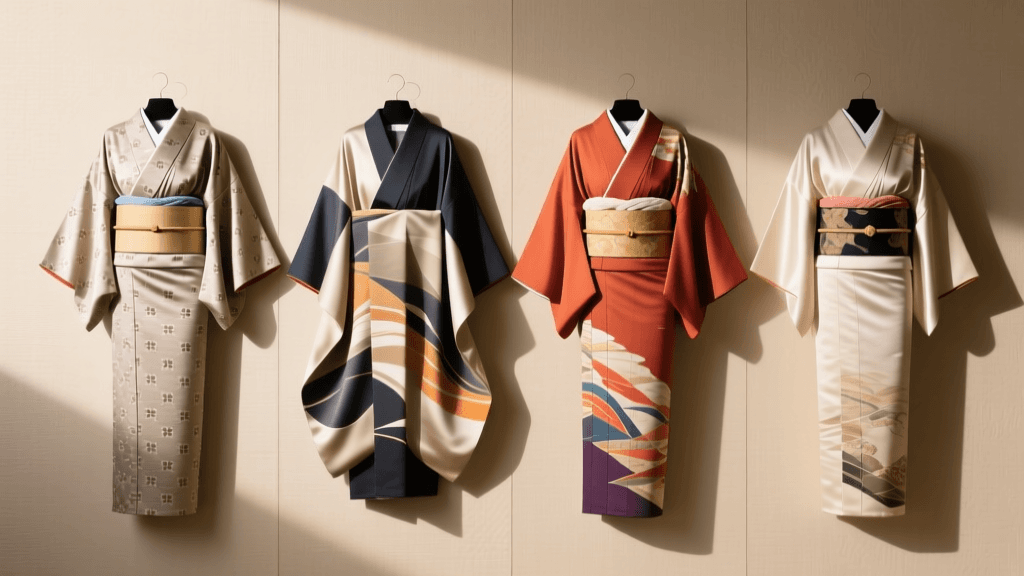
Stepping up the formality ladder is the Houmongi. The defining characteristic of a Houmongi is its e-ba pattern—a continuous, pictorial design that flows across the seams of the shoulders, sleeves, and lower hem, resembling a single painted canvas when the garment is laid flat. Both married and unmarried women can wear Houmongi, making it a versatile staple for attending weddings (as a guest), formal tea ceremonies, and graduation ceremonies. The presence of one to three family crests (kamon) can further elevate its formality.
Furisode (Swinging Sleeves)
Instantly recognizable by their dramatic, floor-grazing sleeves, Furisode are the most formal attire for young, unmarried women. The sleeves can range from 90cm to over 110cm in length. Historically, the swinging sleeves were believed to ward off evil spirits and also served as a subtle way for young women to signal romantic interest. Today, Furisode are the standard attire for Seijinshiki (Coming of Age Day) and are frequently rented or purchased by bridesmaids and unmarried female relatives at weddings. They feature lavish, all-over motifs often accented with gold leaf and intricate embroidery.
Tomesode (Edged Sleeve)
The Tomesode represents the pinnacle of formality for married women. There are two variations: Kurotomesode (black) and Irotomesode (colored). Kurotomesode features a solid black background with a stunning, continuous design exclusively along the lower hem, and always bears five white family crests. It is traditionally worn by the mothers of the bride and groom at weddings. Irotomesode features a colored background, can have one to five crests, and is slightly less formal, allowing it to be worn by married female relatives at imperial court events or high-level celebrations.
Comprehensive Kimono Comparison Chart
To assist your buying journey, refer to this comparative breakdown of formality, target demographics, and current market pricing. Note that vintage (recycled) prices reflect garments in good condition sourced from Japanese markets, while new prices reflect bespoke or high-end retail silk.
| Kimono Type | Formality Level | Target Demographic | Sleeve Length | Avg. Vintage Price (USD) | Avg. New Price (USD) |
|---|---|---|---|---|---|
| Komon | Casual / Semi-Formal | All Women | Standard (~49cm) | $40 - $150 | $800 - $2,500 |
| Houmongi | Formal | All Women | Standard (~49cm) | $120 - $400 | $3,000 - $8,000+ |
| Furisode | Highest Formal | Unmarried Women | Long (90cm - 114cm) | $150 - $600 | $5,000 - $15,000+ |
| Kurotomesode | Highest Formal | Married Women | Standard (~49cm) | $150 - $500 | $6,000 - $20,000+ |
Sizing and Measurements: The Yuki and Mitake
Buying a kimono requires ignoring Western sizing (S, M, L) entirely. Instead, you must understand two critical measurements, usually taken in centimeters. The comprehensive guides provided by the Immortal Geisha community emphasize that proper fit is paramount to achieving an elegant silhouette.
- Yuki (Arm Span): Measured from the center of the back of your neck, over the shoulder, down to your wrist bone. This determines the sleeve length and shoulder width. A standard vintage yuki is around 62-64cm, which fits many modern Western women, though taller individuals may need to seek out modern, custom-tailored pieces.
- Mitake (Garment Length): Measured from the base of your neck (the prominent vertebra) down to your ankle bone. Because a kimono is worn with an ohashori (a folded tuck at the waist), the actual length of the garment should ideally be equal to your height, or slightly longer. If the kimono is too short, the waist fold cannot be created, rendering the garment unwearable by traditional standards.
Navigating the Market: New vs. Recycled Kimonos
The modern kimono market is distinctly divided into new (shitate-agari) and recycled/vintage (recycle) garments. According to the Japan National Tourism Organization (JNTO), traditional craftsmanship is highly valued, but the cost of new, hand-painted silk is prohibitive for most casual collectors.
Buying Recycled (Vintage): Japan has a thriving 'recycle kimono' industry. Chains like Tansu-ya and countless independent shops in Kyoto and Tokyo offer immaculate, second-hand silk kimonos for a fraction of their original cost. When buying vintage online via proxy services like Buyee or ZenMarket, always scrutinize photos for 'shimi' (age spots), mold, or weakened silk along the shoulder folds. Vintage kimonos are often sold in standard sizes, making the hunt for your exact Yuki and Mitake a thrilling treasure chase.
Buying New: Purchasing a new kimono from a gofukuten is a luxury experience. You select the bolt of silk (tanmono), choose the dyeing technique (such as Yuzen or Kaga-Yuzen), and have it tailored to your exact measurements. This route is recommended if you require a specific, high-formality garment like a Furisode for a coming-of-age ceremony, or if your body proportions fall outside the standard vintage dimensions.
The Hidden Costs: Essential Accessories
A common mistake made by first-time international buyers is budgeting solely for the kimono itself. A kimono cannot be worn alone; it requires a specific ecosystem of accessories, which can easily double your initial budget.
"Never purchase a vintage kimono without verifying the condition of the accompanying obi. Often, vintage sets are sold together, but the metallic threads in formal obi are prone to tarnishing and fraying over decades of storage."
- Obi: The sash. For Komon, you will want a Nagoya obi (pre-folded and easier to tie). For Houmongi and formal wear, a Fukuro obi (long, wide, and heavily brocaded) is required.
- Obiage & Obijime: The silk scarf (obiage) that peeks out above the obi, and the braided cord (obijime) that secures the knot.
- Nagajuban: The under-kimono that protects the expensive outer silk from body oils and sweat.
- Tabi & Zori: The split-toe socks and traditional sandals. Ensure you buy modern, washable cotton tabi for comfort.
Caring for Your Investment
Silk kimonos are not machine washable. In Japan, the traditional cleaning method is called arai-hari, where the garment is completely unpicked into flat panels, washed, stretched on bamboo frames to dry, and then re-sewn. While some modern dry cleaners offer 'kimono cleaning' services, it is best to air out your garment on a padded hanger in a shaded, well-ventilated room after wearing, and store it flat in a breathable cotton tatoushi wrapper with desiccant packets to prevent moisture damage. By understanding the types, respecting the measurements, and budgeting for the full ensemble, you can successfully curate a stunning, authentic collection of Japanese traditional garments.