2026 Guide to Preserving Vintage Silk Kimonos & Hanboks
The 2026 Standard for Asian Silk Preservation
The market for vintage Asian garments has evolved significantly over the last decade. In 2026, collectors, archivists, and cultural historians recognize that preserving Taisho-era kimonos and mid-century silk hanboks requires more than just careful folding; it demands a synthesis of traditional respect and modern conservation science. Whether you have inherited a fragile Meiji-period uchikake or acquired a vintage 1970s silk hanbok, the protein structure of Asian silks makes them uniquely vulnerable to environmental degradation. This comprehensive guide outlines the museum-grade preservation techniques, archival materials, and pest management strategies that define best practices in 2026.
The Science of Silk Degradation
To properly care for traditional Asian garments, one must first understand the material. Silk is a natural protein fiber composed primarily of fibroin. Unlike cellulose-based fibers such as cotton or linen, silk is highly sensitive to alkaline environments, prolonged exposure to ultraviolet light, and fluctuating humidity. Furthermore, traditional Japanese and Korean garment-making often incorporates metallic threads (suribaku) and weighted silks. Weighted silk, which was treated with metallic salts like tin chloride in the early 20th century to increase its drape and luster, is particularly prone to 'shattering'—a phenomenon where the fabric literally disintegrates along the fold lines due to the corrosive nature of the salts. In 2026, conservationists emphasize that mitigating mechanical stress and chemical exposure is the only way to halt the degradation of these historic textiles.
Environmental Controls: Temperature and Humidity Standards
Fluctuations in temperature and relative humidity (RH) cause silk fibers to expand and contract, leading to micro-tears and structural fatigue. According to the Canadian Conservation Institute, maintaining a stable microclimate is the single most critical factor in textile preservation. Modern 2026 climate control systems and archival display cases now utilize precision solid-state dehumidifiers to maintain strict parameters without the use of harsh chemical desiccants.
| Environmental Factor | Ideal 2026 Archival Standard | Risks of Deviation |
|---|---|---|
| Temperature | 65°F to 68°F (18°C - 20°C) | Heat accelerates chemical degradation and dye fading. |
| Relative Humidity | 45% to 55% (Stable) | High RH promotes mold; low RH makes silk brittle. |
| Light Exposure | Maximum 50 Lux (UV filtered) | Photodegradation causes irreversible dye loss and fiber weakening. |
| Air Quality | Filtered for Ozone and SO2 | Pollutants cause yellowing and acidification of silk proteins. |
Archival Storage: Kiribako, Tatoushi, and Modern Synthetics
Historically, kimonos were stored in tatoushi (traditional paper wrappers) made from washi paper, and placed inside kiribako (paulownia wood boxes). Paulownia wood is naturally fire-resistant, lightweight, and possesses excellent hygroscopic properties, meaning it absorbs and releases moisture to buffer the interior environment. However, modern conservation science has revealed that raw wood can emit acidic vapors and tannins over decades, which may stain or weaken adjacent silk.
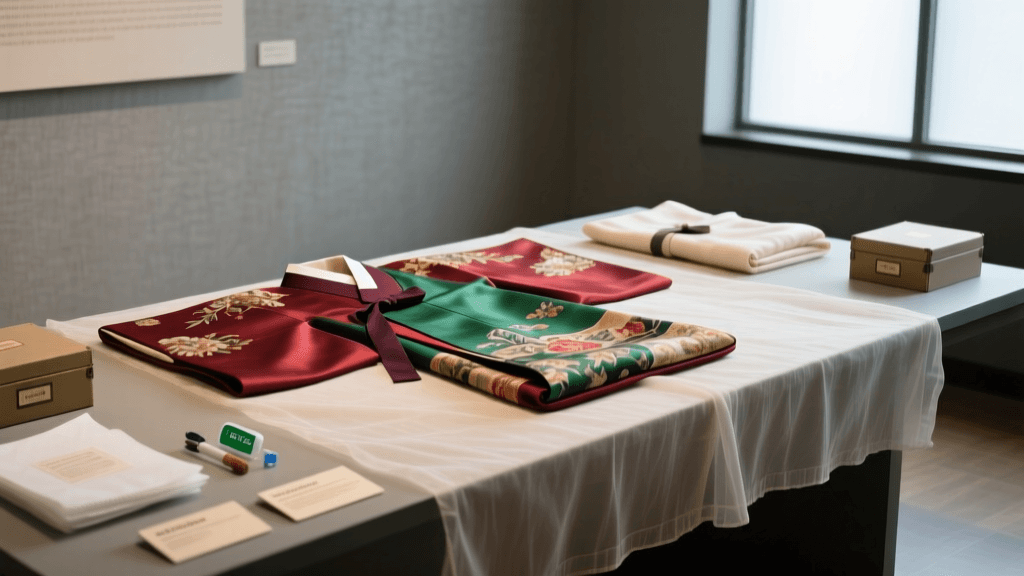
In 2026, the gold standard for using kiribako involves lining the interior of the box with washed, unbleached cotton muslin or Tyvek, an inert polyethylene flash-spun material. This creates a barrier between the wood's natural resins and the garment. When folding the garments, collectors must avoid sharp creases. The Smithsonian Institution Archives recommends padding all folds with unbuffered, acid-free tissue paper. It is crucial to use unbuffered tissue (pH neutral) rather than buffered tissue. Buffered tissue contains calcium carbonate, an alkaline reserve that is excellent for cotton and linen but actively damages protein fibers like silk and wool.
For hanbok preservation, special attention must be paid to the chima (voluminous skirt). The deep pleats of a vintage silk chima should never be pressed flat. Instead, the interior of the folds should be gently stuffed with rolls of acid-free tissue to support the three-dimensional structure and prevent permanent creasing of the warp threads. Additionally, the dongjeong (the detachable white collar) should be removed, wrapped separately in tissue, and stored flat to prevent yellowing from residual skin oils.
Pest Management: Beyond Camphor and Naphthalene
Webbing clothes moths and carpet beetles are the primary biological threats to silk garments. For generations, Asian households relied on natural camphor or synthetic naphthalene mothballs to deter pests. However, camphor can cause yellowing of white silk over time, and naphthalene is now widely recognized as a toxic hazard that leaves a persistent, noxious odor trapped in the silk fibers.
The 2026 approach to pest management is proactive and non-chemical. Museum-grade preservation relies on Integrated Pest Management (IPM). This involves placing non-toxic pheromone traps in storage areas to monitor for male moth activity. If an infestation is detected, or if a newly acquired vintage garment needs to be quarantined, conservators utilize anoxic (oxygen-deprived) treatment. The garment is sealed in a specialized barrier film envelope with an oxygen scavenger or flushed with argon gas. By reducing the oxygen level below 1% for a period of 21 days, all life stages of the pest—including eggs and larvae—are eradicated without exposing the delicate silk dyes to harsh chemical fumigants.
Handling and Display Protocols
When handling vintage kimonos or hanboks, the natural oils, salts, and moisture on human hands can transfer to the silk, leading to localized degradation and staining. In 2026, clean, dry, bare hands are preferred over cotton gloves when handling fragile textiles, as cotton gloves reduce tactile sensitivity and increase the risk of snagging loose metallic threads or catching on delicate embroidery. However, hands must be thoroughly washed with unscented soap and completely dried prior to handling. Lotions, hand sanitizers, and perfumes must be strictly avoided.
If displaying a garment, it should never be hung on a standard wire or wooden hanger. The weight of the heavy silk and the intricate embroidery will cause severe stress on the shoulder seams, leading to tearing. Instead, use a custom-padded hanger wrapped in washed muslin, or display the garment flat on a slanted archival board to distribute the weight evenly. The Victoria and Albert Museum conservation department strongly advises rotating displayed textiles every three to six months to limit cumulative light exposure and allow the fibers to 'rest' in dark storage.
Professional Restoration: The Art of Arai-Hari
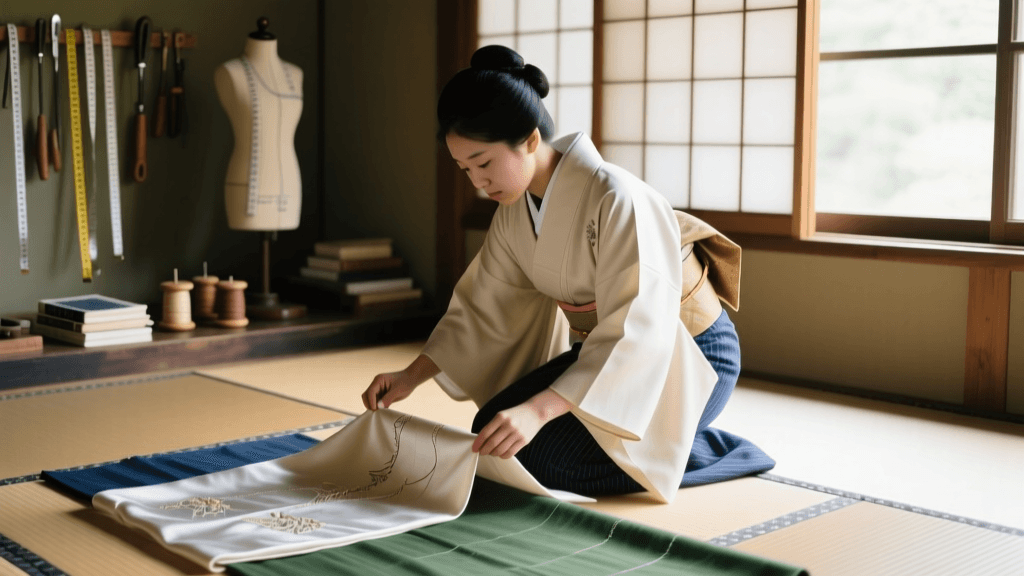
When a vintage kimono becomes heavily soiled or structurally compromised, modern dry cleaning is rarely an option, as the solvents can strip the natural sericin from the silk and dissolve the metallic glues used in embroidery. The traditional Japanese restoration method, known as arai-hari, remains the ultimate standard for deep cleaning and restoration. This painstaking process involves completely unstitching the kimono into its original flat panels, washing the silk in specialized mild solutions, and then stretching the damp panels on large wooden boards (yuzen-ita) to dry. As the silk dries, it shrinks slightly, pulling the fabric taut and naturally erasing wrinkles and creases without the need for damaging heat irons.
In 2026, true arai-hari artisans are incredibly rare, primarily operating out of specialized ateliers in Kyoto and Kanazawa. The cost for this service has risen significantly due to the scarcity of skilled labor, often ranging from $800 to $1,500 USD per garment, with turnaround times exceeding six months. For collectors, this investment is often necessary to rescue a priceless family heirloom or a museum-grade textile, ensuring that the legacy of Asian garment craftsmanship survives for future generations.
Conclusion
Preserving vintage Asian garments is an act of cultural stewardship. By adopting the 2026 standards for climate control, utilizing inert archival storage materials, and embracing non-toxic pest management strategies, collectors can ensure that these magnificent silk kimonos and hanboks remain vibrant and intact. Understanding the delicate chemistry of silk and respecting the traditional construction of these garments allows us to protect the tangible history woven into every thread.