Bespoke Geta & Zori Craft Guide 2026: Materials & Fit
The Renaissance of Traditional Japanese Footwear in 2026
The global renaissance of traditional Japanese garments has inevitably drawn attention downward to the foundation of the silhouette: the footwear. In 2026, the meticulous craft of geta and zori making is experiencing a profound revival, driven by a renewed appreciation for sustainable, artisan-made fashion and the integration of heritage pieces into contemporary streetwear. Unlike mass-produced synthetic alternatives, bespoke traditional Japanese footwear offers a masterclass in ergonomics, natural material utilization, and cultural storytelling. Whether you are a collector of Edo-period aesthetics, a practitioner of tea ceremony, or a modern fashion enthusiast looking to anchor your wardrobe with authentic craftsmanship, understanding the nuances of geta, zori, and setta is essential.
According to the Japanese Ministry of Economy, Trade and Industry (METI), the demand for certified traditional craft footwear has seen a steady year-over-year increase, as consumers prioritize longevity and artisanal heritage over fast fashion. This guide will walk you through the anatomy, material selection, bespoke fitting processes, and maintenance of traditional Japanese footwear as of 2026.
Understanding the Footwear Trinity: Geta, Zori, and Setta
To navigate the world of Japanese footwear, one must first distinguish between the three primary categories, each serving distinct functional and aesthetic purposes.
1. Geta (Wooden Clogs)
Geta are characterized by their elevated wooden base (dai) and supporting teeth (ha). Originally designed to keep the hem of expensive silk kimono above the mud and snow of unpaved streets, geta are inherently casual and produce a distinctive, rhythmic clacking sound when walking. The height and shape of the teeth can vary dramatically, from the low, stable ashida to the towering, single-tooth tengu-geta.
2. Zori (Flat Sandals)
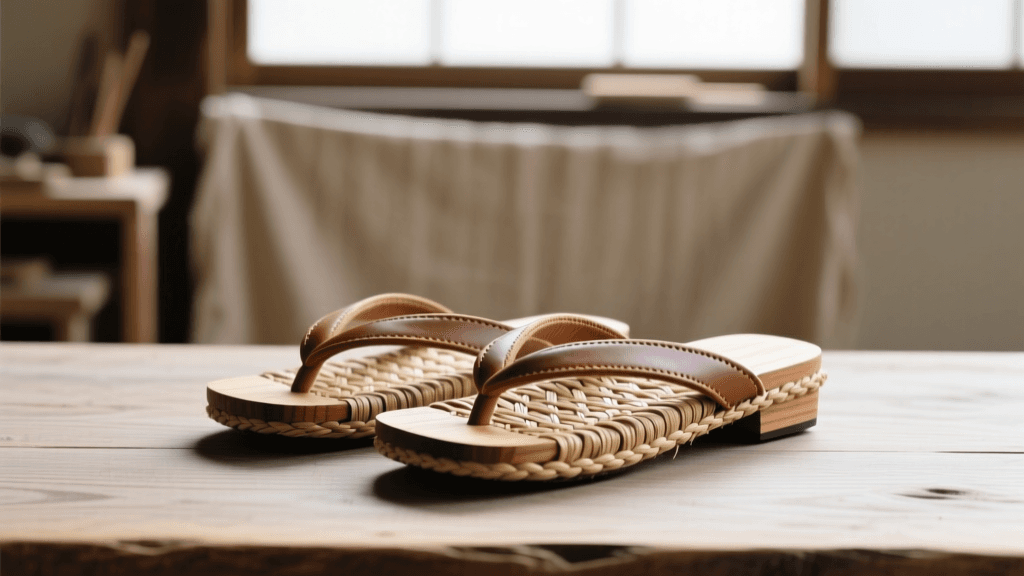
Zori feature a flat base with no elevated teeth. They are the most versatile and can range from highly casual to strictly formal. Formal zori, worn with high-grade kimono for ceremonies, are typically covered in brocade, silk, or premium vinyl, while casual summer zori are woven from natural rush grass (igusa) or bamboo sheaths.
3. Setta (Leather-Soled Sandals)
Setta occupy a unique middle ground. They feature a flat base like zori but are constructed with a layered bamboo or wood core wrapped in leather or woven rush, capped with a metal heel piece (tsuchinoko). Historically worn by samurai and scholars, setta offer excellent durability and a slightly more masculine, rugged elegance, though they are widely worn by all genders today.
Material Selection and 2026 Sustainability Trends
The soul of traditional Japanese footwear lies in its materials. In 2026, the Association for the Promotion of Traditional Craft Industries has heavily emphasized the use of sustainably harvested, region-specific materials to combat climate impact and preserve local forestry.
The Dai (Base): Paulownia and Hinoki
For geta, kiri (paulownia wood) remains the gold standard. Paulownia is incredibly lightweight, resistant to moisture, and possesses natural antibacterial properties. In 2026, premium bespoke geta are crafted from kiln-dried Tohoku paulownia, which has been aged for a minimum of three years to prevent warping. For high-end setta and formal zori bases, hinoki (Japanese cypress) is occasionally used for its dense grain and pleasant, lingering aroma.
The Hanao (Thong): Natural Fibers vs. Modern Alternatives
The hanao is the V-shaped thong that secures the foot. Traditionally made from braided cotton, silk, or velvet, the hanao must balance friction and softness. A major trend in 2026 is the use of ethically sourced, plant-based vegan leathers and recycled maritime nylon for the hanao core, wrapped in traditional silk or cotton textiles. This provides the tensile strength required for daily urban walking while maintaining the traditional aesthetic.
The Omote (Surface): Igusa Rush and Brocade
Summer zori and casual geta often feature an omote (top surface) woven from igusa (rush grass), the same material used for tatami mats. Igusa is highly breathable, absorbs perspiration, and releases a calming, earthy scent. For formal wear, tightly woven silk brocade (nishiki) or modern, high-durability urethane weaves that mimic the sheen of silk are preferred to withstand the rigors of modern concrete environments.
The Bespoke Fitting Process: Sizing for the Perfect Overhang
The most common mistake Western buyers make when purchasing geta or zori is selecting a size that matches their exact foot length, resulting in a shoe that is too large. Traditional Japanese footwear is designed with a deliberate overhang.
The 1-to-2 Centimeter Rule
When standing in properly fitted geta or zori, your heel should protrude approximately 1 to 2 centimeters beyond the back edge of the wooden base. There are two critical reasons for this:
- Kimono Protection: The overhang prevents the back of your heel from catching and dragging the delicate hem of your kimono or yukata, which could cause tripping or fabric damage.
- Biomechanical Alignment: The slight overhang encourages a forward-leaning center of gravity, facilitating the suriashi (sliding step) walking technique required for graceful movement in traditional garments.
How to Measure for Bespoke Footwear
Stand on a piece of paper with your heel against a wall. Mark the longest toe. Measure the distance in centimeters. Subtract 0.5 cm to 1 cm from this measurement to find your ideal Japanese footwear size. For example, if your foot measures 26.5 cm, you should commission a 25.5 cm or 26.0 cm base. Master artisans in Kyoto and Tokyo will often use 3D foot-scanning technology in 2026 to map the exact arch and toe-splay, carving the paulownia base to cradle the foot's unique contours before attaching the hanao.
2026 Buyer's Comparison Chart
Use the following table to determine which style of footwear best suits your needs, along with current market expectations for bespoke commissions.
| Footwear Type | Primary Base Material | Hanao Material | Formality Level | 2026 Avg. Bespoke Cost (USD) |
|---|---|---|---|---|
| Geta (Ashida) | Paulownia Wood (2 teeth) | Cotton / Velvet | Casual / Yukata | $180 - $350 |
| Zori (Igusa) | Compressed Rush / EVA Core | Braided Cotton / Hemp | Semi-Formal / Summer | $120 - $250 |
| Zori (Brocade) | Dense Urethane / Wood | Silk / Vinyl | Formal / Ceremonial | $250 - $500+ |
| Setta | Bamboo Core / Leather Sole | Leather / Woven Rush | Smart Casual / Formal | $300 - $600 |
The Art of Hanao Weaving and Attachment
The creation of the hanao is a specialized craft in itself. The base (dai) is drilled with three holes: one at the front center (mae-ana) and two at the rear sides (yoko-ana). The artisan uses a specialized hook called a hanao-toshi to pull the thong material through the wood.
The tension of the hanao is paramount. If it is too tight, it will cause severe blistering between the toes; if it is too loose, the foot will slide forward, causing the toes to grip the edge of the base and leading to fatigue. In bespoke crafting, the front knot is secured with a specialized binding thread and often sealed with natural tree resin to prevent slipping, while the rear knots are adjusted to allow the wearer to modify the width of the V-shape to match their foot's instep. Many high-end artisans in 2026 now include a small maintenance kit with a spare length of hanao cord and a miniature tensioning tool, allowing the wearer to re-tighten the thongs after the initial break-in period.
Maintenance and Longevity in Modern Climates
Proper care ensures that a pair of handcrafted geta or zori can last for decades, developing a beautiful patina, particularly on the paulownia wood and leather components.
- Wood Care: Never leave paulownia geta in direct, harsh sunlight for extended periods, as this can cause the wood to crack. If the wood becomes stained, gently sand the surface with fine-grit sandpaper (400-grit or higher) along the grain to reveal fresh, fragrant wood underneath.
- Moisture Management: If your igusa or wooden footwear gets caught in the rain, wipe them immediately with a dry, absorbent cloth and let them air dry in a well-ventilated, shaded area. Never use a heat source to dry them, as rapid moisture loss will warp the base.
- Hanao Replacement: The hanao is considered a consumable component. Depending on your walking habits and frequency of wear, expect to have the hanao replaced every two to four years. Most traditional footwear shops offer re-thonging services for a fraction of the cost of a new pair.
Conclusion
The craft of geta and zori is a testament to the Japanese philosophy of marrying profound utility with refined aesthetics. As we move through 2026, the integration of sustainable material sourcing and precise, modern fitting techniques has made traditional Japanese footwear more accessible and comfortable than ever before. By understanding the distinct characteristics of paulownia wood, igusa rush, and the vital mechanics of the hanao, you can confidently commission or select a pair of footwear that not only honors centuries of Asian tradition but also elevates your personal style with unmatched artisanal integrity.